

Bulgaria
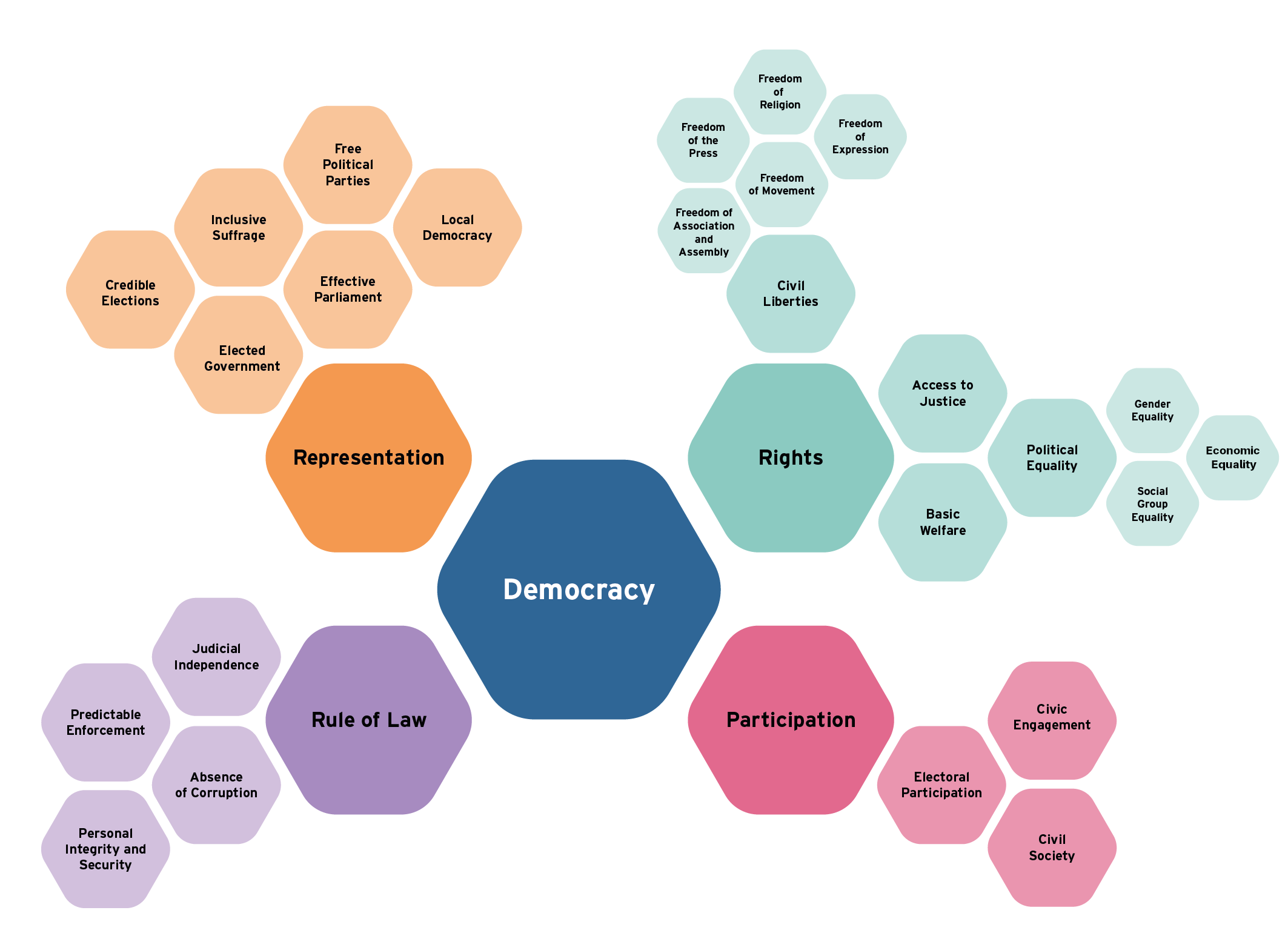
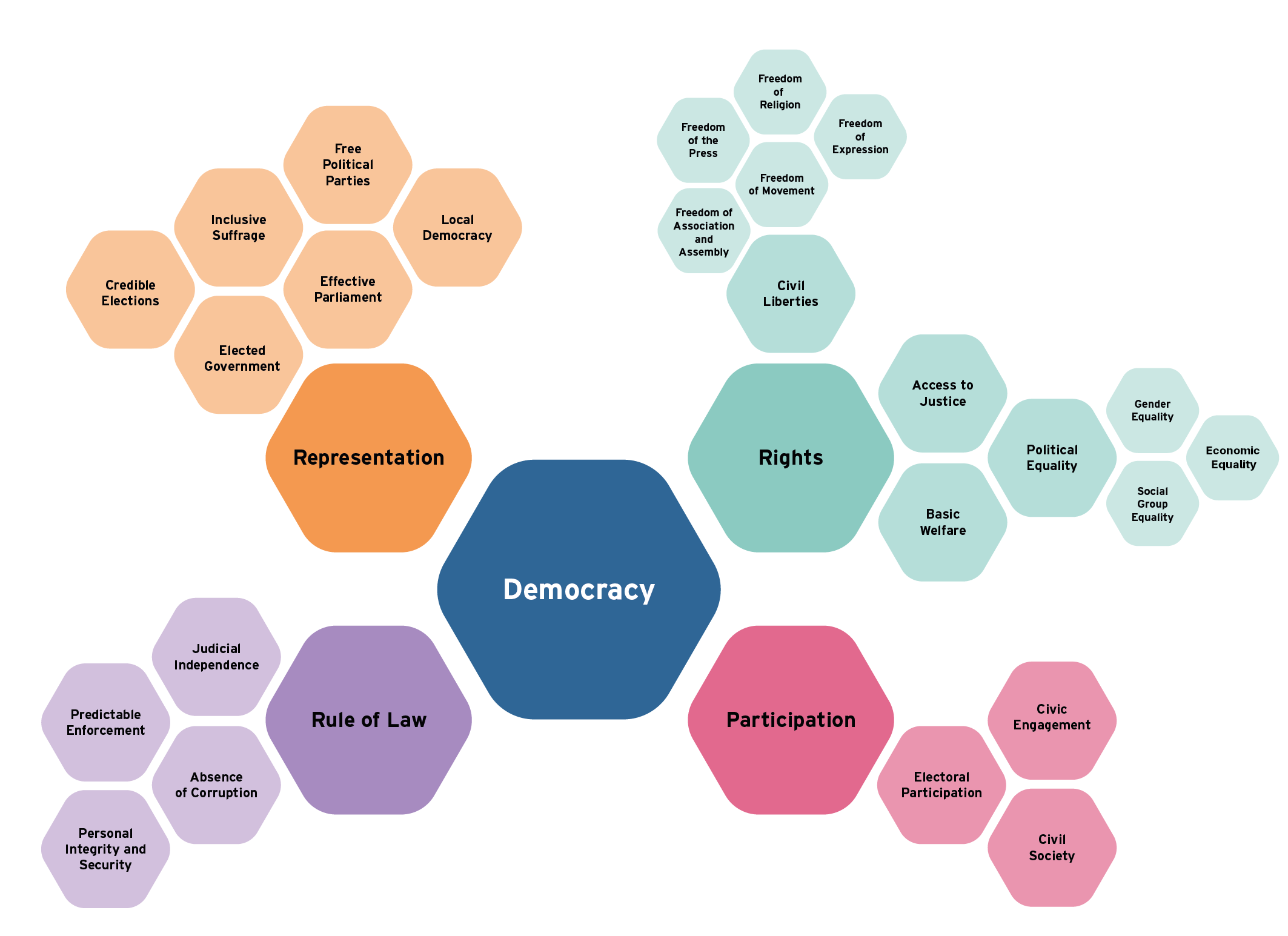
Bulgaria performs in the mid-range across all categories of the Global State of Democracy (GSoD) Framework. It is amongst the world’s top 25 per cent of countries in several factors including Civil Society, Political Equality, Effective Parliament, and Freedom of Movement. Between 2019-2024, Bulgaria has experienced a significant improvement in Freedom of the Press, but a decline in Access to Justice. A high-income country, Bulgaria’s economy has a competitive IT industry and a significant manufacturing sector, but is challenged by emigration and political instability.
Although the Bulgarian state dates back to the 7th Century, it fell under the Ottoman Empire in 1396 for nearly five centuries, when the 1878 Treaty of Berlin made Bulgaria an autonomous principality. Bulgaria joined the Axis powers during the Second World War and became a satellite state of the Soviet Union (USSR) shortly after, even applying to join the USSR—until demonstrations in 1989 paved the way for Bulgaria’s transition from communism to democracy. Bulgaria today is marked by a legacy of distorted sympathies towards Russia, and political instability. By October 2024, seven elections had taken place within a span of three years—with dwindling electoral turnout—as parliamentary gridlock has restricted government formation. Rival political forces on the center-left and center-right have agreed to work together, in a party landscape where anti-establishment, pro-Russian challengers gain ground. Corruption and judicial independence are endemic issues, with citizens increasingly losing trust in democracy as a consequence. Although reforms have been underway, there are fears that progress could be stalled—particularly due to the lingering influence of oligarch interests.
A cleavage between nationalism and European integration exists, deepening as Bulgaria extends its relations with the European Union (EU) through its 2025 accession to the Schengen Area and recent approval to adopt the Euro. At the same time, Bulgaria continues to disrupt North Macedonia’s EU accession, with nationalist political rhetoric enflaming pre-existing disputes over an interlinked history and language, and reopening questions of Russian influence in Europe. According to census data, Bulgarians account for 77 per cent of the population, with the largest minority groups being Turks—who historically underwent forced assimilation, but have political representation today—and the Roma. Experiencing systemic poverty and insecurity, Roma rights have particularly been under the spotlight since several hundreds of people were left homeless following the demolition of their homes. Bulgaria also faces criticism for pushbacks against migrants and asylum seekers on its external border.
Bulgaria performs highly in Gender Equality, with its constitution prohibiting gender-based discrimination and allowing for the “special protection” of motherhood. Despite amendments to the criminal code, addressing domestic violence remains a challenge—especially as Bulgaria fails to ratify the Istanbul Convention. Attitudes towards the LGBTQIA+ community are shaped by extreme-right actors and the Bulgarian Orthodox Church, amidst bans on legal gender reassignment and LGBTQIA+ “propaganda” in schools.
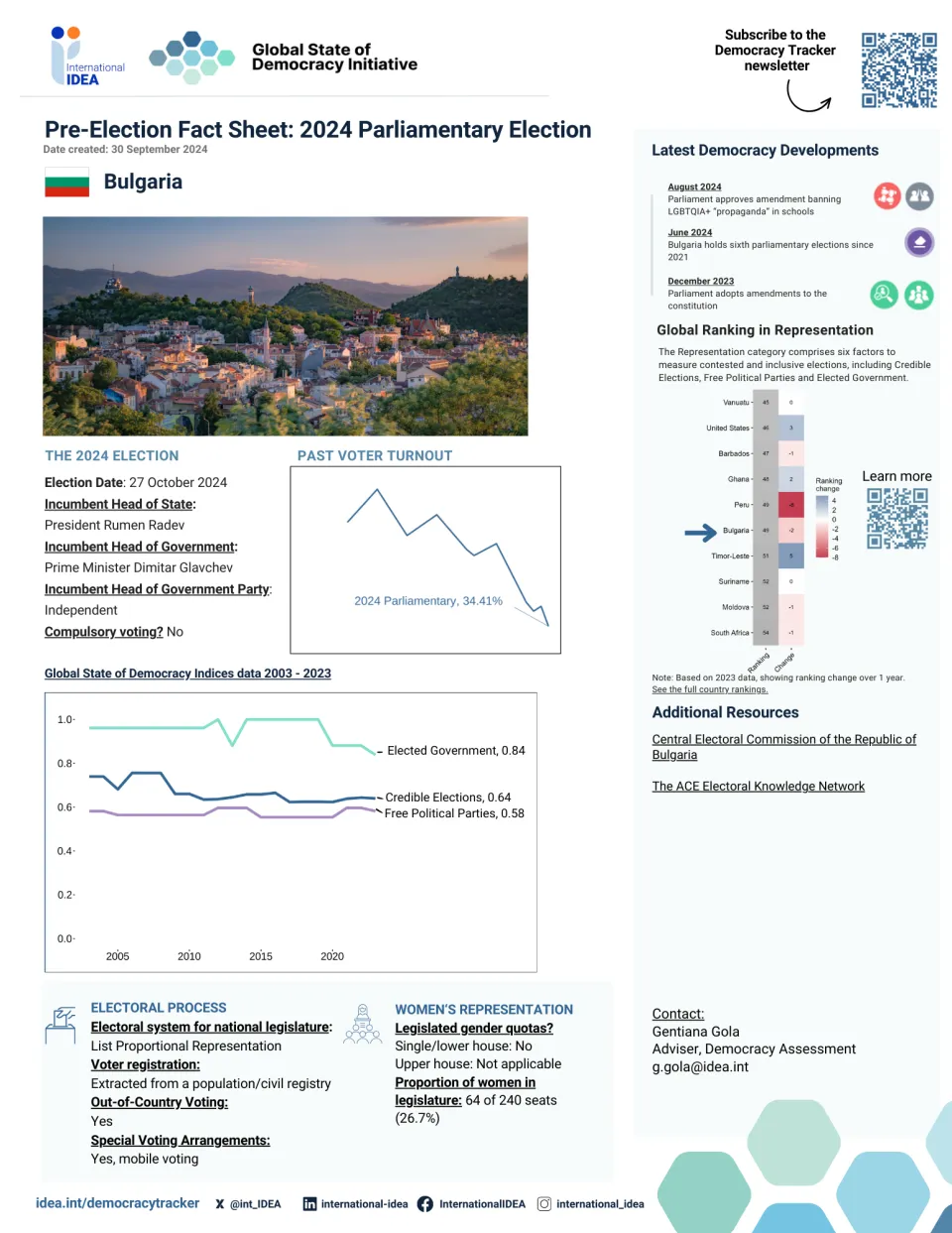
Looking ahead, improvements in Freedom of Movement are expected following Bulgaria’s full inclusion in the Schengen Area. Following Bulgaria’s period of political turmoil, it will be important to monitor Effective Parliament and Electoral Participation, as well as changes to its long-standing challenges in Absence of Corruption and the Rule of Law. Credible Elections should also be watched, given that—as a consequence of voting irregularities—Bulgaria’s most recent election resulted in a recount and reallocation of parliamentary seats.
Last Updated: June 2025
https://www.idea.int/democracytracker/
December 2025
Largest anti-corruption protests in decades trigger PM resignation
More than 100,000 people rallied in Sofia on 10 December, demanding the government’s resignation after weeks of youth‑led protests against corruption and political impunity. The so called ‘Gen Z protests’ grew into Bulgaria’s largest in decades, powered by strong youth participation and social‑media mobilization. The protests began in late November in response to the 2026 draft budget, which proposed higher capital income taxes and social security contributions and was widely seen as an attempt to conceal deeper corruption. Even after the government withdrew the proposal on 2 December, it had already become a symbol of broader governance failures. On 11 December, the protests led to the resignation of Prime Minister Rosen Zhelyazkov.
Sources: Euronews, Radio Free Europe (1), Radio Free Europe (2), Deutsche Welle (1), Deutsche Welle (2), BTV



October 2025
Judicial deadlock leaves country without legitimate Prosecutor General
An institutional deadlock and dysfunction in judicial governance has left Bulgaria without a legitimate Prosecutor General since October. The country also lacks a functioning mechanism to appoint one and no immediate path to resolve the impasse. The Supreme Judicial Council (SJC)--whose mandate expired in 2022 following repeated snap elections that prevented parliament from electing new members--remains in office. However, amendments to the Judicial System Act adopted in January 2025 barred an expired mandate SJC from electing a Prosecutor General and introduced a six month limit on interim appointments. In line with these changes, on 2 October the Supreme Court of Cassation ruled that the mandate of Acting Prosecutor General Borislav Sarafov had expired on 21 July and that he lacks legal authority. With the SJC unable to appoint a successor, Sarafov continues to serve de facto despite the Court’s ruling.
Sources: Novinite, BTA, Radio Free Europe, BNT, Vefassungsblog, Supreme Court of Cassation, Supreme Judicial Council (1), Supreme Judicial Council (2), The Sofia Globe

March 2025
Seat counts in Parliament change after Constitutional Court ordered recount

On 13 March, following a legal challenge to the October election that led to a recount and a four-month investigation, the Constitutional Court ruled that the election of 17 MPs from different parties was illegal due to voting irregularities, including forged votes. The ruling granted the pro-Russian Velichie party 10 seats, which had initially fallen short of the four per cent threshold to enter Parliament (by 20 votes). The leading GERB-UDF group lost three seats, dropping from 69 to 66. This has left the ruling coalition, which took office in January 2025, with a narrow majority of 121 seats (down from 126) in the 240-seat legislature. Women secured 51 seats (21.3 per cent), a decrease from the 64 seats (26.7 per cent) held in the previous mandate. The Court stated that earlier sabotage by the prosecutor’s office had delayed its decision. This sparked protests over election fraud, fueled by allegations that the Sofia Prosecution had hidden evidence of fraud and, together with the Central Election Commission, tried to prevent the recount.
Sources: Svobodna Evropa, Central Election Commission, Euronews, Balkan Insight, Sofia Globe, Inter-Parliamentary Union, Bulgaria’s Constitutional Court, International IDEA
January 2025
Rights groups allege police blocked the rescue of teenage migrants
Two rights organizations released a report containing evidence—including photos, geolocation data, and testimonies—alleging that the authorities ignored emergency calls and obstructed efforts to rescue three Egyptian teenage boys who later died of hypothermia near the Bulgarian-Turkish border. Civil society group members claim that, despite providing the GPS coordinates of the teenagers, authorities failed to assist them. Activists were reportedly blocked by border police from reaching the location and were only able to access the area the following day when they discovered the bodies at the same coordinates they had previously shared. The border police denied the allegations, stating that the alerts contained incorrect information and that the bodies were found in different locations than those initially reported. Bulgaria has faced scrutiny over violence and pushbacks before, but this case shows the failure to provide aid and obstruction of rescue efforts, despite rights groups' involvement.
Sources: No Name Kitchen & Collettivo Rotte Balcaniche, The Guardian, Al Jazeera, Human Rights Watch
See all event reports for this country
Global ranking per category of democratic performance in 2025

Basic Information

Human Rights Treaties
 State party
 Signatory
 No action
Performance by category over the last 6 months
 Representation
 Rights
 Rule of law
 Participation

Election factsheets
Global State of Democracy Indices
Hover over the trend lines to see the exact data points across the years


Factors of Democratic Performance Over Time
Use the slider below to see how democratic performance has changed over time