

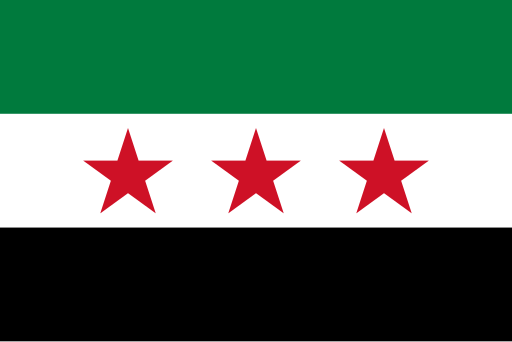
Syrian Arab Republic
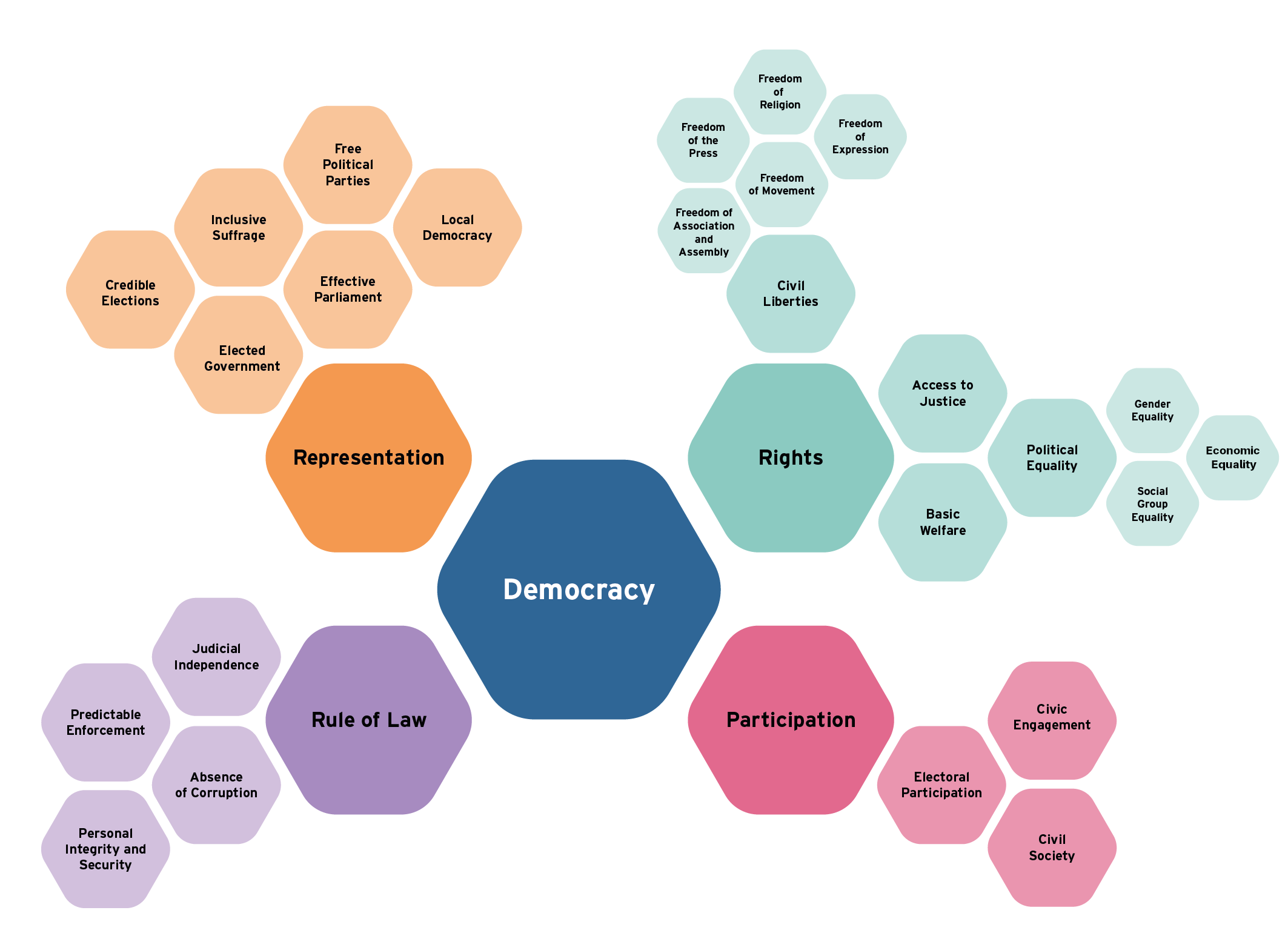
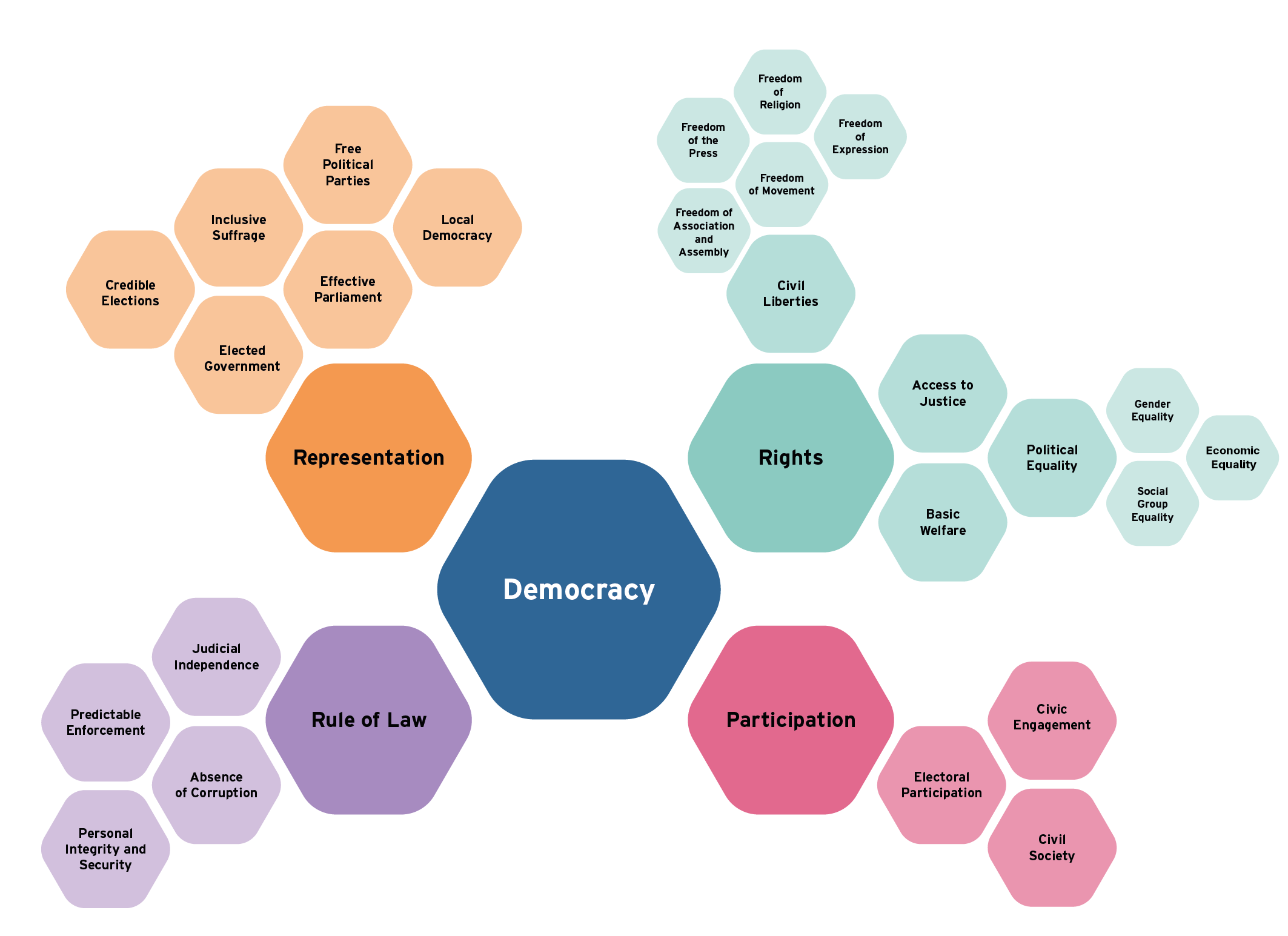
The Syrian Arab Republic exhibits low-range performance across all four categories of the Global State of Democracy (GSoD) conceptual framework. It falls among the world’s bottom 25 per cent of countries in almost all factors. Compared to five years prior, it has experienced declines in Economic Equality. Syria is undergoing a political transition after President Bashar al-Assad was ousted by a coalition of Islamist militants in December 2024, marking a turning point in the civil war that began with the 2011 popular uprisings. Years of conflict, infrastructure damage, and international sanctions severely strained the economy. Sanctions are now gradually being eased to facilitate recovery.
The GSoD Indices data only reflect events inside government-controlled territory.

Syria was under Ottoman rule for over 400 years before falling under French control after World War I and gaining independence in 1946. Its diverse population is predominantly Sunni Muslim, followed by Alawites, Druze, Ismailis, and Christians. Post-independence Syria saw frequent coups, culminating in the 1963 coup by the Arab nationalist and socialist Baath Party. In 1970, Hafez al-Assad seized power, beginning a decades-long family rule. Upon his death in 2000, his son Bashar inherited a regime marked by centralized authority, sectarian co-optation favoring Alawites, and violent repression. In 2011, protests against the regime escalated into a civil war that devastated Syria and displaced about 13 million people.
Following Assad’s fall, Ahmed al-Sharaa, former leader of the Islamist armed group Hay’at Tahrir al-Sham (HTS), was appointed president in January 2025 by a conference of armed groups. In March, he signed a constitutional declaration establishing a five year transitional period, which is to end in elections and involve the adoption of a new constitution. The country remains territorially fragmented due to the civil war, with the transitional government lacking control over large areas amid internal divisions and foreign military presence. In the northeast, the Kurdish-led Syrian Democratic Forces (SDF) have agreed to integrate into national institutions, but obstacles persist. Along the coast, Assad-era loyalists retain influence, and Russia operates military bases. Turkey holds a strong military presence in the north, while Israel has expanded its occupation in the southwest and seeks to gain sway over Druze communities.
Sectarian tensions hinder national cohesion. Assad loyalist armed groups in Alawite-majority coastal regions have resisted the transitional government’s authority, and reprisals, including massacres of Alawite civilians, raise fears of escalating cycles of violence. Social divisions over the role of religion in public life and ethnic and national identity persist. With an entire generation raised amid war and lacking education or jobs, Syria faces major challenges rebuilding human capital and creating opportunities. Since Assad’s fall, 1.2 million people have returned, while 16.5 million still need humanitarian aid.
In Syria, women's political representation is limited, with only one woman among the transitional government’s 23 ministers. Gender equality is also undermined by laws discriminating against women in citizenship, personal status, and inheritance. LGBTQIA+ individuals face discrimination and violence and same-sex relations are criminalized.
Looking ahead, Rule of Law will be crucial to monitor, particularly amid ongoing cases of sectarian violence impacting Personal Integrity and Security. Access to Justice also demands attention, especially regarding how existing and emerging transitional justice mechanisms may address past crimes. Basic Welfare should be watched for the potential impact of sanctions relief on economic recovery and living conditions.
Last Updated: June 2025
https://www.idea.int/democracytracker/
October 2026
New transitional parliament holds inaugural session
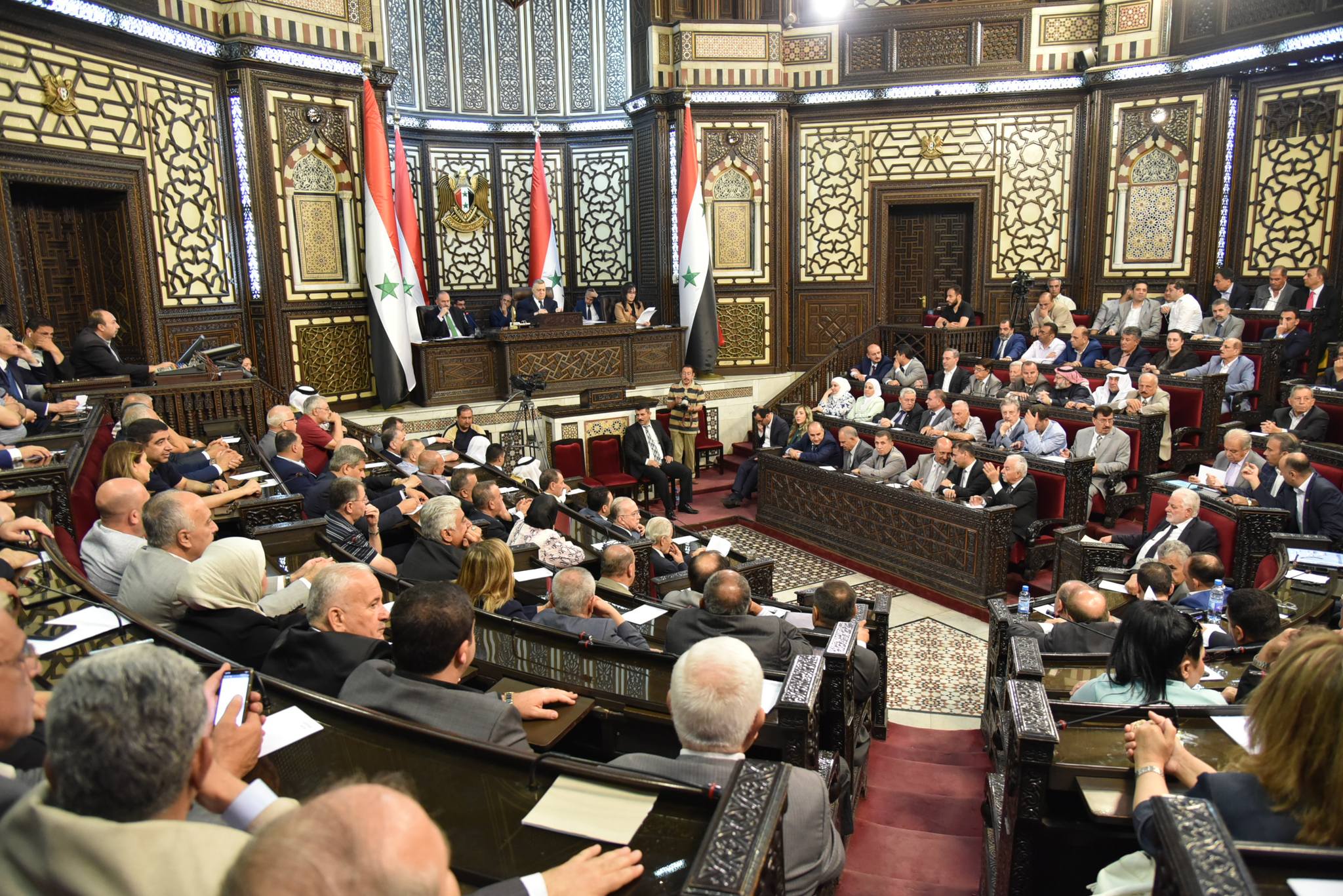
On 12 July, Syria's newly formed 210-seat parliament, the People's Assembly, held its inaugural session in Damascus. The session elected Abdul Hamid al-Awak as Speaker of parliament with 99 votes. Two-thirds of the assembly's members were indirectly elected through regional electoral colleges, while President Al-Sharaa directly appointed the remaining 70 members, named just days earlier on 1 July. Under the interim constitutional declaration adopted in 2025, the Parliament is now tasked with drafting Syria's permanent constitution and laying the groundwork for future elections over a 30-month term. The session marks the re-establishment of a national legislature, following the dissolution of the Assad-era People's Assembly after his government was overthrown in December 2024.
Sources: Reuters (1), Reuters (2), International IDEA (1), International IDEA (2)



January 2026
Presidential decree grants Kurds full citizenship and language rights
On 16 January, President Ahmed al-Sharaa issued a decree granting citizenship to Syrian Kurds, recognizing Kurdish as a national language, and designating Nowruz an official holiday in Syria. The decree was issued as a gesture of appeasement following clashes between the transitional government and the Kurdish-led Syrian Democratic Forces in late 2025. For decades, Syrian Kurds have faced political marginalization and discrimination, making this the first formal recognition of their citizenship, cultural and linguistic rights in contemporary Syria.
Sources: Syrian Arab News Agency, Enab Baladi

Kurdish-led SDF reach ceasefire and integration agreement with transitional government

On 30 January, the Syrian government and the Kurdish-led Syrian Democratic Forces (SDF) reached a ceasefire and integration agreement after weeks of fighting. The deal provides for the incorporation of SDF military and civilian institutions into the Syrian state, the deployment of government forces in Hasakah and Qamishli, and guarantees for Kurdish cultural, educational and civil rights. If implemented, it could support Syria's democratic transition by strengthening state institutions while protecting Kurdish minority rights.
Update: On 26 August, the integration process reached a significant milestone when SDF commander Mazloum Abdi announced the dissolution of the SDF as an independent military force following its merger into the Syrian armed forces and state institutions. The move was presented as part of a broader effort to unify military command structures and restore state authority across the country, while reaffirming commitments to Kurdish cultural, linguistic and educational rights.
Sources: Al Jazeera (1), Al Jazeera (2)


November 2025
Court opens first major trial over March coastal mass killings
On 18 November, the Aleppo Court of Justice opened the first criminal trial concerning the mass killings in Syria’s Alawite-majority coastal regions in March 2025, in which over 1,400 people were killed (many of them civilians). The case stems from a special fact-finding committee appointed by the transitional government, which referred 563 suspects for investigation. The defendants include former regime loyalists, accused of attacking the transitional government’s security forces, as well as members of these security forces, who are charged with killing civilians. The trial marks the first instance since the fall of Assad in December 2024 in which suspected perpetrators of mass violence are being prosecuted.
Sources: Enab Baladi (1), Enab Baladi (2), Syria Direct, International IDEA
October 2025
Syria holds indirect parliamentary elections for transitional period

On 5 October, Syria held indirect parliamentary elections to fill 119 of the 210 seats in the new People’s Assembly, the country’s unicameral parliament, which will serve a 30-month transitional term. Under a temporary electoral law issued in August, two-thirds of the seats were to be chosen through electoral colleges, while the remaining third would be appointed by President Al-Sharaa. Approximately 6,000 electoral-college members (selected via district subcommittees) voted for 1,578 pre-listed candidates, 14 per cent of whom were women. Voting did not take place in the governorates of Sweida, Raqqa, and Al-Hasakah due to insecurity and lack of full government control. Only six women were elected among the 119 seats, suggesting that Al-Sharaa may need to appoint additional women to meet the 20 per cent quota established under the temporary electoral law. Al-Sharaa has not yet made his 70 appointments, and the 21 seats in governorates where elections were postponed remain vacant.
Update: On 17 March 2026, follow-up parliamentary elections were held in Raqqa, and on 24 May, in Al-Hasakah, resulting in the election of 13 additional MPs. After President Ahmad al-Sharaa appointed 70 members, among them 15 women, the newly constituted 206-seat People's Assembly, comprising a total of 22 women (10.7 percent), convened its inaugural session on 12 July. Four seats remained vacant: three allocated to Sweida and one following the death of an elected member.
Sources: Syrian Arab News Agency (1), Al Jazeera, The New Arab, Arab Reform Initiative, Enab Baladi, Associated Press, Syrian Arab News Agency (2), Al Monitor, Reuters, IPU Parline
See all event reports for this country
Global ranking per category of democratic performance in 2025

Basic Information

Human Rights Treaties
 State party
 Signatory
 No action
Performance by category over the last 6 months
Representation
 Rights
Rule of law
Rights
Rule of law
 Participation
Global State of Democracy Indices
Hover over the trend lines to see the exact data points across the years


Factors of Democratic Performance Over Time
Use the slider below to see how democratic performance has changed over time