

Iran
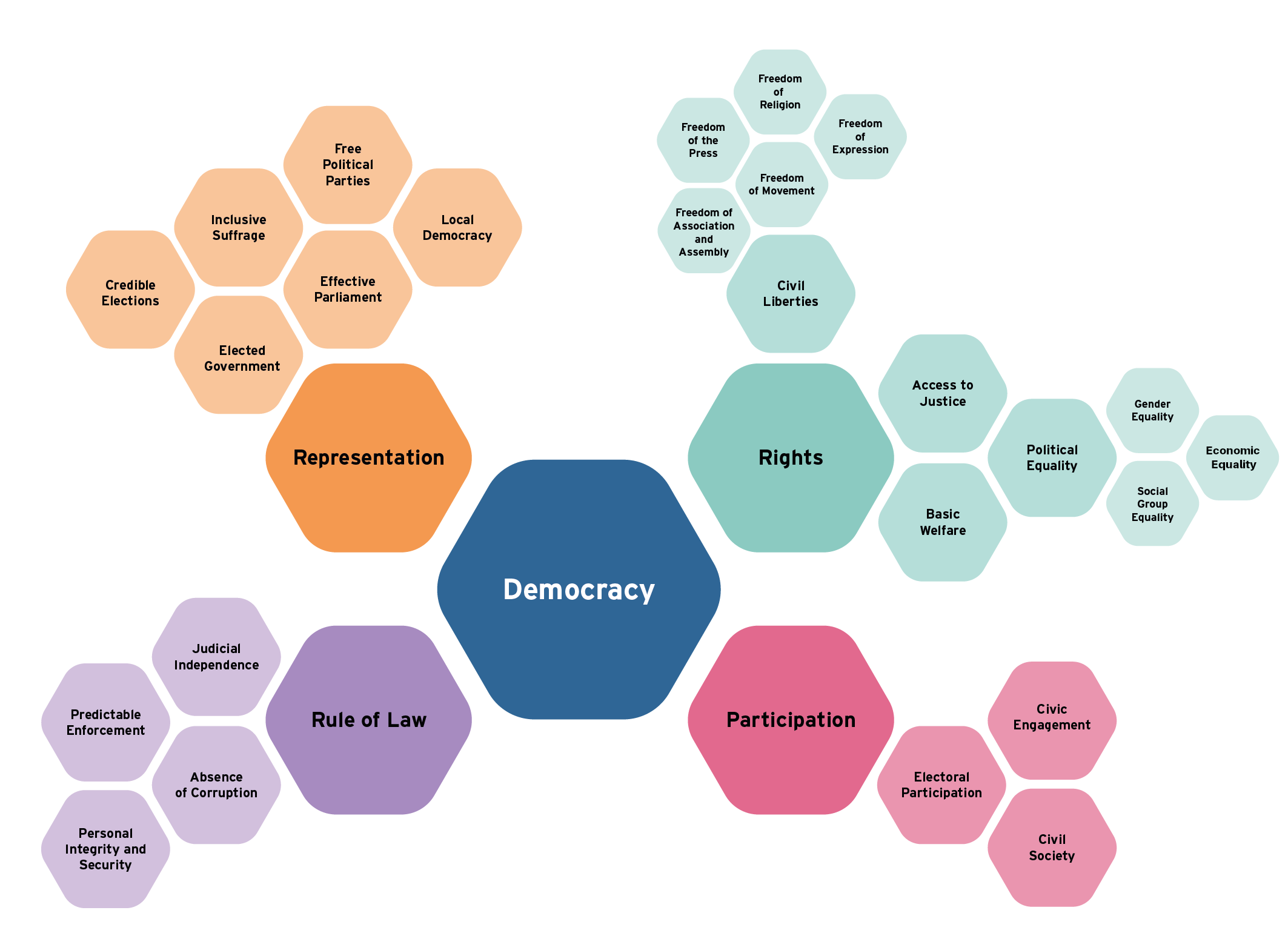
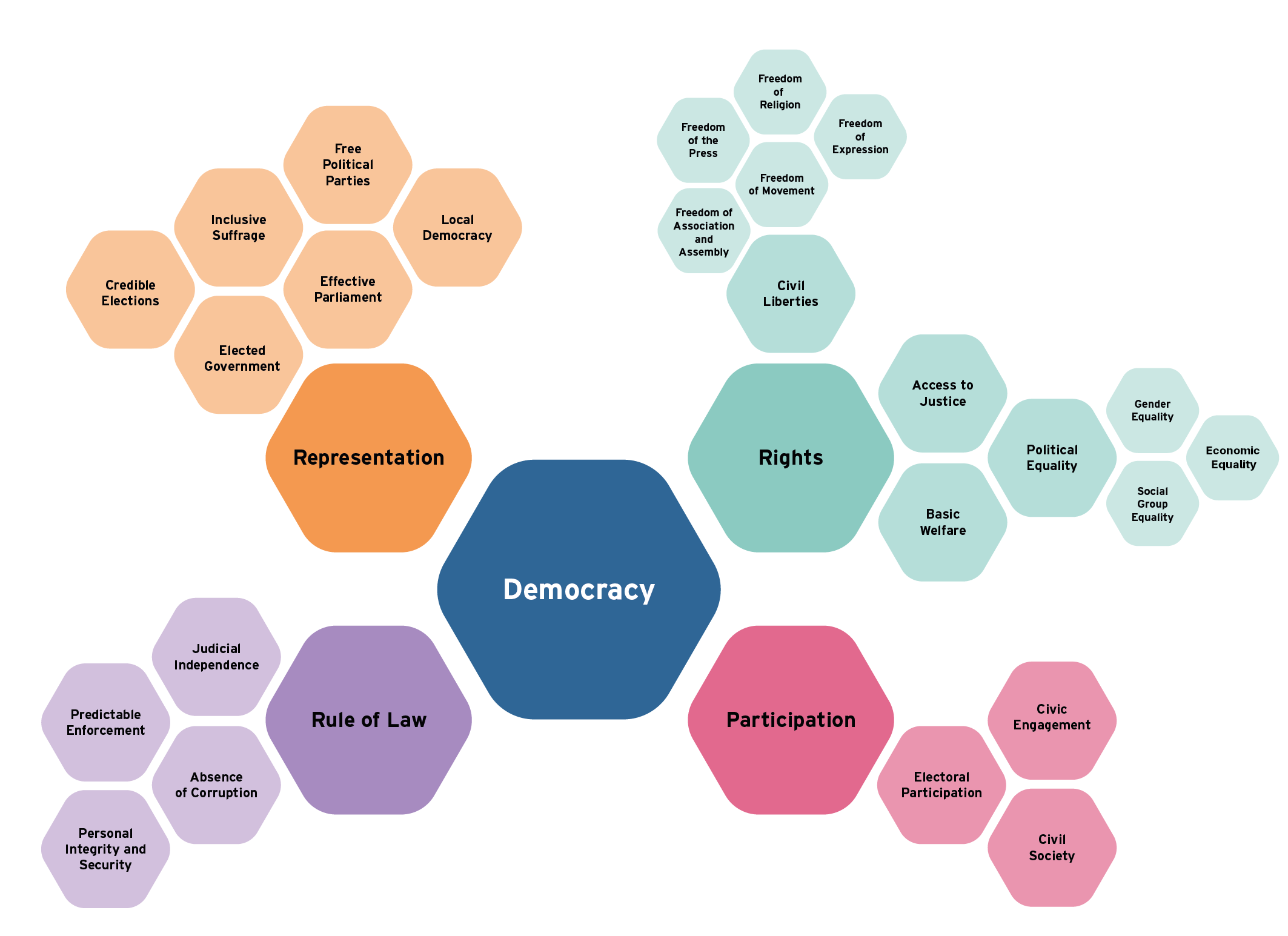
The Islamic Republic of Iran performs in the low range across all four categories of the Global State of Democracy framework. It ranks among the bottom 25 per cent of countries globally in most factors of democratic performance. Compared to five years prior, its performance has remained stable, although with declines in Elected Government. Economically, Iran is an upper-middle income country and a major oil and natural gas producer, with key hydrocarbon and agriculture sectors, as well as services. Its economy has stagnated due to Western sanctions and oil price volatility.
Iran was never formally colonized but experienced foreign influence from Britain and Russia in the 19th and 20th centuries. The 1906 Constitutional Revolution introduced parliamentary rule and limited royal powers, but a 1953 coup reversed those gains. The coup was backed by the U.S. and U.K., partly due to the regime’s plans to nationalize the oil industry, and it reinstated authoritarian rule under the Shah. Growing opposition to the Shah’s rule culminated in the 1979 Revolution, which replaced the monarchy with an Islamic Republic. Since then, Iran’s political culture has been shaped by ardent debates between tradition-oriented, conservative hardliners and modernist reformers, reflecting divisions over religion, democracy, freedoms, rights, and the country’s role on the global stage.
Iran’s political and social landscape is marked by deepening divisions between a ruling elite committed to preserving the Islamic Republic's ideological foundations and a diverse, modern population increasingly demanding reform. The legal system is based on a monolithic interpretation of Islamic law, centered on the principle of wilayat al-faqih (Guardianship of the Jurist), which vests ultimate authority in the Supreme Leader —a senior cleric who holds the highest political and religious power and to whom all branches of government, including the executive headed by the President, are ultimately subordinate. In 2024, Masoud Pezeshkian became the country’s first reformist President in nearly two decades, yet his plans remain constrained by this system and resistance from conservative power centers.
As a Shia Muslim regional power, Iran is engaged in strategic rivalry with Sunni Muslim leader Saudi Arabia, historically leveraging the Sunni-Shia divide to advance their interests and fuel sectarian violence across the region. Its anti-West stance also shapes domestic discourse, often framing foreign influence concerns in ways that justify repression and curb civil liberties. The urban middle class generally favors liberalization, while less densely populated rural regions tend to be more conservative.
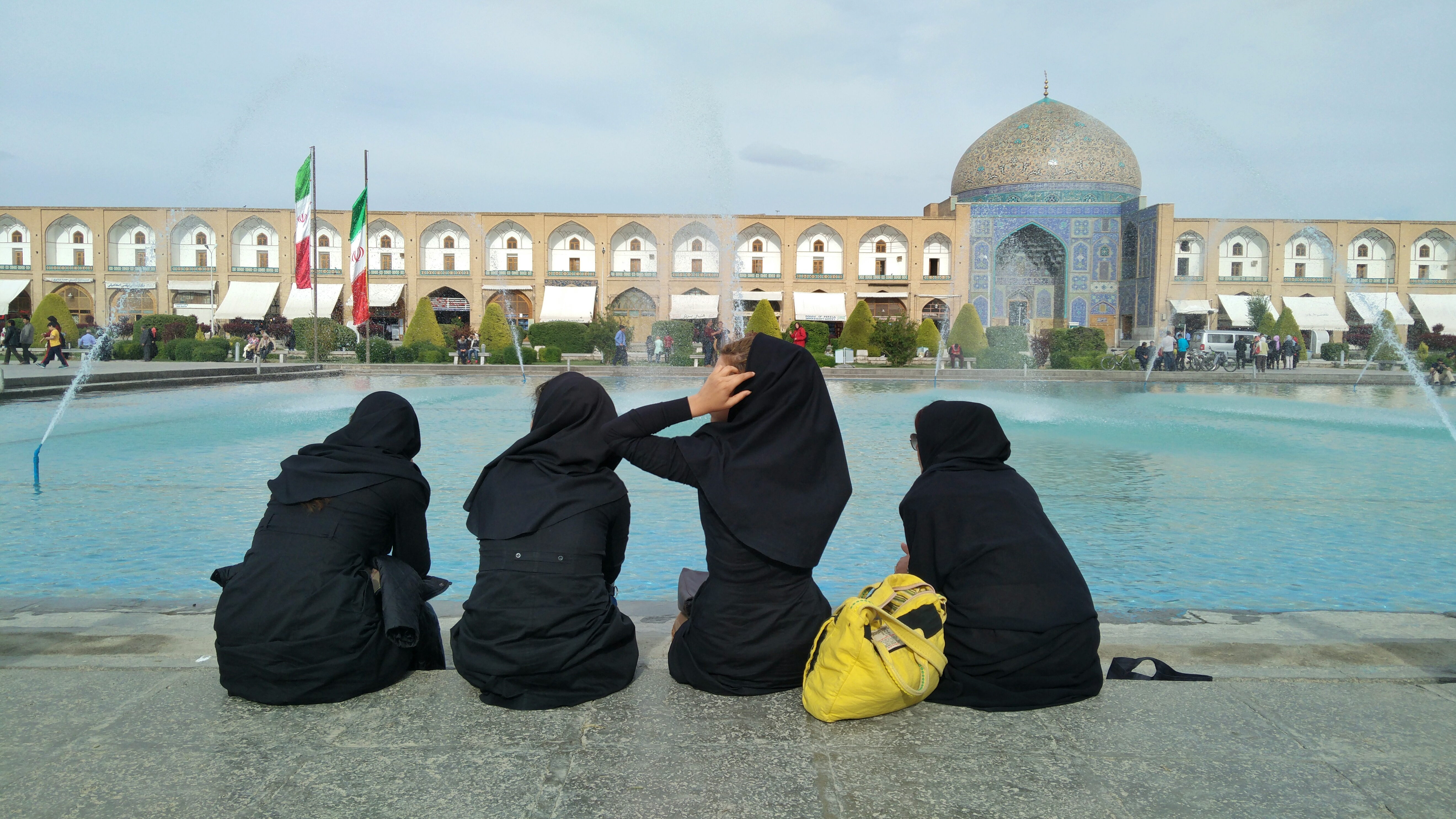
Strict social controls include mandatory hijab laws for women and severe punishments for LGBTQIA+ individuals, including the death penalty. Widespread human rights violations, including internet censorship, torture, and execution, have inspired recurring protests demanding greater freedoms. Religious minorities, particularly the Baha’is, and ethnic minorities (making up roughly 40 per cent of the population) also face repression. Economic challenges—including corruption, state domination of the economy, and high unemployment— fuel ongoing popular discontent and instability.
Looking ahead, Rights and Rule of law will be important areas to watch, particularly in relation to how Iran manages future protests amid a mitigated, though ongoing, legitimacy crisis. Political stability remains uncertain, with Supreme Leader Ali Khamenei’s advanced age raising questions about leadership transition. At the same time, evolving public frustration is reshaping demands for reform, making Representation and Participation key areas to monitor as well.
Last Updated: June 2025
https://www.idea.int/democracytracker/
August 2026
Parliament advances bill criminalizing contact with ‘hostile’ foreign media

On 16 August, Parliament approved the general principles of a bill that would criminalize giving interviews to, or otherwise communicating with, media outlets deemed hostile to the Islamic Republic. The category explicitly includes United States and Israeli outlets and those funded by either country. Violations would carry six months to two years in prison. The bill would also require people to notify the Intelligence Ministry before giving interviews to other foreign media, and to obtain written Foreign Ministry permission before contacting foreign embassies and organizations. The bill, which would further tighten an already highly restrictive media environment, has not yet become law and still requires further parliamentary and Guardian Council approval.
Sources: Reuters, International Federation of Journalists, Organized Crime and Corruption Reporting Project



February 2026
US and Israel launch major attack against Iran, sparking regional crisis

On 28 February, the United States and Israel launched a large-scale air campaign against Iran, targeting military, nuclear and leadership sites. The strikes killed Supreme Leader Ali Khamenei and members of his family, as well as several senior military and government officials, significantly escalating regional tensions. Iran responded with missile and drone attacks against Israel and U.S. military facilities across the region, including in Qatar, Bahrain, Kuwait and the United Arab Emirates.
Update: Following the initial strikes, the conflict escalated into a prolonged regional confrontation. By mid-March, fighting had caused widespread humanitarian and economic disruption in Iran, including civilian casualties, internal displacement, infrastructure damage, and disruptions to essential services. Although a temporary ceasefire was reached in April, fighting later resumed. The Strait of Hormuz has emerged as a key flashpoint of the conflict, with shipping disruptions significantly affecting global energy supplies.
Sources: The Times of Israel, Reuters, Associated Press (1), The UN Refugee Agency, Associated Press (2)


Government legally allows women to drive motorcycles
On 3 February, the government approved a resolution allowing women to legally obtain motorcycle licences and ride motorcycles, representing a limited expansion of women’s rights and freedom of movement. Although women had already ridden motorcycles in practice, the traffic law did not explicitly provide for women to obtain licences, as the relevant provision referred specifically to issuing motorcycle licenses to ‘men’ and had been used by authorities to deny licenses to women.
Sources: Al Monitor

December 2025
Economic crisis sparks nationwide anti-government protests
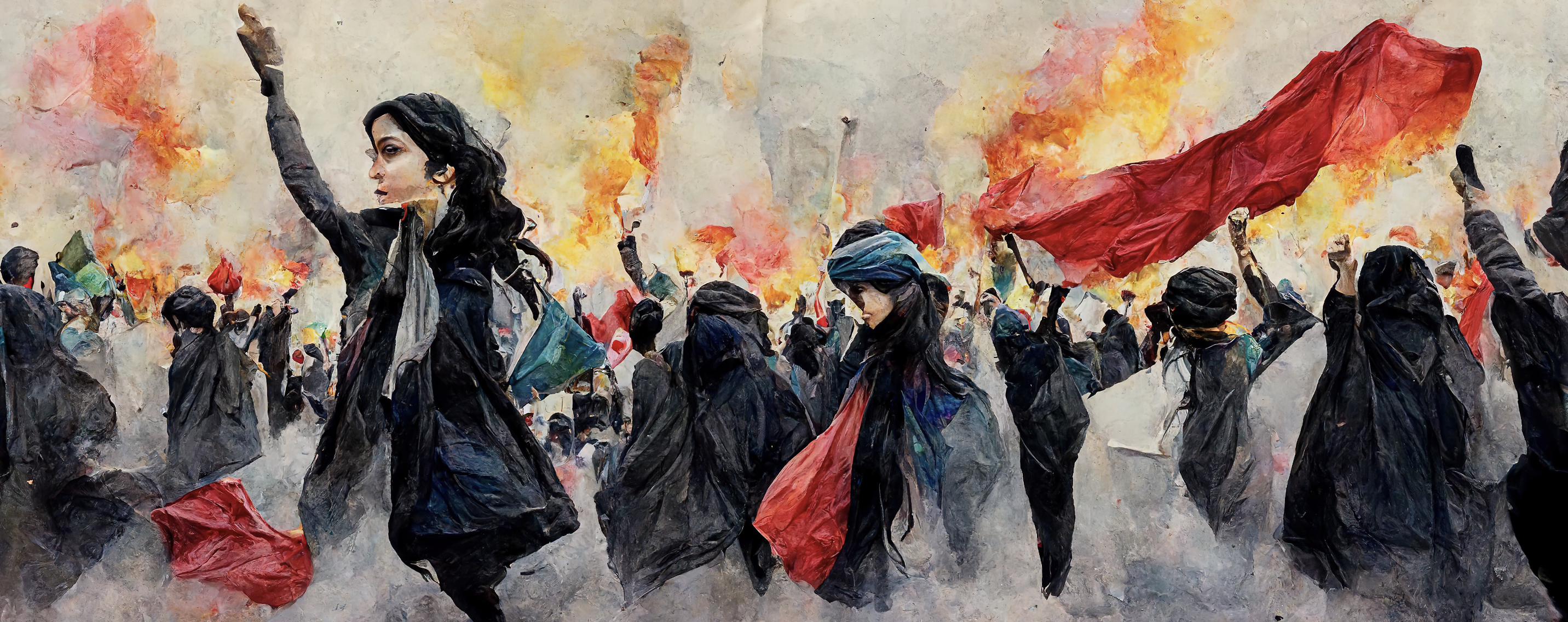
On 28 December, a wave of protests erupted across Iran, marking one of the most serious episodes of unrest since the Woman, Life, Freedom protests in 2022-2023. The demonstrations began in Tehran’s Grand Bazaar, where shopkeepers closed their businesses in protest against soaring inflation and the collapse of the national currency. Although initially driven by economic grievances, the protests rapidly started to spread across the country, evolving into broader anti-government demonstrations with the participation of large sectors society, including students, workers and retirees. In the final days of the month, security forces responded using tear gas, beatings and carrying out mass arrests. The protests intensified as they continued into January 2026, with at least 6,000 people killed.
Update: On 8 January, Iranian authorities imposed a near-total nationwide internet blackout as anti-government protests continued to spread across the country. Human rights organizations reported that the blackout coincided with an intensification of the security crackdown.
Sources: Associated Press (1), Middle East Eye, The Guardian, Iran International, International IDEA, Associated Press (2), Human Rights Watch


June 2025
Israeli attacks on Iran kill at least 935 people
Between 13 and 24 June, Israel launched a major air offensive against Iran, killing at least 935 people, including women and children, and injuring thousands of others. The airstrikes, which Israeli authorities claimed aimed to target nuclear facilities, hit critical infrastructure, including seven medical centres, as well as water and energy facilities, causing blackouts and fuel shortages, and limiting access to medical care. A 23 June strike on Evin Prison killed at least 70 people, including inmates, staff and civilians. The attacks caused mass displacement, with hundreds of thousands fleeing cities like Tehran. The United States also launched a strike on a nuclear facility on 22 June. The United Nations condemned these actions as serious violations of international law. A ceasefire between Israel and Iran was reached on 24 June.
*Since the impact of these events are felt primarily in Iran, they are coded in the entries for the latter. While they are not coded for Israel, it is Israeli action that causes the effects on democracy in Iran.
Sources: Associated Press, Arab News, The New Arab, Middle East Eye, United Nations (1), United Nations (2)
See all event reports for this country
Global ranking per category of democratic performance in 2025

Basic Information

Human Rights Treaties
 State party
 Signatory
 No action
Performance by category over the last 6 months


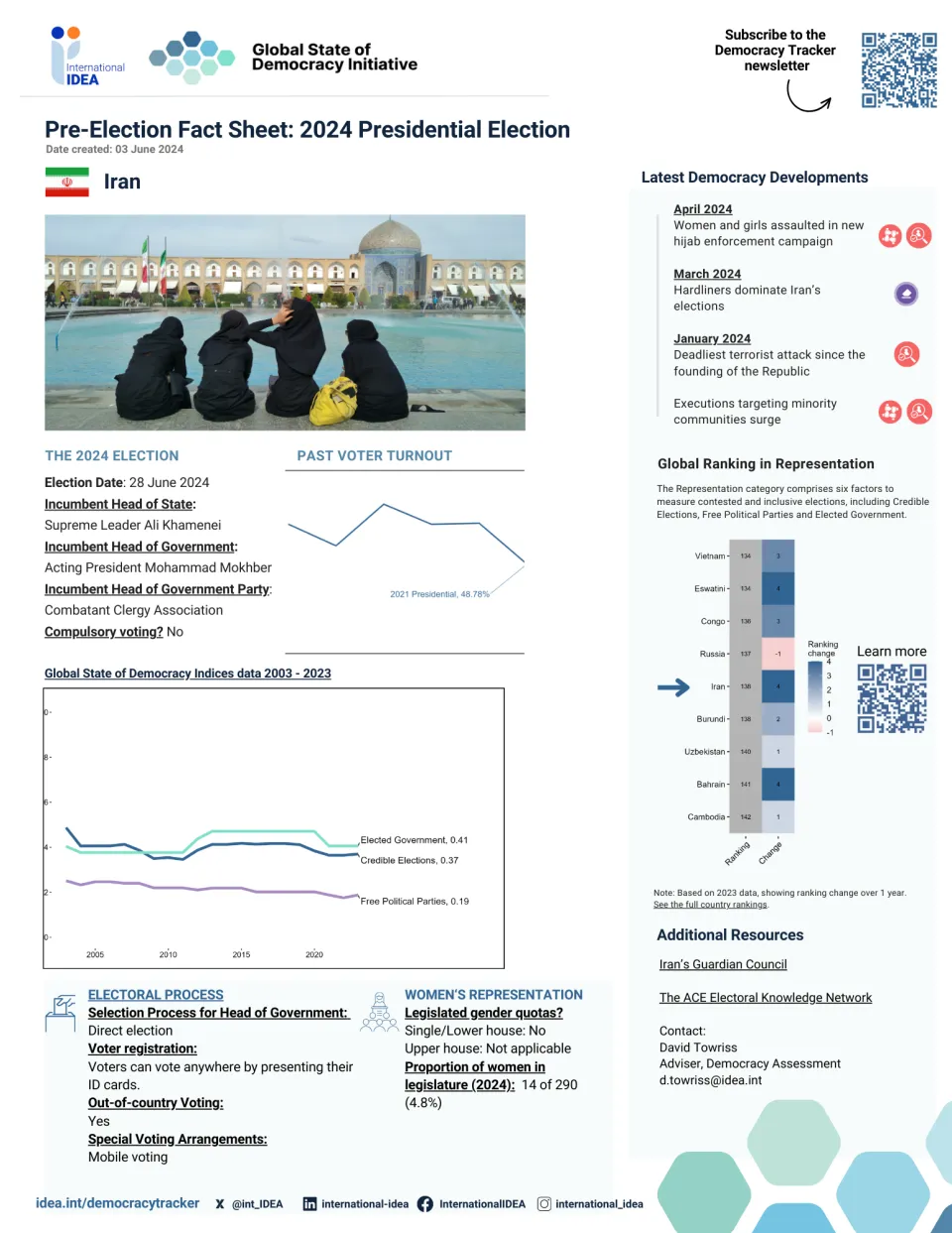
Election factsheets
Global State of Democracy Indices
Hover over the trend lines to see the exact data points across the years


Factors of Democratic Performance Over Time
Use the slider below to see how democratic performance has changed over time