

Kazakhstan
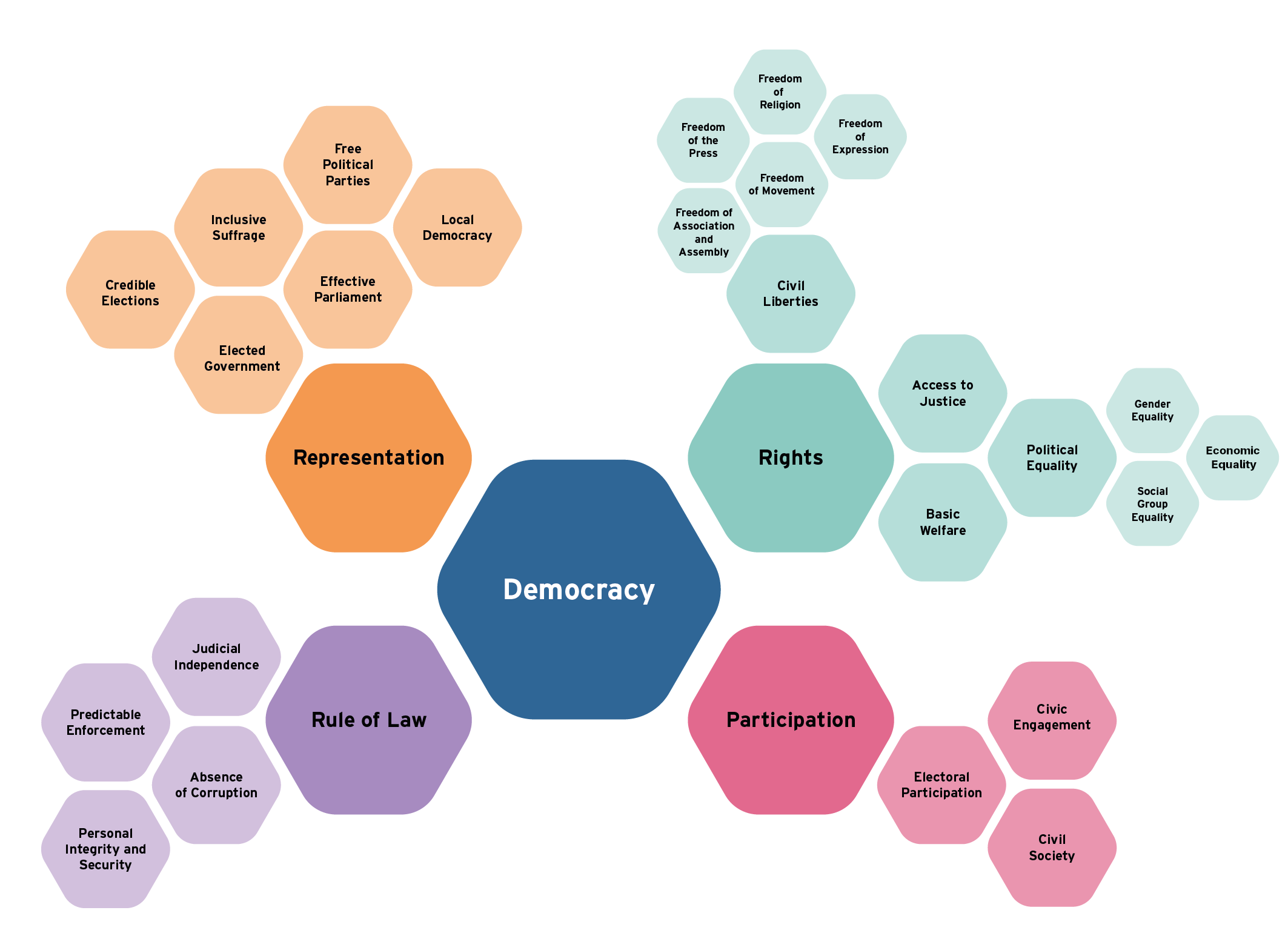
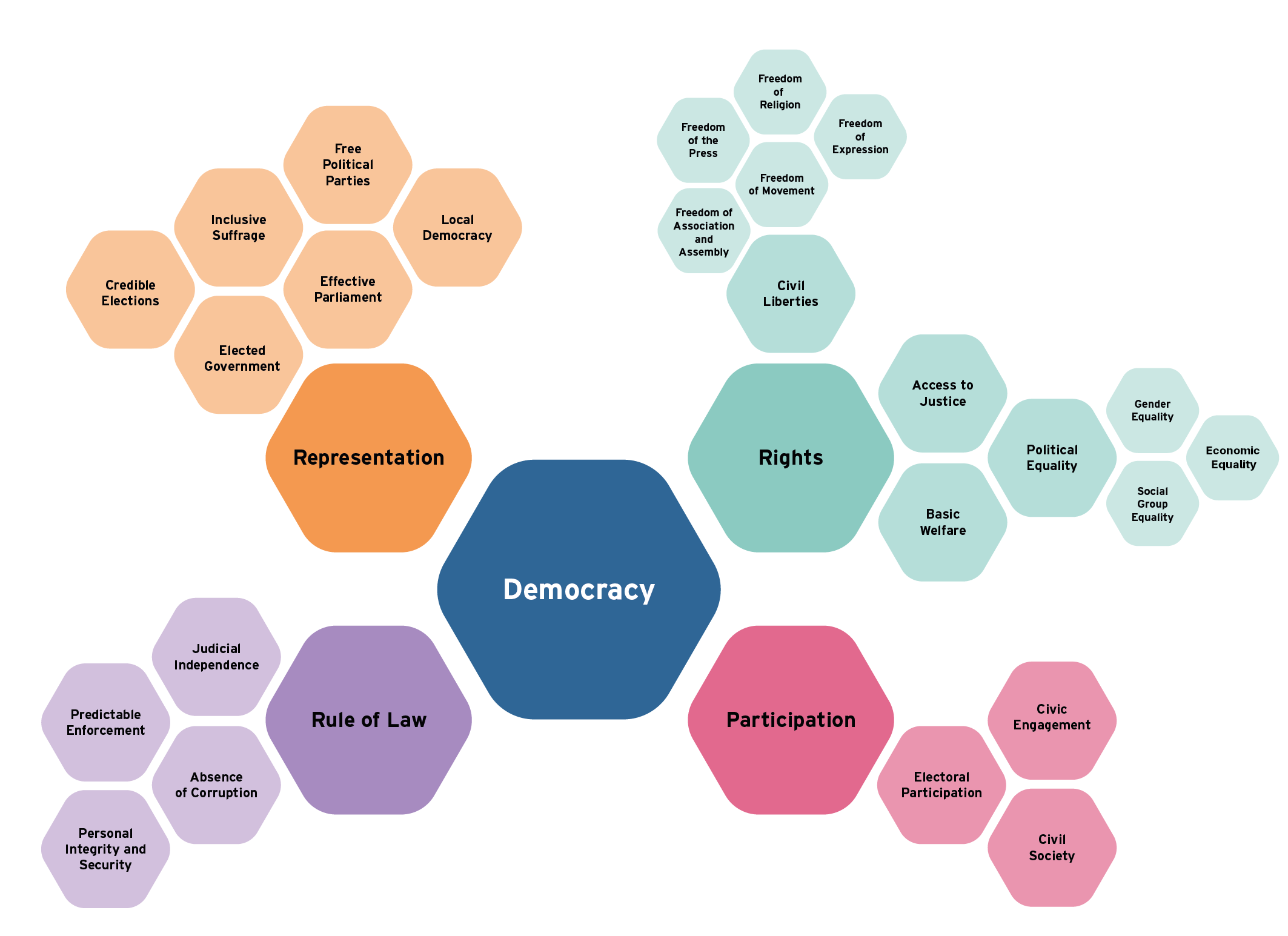
Kazakhstan exhibits low-range performance in all four categories of the Global State of Democracy framework. It is among the bottom 25 per cent of countries in the world in nine factors, including Free Political Parties and Judicial Independence. Over the last five years, it has experienced a significant decline in Access to Justice. An upper middle income country, the Kazakh economy is heavily reliant on the export of gas, oil, and other hydrocarbon products.
For centuries part of a nomadic empire populated by Turkic tribes, the area that is now Kazakhstan came under Russian Tsarist control in the early 19th century, and large scale Russian immigration and colonization began in earnest in the 1890s. After gaining independence in 1991, the political and economic landscape was long dominated by former President Nursultan Nazarbayev and his extended family and allies as well as by his “economics first, politics later” approach. Nazarbayev’s rule was marked by increasing personalization until he stepped down in 2019 in favor of current President Kasym-Jomart Tokayev. Tokayev has since marginalized Nazarbayev, whose “the father of the nation” swiftly diminished and many of whose allies and relatives have been imprisoned or removed from positions of authority.
Political cleavages in Kazakhstan are mostly centered around financial-industrial groups, and the country’s closed stage-managed political environment means that much of this contestation remains behind the scenes. Ethnic Russians have long been the country’s largest minority, but have declined to 15 per cent of the population from a height of 42 per cent in the 1970s. The ethnic Russians who remain are increasingly bilingual and integrated into the ethnic Kazakh-dominated culture. While it has made more progress on gender equality than its Central Asian neighbors, significant gender gaps in government and in the workplace persist and gender-based violence remains widespread. The country is also highly unequal and plagued by grand corruption, with one 2019 study finding that 50 per cent of the country’s wealth was controlled by only 162 individuals.
Kazakhstan’s kleptocracy-fueled inequality has laid the ground for three mass protest movements triggered by social and economic grievances in 2011, 2016, and 2022. While the 2016 protests ended with an accommodating shift in government land policy, the 2011 and 2022 protests – both of which began in the western oil-producing town of Zhanaozen – were put down with deadly force. In both cases, the government denied any domestic roots for the protests and placed the blame on foreign provocateurs.
Following these events, President Tokayev oversaw a constitutional referendum ostensibly on decentralization and political reforms, but which in practice appear to be more focused on cementing his own power and permanently sidelining the Nazarbayev clan.
Looking ahead, it will be important to watch the degree to which President Tokayev implements top-down democratic reforms, maintains the status quo, or pursues an even stricter authoritarian line. New legal restrictions placed on the media in late 2024 and the high-profile prosecution of an online satirist could indicate further pressure on Freedom of the Media and Freedom of Expression in the next two to three years. It will also be important to watch how the government positions itself with regard to Russia, given the history of close ties. Since the war in Ukraine began, President Tokayev has carefully distanced his regime from Moscow and adopted a more pragmatic balancing position between Kazakhstan’s former colonial master and China.
Last Updated: June 2025
https://www.idea.int/democracytracker/
September 2026
New parliamentary rules restrict media access to deputies
Following the inauguration of Kazakhstan's new unicameral Kurultai, authorities introduced rules restricting journalists' access to deputies and government officials inside parliament. Journalists are now only allowed to access parliamentary deputies and government officials inside the parliament building during scheduled briefings in the press center. Previously, accredited journalists were allowed to talk freely to deputies in the halls and corridors. Furthermore, questions are to be limited to the topic of the briefing. Domestic media-rights organizations and international press-freedom groups criticized the measures, arguing that they reduce journalistic scrutiny of elected representatives and limit public accountability, and called on the government of Kazakhstan to withdraw the new rules.
Sources: Committee to Protect Journalists, KazTag, Ulys Media



August 2026
First elections to the unicameral parliament consolidate pro-presidential dominance

On 23 August 2026, Kazakhstan held elections for the newly established 145-seat unicameral parliament (Kurultai), following constitutional reforms approved in a March 2026 referendum that replaced the country's bicameral parliament. The election marked the first use of a nationwide proportional representation system and the creation of a new legislative body. Five parties surpassed the 5 per cent electoral threshold and entered parliament. The pro-presidential Adilet party won 71.2 per cent of the vote and secured 110 of 145 seats, giving it a dominant parliamentary majority. Voter turnout reached 74.1 per cent, while women won 49 seats (33.8 per cent, up from 17.3 per cent in the former lower house). According to the OSCE, the election was technically well administered but took place in a political environment characterized by limited pluralism and restrictions affecting independent candidates, civil society and the media. International and domestic press freedom organizations also reported increased pressure on independent journalists in the run-up to the vote.
Sources: Euronews, IPU Parline, OSCE ODIHR
Turnout and women’s representation both up after implementation of new electoral system
On 23 August 2026, Kazakhstan conducted its first election under a new constitutional system. The election produced notable changes in participation and representation: turnout reached 74.1 per cent, the highest level recorded in a parliamentary election since 2016, while women won 49 of 145 seats (33.8 per cent, up from 17.3 per cent in the former lower house). At the same time, observers noted a more restrictive campaign environment. The OSCE reported limited political pluralism and restrictions affecting independent candidates, civil society and media, while domestic and international media freedom organizations documented criminal investigations, prosecutions and travel restrictions targeting several independent journalists in the weeks preceding the vote.
Sources: Civil Rights Defenders, Euronews, IPU Parline, OSCE ODIHR, International Partnership for Human Rights


March 2026
New constitution adopted in referendum
On 15 March 2026, Kazakhstan adopted a new constitution in a nationwide referendum, the country’s second constitutional referendum since 2022. The new framework replaces the existing bicameral parliament with a unicameral body with proportional representation. It also grants the President unilateral authority to appoint the heads of national law enforcement and national security bodies as well as all members of the Constitutional Court and Central Election Commission. These appointments previously required Senate approval. The President will also be able to rule by decree between sittings of parliament and dissolve parliament should it refuse to approve his nominations. Freedom of speech is more tightly curtailed in a vaguely-worded article that says speech that violates ‘public order’ or undermines national security is not protected. According to official results, the draft was approved by 87.2 per cent of voters with 73.1 per cent turnout, and President Kassym Jomart Tokayev formally signed the new constitution on 17 March.

New wave of arrests of journalists
On 20–21 March 2026, Kazakh journalist Botagöz Omarova was placed under two months of house arrest after being charged under Criminal Code Article 274 (‘knowingly disseminating false information’), allegedly for a post on Telegram saying a company building a presidential stable failed to pay subcontractors. Omarova is the third journalist, along with Amir Kasenov and Gulnara Bazhkenova, arrested and placed into pre-trial house arrest since December 2025. Journalist Aset Matayev was also placed under house arrest in March and awaits trial on ‘hooliganism’ charges related to an altercation when he was assaulted with a crowbar. Journalists and press freedom advocates have criticized the arrests as lacking due process and as political retaliation for critical reporting. In many of the cases, the specific statements or writings that are alleged to be false information have not been publicly disclosed.
Sources: Arasha, Kaztag, Factcheck.kz, Tengrinews, Norwegian Helsinki Committee
December 2025
Draft legislation would restrict online speech

The Ministry of Culture and Information has submitted two draft amendments for Parliament’s consideration that seek to more tightly govern and curtail access to online spaces, arguing ‘the measure is necessary to create a safer information environment.’ The draft legislation would ban anyone under 16 years old from social networks and grant the Ministry the authority to block online platforms. The Ministry would be able to block online platforms that fail to comply with its orders to remove content, do not label online content in line with Kazakhstan’s guidelines, or do not provide information on anonymous accounts with more than five thousand followers. In a statement to local media, the Ministry said that the ban on social media use for under-16s would not apply to messengers such as WhatsApp and Telegram nor to online games such as Minecraft and Roblox.
Sources: Government of Kazakhstan, Fergana News, Tengri News
Law targets LGBTQIA+ community
President Kassym-Jomart Tokayev signed a law banning ‘LGBT propaganda’ on 30 December. The bill passed the lower house of parliament on 12 November, and in the intervening time was strongly criticised by international human rights organizations and United Nations experts for marginalizing LGBTQIA+ Kazakhs and violating children’s rights to education, information and health.
Sources: Euronews, Eurasianet, International IDEA
See all event reports for this country
Global ranking per category of democratic performance in 2025

Basic Information

Human Rights Treaties
 State party
 Signatory
 No action
Performance by category over the last 6 months


Global State of Democracy Indices
Hover over the trend lines to see the exact data points across the years


Factors of Democratic Performance Over Time
Use the slider below to see how democratic performance has changed over time