

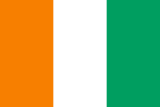
Côte d'Ivoire
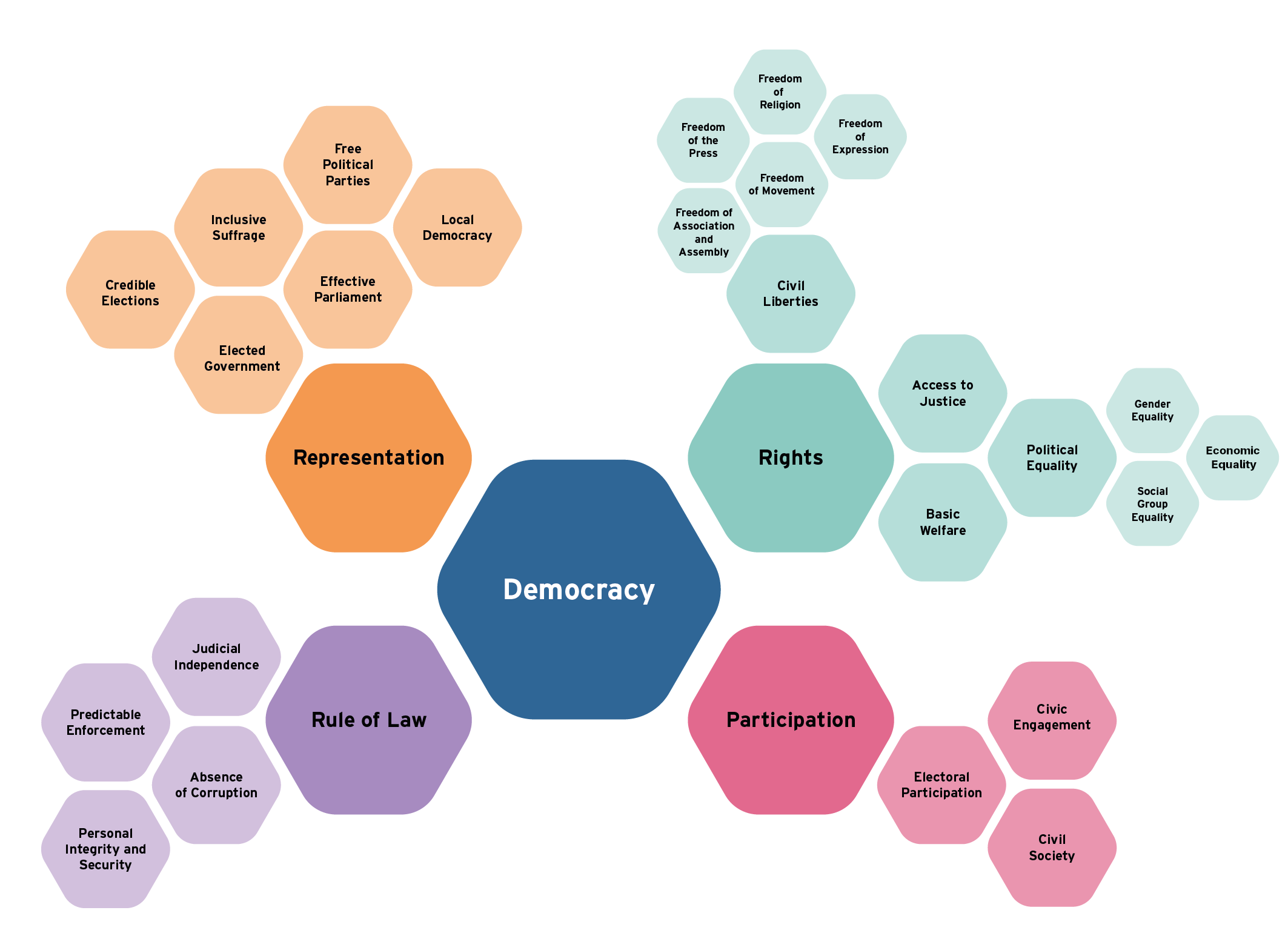
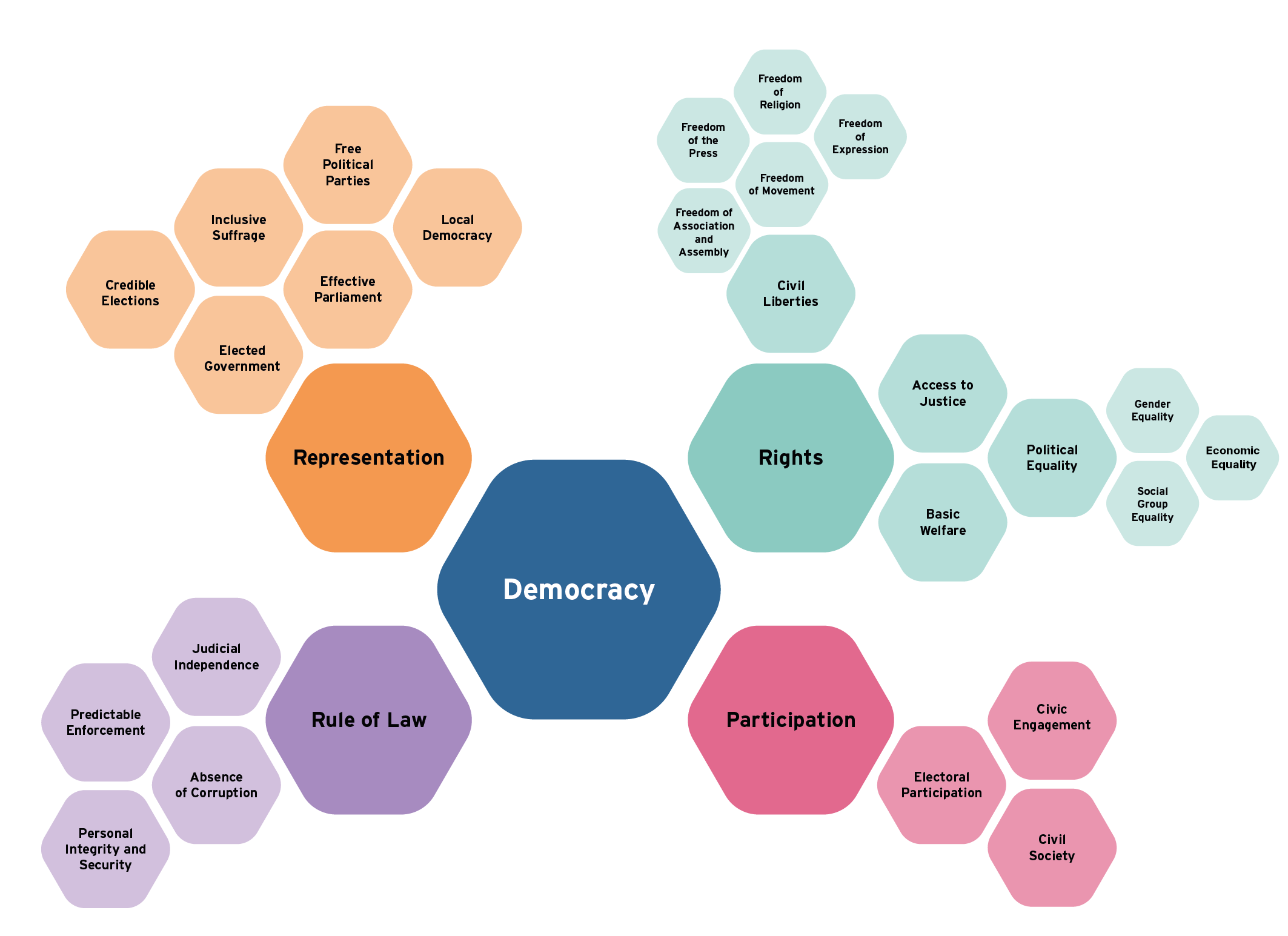
Côte d'Ivoire exhibits mid-range performance in three of the Global State of Democracy categories: Representation, Rights, and Participation; it is low-performing in Rule of Law. It is among the bottom 25 percent of countries with regard to Basic Welfare and Electoral Participation. Over the last five years, the country has suffered from notable declines in Credible Elections, largely due to a flawed presidential election in 2020. It is a middle-income country that has experienced robust growth and foreign investment over the last decade, driven by exports of cocoa and cashews. It has had one of the fastest growth rates in Africa.
Côte d'Ivoire is home to more than 60 ethnic groups. The roots of its ethnic diversity can be traced to pre-colonial migration from various parts of West Africa. Immigration continued during the colonial and post-colonial eras, with the French administration and founding President Félix Houphouët-Boigny encouraging labour migration from neighbouring Sahel countries to meet the needs of the Ivorian commercial agriculture sector. Inter-ethnic tensions emerged during the late colonial period and began to have political consequences soon after independence (1960). The country’s political landscape over the last 30 years has been shaped by the alliances and rivalries between current President Alassane Ouattara and former heads of state Henri Konan Bédié and Laurent Gbagbo and their supporters. Each leader has run political campaigns that have used ethnicity as a political wedge.
Soon after succeeding the deceased President Houphouët-Boigny in 1993, President Henri Konan Bédié formulated a narrow concept of citizenship and identity called Ivoirite, which discriminated against northerners and Muslims. Bédié was forced from power through a military coup in 1999. The sense of ethnic exclusion that accompanied Laurent Gbagbo’s election in 2000 contributed to a military rebellion in 2002 that morphed into a civil war that continued until 2007. After having been prevented from running for office earlier (by discriminatory laws), Ouattara ran and won in 2010. Gbabgo’s refusal to accept the 2010 election results led to a violent post-electoral crisis. The conflict was followed by Gbagbo’s arrest and detention at The Hague, where he was charged and subsequently acquitted of committing War Crimes by the International Criminal Court. Relative stability prevailed during Ouattara’s first two terms of office, but his unwillingness to pursue political reform, and genuine reconciliation and his decision to undertake a third term (enabled by a new constitution ratified in 2016), contributed to the outbreak of violence during the 2020 electoral process, which he also won.
Côte d’Ivoire has persistently performed at the mid-range in Gender Equality, and the country bans sex-based discrimination. While recent initiatives to mainstream gender in climate change actions are promising, gender discriminatory practices, including political exclusion and labour market marginalization are widespread. The LGBTQIA+ community also faces discrimination in healthcare, housing, and education, as well as escalating violence.
Going forward, it is important to watch Credible Elections, Free Political Parties, and Electoral Participation, especially in light of the upcoming 2025 presidential elections. Addressing corruption is important for both democratic and economic growth, and the government has in recent years stepped up its anti-corruption measures. Military and economic development initiatives have curbed jihadist expansion from the Sahel into northern Côte d’Ivoire, however the security situation should be monitored because of its potential impact across many GSoDI indicators.
Last updated: May 2025
https://www.idea.int/democracytracker/
December 2025
Ruling party consolidates majority in parliamentary elections

On 27 December, Côte d’Ivoire held parliamentary elections. The ruling Rally of Houphouëtists for Democracy and Peace (Rassemblement des houphouëtistes pour la démocratie et la paix, RHDP) won 197 out 255 seats (77.3 per cent), consolidating its dominance following President Alassane Ouattara’s re-election to a fourth term in October. The main opposition Democratic Party of Côte d’Ivoire (Parti Démocratique de la Côte d'Ivoire-Rassemblement Démocratique Africain, PDCI-RDA) secured 32 seats (12.5 per cent), down from 66 in the previous legislature, while former President Laurent Gbagbo’s African People’s Party–Côte d’Ivoire (Parti des peuples africains–Côte d'Ivoire, PPA-CI) boycotted the polls, citing the exclusion of key opposition figures from electoral lists and arguing that conditions for a credible and inclusive vote were not in place. Twenty-three independents were elected, many of whom are expected to align with the ruling party. Voter turnout stood at 35.0 per cent, slightly lower than the 37.9 per cent recorded in 2021. Women won 34 seats, representing 13.4 per cent of the National Assembly (compared to 12.9 per cent in 2021). The vote was reported to have taken place largely peacefully under heightened security measures, with authorities noting isolated incidents that did not affect the overall integrity of the electoral process.
Sources: Independent Electoral Commission - Cote d’Ivoire, International IDEA, IPU Parline, International Crisis Group, Radio France Internationale


October 2025
Ouattara re-elected in low-turnout vote lacking main opposition
On 27 October, Côte d’Ivoire’s electoral commission declared President Alassane Ouattara the winner of the 25 October presidential election with 89.8 per cent of the vote. Major challengers Laurent Gbagbo and Tidjane Thiam were barred from running, and with no major opposition contender on the ballot, voter turnout dropped slightly to 50.1 per cent from 53.9 per cent in 2020. Entrepreneur Jean-Louis Billon placed a distant second with 3.1 per cent, followed by former First Lady Simone Gbagbo at 2.4 per cent; she was one of two women candidates among the five on the ballot. Various observers, including the Economic Community of West African States-African Union (ECOWAS-AU) mission and national civil society groups, said the vote was largely peaceful, but noted the restrictive political environment and exclusion of key candidates. The opposition described the polls as a ‘civilian coup,’ citing the disqualification of Gbagbo and Thiam and broader concerns over electoral fairness and judicial independence.
Sources: Independent Electoral Commission of Cote d'Ivoire, International Crisis Group, Deutsche Welle, The Guardian, Jeune Afrique, Institute for Security Studies – Africa, International IDEA
August 2025
11 opposition members charged with ‘terrorist acts’
On 11 August, Ivorian authorities charged 11 members of former President Laurent Gbagbo’s African People’s Party–Côte d’Ivoire (Parti des peuples africains–Côte d'Ivoire, PPA-CI) with ‘terrorist acts’ and ‘conspiracy against state authority’. The charges relate to a 1 August attack in Abidjan’s Yopougon suburb, where a bus was burned and a police vehicle vandalised. The accused include prominent figures such as former Defence Minister Lida Kouassi and a retired ambassador—both known critics of President Alassane Ouattara’s bid for a fourth term in the October 2025 presidential election. Prosecutors allege they orchestrated the unrest, but the PPA-CI condemned the violence and denied any involvement, calling the arrests politically motivated. PPA-CI officials have raised concern over arbitrary detentions and due process violations, noting the lack of publicly available evidence. The arrests come amid a broader crackdown on opposition, with leading figures like Tidjane Thiam still barred from contesting. Thousands later protested peacefully in Yopougon demanding their reinstatement on the electoral roll.
Sources: International Crisis Group, Jenue Afrique (1), Jeune Afrique (2), The Africa Report, Associated Press, Barron’s, International IDEA


April 2025
Court bars top Ivorian opposition leader from presidential race
On 22 April, the Abidjan Court of First Instance struck opposition leader Tidjane Thiam from the electoral roll, barring him from running in the October presidential election. The court cited Article 48 of the 1961 Nationality Code, which states that Ivorian citizens automatically lose their nationality if they acquire another without prior state approval. Thiam obtained French citizenship in 1987, a move the court deemed grounds for disqualification despite his recent renunciation of it. Thiam and his party, the Democratic Party of Côte d'Ivoire (Parti Démocratique de la Côte d'Ivoire, PDCI), denounced the ruling as politically motivated and, although it is not subject to appeal, filed a procedural challenge citing judicial irregularities. Several other prominent opposition figures have also been excluded from the race, including former president Laurent Gbagbo.
Sources: International Crisis Group, British Broadcasting Corporation, Reuters, Abidjan.net, Barron’s, The Africa Report, Radio France Internationale

See all event reports for this country
Global ranking per category of democratic performance in 2025

Basic Information

Human Rights Treaties
 State party
 Signatory
 No action
Performance by category over the last 6 months
Representation
 Rights
 Rule of law
Participation
Rule of law
Participation
Global State of Democracy Indices
Hover over the trend lines to see the exact data points across the years


Factors of Democratic Performance Over Time
Use the slider below to see how democratic performance has changed over time