


Bangladesh
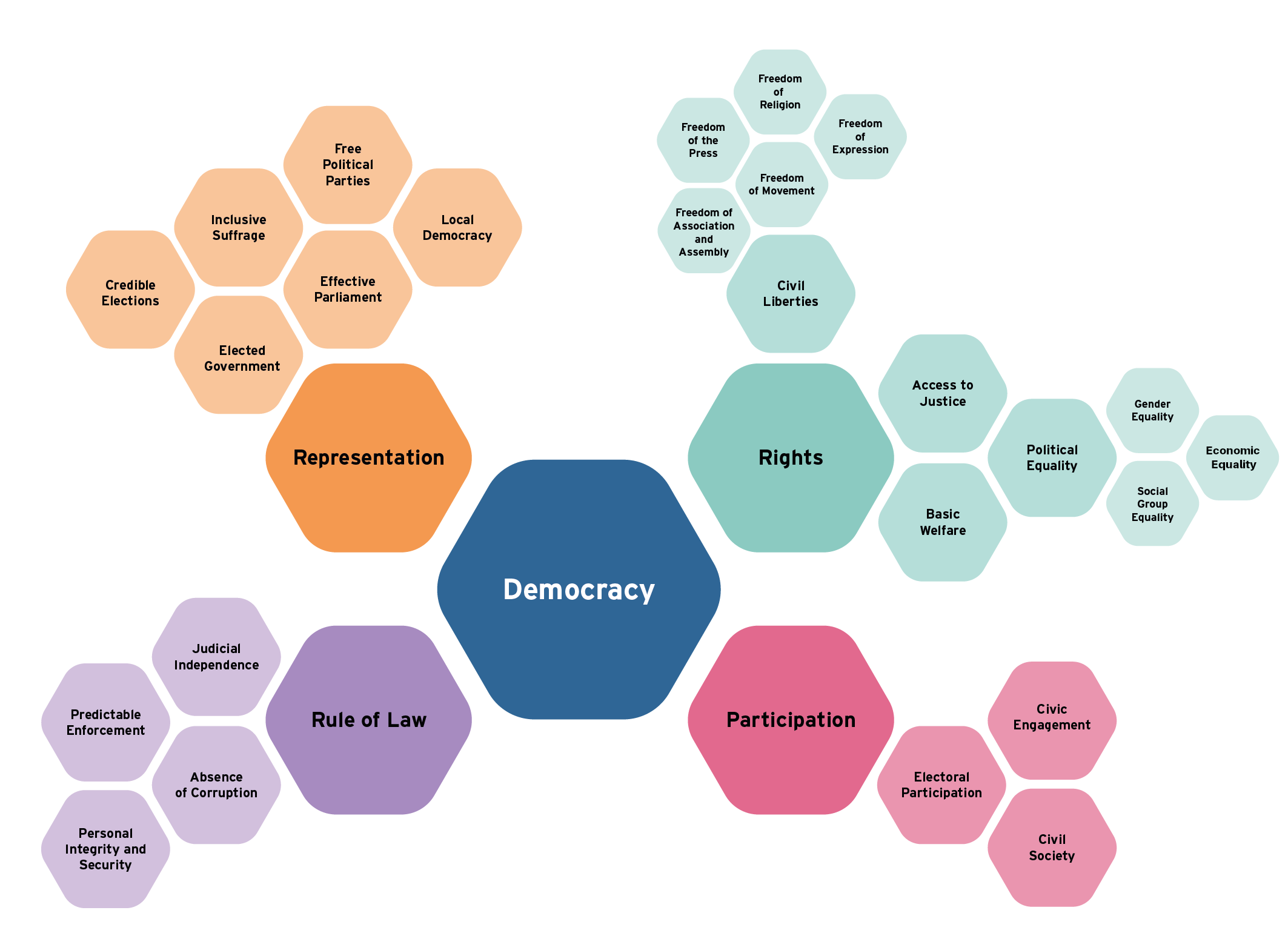
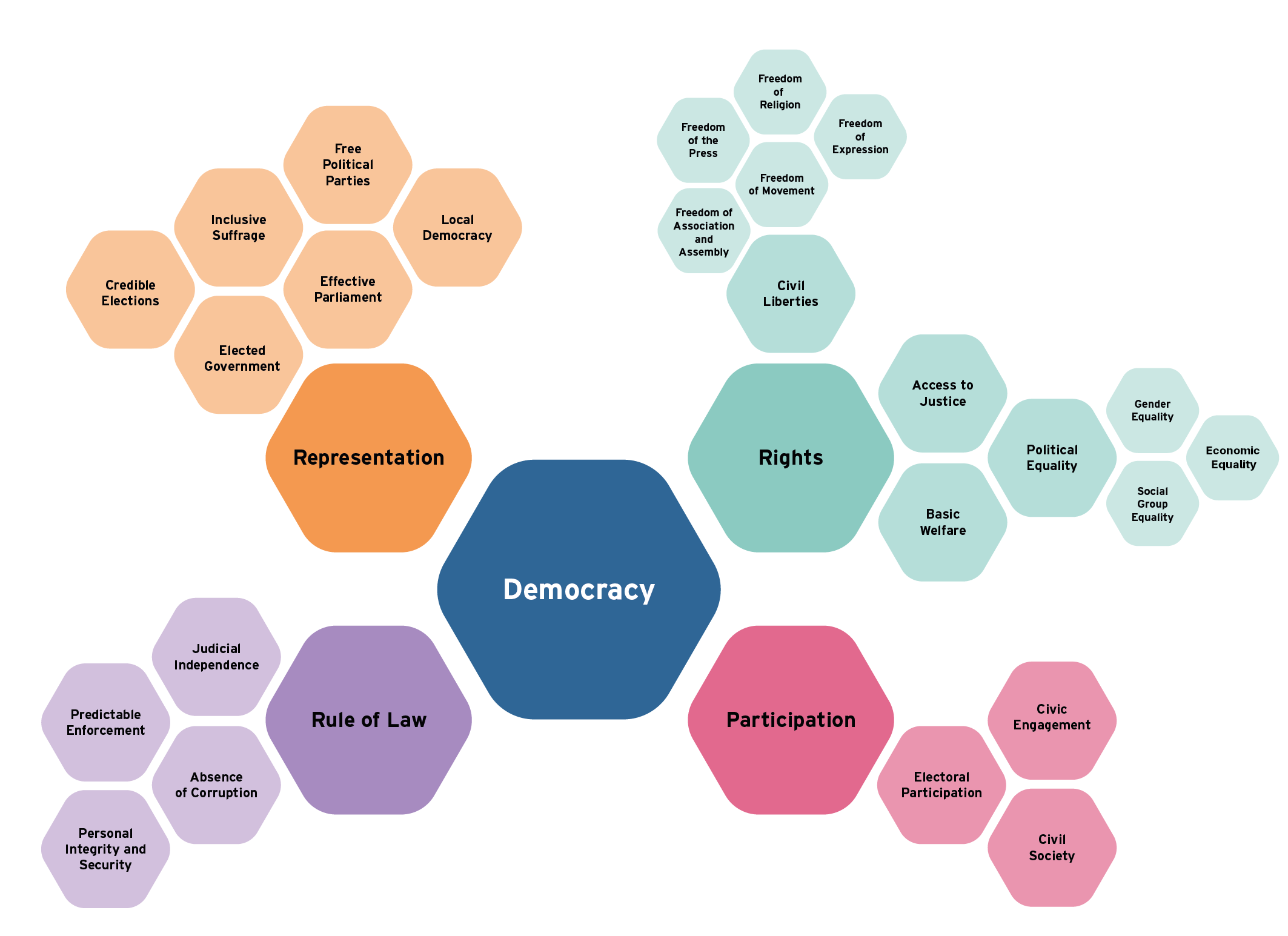
Bangladesh exhibits low level performance across three categories of the Global State of Democracy Framework (Representation, Rights and Rule of Law) and performs at the mid-range level in Participation. Over the past five years, it has experienced declines in Representation, Credible Elections, Elected Government and Effective Parliament but seen advances in Freedom of Expression, Economic Equality, Rule of Law, Predictable Enforcement and Personal Integrity and Security. The economy largely depends on agriculture (primarily rice, jute and tea) – with almost half the population employed in the sector - while the Ready-Made Garments (RMG) industry and overseas migrant workers’ remittances are also major contributors. The country has experienced significant progress in Basic Welfare since the 1980s. Bangladesh is one of the world’s most populous countries and hosts one of the largest refugee camps in the world, housing approximately one million Rohingyas from Myanmar since 2017. The low-lying country is also amongst the most vulnerable to the impact of climate change.
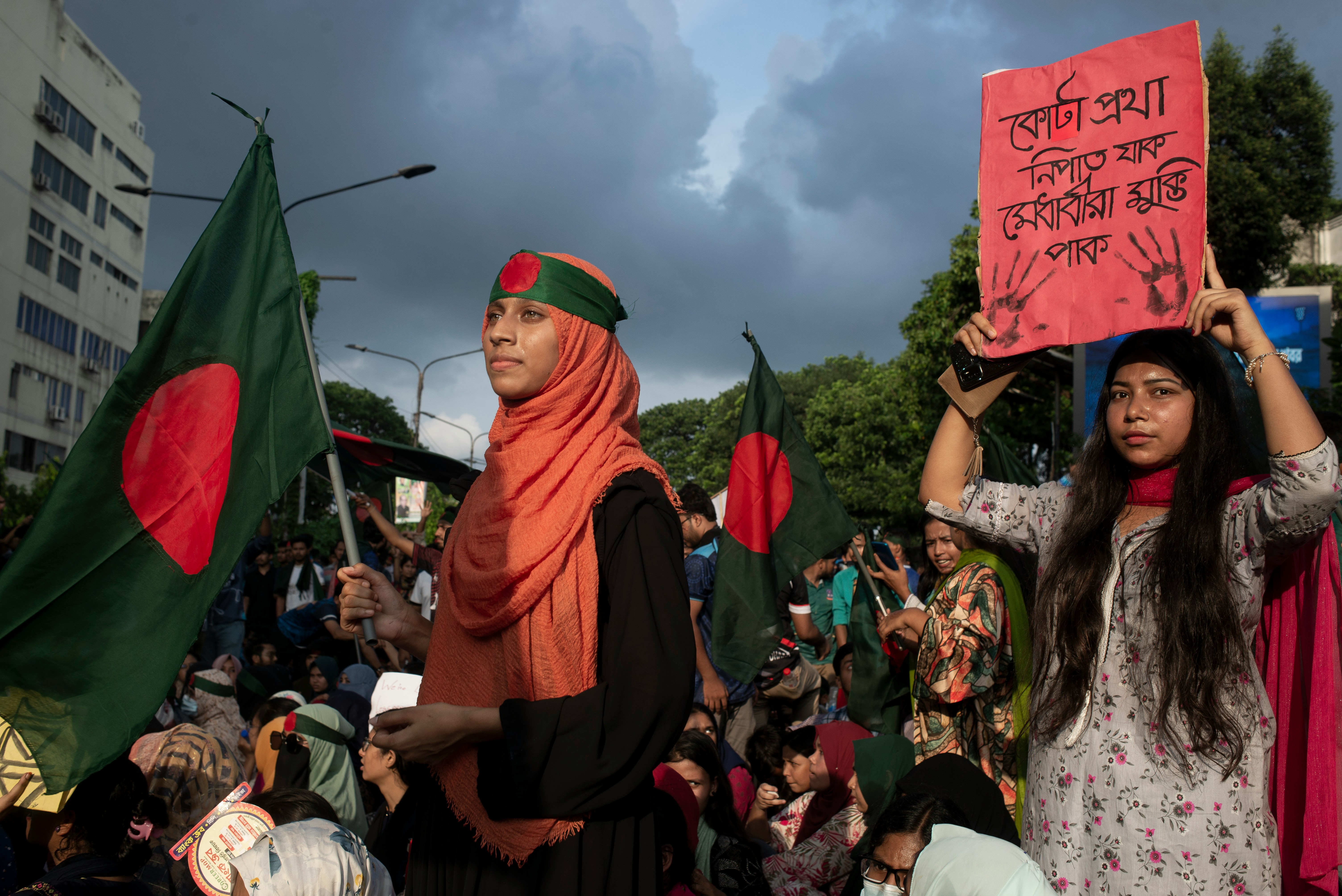
Modern-day Bangladesh came to be in 1971, after a violent war of independence (the ‘Bangladeshi Liberation War’) from what was then West Pakistan (current Pakistan). The war was rooted in desires for political autonomy from the geographically, culturally and ideologically distanced West Pakistan. Following independence in 1971, authoritarian rule and military dictatorships were the norm until the first multi-party democratic elections in 1991. Politics has historically been dominated by two dynastic parties – the Awami League and the Bangladesh National Party – whose protracted rivalry stalled democratic reforms. Democratic consolidation was further complicated by elections marred by limited competitiveness, boycotts, violence, fraud and irregularities. In 2024, a student-led uprising abruptly ended Sheikh Hasina’s 15-year rule, resulting in an interim government tasked with reforming state institutions and organizing new elections. Persisting governance challenges include systemic corruption, nepotism, and weak oversight mechanisms, especially rampant in the RMG, health and environment sectors. Additionally, Rohingya refugees suffer from lack of a legal status and limited access to basic services and livelihood opportunities. Past governments have also been responsible for enforced disappearances of political opponents and human rights activists and violations of freedom of expression and other civil rights.
Although Bangladesh is founded as a secular state, Islam became the state religion in 1988. Political parties maintain divergent views on state-Islam relations, while still appealing to Islamic religious sentiments for political gain. Bangladesh is also home to Hindu, Buddhist, Christian and other religious minorities and a total of 54 indigenous groups. These groups are politically and socio-economically marginalized, experience discrimination in accessing basic state services, land extortion and higher poverty rates than the national average. Communal violence against minorities remains a serious issue.
The Constitution bans gender discrimination the country consistently performs at the mid-range in Gender Equality. While the nation has made strides in women’s empowerment , women’s representation in politics remains limited despite the unique experience of having been led by two separate female prime ministers over the past three decades. Child marriage and gender-based violence remain key problems.
Looking ahead, it will be important to watch Representation, Rights and Rule of Law in light of the country’s ongoing reform process to the judiciary, electoral system, corruption commission and constitution. Credible Elections and Free Political Parties will need to be monitored ahead of the next general election.
Last updated: June 2025
https://www.idea.int/democracytracker/
December 2025
Killing of prominent student leader sparks violent unrest
On 12 December, prominent student leader and independent parliamentary candidate Sharif Osman Hadi was assassinated by masked gunmen. Although the assailants have been identified, none have been apprehended yet. Hadi’s assassination sparked violent protests that included arson attacks on two leading media offices and a cultural landmark. In a separate incident, a Hindu youth was lynched amid blasphemy allegations. United Nations officials condemned both the killings and the vandalization of media offices, urging authorities to ensure accountability and conduct an impartial investigation into all incidents. Rights experts warn that the escalating political violence threatens the protection of civic space and broader participation ahead of the elections scheduled for February 2026.
Sources: United Nations, Reuters, Article 19, The Daily Star, BBC News




November 2025
Sheikh Hasina found guilty of crimes against humanity
On 17 November, Bangladesh’s domestic war crimes court–the International Crimes Tribunal (ICT)–found former Prime Minister Sheikh Hasina and former Home Minister Asaduzzaman Khan (both tried in absentia) guilty of crimes against humanity for acts committed during the student-led protests in 2024 and sentenced them to death. The Tribunal found Hasina and officials guilty of authorizing the use of lethal force that led to up to 1,400 protester deaths and left thousands injured or disappeared. The United Nations High Commissioner for Human Rights remarked that the verdict represents an ‘important moment for victims of the grave violations committed during the suppression of protests last year.’ However, the United Nations also criticized the use of the death penalty and expressed concerns about the fairness of the trials, particularly since they were conducted in absentia. Rights experts have urged the government to end reprisals, protect the rights of the accused, and work towards establishing a comprehensive system for national reconciliation.
Sources: International IDEA, Human Rights Watch, United Nations, The Conversation, Al Jazeera, The Daily Star


Bangladesh to hold referendum on constitutional reforms alongside election

On 13 November, the interim government announced that a referendum on constitutional and legal reforms will take place alongside the parliamentary elections in February 2026. This referendum aims to give legal force to the ‘July Charter,’ a landmark but non-binding document signed by 24 political parties in October after extensive debate. The Charter consolidates over 80 reform proposals from the interim government’s constitutional reform commission. The Charter aims to increase women’s political representation, impose term limits for the prime minister, enhance presidential powers, expand fundamental rights and protect judicial independence. It also proposes a bicameral parliament with a new 100-member Senate. Voters will cast a single yes/no vote on a question covering four consolidated issues. If approved, the next parliament will serve as a Constitutional Reform Council and have 180 days to implement the reforms.
Update: As of April 2026, despite a successful ‘yes’ vote in the referendum on July Charter reforms, implementation remains uncertain. The Constitutional Reform Council has not been convened amid legal and procedural disagreements. Meanwhile, parliament approved most interim ordinances but allowed several crucial ones to lapse following review and the constitutionally mandated deadline. The government has indicated that some ordinances may be revised and reintroduced later, but no clear timeline has been provided.
Sources: International IDEA, Chatham House, Dhaka Tribune, Consitutionnet, Crisis Group, Constitutionnet, Dhaka Tribune

Election Commission launches system to facilitate expatriate voting
Ahead of the anticipated February 2026 election, the Bangladesh Election Commission launched a voting system to assist Bangladeshi expatriates to vote for the first time. Previously, expatriates had the right to vote, but no proper process to do so, with voting confined to in-person ballots in Bangladesh or limited paper-based ballots for certain groups. The postal ballots will now be supported by a mobile app called Postal Vote BD, whereby expatriates can register online, receive a physical ballot by mail, and then return the completed ballot to the Election Commission. According to the Election Commission, the new system aims to widen the franchise to its diaspora, potentially benefiting 15 million Bangladeshi citizens living abroad, including migrant workers. Experts note that it remains to be seen how the overseas voting system will be implemented.
Sources: Dhaka Tribune (1), Dhaka Tribune (2), Al Jazeera

Enforced disappearance law promulgated
On 6 November, the interim government’s Advisory Council granted final approval to the draft Enforced Disappearance Prevention and Redress Ordinance (2025), which was promulgated by the President in early December. The ordinance marks Bangladesh’s first legal framework directly criminalizing enforced disappearances, marking an important step towards accountability. However, rights experts continue to criticize provisions such as the retention of the death penalty as a maximum punishment, the allowance for trials in absentia, and the denial of fair trial rights more broadly, which fall short of international standards.
Update: Following the February 2026 election, the draft ordinance lapsed after not being approved by parliament within the constitutional timeframe. As of April 2026, the government has said it will redraft and reintroduce the measure after consultation, but no timeline has been set, while rights organizations have criticized the lapse as weakening accountability safeguards.
Sources: Fortify Rights, The Daily Star, International IDEA, Human Rights Watch

September 2025
High Court verdict reinstates control of lower courts to Supreme Court
On 2 September, the High Court Division of the Supreme Court delivered a landmark judgement, restoring the Supreme Court’s authority over the control and discipline of lower court judges. The decision overturns previous constitutional changes under Article 116, which had granted these powers to the president. The Court also directed the formation of a separate judicial secretariat within three months to be run by the Supreme Court. The move shifts administrative control of lower court judges to the judiciary, responsible for overseeing judicial appointments, promotions, disciplinary measures, and budgeting. The verdict follows petitions submitted by several Supreme Court lawyers in August, who challenged the constitutionality of the existing Judicial Service (Discipline) Rules, 2017. Rights and legal experts have welcomed the ruling, noting that it marks a significant step toward enhancing judicial independence and reinforcing the separation of powers in Bangladesh.
Sources: The Daily Star (1), The Daily Star (2), Prothomalo
August 2025
Interim government moves forward on draft enforced disappearance law
On 28 August, the interim government’s Advisory Council granted ‘approval in principle’ to the draft Enforced Disappearance Prevention and Redress Ordinance 2025. The draft ordinance proposes harsher penalties for enforced disappearances and empowers the National Human Rights Commission to investigate these cases, rather than law enforcement agencies. The ordinance also establishes a special tribunal to handle the prosecutions and trials submitted by the Commission. Other provisions include requiring trials to be completed within 120 days of complaints and offering compensation and legal assistance to victims and their families. While rights experts welcome many provisions, concerns remain regarding the inclusion of the death penalty as a maximum punishment for offenders and the allowance for trials to be held in absentia. The proposed ordinance awaits further discussions before receiving final approval.
Sources: The Daily Star, Fortify Rights, The Financial Express
See all event reports for this country
Global ranking per category of democratic performance in 2025

Basic Information

Human Rights Treaties
 State party
 Signatory
 No action
Performance by category over the last 6 months
 Representation
Rights
Rule of law
Participation
Representation
Rights
Rule of law
Participation
Global State of Democracy Indices
Hover over the trend lines to see the exact data points across the years


Factors of Democratic Performance Over Time
Use the slider below to see how democratic performance has changed over time