


Bahrain
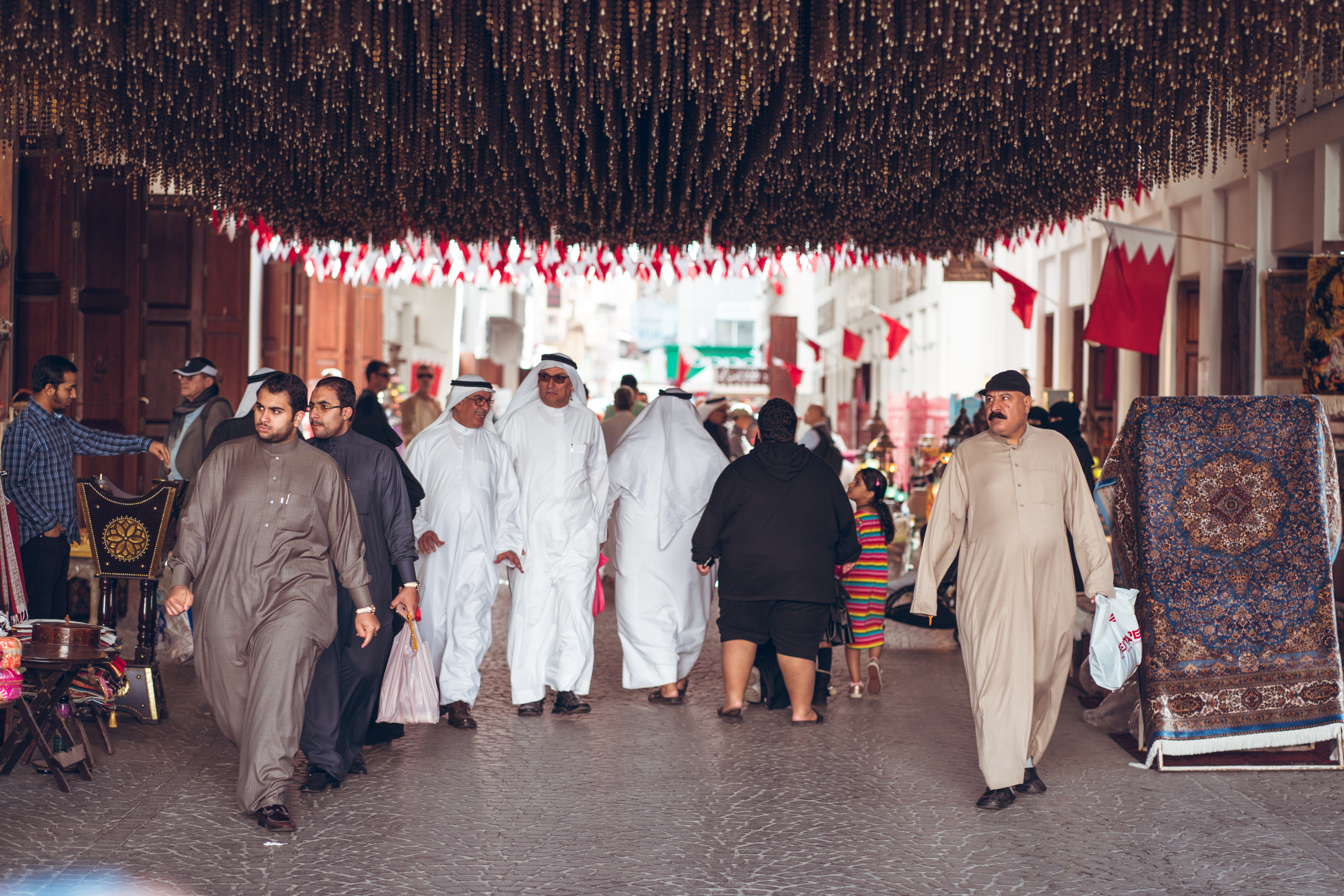
Bahrain is a Gulf state exhibiting low performance across all four categories of the Global State of Democracy framework. It ranks among the bottom 25 per cent of countries globally in most factors of democratic performance. Its economy depends on oil production, with 70 per cent of government revenues coming from oil exports, allowing it to increase social spending in times of instability. Bahrain also hosts a U.S. naval base.
Bahrain became independent in 1971 after 110 years under British protection. Before that it was ruled by Portuguese and Persian empires in the 16th and 17th centuries, and earlier by Persian empires and Islamic caliphates. Following its independence, Bahrain adopted a moderate form of parliamentary democracy, but it was suspended in 1975 when then-Emir Isa bin Salman Al Khalifa took on absolute power after early conflicts with the National Assembly. Waves of popular opposition in the late 1990s, driven by unequal development, pushed for reform. Since a new 2002 constitution reinstated elections and opposition parties, Bahrain holds regular elections for the Council of Representatives, the lower chamber of its bicameral parliament. However, parliament is weak, with limited executive oversight.
Bahrain is divided along religious and sectarian lines, with a large Shia population (55 to 70 percent) and a Sunni ruling family, Al Khalifa. The Shia-Sunni divide has been politically instrumentalized by the regime to silence Shia-dominated opposition. Bahraini Shia face persecution, restrictions on religious holidays, underrepresentation in government jobs, and frequent accusations of allegiance to Iran. In addition to penalties for anti-monarchical stances, dissidents are routinely stripped of citizenship. Despite a broader rural-urban gap in access to services, Shia neighborhoods face underdevelopment even within urban areas. Tensions around secularism and the position of Islamist Sunni political forces, such as the Muslim Brotherhood and Al-Asala—which largely align with the government—also influence politics.
In 2011, protests, rooted in the systematic deprivation of Shia rights, were suppressed, with authorities also removing key protest sites to prevent gatherings. Since then, dissent has been harshly repressed, with activists, including minors, facing long sentences, torture and arbitrary detention. Royal pardons are rarely extended to political prisoners. The last major opposition parties (al-Wifaq and Wa’ad) were dissolved in 2016 and 2017, and the independent media outlet, Al-Wasat, was shut down in 2017. Political isolation laws in 2018 barred former opposition members from running in elections or participating in civil organizations. Bahrain’s normalization with Israel through the Abraham Accords and repression of pro-Palestinian protests since the 2023 Gaza war have deepened divisions between the monarchy and its people.
Bahrain performs among the world’s bottom 25 per cent in Gender Equality. Women remain underrepresented in parliament, but hold 48 percent of positions in the public sector. While a unified family law in 2017 also sought to address sectarian inequalities based on personal status, male guardianship continues to limit freedoms. While same-sex activity is legal in private, LGBTQIA+ people face social stigma and their rights are limited. Bahrain has a lower proportion of migrant workers than its Gulf neighbors, but they face socioeconomic exclusion as a result of the kafala sponsorship system.
Looking ahead, while Bahrain’s rulers have given no indications that they are willing to reinstate independent political forces in the country, developments in Representation will be a key area to watch. Additionally, it will be important to continue to monitor the state’s handing of political dissent and its impact on Rights and Participation.
Last Updated: June 2025
https://www.idea.int/democracytracker/
May 2026
Three MPs expelled after opposing royal decree on citizenship oversight
On 7 May, Parliament expelled three lawmakers after they voted against a 2024 royal decree law during its parliamentary review. The decree had removed judicial oversight over citizenship decisions and made such matters subject to executive authority without the possibility of legal appeal. The lawmakers argued that the measure weakened due process and reduced safeguards against arbitrary citizenship revocations. The government defended the expulsion on national security grounds, accusing the MPs of opposing citizenship revocation measures taken against individuals alleged to have supported or sympathized with Iran. While the expulsions were framed as a disciplinary response, rights groups and observers criticized them as a sign of declining freedom of expression, parliamentary independence, and checks on executive power.
Sources: Middle East Eye, Bahrain News Agency, Bahrain Institute for Rights and Democracy, New Lines Magazine




April 2026
Royal order extends legislature term, delaying parliamentary elections
On 29 April, a royal order extended the current term of the National Assembly—comprising the elected Council of Representatives and the appointed Shura Council—by one year. This decision postpones the end of the sixth legislative term to December 2027 and delays the next parliamentary elections to the Council of Representatives beyond the standard four-year cycle.
Sources: Bahrain News Agency, Alayam
March 2026
Interior Ministry announces protests ban amid wave of arrests
On 6 March, the Interior Ministry announced a ban on public protests. The move came after several days of demonstrations and online expressions of dissent in relation to the strikes by the United States and Israel against Iran. Human rights groups reported dozens of people were arrested around the same time for taking part in or filming protests, as well as for posting critical content online. Authorities, for their part, have described those detained as posing ‘security concerns,’ pointing to alleged support for Iran or suspicions of espionage, and have described the measures as needed to ‘preserve public safety.’ In practice, the ban is likely to disproportionately impact the country's large Shia community, given its prominent role in past protest movements and prior patterns of enforcement.
Sources: Human Rights Watch, Middle East Eye, Associated Press, IFEX, Al Monitor, France 24

April 2024
Political prisoners released in largest royal pardon since Arab Spring
On 8 April, Bahrain released 1,584 prisoners, including a number of political prisoners, in what was the largest royal pardon since the 2011 Arab spring, when Bahrain experienced a series of mass anti-government protests. According to a government spokesperson, 65 per cent of the released prisoners were convicted of rioting and, of these, some were reported to have been serving life sentences connected with the 2011 protests. Thousands of protesters, journalists and activists are thought to have been imprisoned in Bahrain in the wake of the Arab Spring and it is estimated that many political prisoners remain in detention (more than 600 are thought to be incarcerated in Jau prison, the country’s largest male detention facility). The prisoner release coincided with celebrations of Eid and the King’s silver jubilee, but commentators have speculated that it may have been motivated by a desire to assuage the human rights concerns of its US and UK allies and to reduce domestic tensions over the country’s normalized relationship with Israel.
Sources: Reuters, The New Arab, The Guardian, Bahrain Institute for Rights and Democracy

See all event reports for this country
Global ranking per category of democratic performance in 2025

Basic Information

Human Rights Treaties
 State party
 Signatory
 No action
Performance by category over the last 6 months


Global State of Democracy Indices
Hover over the trend lines to see the exact data points across the years


Factors of Democratic Performance Over Time
Use the slider below to see how democratic performance has changed over time