Democracy goes digital: Social media and Bulgaria’s Gen Z protests
Standing in her closet, folding clothes and speaking into a spatula suspended from the ceiling as a prop microphone, Bulgarian influencer and self-declared “Gen Z Machiavellian” Flora Stratieva (@florcheto) has a message for her 80,000 Instagram followers. “Every generation has its own historical moment that it declares to the world that they’re there… the time is ours!”
Flora’s message comes in the wake of the most significant wave of youth-driven protests in Bulgaria in over a decade, with more than 100,000 people estimated to have rallied in the capital alone. What began in late November as opposition to proposed tax and social-contribution hikes quickly expanded into a broader challenge to corruption and political stagnation, culminating in the government's resignation on 11 December after less than a year in power.
With the government’s resignation, Bulgaria joined Nepal and Madagascar as countries in 2025 where Gen Z-led protest movements contributed to the collapse of sitting governments. As in earlier such movements, social media has played a critical role in Bulgaria’s Gen Z protests, serving as a key organizing tool, connecting young people through shared cultural references, and providing influencers like Flora with a platform to translate politics into something that feels real and personable.
After weeks of protest content flooding my social media feeds, I grew curious about the role social media played in Bulgaria’s Gen Z protest movement. I found an opportunity to sit down with Malena Malcheva and Valeria Berkova, who co-lead the social media pages for the youth wing of We Continue the Change, the opposition party behind the organization of many of the recent protests.
From scouring social media reels and my discussion with Malena and Valeria, here are a few takeaways on the evolving role of social media in youth-driven democratic participation:
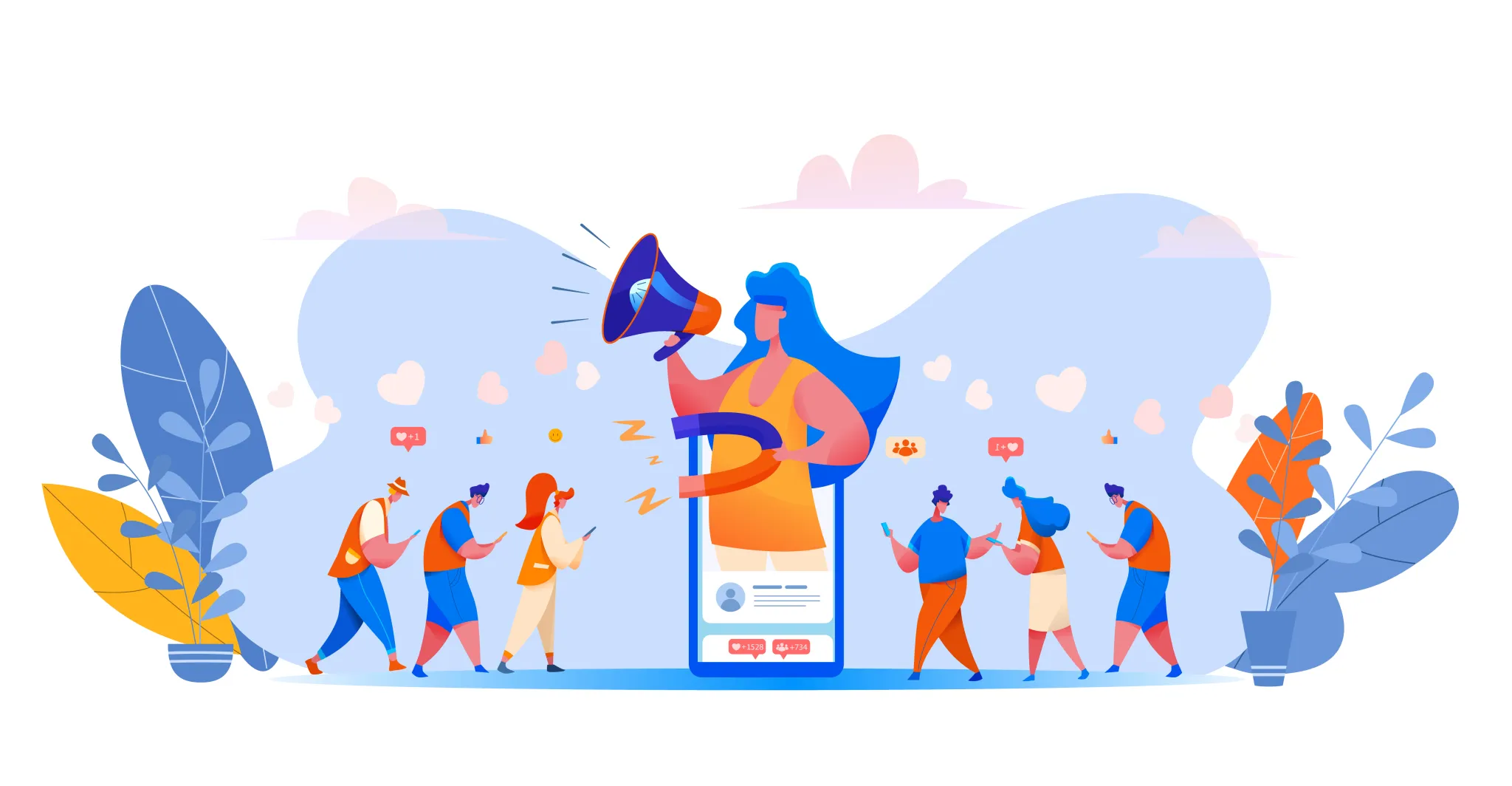
For Gen Z, social media isn’t just a digital space; it’s a lived space.
For many young Bulgarians, social media is understood as an active, inhabited space rather than a meaningless distraction. What matters is not how much time is spent on social media platforms, but how they are used as a means of expressing identity and as spaces for creating meaningful connections. As Berkova explains, “Our generation thinks differently; we use social media not just as something we spend time on, but as an actual place we go to exist as people.” Growing up online has made these spaces feel natural and familiar rather than artificial. “For our generation, social media was essential because we grew up with it and it’s a completely different place that we live in and share our opinions.” Berkova added, noting that “we’ve kind of created our personas there.”
Social media has the potential to help Gen Z connect the dots on politics.
As young activists, Malcheva and Berkova believe that social media can be a meaningful tool to help young people understand how politics impacts everyday life. As Malcheva put it, “Social media links what we see in our relatives’ lives, and what we see in our villages, to the political situation and how those people’s decisions affect ours and our families’ everyday lives.” In this way, social media platforms offer opportunities to translate complex political concepts into relatable terms, grounded in the lived experiences of content creators. While acknowledging that social media is “not the best option” for news, Berkova emphasized its accessibility, noting that most young people are unlikely to seek out long-form media sources. That accessibility has mattered: “One of the main achievements of the protest was that young people started caring about politics more,” Berkova noted, pointing to memes and videos taken from protests as drivers of awareness.
Reaching Gen Z isn’t about polish; it’s about authenticity.
Having observed shifts in social media content style over the years, Gen Z has developed a sixth sense for what feels staged or performative. “For young people to want to watch content, you have to do it in our language. When it’s a 50-year-old acting like a Gen Z - it just feels fake.” Berkova explained. As a result, Malcheva and Berkova strategized to use their platform to repost footage that protestors were sharing with them in real time. According to Berkova, this approach “created a sense that everyone was going to the protest,” as seeing young protestors post live stories made participating in street protests feel “normal and not exclusive only to people involved in politics.”
The use of social media alone isn’t a form of protest, but a contributing act.
For Malcheva, social media can support protest, but it cannot replace it. “I do think of it as an act of protest, but it’s more of a contributing act," she explained, stressing that online activity “cannot exist on its own as a singular act and be defined as an act of protest.” Ultimately, Malcheva argues that online visibility only matters insofar as it feeds into pressure beyond the screen. As she put it, “When protesting, you also have to think of what kinds of actions will make the people you’re protesting against actually step down.” While reposting political content may raise awareness among networks of friends online, she cautions that it carries limited weight to speak out in spaces where those in power are not paying attention. In the end, real pressure is not measured in posts, but in people filling the streets.
Fluent in digital culture, a new generation of Bulgarian activists has shown a distinct ability to translate online momentum into collective action. Bulgaria’s Gen Z protests have demonstrated how political participation now moves fluidly between digital and physical spaces, making it easier than ever to witness and engage with political events in real time. What this moment makes clear is that social media has not distracted Gen Z from civic life but, instead, placed political participation in the palm of their hands.
Disclaimer: Opinions expressed in this commentary are those of the authors and do not necessarily represent the institutional position of International IDEA, its Board of Advisers or its Council of Member States.
For monthly-updated information on democracy and human rights developments in 173 countries, visit the Democracy Tracker. For all our data and analysis, visit the Global State of Democracy Initiative.


About the author