

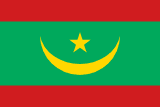
Mauritania
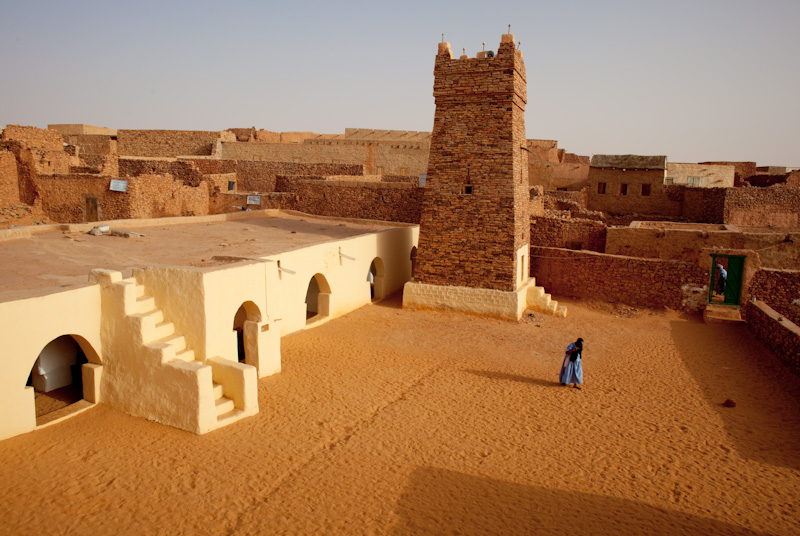
Mauritania exhibits low-range performance in the Rights, Representation, and Rule of Law categories of the Global State of Democracy framework, while exhibiting mid-range performance in Participation. It is among the world’s bottom 25 per cent of countries across several factors of Rights, Rule of Law and Participation. The last five years saw declines in Access to Justice, Freedom of Expression and Predictable Enforcement. Mauritania is one of the world’s least densely populated countries, and its vast expanses of uninhabitable land render the agriculture-driven economy highly sensitive to climate- related shocks.
Mauritania's history dates back to early sub-Saharan and Berber settlements. In the 11th century, it became the center of the Almoravid movement, associated with the spread of Islam across North Africa. Colonized by France in 1903, Mauritania came to endure military domination, the deliberate manipulation of tribal antagonisms and heavy taxation, which rendered it the poorest territory of French West Africa. Mauritania gained independence in 1960 and its first 30 years of independence were marked by military rule. In a break from this history, the 2019 presidential elections represented the country’s first peaceful transfer of power and signaled the start of tentative path toward political liberalization. Major challenges towards democratic consolidation nevertheless persist, including a powerful executive dominated by enduring military influence, a weak judiciary, a constrained media landscape, and a fragmented, patronage-based party system controlled by the ruling party.
Mauritania has three major ethnic groups, and ethnicity is a dominant political cleavage. The first group is the Bidhân, who have monopolized the most significant state institutions, and whose inter-group dynamics remain a key political factor. The second group, the Haratines, comprise the descendants of enslaved black Africans. The marginalization of the Haratine, including through enslavement, is a major problem, and the emergence of the Haratines as a potent political force is one of the most significant developments in recent years. Their party political and social mobilization has centred on demands for racial equality and the fulfilment of human rights. The third category includes non-Arabic speaking groups, whose assertion of cultural identities raises issues of language, land tenure, and education policies. The partition of these groups’ claims along ethnic lines has made it difficult to find common ground with respect to prominent issues such as the intersection of Islam and politics, the enduring practice of hereditary slavery, poverty, insecurity close to its border with Mali, and corruption.
Mauritania is among the world’s bottom 25 per cent with regard to performance on Gender Equality, but recent progress includes an electoral gender quota and legislation prohibiting harmful practices. Yet, patriarchal oppression and socio-economic constraints continue, while female genital mutilation and child marriage persist despite legislative efforts. In terms of LGBTQIA+ rights, same-sex activity is criminalized and is a capital offence.
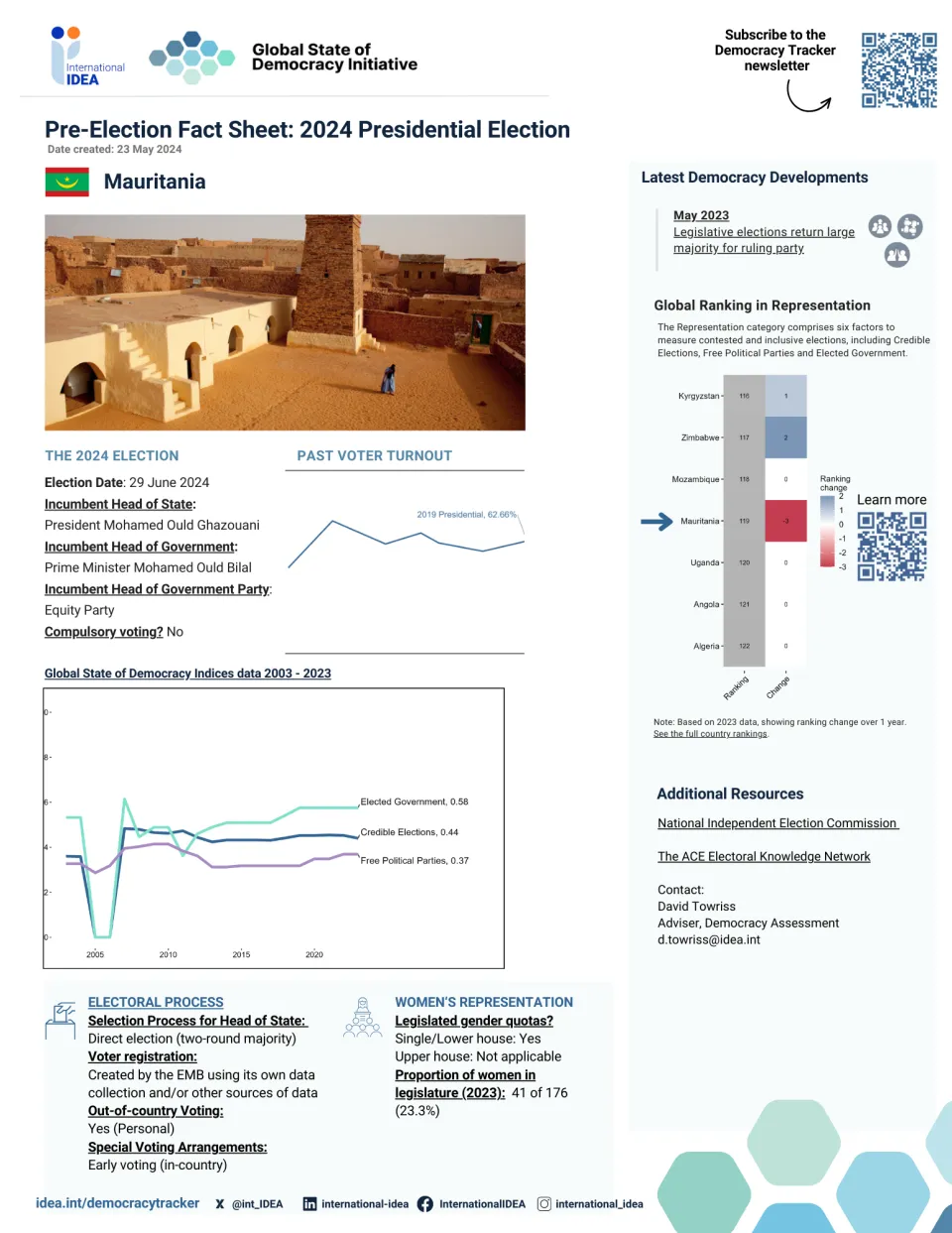
Following the recent re-election of President Mohamed Ould Ghazouani, it will be important to monitor whether Mauritania will progress towards a more pluralistic political system. One important area to watch in this regard is the Free Political Parties factor, with pending reforms set to tighten the laws governing the creation and operation of parties. Both recent police brutality in the dispersal of protests and a 22 day internet shutdown following the presidential elections may come to signal a more restricted environment for Civil Liberties. Nonetheless, the launching of a national inclusive dialogue aimed at consolidating democracy, might offer some tentative progress.
Last updated: May 2025
https://www.idea.int/democracytracker/
November 2025
Supreme Court upholds conviction of former president Abdel Aziz
On 4 November, Mauritania’s Supreme Court upheld the 15-year prison sentence of former president Mohamed Ould Abdel Aziz, confirming his convictions for illicit enrichment, money laundering and related offences. Abdel Aziz, who ruled from 2008 to 2019 after seizing power in a coup, was found to have amassed assets valued at around USD 70 million through illicit means and was charged in 2021 alongside ten other senior officials. His lawyers reiterated that the case was politically motivated, arguing that he was targeted after falling out with his successor. The rights group Mauritanie Transparency said it had hoped for a broader trial involving others implicated in the misuse of public funds but expressed hope that the verdict could nonetheless mark the start of a new era in governance despite its shortcomings.
Sources: La Dépêche de Mauritanie et du Sahel, Africa News, Le Monde, The North Africa Post, Jeune Afrique (1), Jeune Afrique (2)



October 2025
Mauritania opens two migrant detention centres funded by Spain

On 17 October, Mauritania inaugurated two migrant reception centres built and financed by Spain, with additional funding from the European Union Emergency Trust Fund. With a combined capacity of around 200 people, the centres will primarily host migrants intercepted in Mauritanian waters en route to the Canary Islands. The project forms part of Spain’s efforts to outsource migration management to Mauritania. Spanish authorities say the centres will accommodate migrants for up to 72 hours, after which Mauritanian authorities will process any asylum requests. Opposition and rights groups have condemned the move, citing Mauritania’s record of migrant abuses and warning that the centres could effectively function as detention facilities, weakening Spain’s oversight and accountability. In a statement issued before the inauguration, Mauritania rejected allegations of torture or systemic rights violations and pointed to recent reforms, including a ban on collective expulsions and new migrant protection procedures adopted in May 2025.
Sources: El Salto Diario, El Diario, Europa Press, Global Detention Project, Human Rights Watch, Foundation for the Internationalisation of Public Administration, OK Diario, The Commissariat for Human Rights – Mauritania, The Government of Mauritania

June 2024
Incumbent Ghazouani wins presidential election

Mauritania’s presidential election was held on 29 June and was won by incumbent Mohamed Ould Cheikh El Ghazouani. According to the results released by the country’s Independent National Electoral Commission (CENI), Ghazouani secured a second term with 56.12 per cent of the vote. The former army chief of staff and defense minister faced six challengers in the election, none of whom were women. Ghazouani’s main opponent, anti-slavery campaigner Biram Dah Abeid, received 22.10 per cent of the vote, while Hamadi Ould Sid’ El Moctar, who heads the Islamist Tawassoul party, came third with 12.78 per cent. The result was rejected by Abeid, who alleged fraud and irregularities and announced that he had filed an appeal at the Constitutional Council. Voter turnout was reported by CENI to be 55.39 per cent of the registered voters, down from 62.66 per cent in 2019. International observers from the African Union reported the elections were held without any major incidents.
Sources: Independent National Electoral Commission (CENI), Jeune Afrique, Al Jazeera, BBC, Reuters, Le Monde, African Union, International IDEA
May 2023
Legislative elections return large majority for ruling party
Elections for representatives in the local, regional, and national legislative bodies were held in Mauritania on 13 and 27 May. At the national level, the party of the President (rebranded for this election as the Equity Party) won a strong majority with 107 of the 176 seats in the National Assembly. The legislature includes 20 seats elected through a special list for women, and with the addition of women who won seats in the general list and in single member districts, the new legislature will be 24.2 per cent women, which is almost unchanged from the previous legislature. The ruling party was also successful in the local and regional elections, winning control of all 13 regional councils and a majority of the local councils. However, six opposition parties have demanded that the results of the election from a number of locations (most notably in the capital of Nouakchott) be rejected due to what they have called ‘tampering’ with the vote. Turnout at the national level was 71.6 per cent of registered voters, very slightly down from the last election (72.5 per cent).
Sources: Commission Electorale Nationale Indépendante, Radio France Internationale, Africa News, Middle East Monitor, Le Monde


See all event reports for this country
Global ranking per category of democratic performance in 2025

Basic Information

Human Rights Treaties
 State party
 Signatory
 No action
Performance by category over the last 6 months
Representation
Rights
 Rule of law
Participation
Rule of law
Participation
Election factsheets
Global State of Democracy Indices
Hover over the trend lines to see the exact data points across the years


Factors of Democratic Performance Over Time
Use the slider below to see how democratic performance has changed over time