

Bosnia and Herzegovina
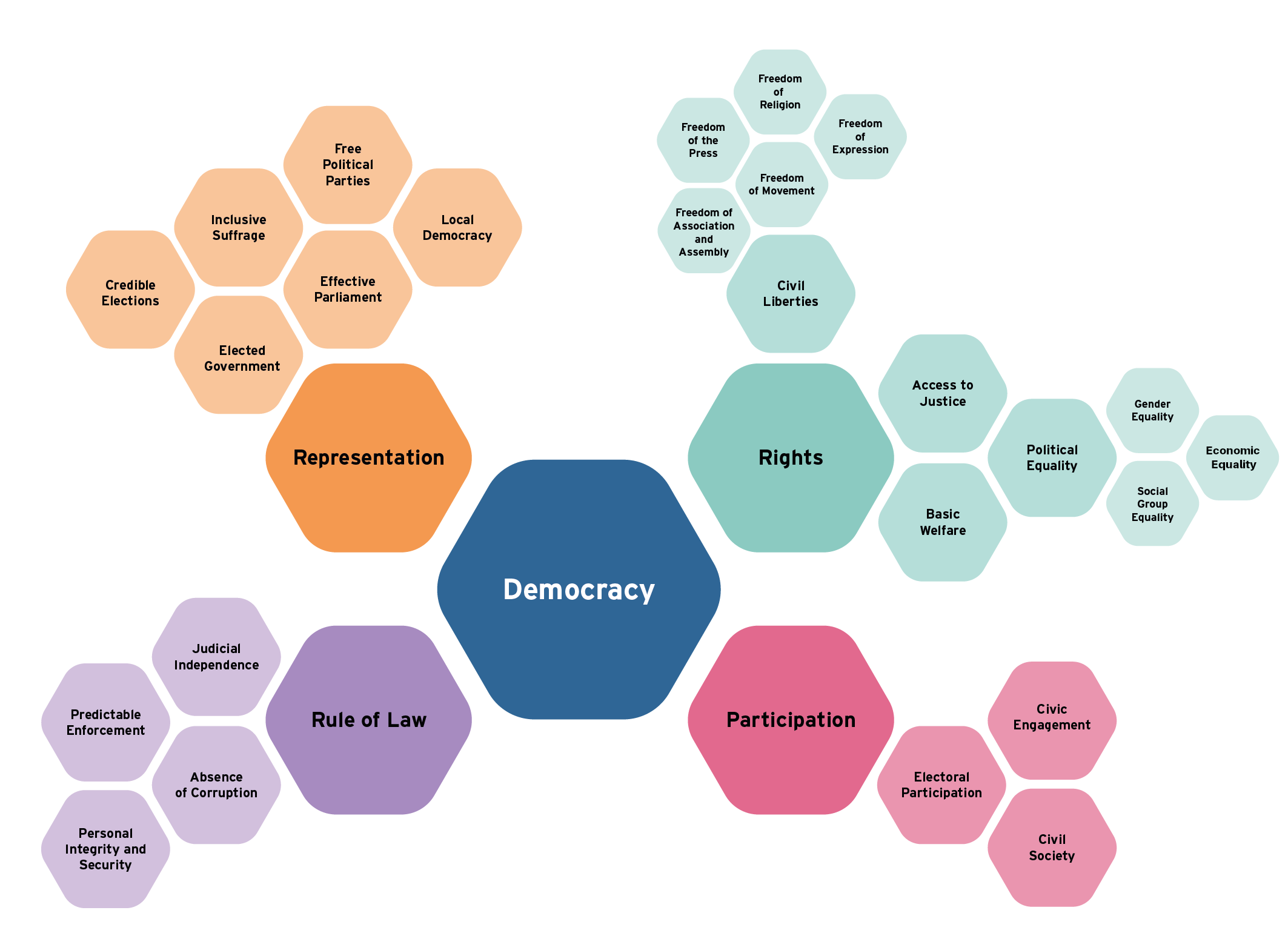
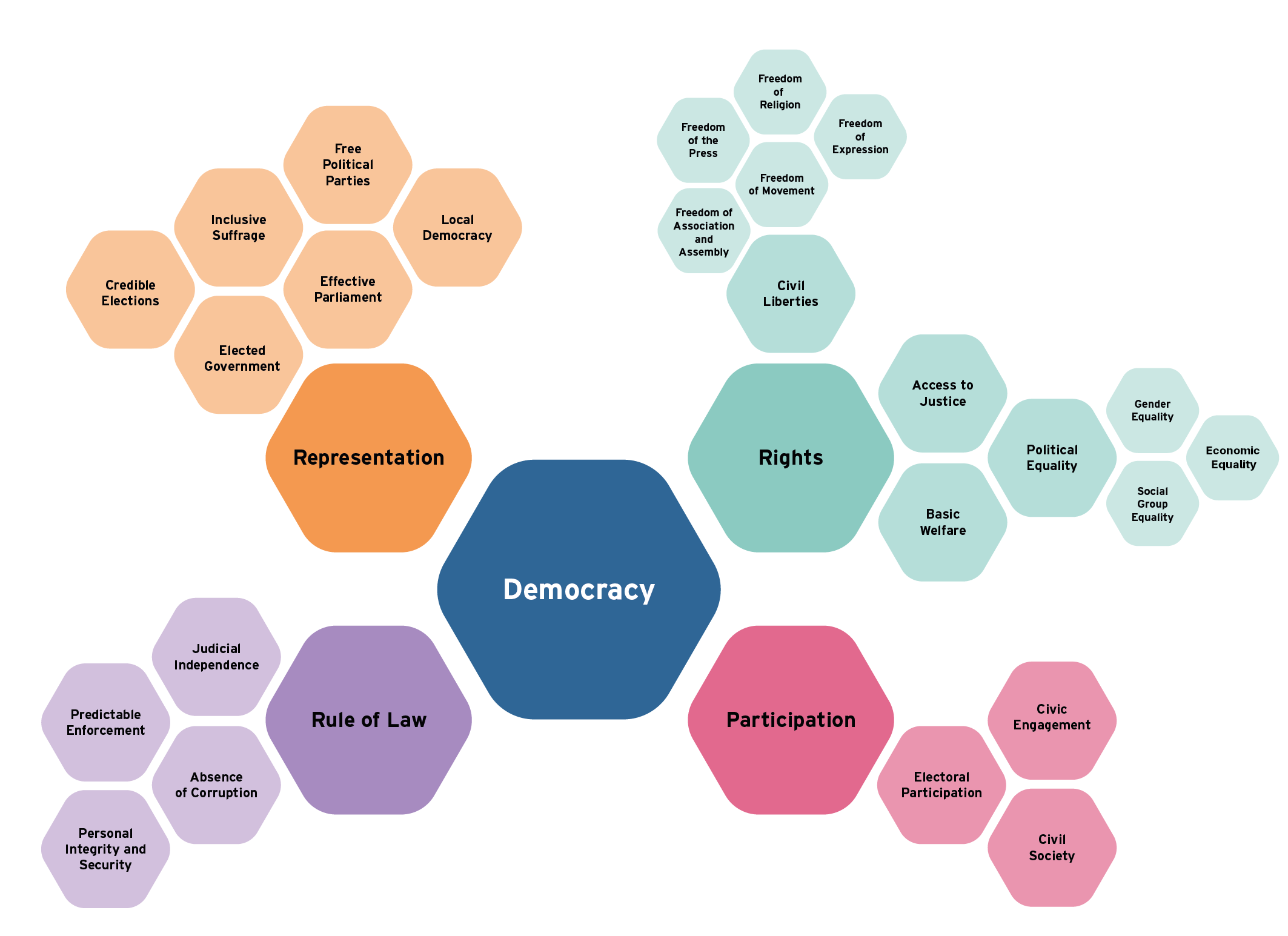
Bosnia and Herzegovina (BiH) performs in the mid-range across all categories of the Global State of Democracy framework, though its Rule of Law score is on the lower end of mid-range. Notably, BiH performs in the bottom 25 per cent globally in Absence of Corruption. There have been no significant changes between 2019-2024. BiH is an upper-middle-income country, with significant services, manufacturing and agricultural industries.
Although Bosnia and Herzegovina was declared a kingdom in 1377, it lacked autonomy for much of its history, including over 400 years under Ottoman rule. Its current borders were established in 1946 when it became a federal unit within Yugoslavia. In a 1992 referendum, Bosnian Muslims (Bosniaks) and Croats voted overwhelmingly for secession from Yugoslavia, while Serbs largely boycotted the vote, preferring to remain in a Serb-dominated Yugoslavia. After the vote, BiH declared independence and received international recognition. Almost immediately, fighting broke out, resulting in the Bosnian War, one of the deadliest in Europe since the Second World War. The 1995 Dayton Peace Agreement (DPA) ended the war and enshrined Bosniaks, Croats, and Serbs as the country’s three constituent peoples, establishing what some call the world’s most complicated governance system. The DPA established two entities—Republika Srpska (RS), mainly populated by Serbs, and the Federation of BiH, largely populated by Bosniaks and Croats. The link between ethnicity and representation established by the DPA has strengthened ethnic political elites and fostered a system often characterized as an ethnocracy or ethnically-based kleptocracy. Over the years, RS has favoured close ties with Serbia and Russia, and has undermined BiH’s accession to the European Union, negotiations for which began in March 2024. RS has increasingly rejected the authority of central government institutions, moving towards a parallel electoral system and banning state-level justice and police authorities from exercising jurisdiction in the entity.
Constitutional discrimination against ethnic minorities of non-constituent peoples, including the Roma minority, remains a challenge. Grievances related to war atrocities, particularly the Srebrenica Massacre (ruled a genocide), continue to shape the country’s politics. A landmark genocide denial conviction in 2025 came amid criticism that the judiciary has not done enough to prosecute such offenses, despite legal protections in place. In 2024, the UN General Assembly approved the Srebrenica Genocide Resolution condemning any denial of the event. Another sticking point is elections, which continue to be marred by allegations of discrimination, while the suspension of public funding for parties has raised political competition concerns. Amid ongoing concerns about political corruption, there have been recent efforts to counter money laundering, and prevent potential conflicts of interest among public officials.
BiH is mid-performing in Gender Equality. While legislation, policies and institutional mechanisms are in place, implementation is uneven. Impediments to equal political participation, threats against women and LGBTQIA+ activists, and gender-based violence persist. BiH’s Federation entity recently enhanced support for victims of domestic violence, ensuring that women are also protected outside of marriage.
Looking ahead, it will be important to monitor Personal Integrity and Security and Political Equality, as memories of the war loom large, secessionist threats from the leadership of Republika Srpska escalate, and ongoing ethnic tensions strengthen. Developments to watch include a case pending before the European Court of Human Rights, which will be significant for the political rights of ethnic minorities, and recent revisions to the RS Constitution weakening requirements for balanced ethnic representation of the constituent peoples in the functions of the entity’s government.
Last Updated: July 2025
https://www.idea.int/democracytracker/
December 2025
Electoral commission orders rerun after annulling Republika Srpska presidential election
On 24 December, the Central Election Commission announced that it would annul the election results of the 23 November Republika Srpska presidential elections (entity-level) at 136 polling stations across 17 municipalities due to vote counting irregularities. Opposition parties and NGOs suspected identity theft and falsified votes, while Transparency International and local NGO Pod Lupom alleged electoral fraud may have affected the result. The Banja Luka Prosecutor’s Office has opened seven cases investigating the reported irregularities. Initial results indicated a narrow victory for Siniša Karan, backed by the Alliance of Independent Social Democrats (SNSD), over opposition candidate Branko Blanuša of the Serb Democratic Party (SDS). Repeat voting has been scheduled for 8 February at the affected polling locations.
Sources: Central Election Commission of Bosnia and Herzegovina (1), Central Election Commission of Bosnia and Herzegovina (2), Balkan Insight, N1, Pod Lupom, ODIHR, Srpska Info



August 2025
Republika Srpska president rejects mandate removal, calls referendum challenging decision
Milorad Dodik, the President of Republika Srpska (RS), one of the two entities of Bosnia and Herzegovina (BiH), has publicly rejected the Central Electoral Commission (CEC)’s decision to revoke his mandate, reached on 6 August. The CEC’s move followed the BiH State Court’s appellate ruling upholding Dodik’s conviction for defying the High Representative and undermining the central government’s authority, confirming a one-year prison sentence and a six-year ban from holding public office. The prison sentence was later converted into a fine of BAM 36,500 (EUR 18,660). On 18 August, the BiH State Court rejected Dodik’s appeal of the CEC decision, making his removal from office final and binding. The CEC has scheduled early elections for the RS Presidency on 23 November. On 22 August, the Parliament of Republika Srpska voted in favour of an entity-wide referendum on whether to accept the State Court’s verdict and Dodik’s removal from office, scheduled for 25 October.
Sources: Balkan Insight (1), Balkan Insight (2), Al Jazeera, European Western Balkans, Friedrich Naumann Foundation, Organization for Security and Co-operation in Europe, International IDEA
Update: On 18 October, Ana Trišić-Babić, an associate of Milorad Dodik and former deputy foreign minister of Bosnia and Herzegovina (BiH), was confirmed as interim president of the Republika Srpska (RS), following a ban on Dodik holding public office. Trišić-Babić is expected to serve until the early presidential elections scheduled for 23 November. A referendum on whether to accept the State Court’s previous conviction of Dodik, initially scheduled for 25 October, did not take place.
Sources: Al Jazeera, Balkan Insight (1), Balkan Insight (2), Balkan Insight (3), Sarajevo Times


July 2025
Constitutional Court overturns defamation verdict involving journalist
On 10 July, the Constitutional Court ruled in favour of Vahidin Durić, journalist and editor-in-chief of the local media outlet Bisce.ba, finding that lower courts violated his constitutional right to freedom of expression. The decision follows six years of legal proceedings and sets an important precedent, affirming that satire and criticism of public officials are protected speech. The outlet had published a satirical article questioning a public official’s educational credentials, claiming that the official had obtained a higher education degree in an unusually short period of time. Lower courts found Durić guilty of defamation and fined him BAM 1,000 (approximately USD 588). The Constitutional Court annulled the judgment, and sent the case back for reconsideration, requiring the lower court to apply constitutional standards. The ruling was welcomed by the BH Journalists Association as a victory for the protection of journalists in the country, while preserving democratic public debate.
Sources: BL Portal, Lu portal, Constitutional Court, Nezavisne


June 2025
Opposition leader arrested in Republika Srpska entity
On 9 June, Milan Miličević, mayor of Teslić and then head of the Serb Democratic Party (SDS), the largest opposition party in Republika Srpska (RS), was arrested in an anti-corruption operation led by the RS Ministry of the Interior. Two local officials, including the Deputy Speaker of the Teslić Assembly, were also arrested by RS police. The Prosecutor’s Office in Banja Luka reported approximately BAM 400,000 (EUR 200,000) were seized in a search of Miličević’s home. RS opposition parties condemned the arrests as political intimidation, and international media and state-level government officials noted a crackdown on dissent in RS. On 13 July, Miličević resigned from his position as party leader, citing intra-party divisions. The Prosecutor’s Office has launched an investigation into charges of influence peddling and bribery. The arrests are the latest development in the broader weakening of the opposition in RS. Watchdogs report that corruption charges against state officials rarely lead to consequences.
Sources: Info Bijeljina, European Western Balkans, Balkan Insight, SRNA, Klix.ba, International IDEA
See all event reports for this country
Global ranking per category of democratic performance in 2024

Basic Information

Human Rights Treaties
 State party
 Signatory
 No action
Performance by category over the last 6 months


Global State of Democracy Indices
Hover over the trend lines to see the exact data points across the years


Factors of Democratic Performance Over Time
Use the slider below to see how democratic performance has changed over time