


United Kingdom

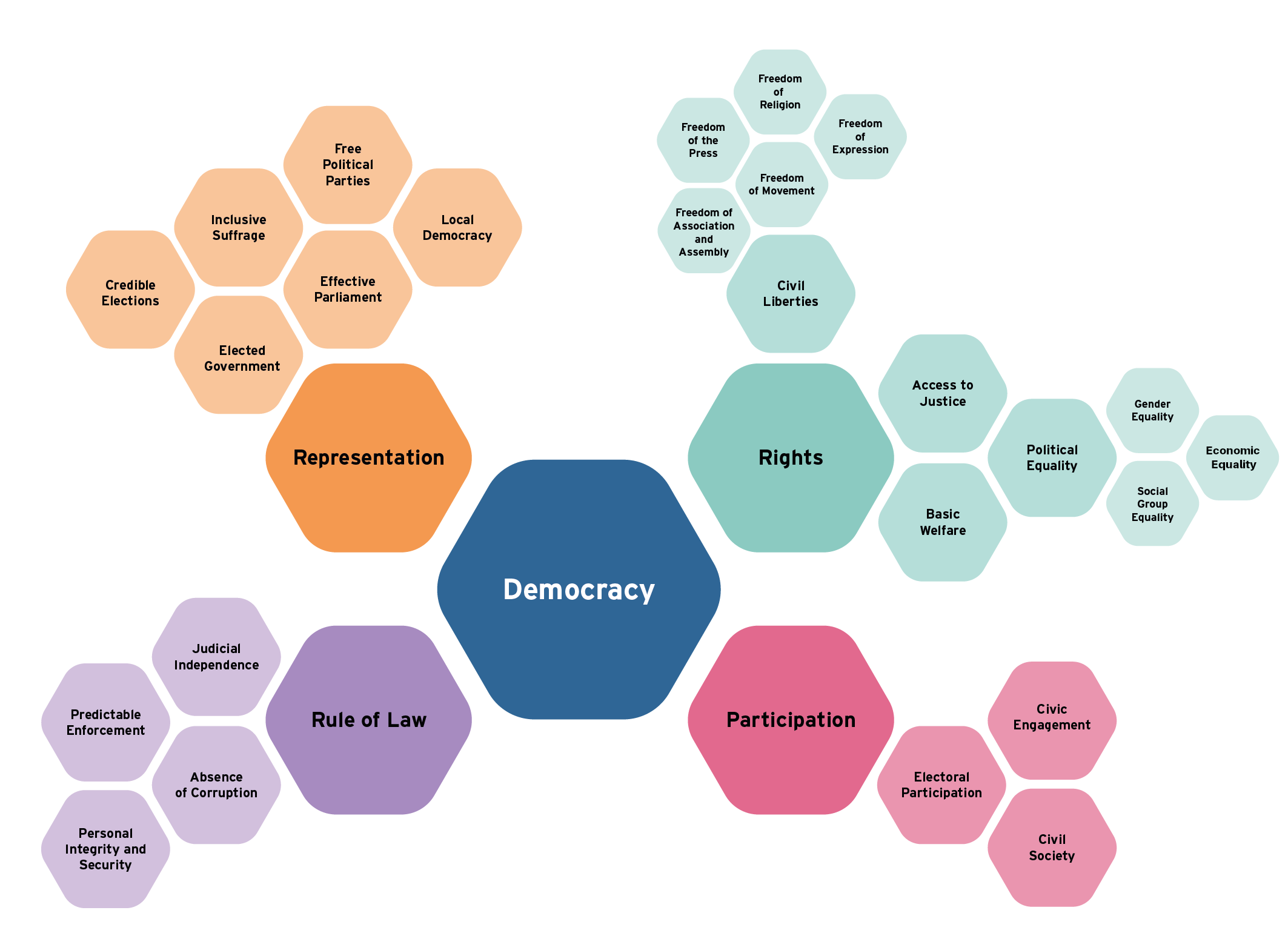
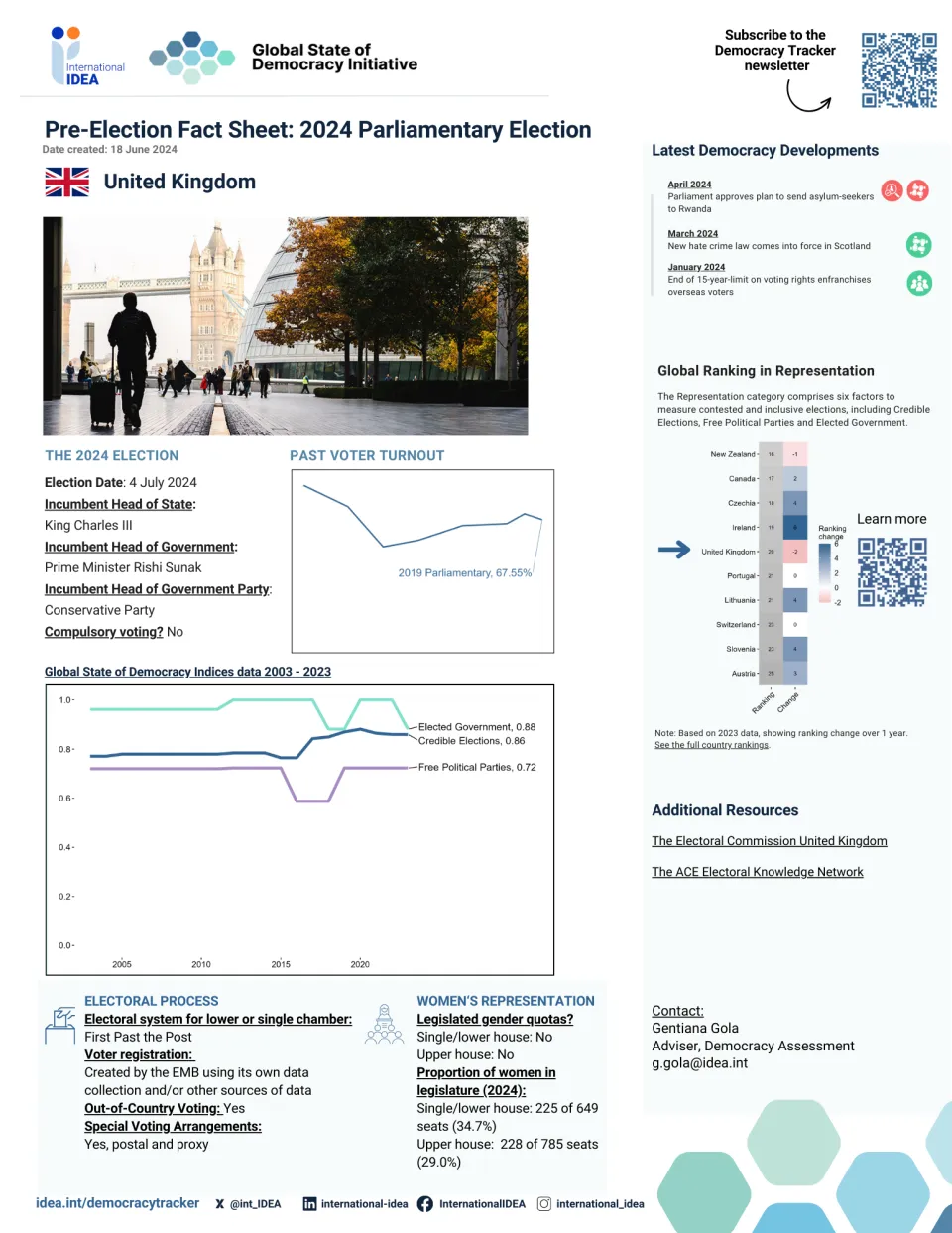
The United Kingdom of Great Britain and Northern Ireland (the UK) is high-performing in the Representation, Rule of Law and Participation categories of the Global State of Democracy framework, and mid-performing in Rights. The UK performs in the top 25 per cent globally in almost all factors, with the exception of Electoral Participation, Access to Justice, and Personal Integrity and Security. Between 2019-2024, the UK has significantly declined in Access to Justice, including measures of judicial corruption, as well as Freedom of Expression. It boasts the world’s sixth-largest economy, featuring a robust service industry (particularly retail and financial sectors), although it has among the highest levels of income inequality of any major European economy.
The UK was formed through unions of England and Wales with Scotland in 1707 and subsequently with Ireland in 1801. The UK’s national identity has over the years been challenged by Jacobite rebellions in Scotland, nationalist movements in Ireland and, more recently, an unsuccessful Scottish independence referendum and greater devolution of power to the constitutive nations. The UK withdrew from the European Union following a 2016 referendum in which a narrow majority of voters opted to leave the bloc. The departure process, known colloquially as 'Brexit', has had a profound political impact on the country, exposing and deepening social and regional divisions across the country. Low levels of trust in politicians, particularly visible among Leave voters, has spurred the Welsh government to propose measures to curb the spread of misinformation by candidates and elected officials.
Immigration from across the Commonwealth and from Europe has over time added new layers of diversity and identity to the UK’s nations, as immigrants brought with them new languages and religions. Previous tolerance of such diversity has been eroded as multiculturalism and other liberal values have increasingly been contested by politicians and voters. Migration policy has recently focused on tackling organized crime and human trafficking amid a growing number of deaths and disappearances in the Channel. At the same time, an economic-geographical division has grown out of the concentration of governance and economic productivity in London and its hinterlands, which has produced some of the highest levels of regional inequality in the developed world.
The UK is high-performing in Gender Equality, and recent gains have been notable in women’s political representation, despite concerns around online harassment of women electoral candidates. Violence against women is a persistent challenge, and the prevalence of sexual assault has increased over the past decade. The UK is in many ways advanced in LGBTQIA+ rights, and removed barriers to access to IVF for same-sex couples in 2023. Nonetheless, challenges persist, particularly in relation to rising harassment of transgender people. In 2024, Scotland expanded protections for victims of hate crimes in response to this challenge, which has unfolded alongside growing divisive rhetoric and embattled health services across the UK.
In the years to come, it will be important to monitor Civil Liberties and Personal Integrity and Security in light of the weakening of the rights of asylum-seekers, immigrants, dual nationals and those born abroad. Additionally, the Welsh government’s proposals to address deliberate political deception should be closely watched as they seek to promote accountability while balancing Freedom of Expression. Finally, it will be important to monitor the implications of a 2025 Supreme Court ruling interpretating key equality legislation, as it may affect Gender Equality in areas ranging from access to single-sex spaces to associational rights.
Last updated: July 2025
https://www.idea.int/democracytracker/
May 2026
Proposed electoral reforms target youth voting and political finance safeguards

On 14 May, the UK government reintroduced a major electoral reform package that would extend voting rights to 16- and 17-year-olds in all UK elections (including to the UK Parliament), potentially enfranchising 1.7 million additional people. The minimum voting age is currently 16 only for local council elections in - and elections to the devolved parliaments of - Scotland and Wales. The proposal is accompanied by government commitments to strengthen citizenship education. Other proposals include introducing forms of automatic voter registration, expanding voter ID options, and tightening political-finance rules to mitigate against foreign influence. New ‘know your donor’ requirements would require political parties and campaigners to conduct more rigorous checks on donation sources. The bill must now complete the legislative process in both parliamentary chambers. The government intends for the reforms to be in force before the next UK general election.
Sources: UK Government (1), UK Government (2), UK Parliament, BBC, UK Electoral Commission



November 2025
Government proposes new offense related to protesting outside politicians’ homes
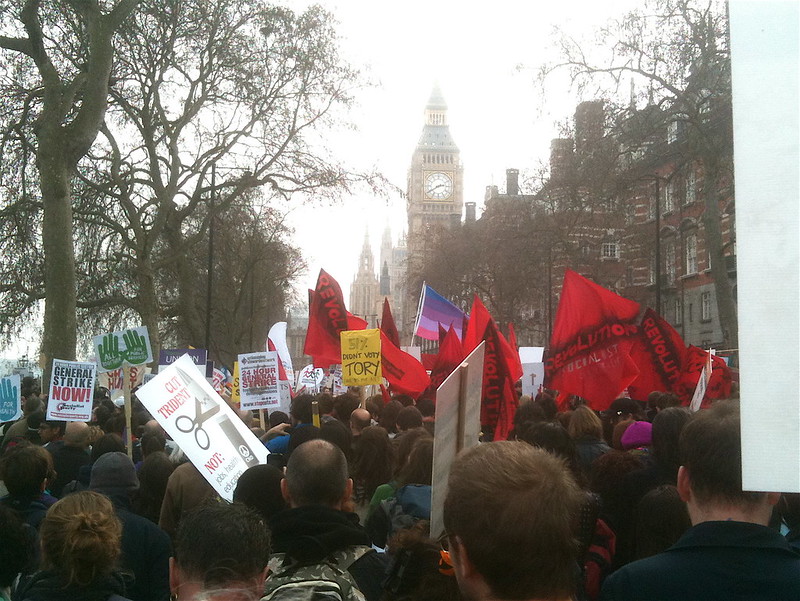
On 13 November, the Minister of State for Security introduced an amendment to the draft Crime and Policing Bill to create a new offence for protesting outside the private home of a public officeholder, such as an MP or local councillor, punishable by up to six months’ imprisonment or a GBP 2,500 fine (approximately USD 3,342). The government cited safety concerns, including a June arson attack on property linked to Prime Minister Keir Starmer, and a survey showing 96 per cent of MPs have faced harassment or intimidation since taking office. Critics warn the proposal could unduly restrict peaceful protest and raise proportionality concerns. The wider Bill, introduced in February, has raised concerns for its potential to restrict protests near places of worship and recurring demonstrations. The Bill still requires parliamentary approval and is currently at the committee stage in the House of Lords.
Sources: The Guardian (1), The Guardian (2), Government of the United Kingdom (1), Parliament of the United Kingdom, Verfassungsblog


November 2025
Border security legislation enters into force
On 2 December, the Border Security, Asylum and Immigration Act, introducing major changes to immigration detention and asylum processing, received royal assent. The legislation, first introduced in January, extends the powers of immigration authorities to extract data from electronic devices beyond criminal investigations, raising concerns from the Joint Committee on Human Rights, a parliamentary committee, about their potential to lead to searches of vulnerable individuals. The legislation also restricts civil legal aid for those subject to deportation, limiting access to exceptional cases only such as those at risk of refoulement. At the same time, the legislation creates new offenses targeting organised criminal networks involved in migration, and introduces a 28-day time limit on detention, responding to long-standing concerns over legal uncertainty under indefinite detention regimes. The legislation took effect immediately.
Sources: Government of the United Kingdom (1), Government of the United Kingdom (2), Government of the United Kingdom (3), The Guardian, Reuters, Parliament of the United Kingdom (1), Parliament of the United Kingdom (2)


September 2025
New joint framework tackles truth and justice on the Troubles
On 19 September, the Republic of Ireland and the United Kingdom of Great Britain and Northern Ireland governments announced a new joint framework to replace the 2023 Legacy Act, aimed at restoring access to justice, strengthening independent investigations, promoting reconciliation and rule of law, and improving truth recovery for victims and survivors of the Troubles (a 30-year conflict in Northern Ireland that ended with the Good Friday Agreement in 1998). The prior framework had ended new criminal investigations, civil cases, and inquests, granting conditional immunity to those cooperating with its reconciliation body. The new framework removes these restrictions, ends the immunity scheme, restores civil and coronial processes, and establishes a restructured Legacy Commission with stronger investigatory and referral powers. It also established an information recovery body, reviving unimplemented Stormont House proposals to improve family access to historical records under updated disclosure rules.
Sources: OHCHR, The Guardian, Reuters, Government of Ireland, Government of the United Kingdom of Great Britain

See all event reports for this country
Global ranking per category of democratic performance in 2025

Basic Information

Human Rights Treaties
 State party
 Signatory
 No action
Performance by category over the last 6 months

Global State of Democracy Indices
Hover over the trend lines to see the exact data points across the years


Factors of Democratic Performance Over Time
Use the slider below to see how democratic performance has changed over time