

Ukraine
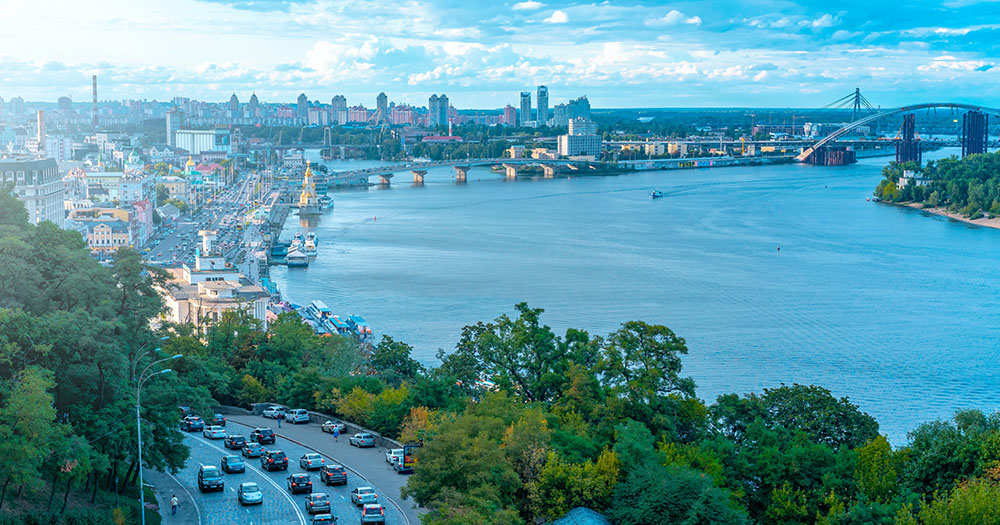
Ukraine exhibits mid-range performance in three categories of the Global State of Democracy framework (Representation, Rights and Participation), but it performs in the low range in Rule of Law. It is among the world’s top 25 per cent of countries in Civil Society but is among the bottom 25 per cent in Civic Engagement. Over the last five years, Ukraine has experienced significant declines in Elected Government and Civil Liberties. A lower-middle-income country, Ukraine is a major producer of metals and agricultural goods. However, emigration is a serious issue, and between 15 and 25 per cent of the country’s pre-war labour force was estimated to be employed abroad.
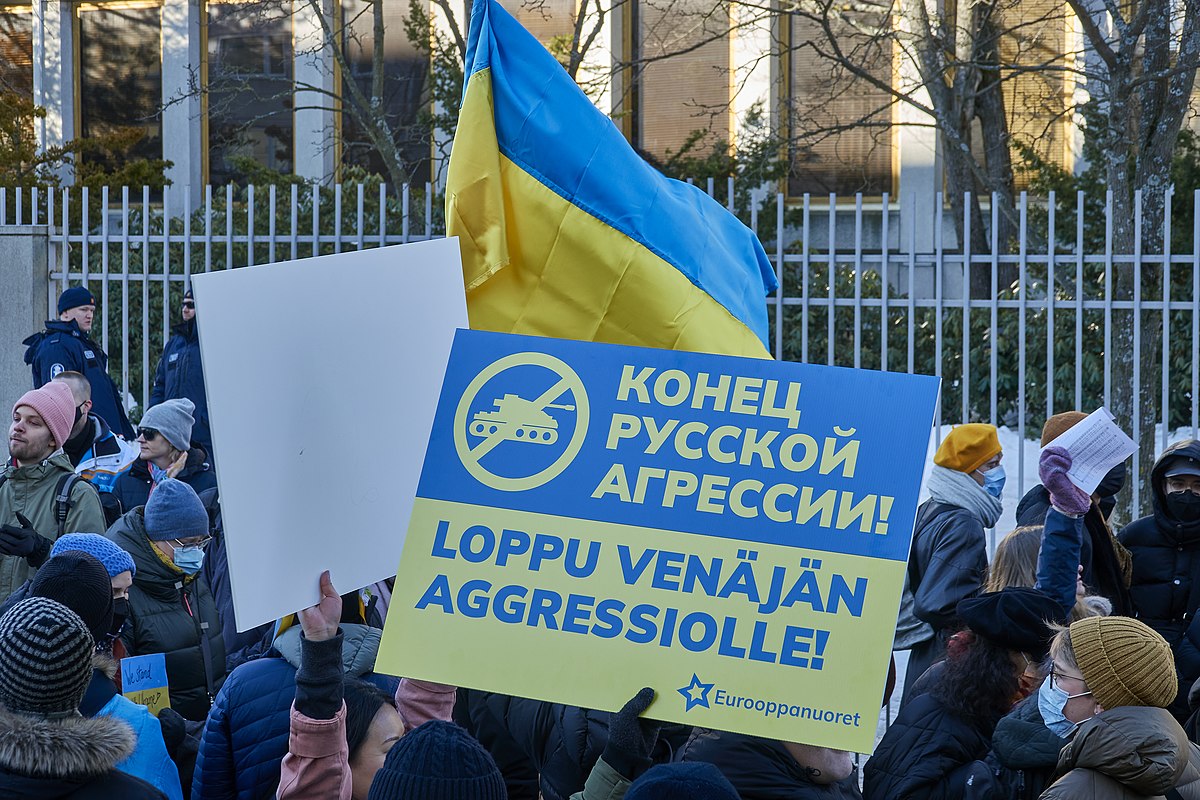
Ukraine’s current political landscape is dominated by the ongoing Russian war of aggression, which began in February 2022. The war has prompted a surge of refugee outflows and internal displacement.
Since gaining independence from the Soviet Union in 1991, Ukraine has commonly been characterized as having a “pro-Russian” versus “pro-Western” cleavage, but these terms are reductive. Although ethnicity, language, social class, and geography are strong drivers of the country’s political cleavages, they have not cleanly or consistently divided Ukraine into a Russophone, Slavicizing east and a Ukrainian-speaking, Europhile west. Together, ethnic Russians and Ukrainians make up over 90 percent of the population, with Belarusians, Moldovans, and Crimean Tatars making up the largest remaining minorities.
In practice, ethnic and linguistic boundaries in Ukraine are blurred, bilingualism is near-universal, and large swathes of rural and suburban Ukraine rely on a Ukrainian-Russian creole known as surzhyk. Arguments over the relative status of the Russian and Ukrainian languages has been a frequent rallying point in national politics, but this discourse is often a proxy for other concerns about unemployment, inequality, the distribution of national resources, and corruption. The 2014 Euromaidan Revolution and the 2022 invasion triggered an ongoing renegotiation of Ukraine’s sense of national identity, the outcome of which remains uncertain.
In pre-war Ukraine, the controversial handling of reforms of judicial, electoral, and anti-corruption institutions were a driving political force. Broad-based efforts to improve the everyday functioning of government and fight corruption had been hampered by the often-countervailing force of strong patrimonial structures centred around powerful oligarchs or local power brokers. These oligarchs dominated the state and economy for nearly all of Ukraine’s independent history, only losing ground following the full-scale Russian invasion.
Ukraine has been categorized as high performing and one of the top 25 globally in Gender Equality since 2019. While Ukrainians with positive views of LGBTQIA+ people and women’s rights remain a small minority, some research indicates that the strong connection of traditional patriarchal values and open homophobia with the Russian state has contributed to a decline in the public acceptance of these values in Ukraine since the full-scale invasion. Nevertheless, existinggender inequalities have been exacerbated by the Russian invasion, with women experiencing greater economic, physical, and psychosocial inequality than men. Civil Liberties and Free Political Parties have declined in recent years, reflecting bans on pro-Russian political parties and restrictions on movement that are part of the government’s wartime defence efforts. They may or may not be indicative of the country’s future post-war development. The short- and long-term democratic trajectory of Ukraine will be heavily influenced by the outcome of the ongoing war and the nature of its final settlement.
Updated: May 2025
https://www.idea.int/democracytracker/
November 2025
Decade-long PrivatBank legal dispute comes to a close
An arbitration court in London ordered Ukrainian oligarchs Ihor Kolomoyskyi and Hennadiy Boholyubov to pay USD 3 billion to the Ukrainian state-owned PrivatBank, bringing to an end a nine-year legal battle. The two men did not make the payment voluntarily by the court’s deadline of 27 November 2025, and PrivatBank will now seek to recover the sum from their billions of dollars of assets frozen around the world. PrivatBank, the most widely-used retail bank in Ukraine, was privatized in 2016 after regulators found that its owners Kolomoisky and Boholyubov, had misappropriated USD 5.5 billion of its assets for their own personal enrichment. Prior to the 2014 Euromaidan revolution, Ukrainian oligarchs typically misused bank assets in this manner to finance their personal business empires and political campaigns. Kolomoyskyi was arrested in Ukraine in 2023 and faces a range of criminal charges, while Boholyubov remains at large and reportedly lives in either Geneva or London.
Sources: Kyiv Independent, BNE Intellinews



November 2025
Andriy Yermak resigns amid corruption scandal
Head of the Office of the President of Ukraine Andriy Yermak resigned from his post on 28 November after his home and offices were searched by anti-corruption officials as part of an investigation into bribery in the country’s energy sector. Yermak, widely held to be the most powerful official in the country after President Zelenskyy, has not been charged as part of ‘Operation Midas’, which is the largest and most high-profile anti-corruption case in recent history. Several other high-ranking ministers and Zelenskyy’s former business partner Timur Mindich have also been charged alongside Yermak, and the investigation continues. The ongoing investigation reportedly motivated the president’s office to attempt to limit the National Anti-Corruption Bureau’s independence in July 2025. These efforts were abandoned after significant pushback from civil society and the general public.
Sources: Financial Times, Carnegie Endowment for International Peace, Kyiv Independent (1), Kyiv Independent (2)
October 2025
Odesa mayor stripped of citizenship and removed from office
President Volodymyr Zelenskyy issued a decree on 14 October stripping Odesa Mayor Gennadiy Trukhanov of his Ukrainian citizenship and thereby removing him from office. The mayor’s office has been replaced with a military administration appointed by the President. The grounds for the decision were claims by the Security Service of Ukraine (SBU) that Trukhanov obtained Russian citizenship in 2015. Dual citizenship is not currently recognized under Ukrainian law, and Trukhanov’s case has been the source of speculation for years. The move is broadly understood to be only the starkest case in the long-running effort by the presidential administration to limit the independence and political power of influential regional elites. Many such elites have clashed with the administration over the bounds of decentralization reforms. Trukhanov denies that he has or had Russian citizenship and has said he will challenge the decision in court. Trukhanov is a figure with ties to organized crime and allegations of Russian citizenship have circulated for a decade, but who has also been praised for effective leadership and resisting Russian influence since the full-scale invasion.
Sources: Kyiv Independent, Radio Free Europe/Radio Liberty, The Insider, Carnegie Endowment for International Peace


September 2025
Rada resumes regular broadcasts
On 16 September, regular live television broadcasts of sessions of the Verkhovna Rada (parliament) were reinstated for the first time since Russia’s February 2022 full-scale invasion. The move is part of a gradual reopening of the Rada to the media and the public, after press freedom and transparency were curtailed on security grounds as part of the country’s state of martial law. Previously, journalists were admitted to the Rada on 5 May for the first time since February 2022, although only a few dozen have been accredited, down from 4,000 before the war.
Sources: Babel.ua, Reporters without Borders

See all event reports for this country
Global ranking per category of democratic performance in 2024

Basic Information

Human Rights Treaties
 State party
 Signatory
 No action
Performance by category over the last 6 months


Global State of Democracy Indices
Hover over the trend lines to see the exact data points across the years


Factors of Democratic Performance Over Time
Use the slider below to see how democratic performance has changed over time