Ghana - 2000 - Presidential Election

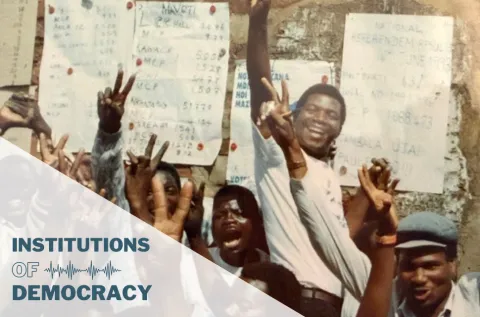
Ghana’s 2000 general elections marked the country’s first real test of constitutional term limits and peaceful alternation of power after nearly two decades dominated by Jerry John Rawlings and the National Democratic Congress (NDC). With Rawlings stepping down at the end of his second elected term, the race opened up between John Agyekum Kufuor of the opposition New Patriotic Party (NPP) and Vice President John Atta Mills, Rawlings’s chosen successor. The campaign unfolded in a relatively calm environment by regional standards, reinforced by elite commitments such as the Osu Declaration, in which key party leaders publicly pledged to avoid violence and restrain their supporters.
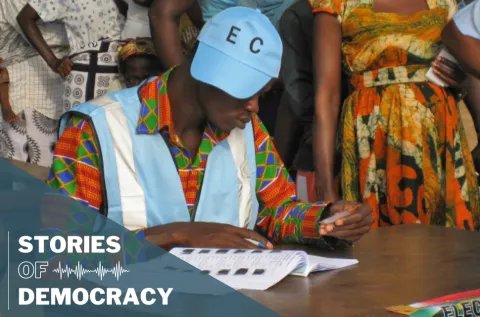
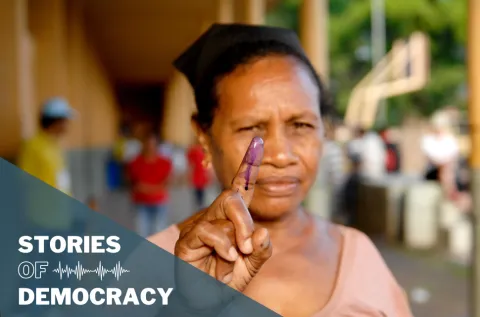
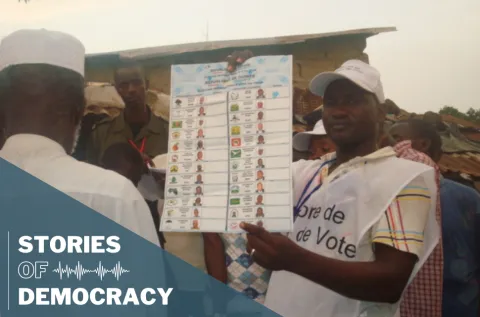
The first round of voting on 7 December 2000 produced no outright presidential winner; Kufuor led with roughly 48 percent to Atta Mills’s 44 percent, forcing a runoff later that month. In the second round, Kufuor won about 57 percent of the vote, while the NPP also emerged as the largest bloc in parliament, ending eight years of NDC dominance and signaling a significant shift in Ghana’s political landscape. International and domestic observers judged the process broadly free and fair, and the orderly transfer of power helped cement Ghana’s reputation as one of Africa’s emerging democratic success stories at the turn of the century.
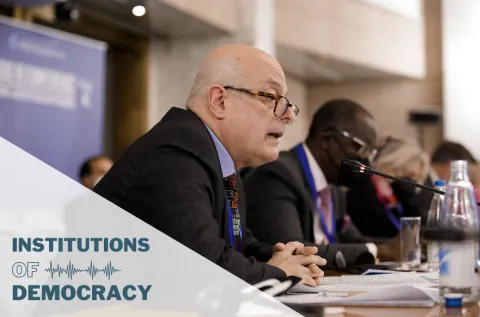
In this recording, Professor Gyimah-Boadi discusses the historical and political context surrounding the December 2000 elections, and his role in founding the Ghana Center for Democratic Development and the Coalition of Domestic Election Observers (CODEO), two organizations that had a key impact on the election environment in Ghana during the 2000 election, and in many elections since.
Professor Emmanuel Gyimah-Boadi is co-founder, former executive director, and board chair of Afrobarometer, a pan-African survey research project that tracks public opinion on political, economic, and social developments in African countries. He is also a co-founder and former Executive Director of the Ghana Center for Democratic Development (CDD-Ghana), an independent, nonpartisan, and nonprofit policy research and advocacy group on democratic governance.
Born on October 2, 1953, in Ghana, he earned his bachelor’s degree in political science from the University of Ghana and his master’s and doctoral degrees in political science from the University of California, Davis. Professor Gyimah-Boadi has taught a wide range of courses in political science and related disciplines at several universities, including the University of Ghana (1986-2014), the University of Swaziland (1991-1994), and the American University (1995-1996).
Professor Gyimah-Boadi has held fellowship positions at the Center on Democracy, Development and the Rule of Law at Stanford University, the International Forum for Democratic Studies at the National Endowment for Democracy, and the Woodrow Wilson International Center for Scholars. He was a member of the Advisory Committee of the Ibrahim Index of African Governance (IIAG), a fellow of the Ghana Academy of Arts and Sciences, an international member of the US National Academy of Sciences, and a recipient of several awards, including the Martin Luther King, Jr. Award for Peace and Social Justice and the US African Studies Association's Distinguished Africanist Award in 2018.

Media