Constitutional Governance and Rule of Law


Strengthening Constitutional Governance for Peace and the Rule of Law
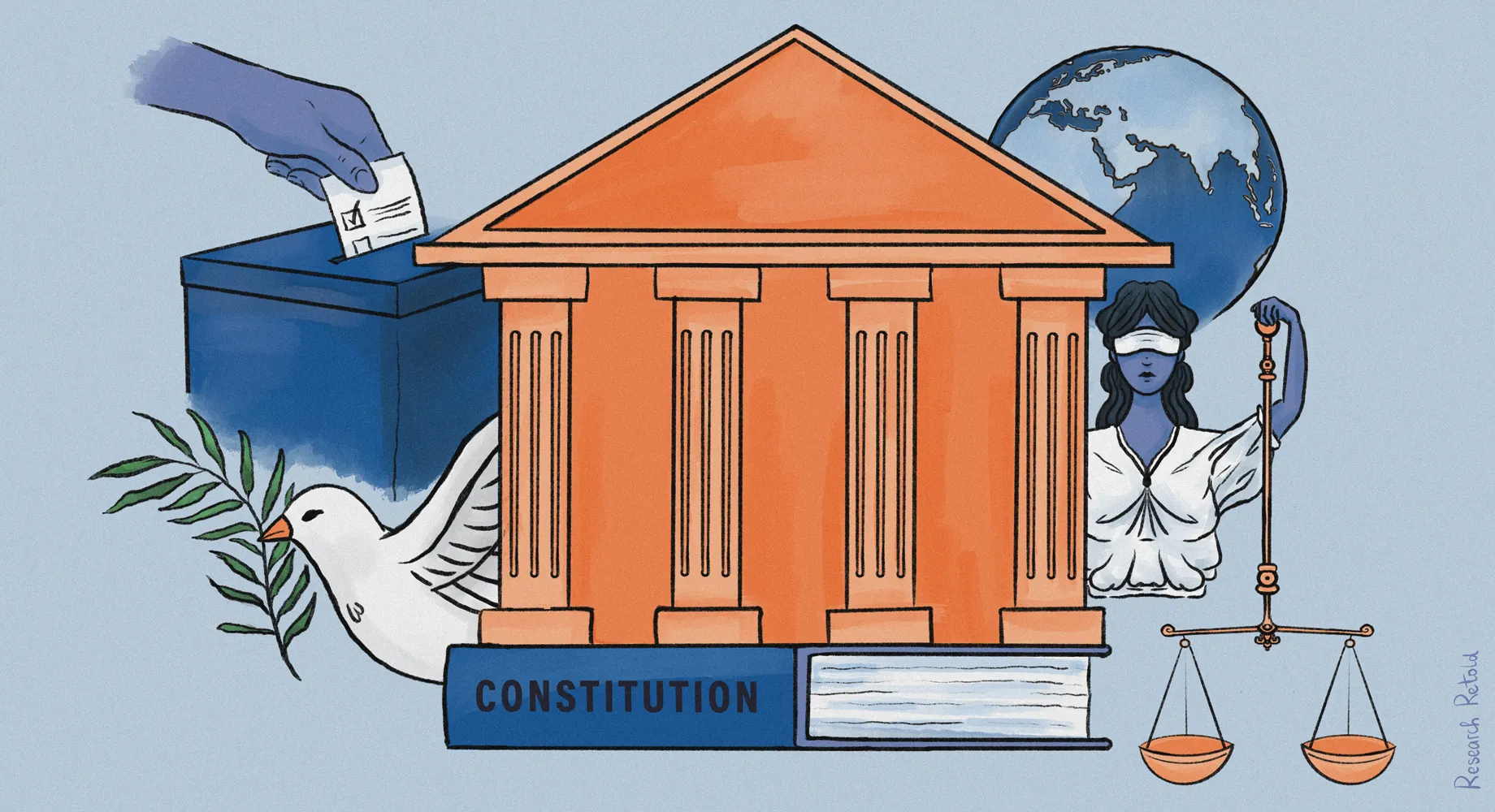
Constitutions are foundational to democracy, the rule of law, human rights and good governance, but poorly designed constitutions can increase discord and conflict. Because of the important roles that constitutions play, constitutional change is a central feature of democratic transition, democratic consolidation and conflict management.
International IDEA believes that people everywhere yearn for a social contract that respects and advances their dignity and equality. To further these aspirations, International IDEA provides request-based support to strengthen constitutional governance and rule of law.
Why the Legal and Constitutional Framework Matters
1. The Rule of Law for Public Good
Elections determine who holds power, but the legal and constitutional framework establishes what those in power must do, and what they are prohibited from doing. Without a robust legal and constitutional framework, public authority can be used to benefit only those in power, undermining fundamental rights, marginalizing vulnerable groups, and generating social and economic instability. Strong rule of law, by contrast, promotes the exercise of public authority for the public good.
2. Constitutional Change for Peace and Democracy
Constitution-making is not only a legal exercise; it is a collective effort to redefine the social contract between citizens and the state, and among diverse societal groups. Since constitutions determine how power is shared, how rights are protected, and how societies coexist, constitutional reform negotiations often lie at the heart of transitions from conflict to peace and authoritarianism
to democracy. These processes carry serious risks if mishandled, but can drive profound transformation if managed successfully.
3. Strong Institutional Safeguards for Democratic Resilience
In a growing number of countries, elected governments have exploited weak legal and institutional frameworks to undermine democratic safeguards. When institutions are fragile or rules are poorly designed, political majorities can exploit them to erode democracy from within. But strong laws help to ensure that political decisions reflect the will of the people.
If political systems were a machine, failures could arise from flawed design or from problems in operation. International IDEA works on both fronts by:
- Support for the design of legal and constitutional reforms through comparative, non-prescriptive, expert advice.
- Improving how democratic institutions work through tailored technical assistance, advice and peer-to-peer exchange.
Our Unique Approach
International IDEA’s Constitutional Governance and Rule of Law Programme is grounded in three core principles:
- National Ownership: We do not impose solutions. Instead, we act as trusted advisors, helping national actors explore options, assess trade-offs and design legal and constitutional frameworks that are tailored to their context.
- Inclusive Dialogue: We support processes that bring together citizens, civil society, political leaders and other stakeholders, enabling them to jointly shape their shared future.
- Evidence-Based Support: Our assistance draws on comparative knowledge, research, and technical guidance informed by global experience.
International IDEA brings political neutrality and trusted access, allowing us to work across divides, engage all sides of a process and support constitutional reforms even in sensitive or polarized environments.
Through capacity-building workshops, technical assistance, political mediation and advisory support, International
IDEA partners with countries at decisive moments — when constitutional choices determine the direction of their
democracy. We help national actors navigate these transitions with confidence and clarity, ensuring that reforms
open pathways to peace, accountability and a stronger rule of law. Our comparative knowledge equips governments
to make informed decisions, provides development partners with a reliable foundation for evidence-informed
programming and contributes to building institutions that citizens can trust.
Key Outputs and Results
Knowledge:
Before the establishment of International IDEA's Constitutional Governance and Rule of Law Programme in 2006, there were no practitioner-oriented resources on how to undertake constitutional reform.
Today, International IDEA has produced over 100 such publications. Constitution makers from Bangladesh to Barbados, and from Tunisia to Tuvalu, have used these materials in drafting and reform processes.
International IDEA also created ConstitutionNet, the leading global online information portal for constitutional governance. It provides thousands of knowledge resources and guidance materials, expert analyses on ongoing constitutional reform processes and regular updates on constitutional reforms around the world.
Convening:
Prior to this programme, there was no forum that brought together the conflict mediation and constitutional reform communities. Since 2014, International IDEA has convened an annual dialogue on post-conflict constitution-building, fostering exchanges between these communities alongside key actors from ongoing peace processes. This dialogue has generated a substantial body of research and practical knowledge for practitioners and international advisors.
Likewise, prior to 2019, there was no global platform for women engaged in political transitions to share experiences and learn from one another. International IDEA created the Women's Constitution Makers' Dialogue, which has since grown into a flourishing, global network, offering mutual advice and support to advance women's participation in constitutional and legal reform processes.
Country Assistance
International IDEA has provided support to constitutional reform processes in over 20 countries, including in Armenia, Barbados,
Belarus (opposition in exile), Chile, The Gambia, Ghana, Guyana, Libya, Myanmar, Nepal, Panama, the Philippines, Somalia, South
Sudan, Sudan, Sri Lanka, Trinidad and Tobago, Tunisia, Ukraine and Yemen.

Subscribe to the ConstitutionNet Newsletter
Monthly updates on the world of Constitution-Building
Related content
Updates
Projects
Publications






![Dr Fawaz Shareef, Founder of Maldives Centre for Policy Studies; Uza. Aishath Azima Shakoor; Uza. Fathimath Dhiyana Saeed. [Photo: Maldives Centre for Policy Studies]](https://www.idea.int/sites/default/files/styles/webp_480/public/2024-08/WhatsApp%20Image%202024-08-06%20at%2011.48.48.jpeg.webp?itok=pRaNdf-C)

Our experts
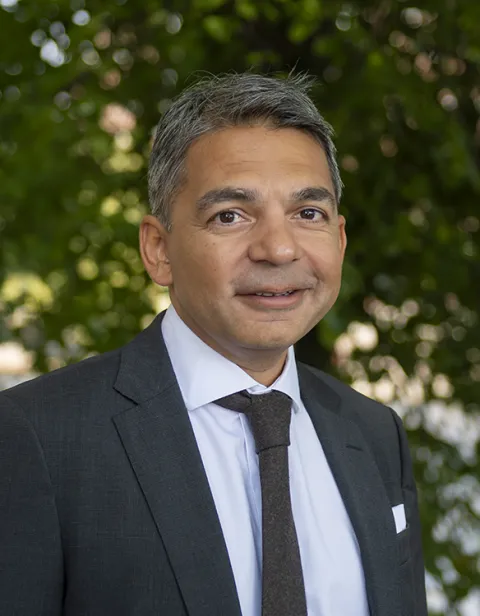
Sumit Bisarya
- Head of Constitutional Governance and Rule of Law Programme
Head of Constitutional Governance and Rule of Law Programme
Sumit Bisarya heads International IDEA’s Constitution-Building and Rule of Law Programme, which produces global comparative knowledge, conducts policy advocacy within the field of constitution-building and provides technical support to in-country…
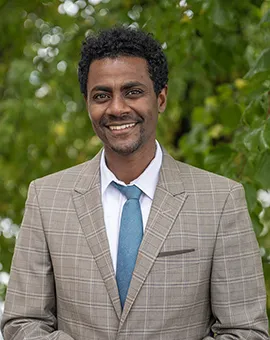
Adem Kassie Abebe
- Senior Adviser, Constitutional Governance and Rule of Law Programme
Senior Adviser, Constitutional Governance and Rule of Law Programme
Dr Adem Kassie Abebe is Senior Adviser on International IDEA’s Constitutional Governance and Rule of Law Programme where he supports constitutional and democratic resilience and consolidation, as well as transitions from conflict/authoritarianism to…
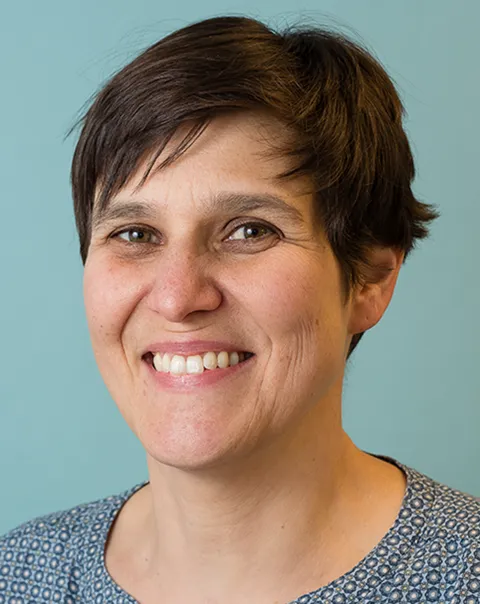
Elisabeth Baumgartner
- Senior Programme Manager, Constitutional Governance and Rule of Law Programme
Senior Programme Manager, Constitutional Governance and Rule of Law Programme
Elisabeth Baumgartner is a Senior Programme Manager and a key expert 1 at the Constitutional Governance and Rule of Law Programme.Baumgartner coordinates the Facility on Justice in Conflict and Transition which provides support in the areas of…
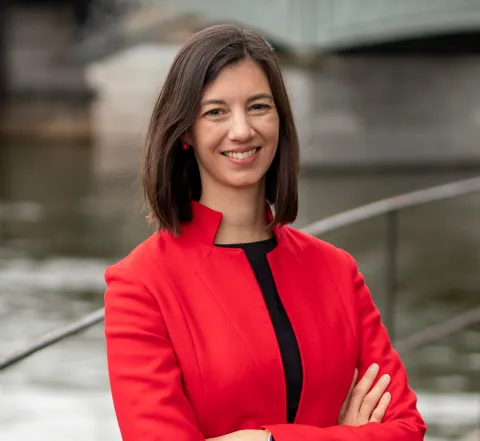
Kimana Zulueta-Fülscher
- Acting Head, Constitutional Governance and Rule of Law Programme
Acting Head, Constitutional Governance and Rule of Law Programme
Kimana Zulueta-Fülscher, PhD, is Acting Head of the Constitutional Governance and Rule of Law Programme, and is a non-resident fellow at Cornell University's Center on Global Democracy.She was Senior Advisor (2022-26) and Acting Head of the…

Sharon Pia Hickey
- Programme Officer, Constitutional Governance and Rule of Law, and Climate Change and Democracy programmes
Programme Officer, Constitutional Governance and Rule of Law, and Climate Change and Democracy programmes
Sharon Pia Hickey is a lawyer and Programme Officer at International IDEA’s Constitutional Governance and Rule of Law, and Climate Change and Democracy programmes. Her work at IDEA includes advancing climate constitutionalism and organizing the…
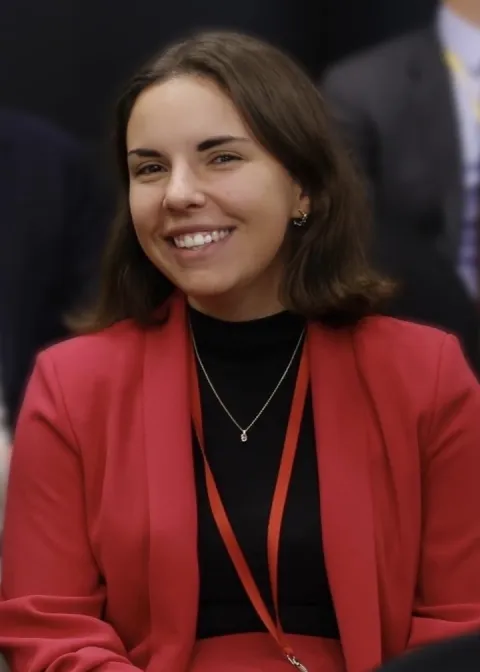
Alexandra Oancea
- Associate Programme Officer, Constitutional Governance and Rule of Law
Associate Programme Officer, Constitutional Governance and Rule of Law
Alexandra Oancea is Associate Programme Officer for the Constitutional Governance and Rule of Law Programme at International IDEA's office in The Hague. She supports constitution-building processes, with a focus on constitutional design, rule of law…

Maurice Mboula Jean-Claude Didier Enguélégué
- Senior Adviser, Constitution-Building Processes, Africa and West Asia
Senior Adviser, Constitution-Building Processes, Africa and West Asia
Maurice Enguélégué is the Senior Adviser, Constitution-Building Processes for the Africa and West Asia region. He is a Professor of Political Science and has taught for 20 years in French universities (Amiens, Bordeaux and Douai) and in Cameroon at…
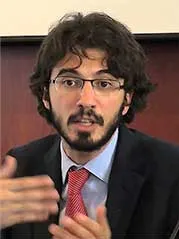
Zaid Al-Ali
- Senior Programme Manager, Constitution-Building in Africa and West Asia
Senior Programme Manager, Constitution-Building in Africa and West Asia
Zaid Al-Ali is the Senior Programme Manager in Constitution-Building in the Africa and West Asia region. Al-Ali’s research and work focuses on constitution-building and peace-building, particularly in Arab countries. Al-Ali’s previous work…

Danladi Okuk Plang
- Head of Nigeria Programmes
Head of Nigeria Programmes
Danladi Okuk Plang is the Head of Programme for RoLAC II Programme in Nigera. Danladi Okuk joined International IDEA in June 2023.Danladi has over 20 years of experience working in the rule of law sector. He worked in senior management positions…
Work with us
Our funding and other types of contributions come from our Member States and other financial partners. Become our partner and learn more about how we can jointly undertake actions in Value for Partnership.