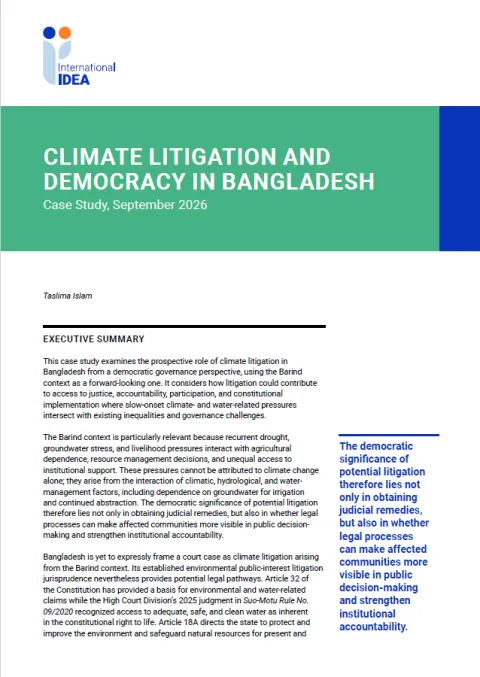
Climate Litigation and Democracy in Bangladesh
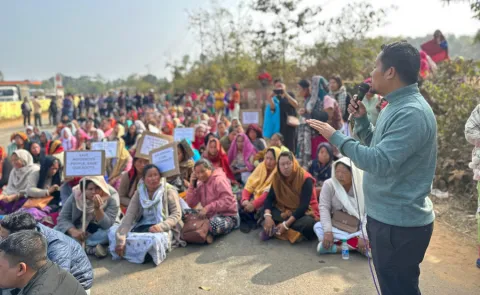
The Barind Tract in northwestern Bangladesh is one of the country's most climate-vulnerable regions, facing increasing water scarcity, prolonged droughts, and growing pressure on groundwater resources. Communities are experiencing the impacts of climate change most acutely, yet often have limited avenues to influence the decisions that affect their livelihoods.
This case study explores the potential of climate litigation as a tool to strengthen accountability, protect constitutional rights, and amplify the voices of affected communities. It examines the legal, institutional, and democratic dimensions of climate-related water governance. It is part of a series on climate litigation and democracy in Asia and the Pacific, which examines how legal action is shaping participation, accountability, and rights-based responses to climate change.


Details

Contents
EXECUTIVE SUMMARY
INTRODUCTION
1. CLIMATE VULNERABILITY AND GOVERNANCE IN THE
BARIND TRACT
2. DEMOCRATIC IMPLICATIONS FOR AFFECTED GROUPS
3. LEGAL AND LITIGATION FRAMEWORK
4. OPPORTUNITIES, RISKS, AND FUTURE PATHWAYS
5. CONCLUSION
REFERENCES
ABOUT THE AUTHOR
Give us feedback
Do you have a question or feedback about this publication? Leave us your feedback, and we’ll get back to you
Send feedbackClimate Litigation and Democracy in Bangladesh


 Download PDF
| Total views | 1127 |
|---|---|
| Downloads | 9 |
| Rating |

|
Give us feedback
Do you have a question or feedback about this publication? Leave us your feedback, and we’ll get back to you
Send feedback