Report highlights Amazonian climate assemblies as diagnosis for inclusive governance, climate finance challenges
Two central challenges to improving climate action are ensuring inclusive governance and access to climate finance. This is true not least in the Amazon, one of the world’s most critical regions when it comes to climate change mitigation and biodiversity protection.
In November, International IDEA and Delibera Brasil published the case study report “Amazonian Climate Deliberation: Insights from Three Citizen Assemblies on Climate Finance Held Ahead of COP30”, supported by the Agence Française de Développement (AFD) and the Federal Ministry for Economic Cooperation and Development of Germany (BMZ). The report presents the findings from a project piloting climate citizen assemblies to strengthen local climate governance, specifically on access to and priorities for climate finance. The climate assemblies were organised in the State of Pará in the Brazilian Amazon, whose capital city Belém hosted COP30 10-21 November 2025. The report contains three case studies and recommendations on how the international climate finance ecosystem can better benefit local communities and deliver global climate action.
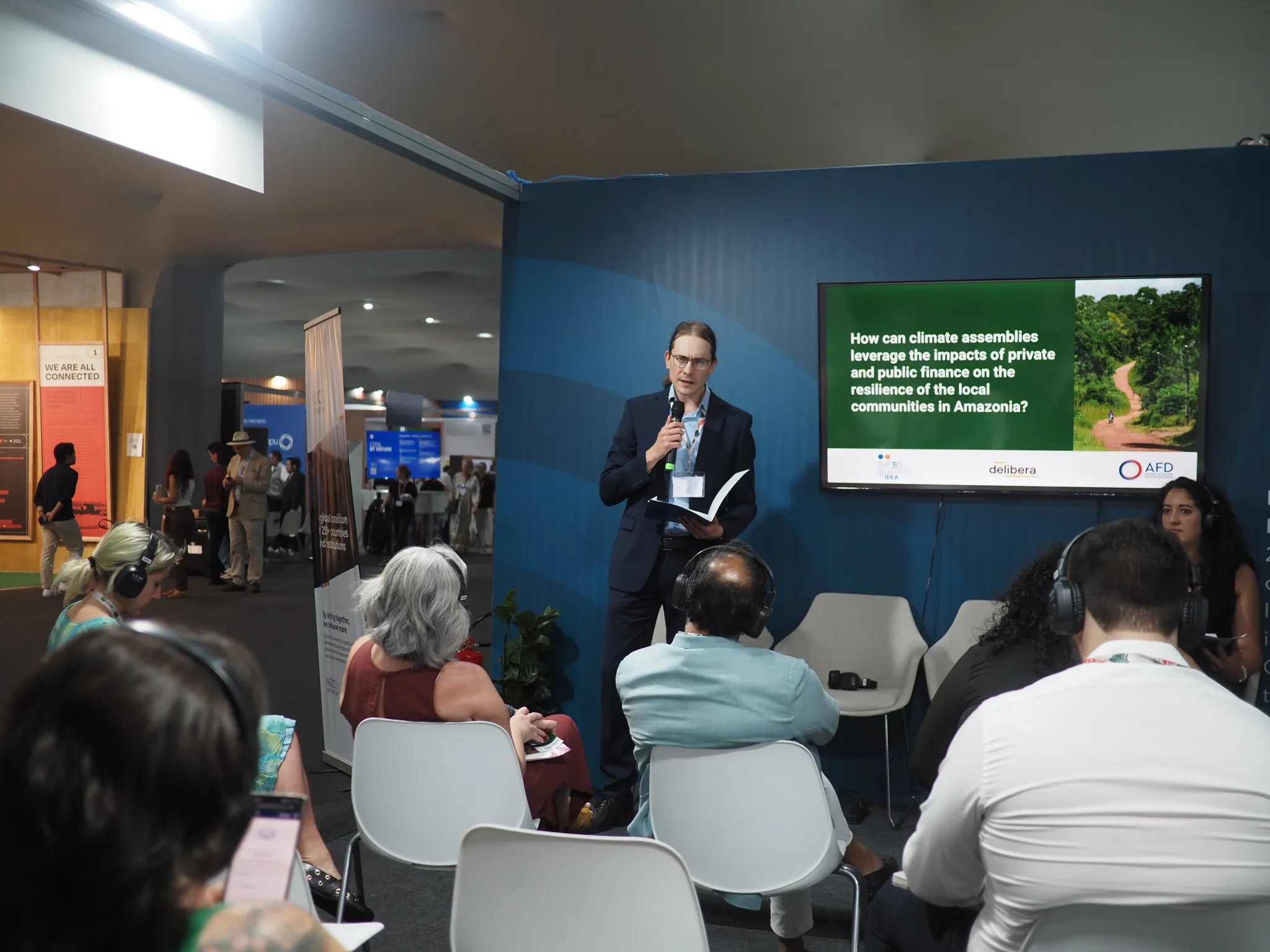
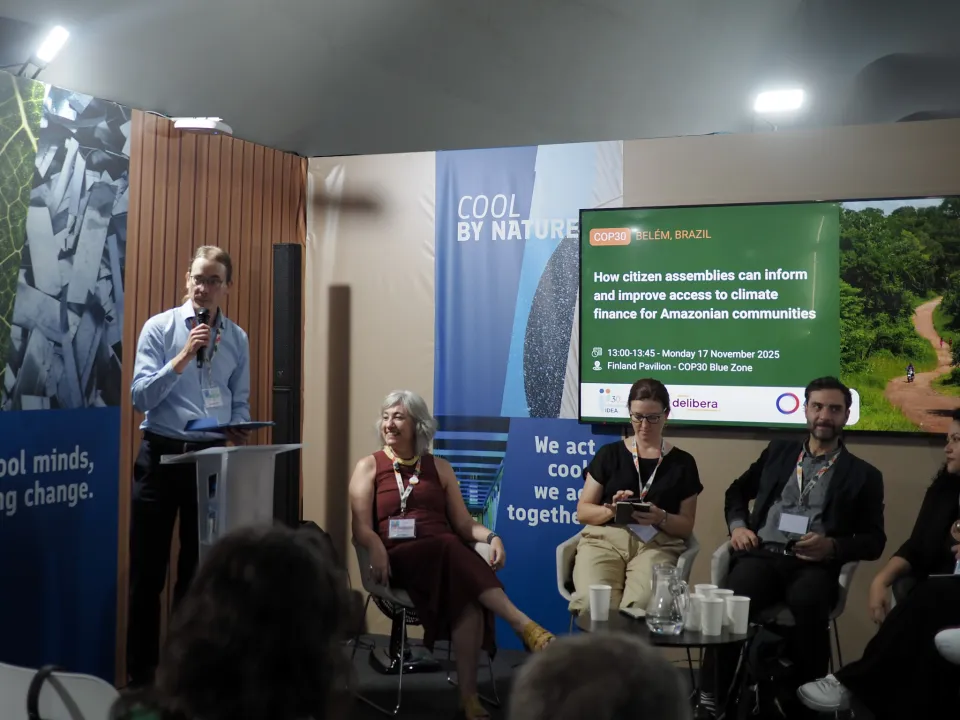
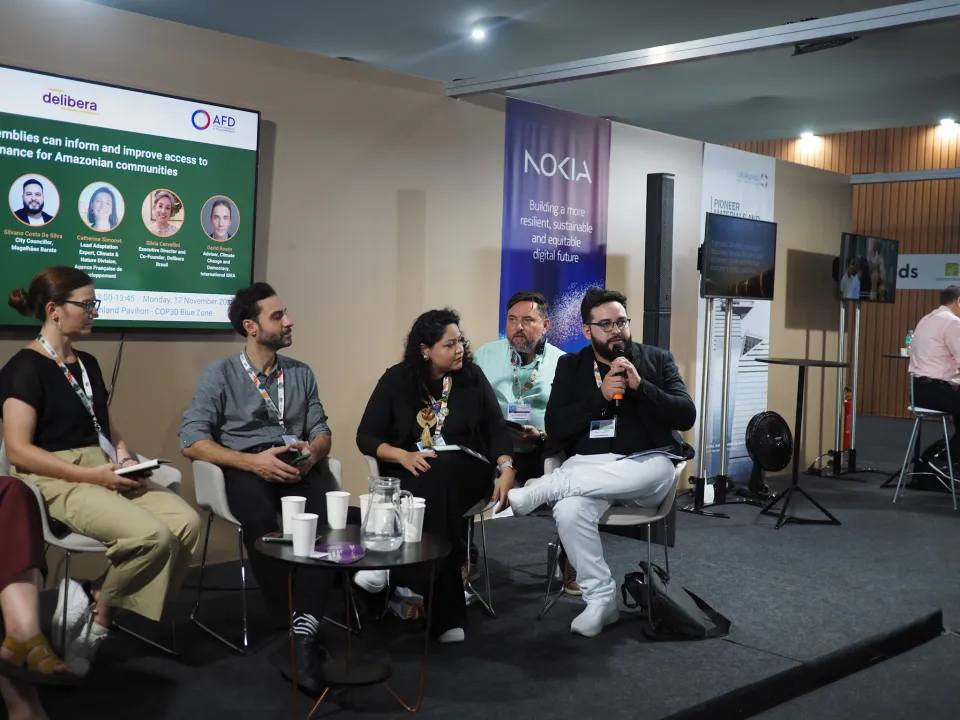
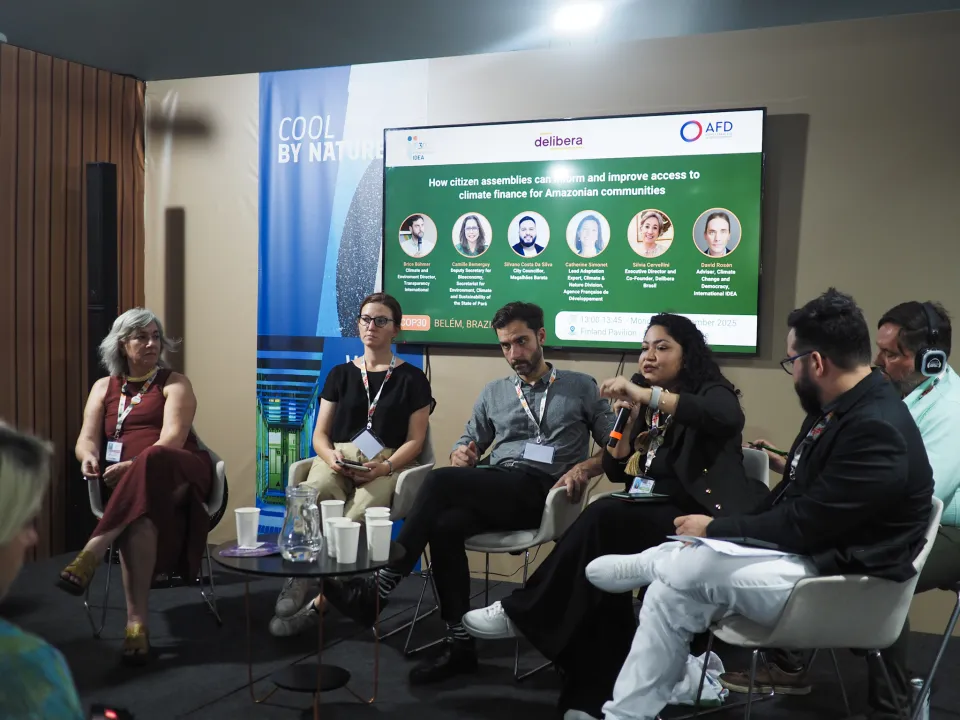
The report was launched with two dedicated events at COP30 on 17 November. The first event took place in the Finnish Pavilion. Opening the conversation, David Rosén, International IDEA Adviser on Climate Change and Democracy, introduced the initiative, which built on the 2024 International IDEA report “Deliberative Democracy and Climate Change: Exploring the Potential of Climate Assemblies in the Global South”.
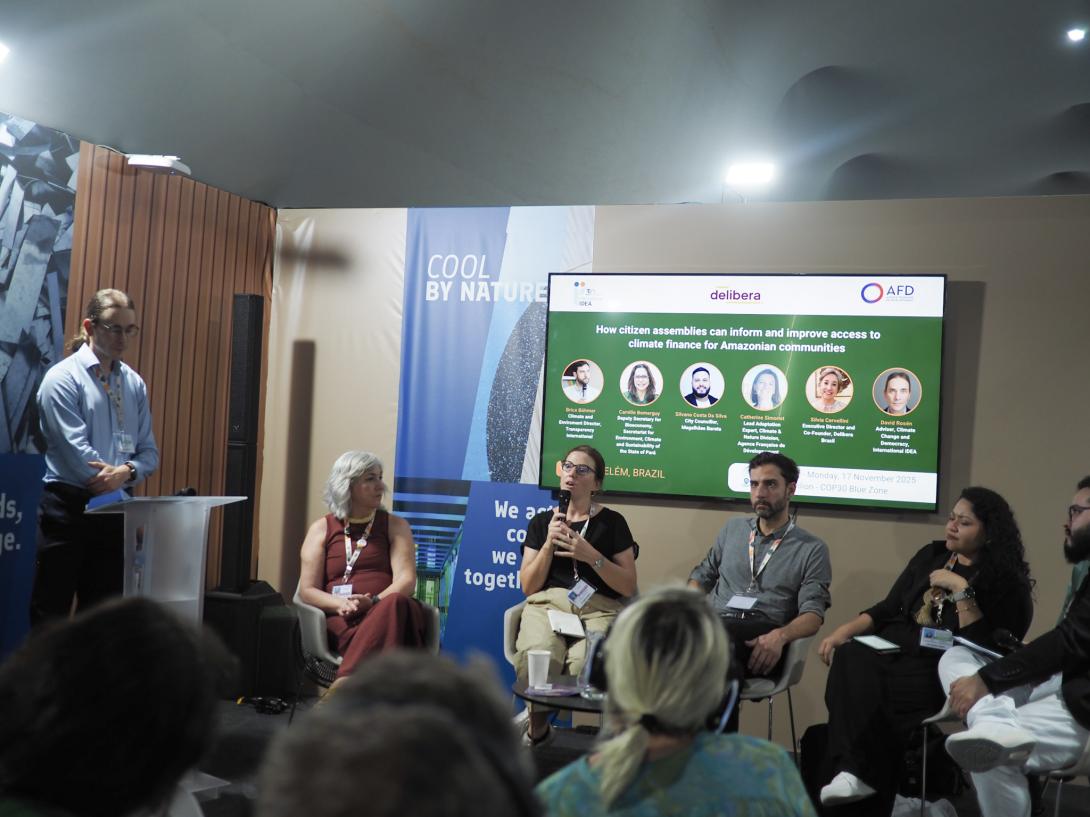
Silvia Cervellini, Co-Founder of Delibera Brasil, presented the findings of the three climate assemblies and the global recommendations. Underscoring that citizens want and need to have a say in how climate finance is sourced and spent in their communities, while facing many challenges in accessing it, she concluded that “climate financers should think more about how they can reach municipalities, rather than municipalities thinking about how they can reach climate finance”.
One of the three communities hosting the pilot assemblies was Magalhães Barata, where Silvano Costa da Silva is City Councillor. He highlighted that while Magalhães Barata is a small community, it is very large in terms of biodiversity and faces many climate and environmental pressures. Through the climate assembly, the community had been able to develop a consensus around what issues to prioritise as well as suggestions for better management of local public resources.
Coming from a state-level perspective, Larissa Rodrigues, Cabinet Adviser to Camille Bemerguy, Deputy Secretary of Bioeconomy in the Pará State Secretariat for Environment, Climate and Sustainability, emphasized how the citizen assemblies provided a channel for dialogue between the state and local governments: Serving as an informative forum for the citizens and local communities, while providing the state government with insights they otherwise would not have access to. “Climate assemblies are like a gift to the state government of a very good diagnosis of what has to be done”, she concluded.
Building on this, Catherine Simonet, Lead Adaptation Expert in the Climate and Nature Division at Agence Francaise de Developpement (AFD), underscored the importance of bottom-up mechanisms like citizen assemblies to inform how actors like AFD can best support locally led climate adaptation. The strength of climate assemblies, she said, is two-fold: Delivering concrete outputs in the form of recommendations, while also building community resilience and common understandings through the process itself.
Brice Böhmer, Climate and Environment Director at Transparency International, claimed that climate change is now first and foremost a governance issue and responding to this requires rebalancing power and opening new doors for participation. Here, citizen assemblies stand out as an important innovation which can improve the quality and outcomes of climate programs, while building trust and transparency in decision-making processes. At the same time, designing climate assemblies requires careful consideration of potential risks and pitfalls, ensuring that the recommendations are not just delivered to but actually picked up by policymakers.
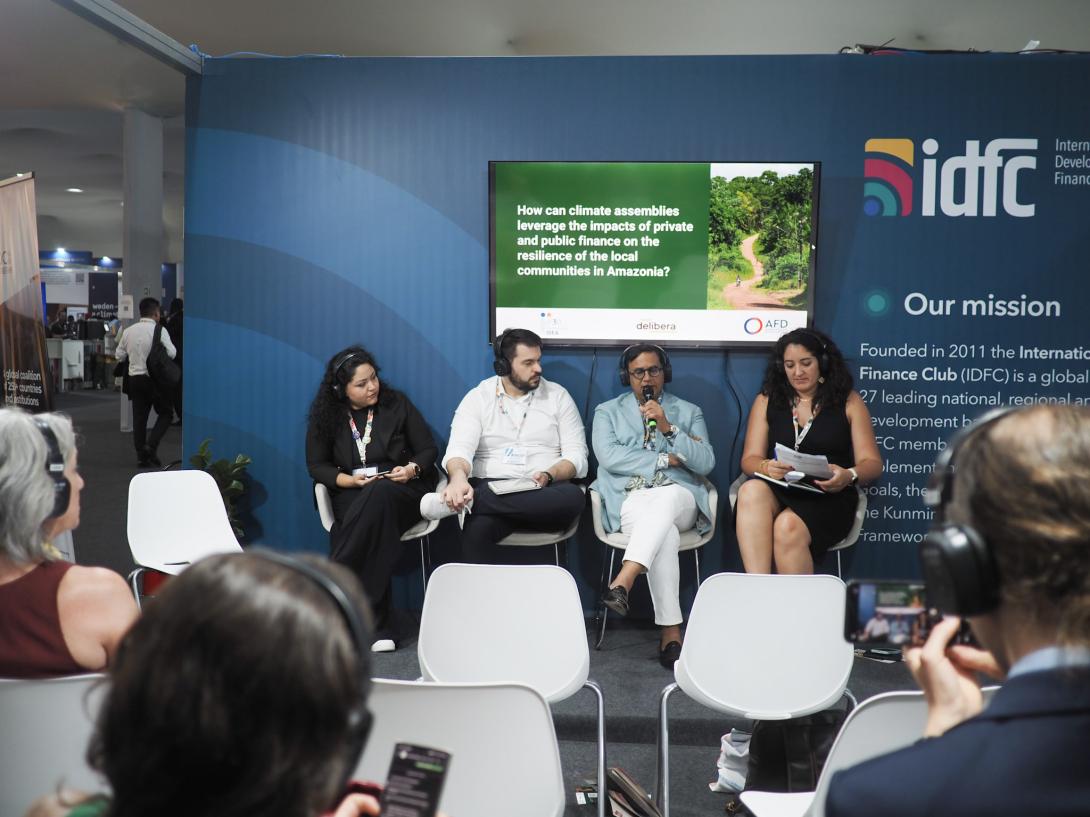
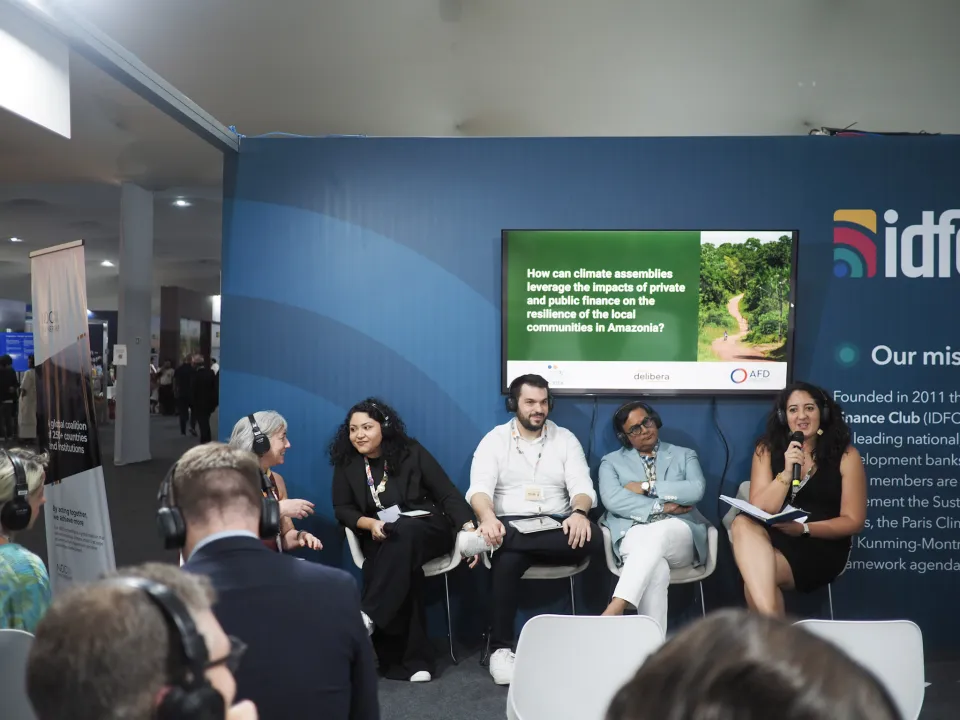
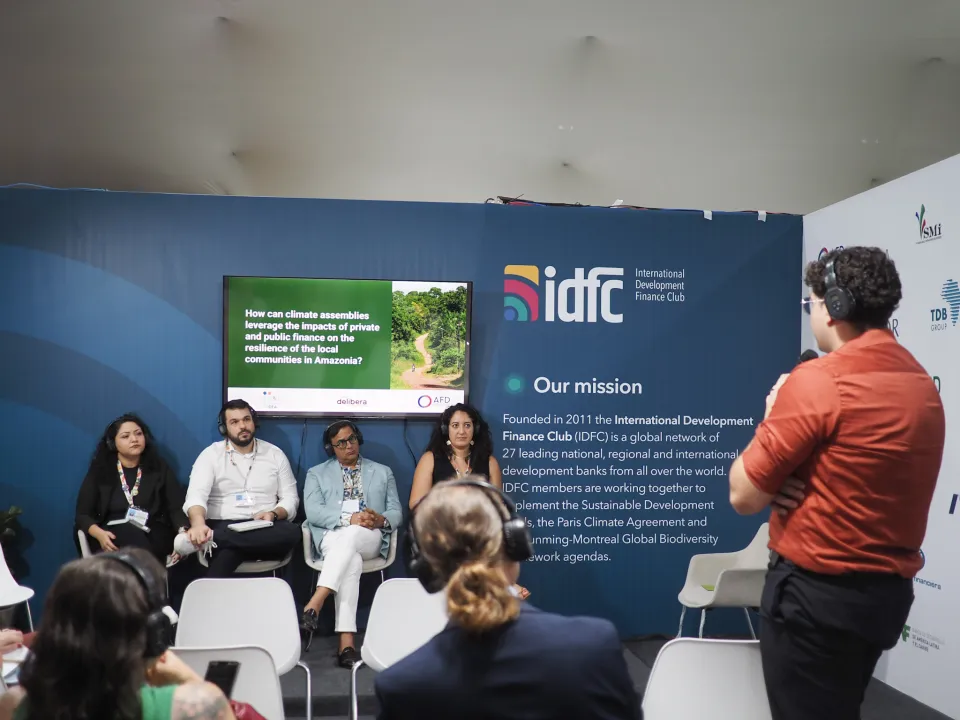
The second event took place in the International Development Finance Club (IDFC) Pavilion and had focused on the recommendations from citizens and the role of citizen deliberation from the perspective from donors and financial institutions. Atika Ben Maid, Deputy Head of the Climate and Nature Division at AFD, opened the event with reflections on how the crisis of climate change and of democracy should be conceived as an opportunity to rethink and rebuild our institutions, including for better allocation of climate finance. Looking towards the future, she noted that: “The climate transition will succeed only if it is democratic, and democracy will renew itself only if it embraces the climate challenge”.
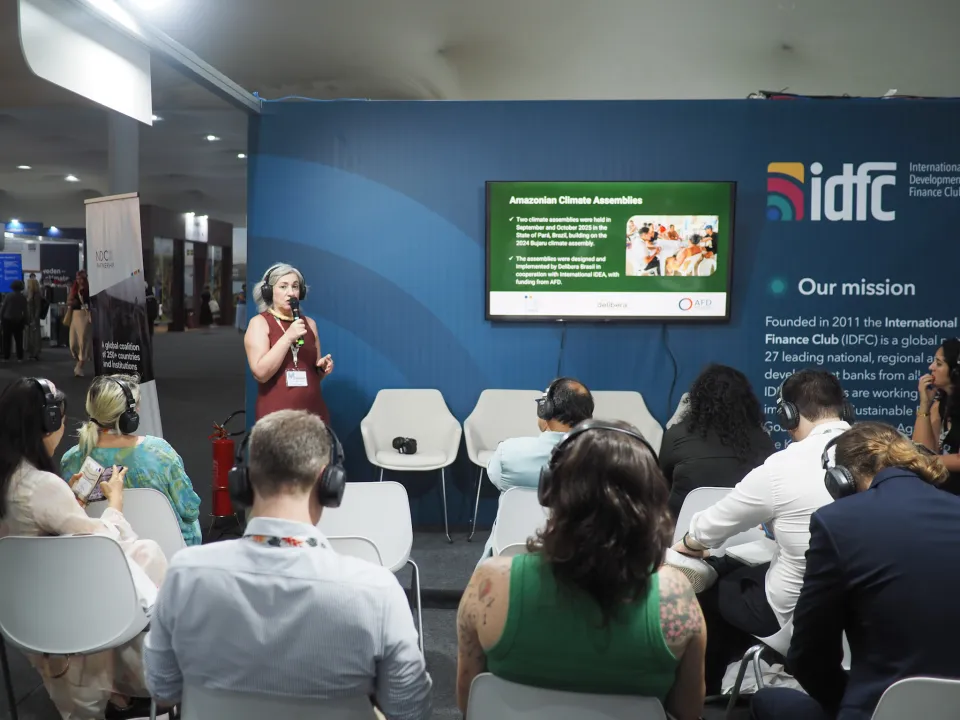
After introductory remarks by David Rosén and the project presentation by Silvia Cervellini, Larissa Rodrigues shared a story illustrating the importance of early engagement with local stakeholders. When the Pará state government set up a fund for community-based bioeconomy projects, they at first received zero applications - not because it was irrelevant, but because communities lacked the information and documentation required to apply. After simplifying the application process and engaging in capacity building at the community level, the Pará government re-published the call and received 150 proposals.
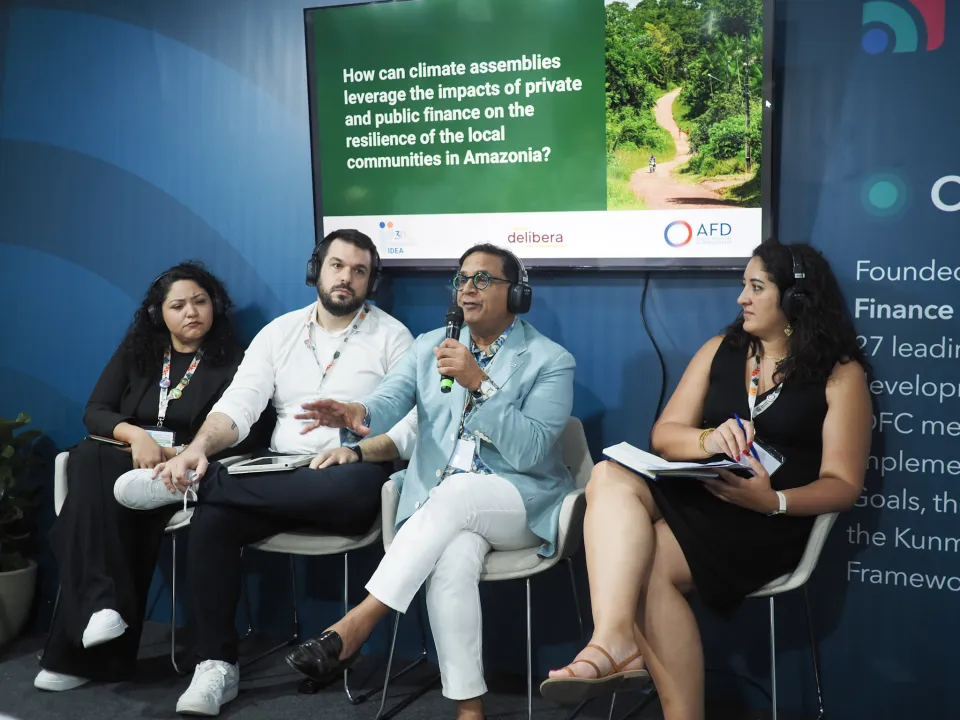
Picking up on this, Avinash Persaud, Special Adviser to the President of the Inter-American Development Bank, underlined the need to overcome the disconnect that exists between funders and the frontline communities they want to reach. Here, citizen assemblies can improve communication and understanding in both directions, he said, though it is essential to pay attention to the process design and ensure assemblies are not taken over by the loudest voices but rather lift those who otherwise might not be heard. Avinash Persaud moreover recognised the need for donors to become more flexible, though it is often difficult to do. Perhaps climate adaptation finance could be made conditional on participatory elements like community assemblies?
Pedro Paulo Bocca, International Affairs and Public Policy Coordinator at GIFE, a platform for private foundations in Brazil, emphasised that in contrast to development banks, philanthropic funders can often be more flexible, less bureaucratic, and allow for more risk. He also highlighted how multistakeholder partnerships are central to GIFE’s work and that donors must become better at working with communities and municipalities as partners rather than beneficiaries. “We need to listen to the local populations, not just as defenders of their lands, but as those who know where and why they need the money. Banks and philanthropies often donate according to our strategies – perhaps it is time to rethink that”, he said.
The event discussions echoed conclusions heard elsewhere throughout the corridors of COP30: The issues with climate finance are not only about the amounts but also about how they are spent and what they achieve. Here, climate assemblies can be a powerful tool in setting priorities and ensuring climate finance is allocated where it matters the most and delivers meaningful results. In this way, climate deliberation has the potential to deepen both democratic decision making and climate resilience.
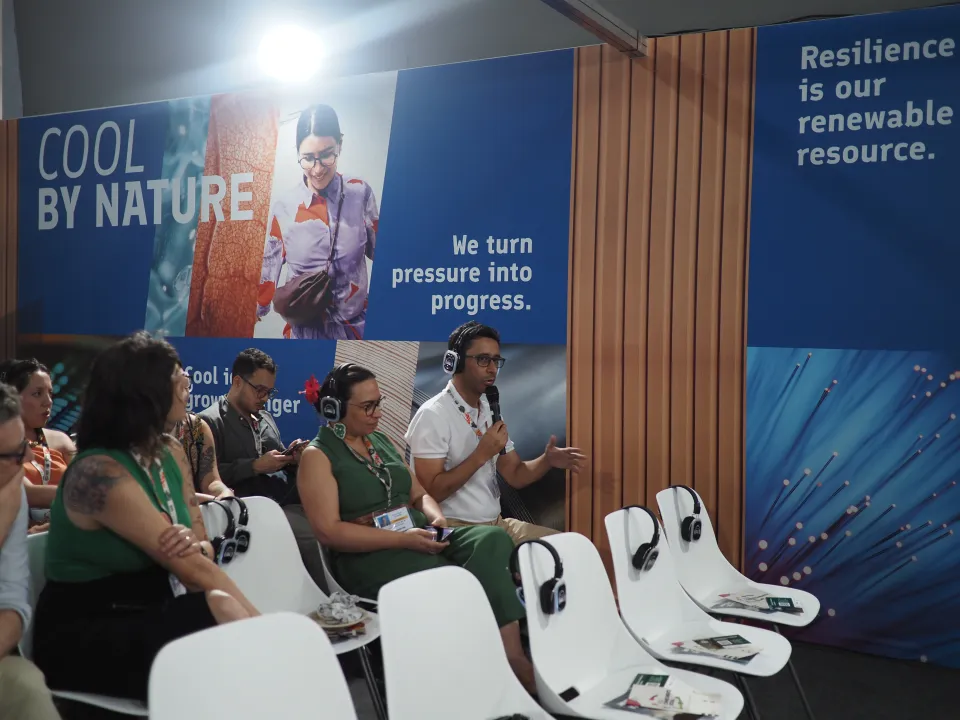
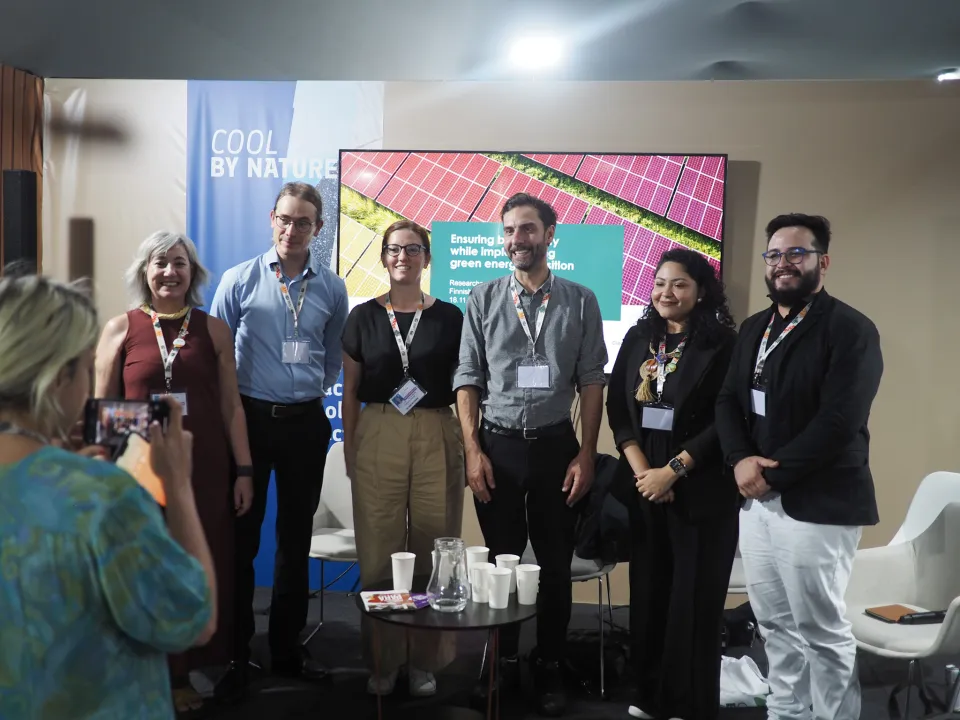
Photos from the launch event in the Finland Pavilion at COP30




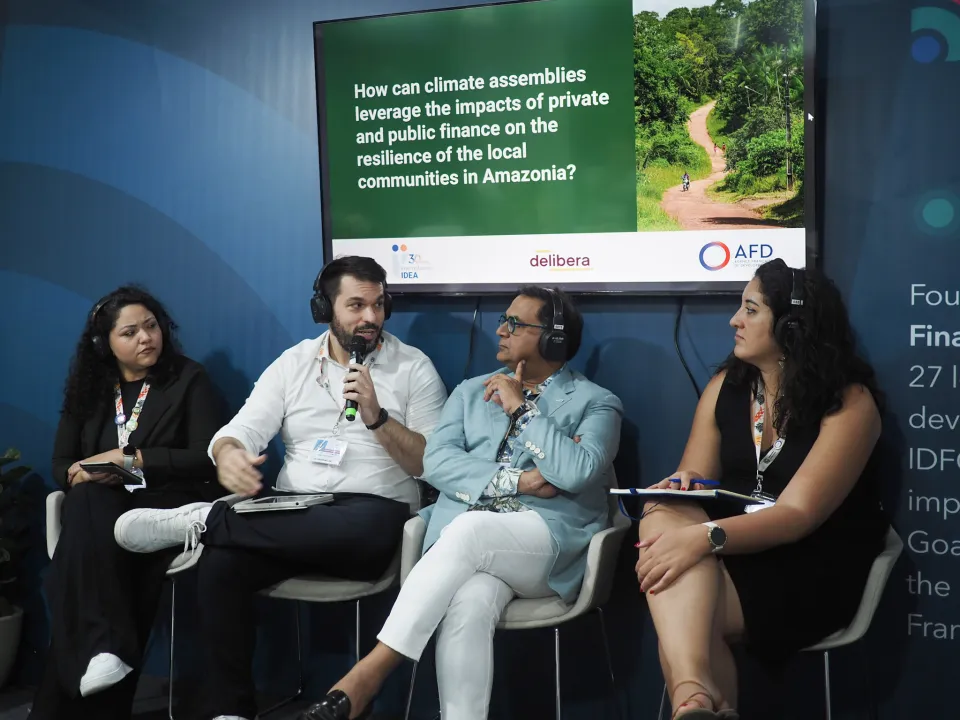
Photos from the launch event in the IDFC Pavilion




About the authors