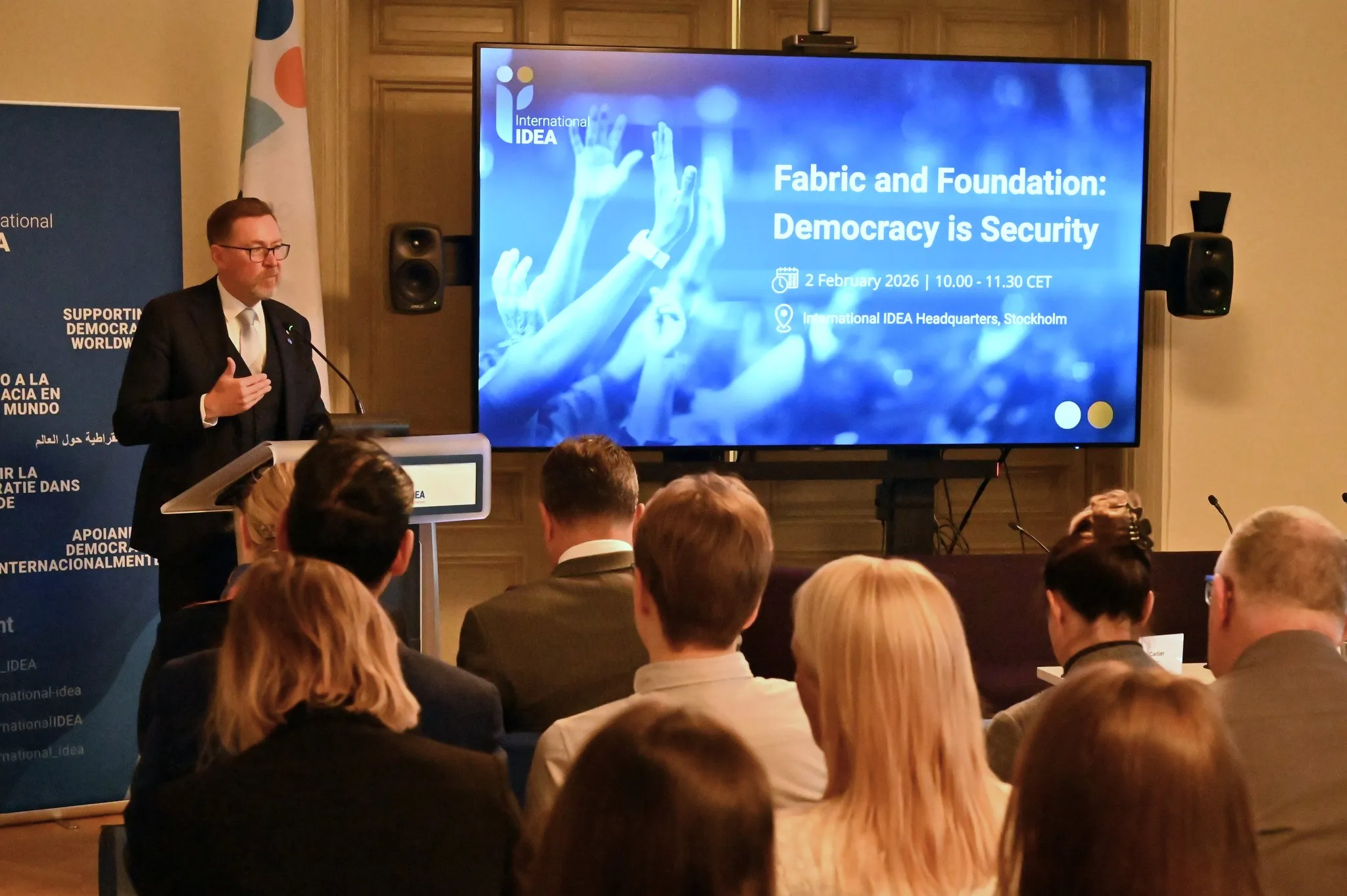
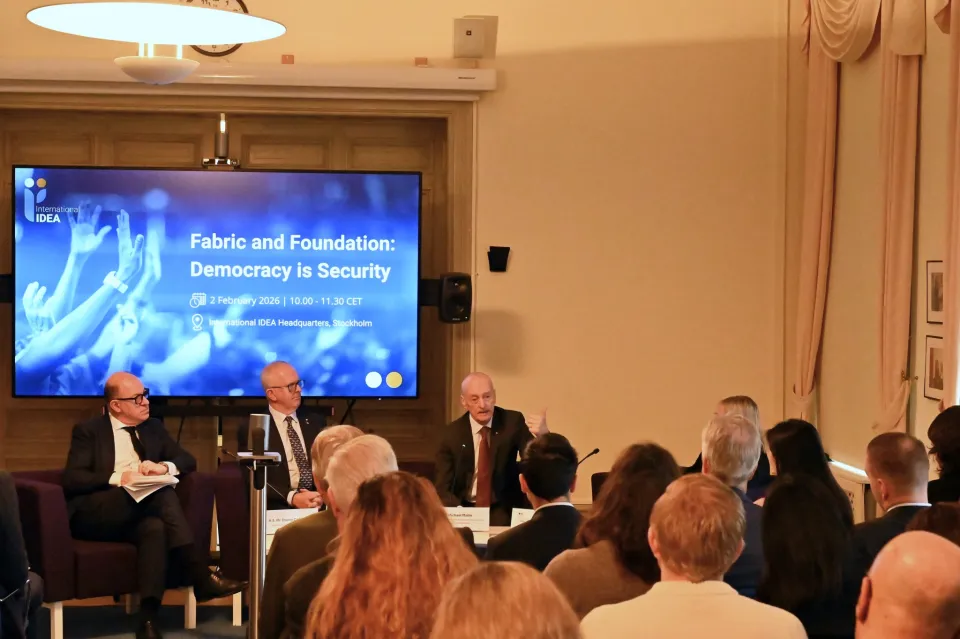
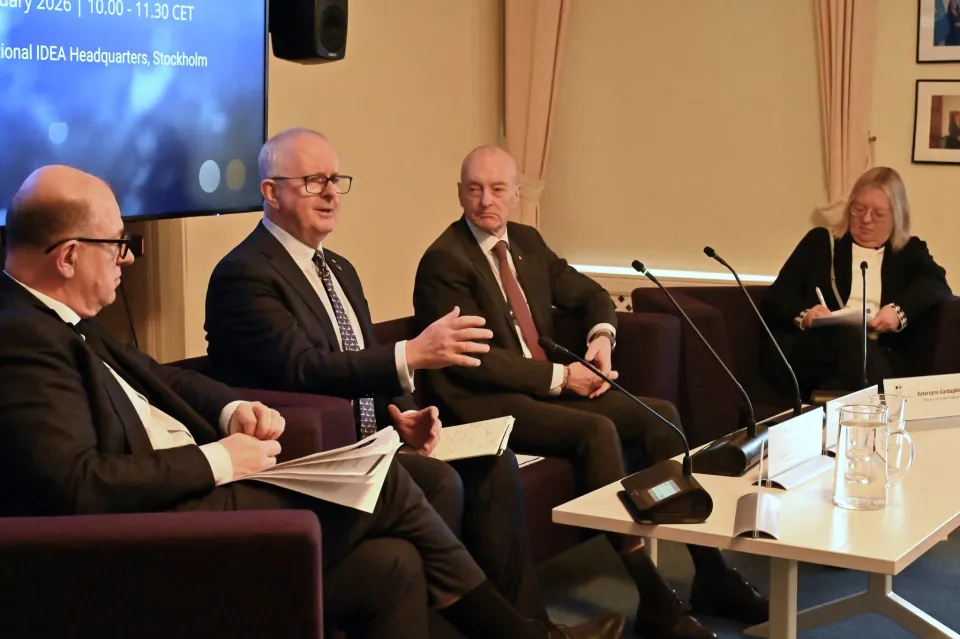
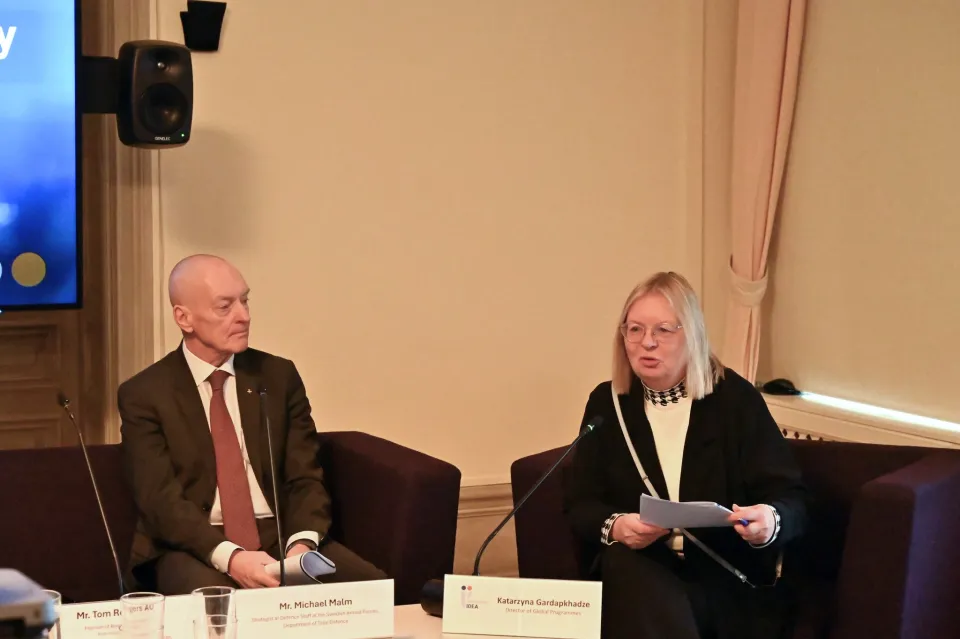
International IDEA hosted a public event, ‘Fabric and Foundation: Democracy is Security’, at its headquarters in Stockholm on 2 February. The event featured a discussion on the nexus between democratic resilience and national security, and specifically on issues of social trust and cohesion; democratic integrity and control; and elections as critical infrastructure. The event began with a keynote address by Professor Rory Medcalf, Head of National Security College at the Australian National University, followed by a panel discussion with H.E. Thierry Carlier, Ambassador of France to Sweden; Tom Rogers, Distinguished Advisor at National Security College at Australian National University and Member of International IDEA’s Board of Advisers; and Michael Malm, Strategist at the Swedish Armed Forces.
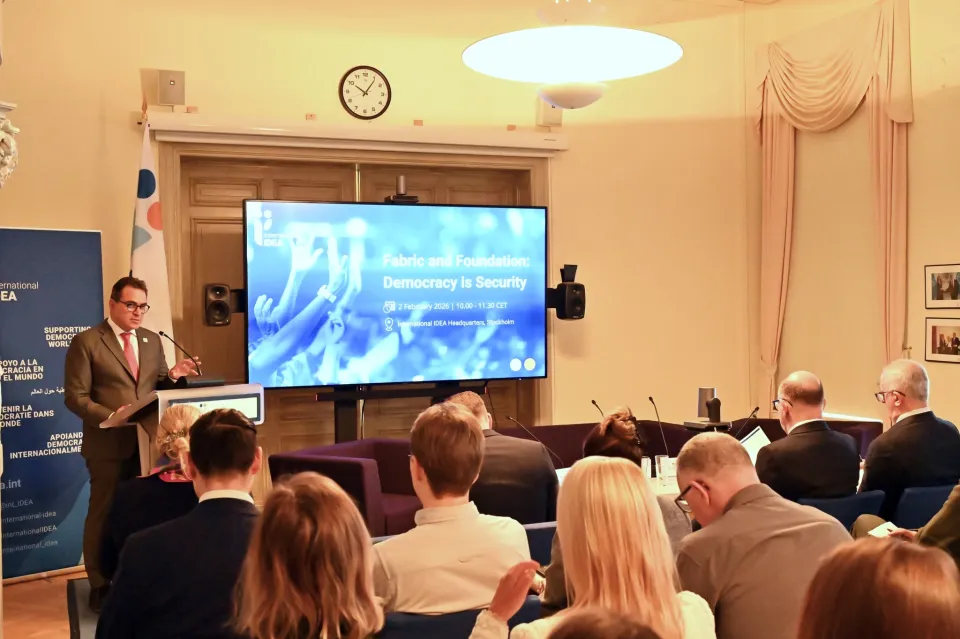
The Secretary-General of International IDEA, Kevin Casas-Zamora, opened the event by stressing the need to protect democracies in the face of rising threats to democratic institutions and processes. At the same time, he called for the exercise of caution: “Imprudent or excessive securitisation can put at risk the very values we seek to defend.” Dr Casas-Zamora’s speech highlighted the mutual relationship between democracy and security, underscoring how democracy not only needs security but also supplies it, by strengthening institutions that underpin peace.
Rory Medcalf’s speech presented key lessons from the Australian experience. He called for moving away from contemporary understandings of security, and back to the concept’s origins in the Latin securitas: a state of being without care. Doing so allows us to veer away from rigid conceptualisations of national security to a more inclusive model, one that advances social cohesion, respect for community and democratic rights, and institutional integrity. He underscored that democracy exists at the intersection of hard interests and shared values.
The panel discussion provided two main takeaways. First, national security cannot neglect democracy, because what states are defending is not only territory but also values. As Tom Rogers articulated, “During my time at the Electoral Commission, I noticed [the change] from elections being mechanical to being existential.” Panelists agreed that elections should be protected as critical infrastructure.
Second, the panelists reaffirmed that security rests upon the stability, peace and prosperity that democracy creates. Michael Malm highlighted how democracy is a complement to total defense, helping society function normally in times of crises without forsaking common values. Furthermore, he pointed out that values and principles — unlike territory — must also be defended in peacetime. Ambassador Carlier proposed three pillars for democratic resilience: trust in democracy and its processes, social cohesion, and the integration of democratic resilience into strategies for security. Upon this foundation, resilient democracy can help to protect our values and way of life, from both the inside and outside.


About the authors