Democracy and justice as foundations of security: Insights from The Hague
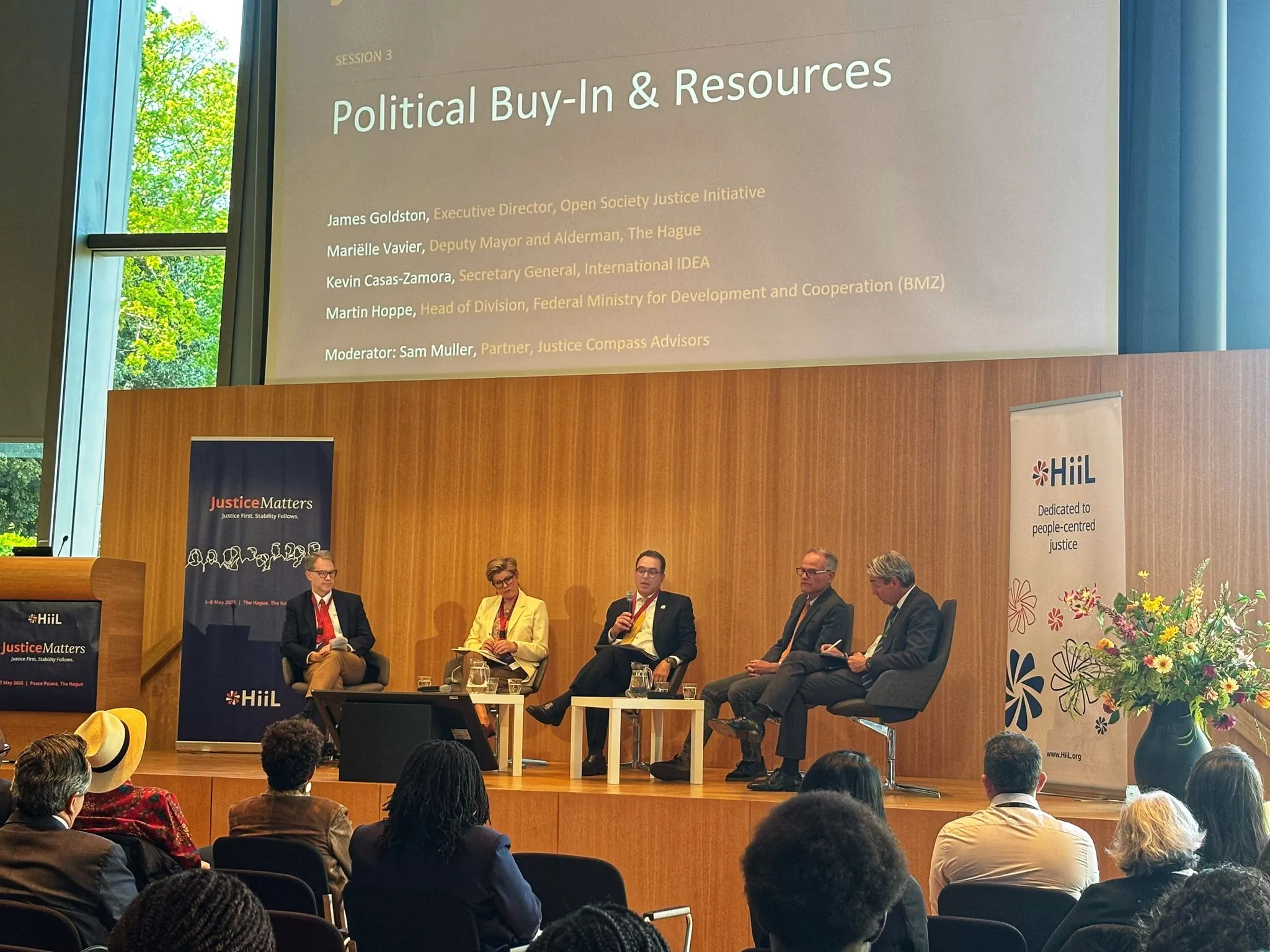
The conference brought together policymakers, practitioners and international organisations to advance a central message: that justice is not a downstream policy concern, but a frontline strategy for stability, peace and democratic resilience.
International IDEA’s Secretary-General spoke in Session 3 of the conference, entitled “Political Buy-In and Resources”. This final substantive panel of the day examined how to translate the link between justice and stability into sustained political commitment and investment, and explored how to move from recognition to action. The session focused on identifying persuasive arguments, target audiences and practical strategies to mobilise resources, while demonstrating a clear return on investment for justice systems.
The session is available on Youtube at HiiL channel and accessible below.
Key takeaways from this session
- The case for justice is already well understood—but underfunded: the challenge is not awareness, but sustained political commitment and resource mobilisation.
- The rule of law is a critical vulnerability in today’s democracies, with judicial independence and enforcement capacity under growing strain—posing direct risks to stability.
- Justice systems underpin broader democratic resilience, enabling accountability, civic action and trust in institutions.
- Demonstrating impact and return on investment is essential to unlock funding and maintain political support.
Side event: “Fixing the Cracks in Democracy: Strengthening Democratic Resilience as a Pathway to Security”
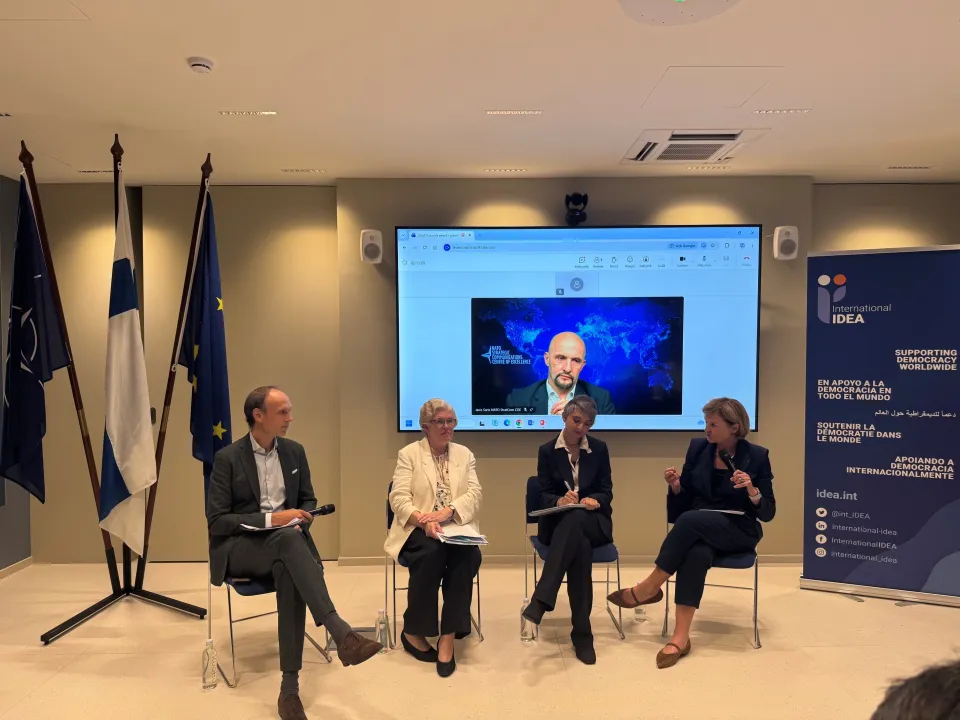
On 6 May 2026, as a dedicated side event to the Justice Matters Conference, International IDEA co-organised the panel discussion “Fixing the Cracks in Democracy: Strengthening Democratic Resilience as a Pathway to Security” at the Clingendael Institute, together with the Democratie Monitor and Clingendael’s Conflict Research Unit.
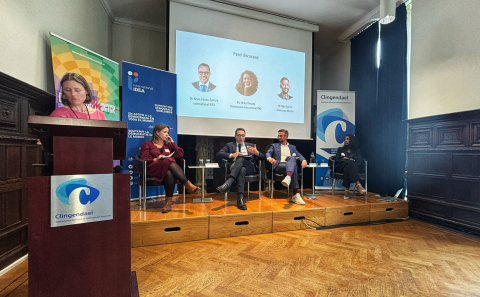
This event focused specifically on the growing intersection between democratic backsliding and security risks. The programme opened with a keynote by Prof. Dr. Carolien van Ham (Radboud University), who presented evidence on declining trust in institutions, pressures on the rule of law and increasing societal polarisation, highlighting how these trends translate into concrete democratic vulnerabilities. Her remarks underscored the importance of systematic monitoring and early warning to identify and address risks before they escalate.
This was followed by a discussion featuring Kevin Casas-Zamora, Ms Milka Yemane (Councillor, City of Amsterdam) and Mr Bas Bijlsma (Director, Democratie Monitor). The panel explored how internal democratic weaknesses, such as the erosion of checks and balances and weakened public trust, create openings for instability and external interference at different levels of government, and emphasised the need to treat democratic resilience as a core component of security policy. The discussion highlighted the importance of strengthening institutional safeguards, reinforcing public trust and linking democracy support more directly to broader security strategies.


About the authors