Panama: The Voice of the Assembly (1999–2029)
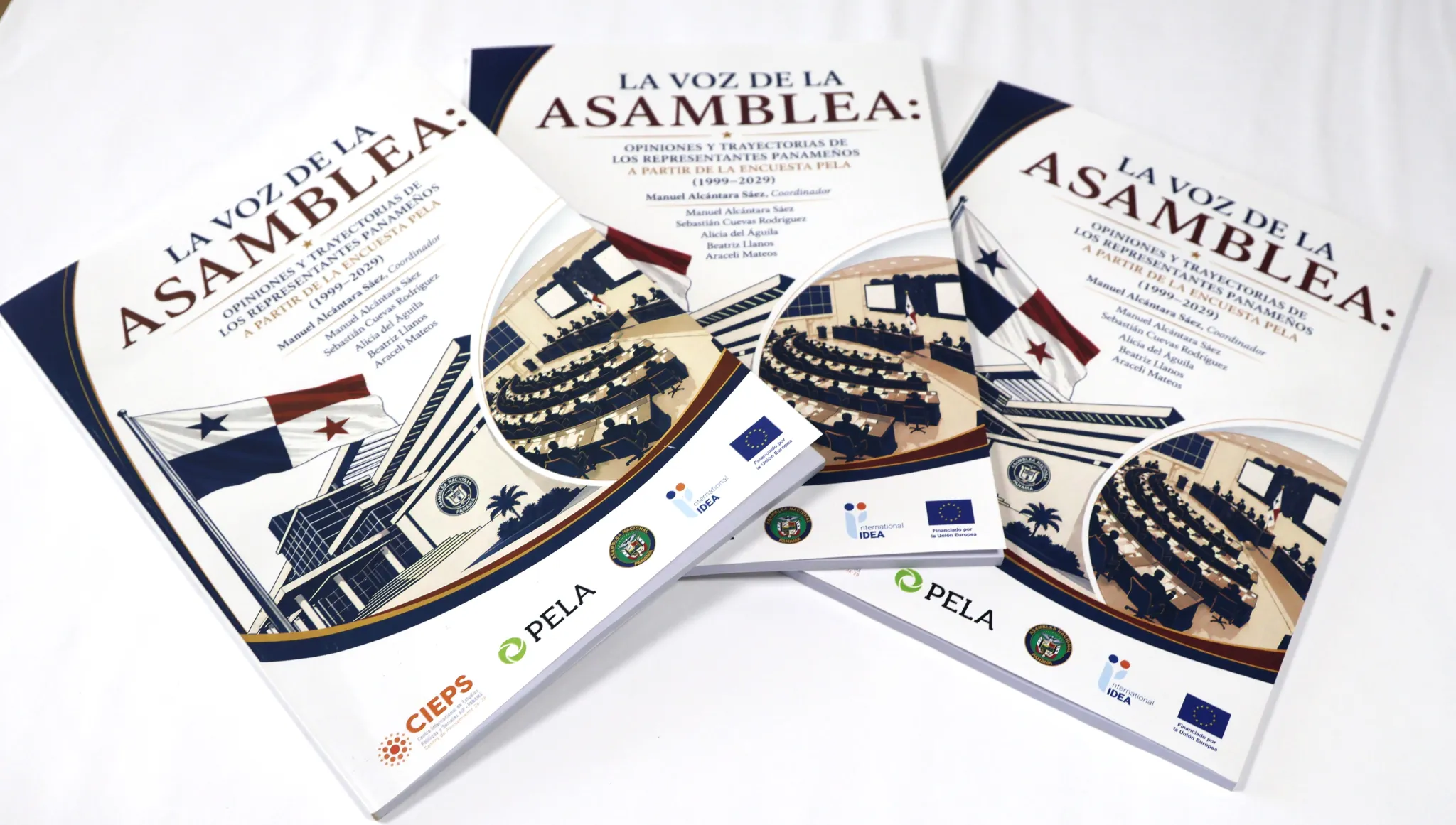
International IDEA authored section two, “Trajectories, Priorities and the Impact of Caregiving Responsibilities on Panamanian Deputies”, written by Alicia del Águila and Beatriz Llanos.
From a gender equality perspective, the study highlights the differentiated impact of unpaid work and caregiving responsibilities on the political careers of male and female deputies. The findings suggest that caregiving responsibilities are associated with a later entry of women into political life and elected office. Among the deputies surveyed, no women had assumed office before the age of 32, whereas 16.3% of male deputies entered office before turning 30.
The study also shows that nearly half of female deputies (45%) assume office between the ages of 50 and 59, a stage of life when childcare and other caregiving responsibilities often become less intensive. These findings challenge the notion that women are less interested in public service or political leadership. In fact, the research reveals that levels of political ambition are virtually identical across genders: 60% of female deputies expressed their intention to run for office again, the same percentage recorded among men.
In section one, “The Panamanian National Assembly through the Opinions and Values of Its Members”, authored by Manuel Alcántara, Araceli Mateos and Sebastián Cuevas Rodríguez, the study finds that while Panama’s political system has maintained relative institutional stability, it coexists with significant dissatisfaction regarding the quality of political representation. This discontent is associated with challenges such as corruption, institutional weakness and growing distrust of the political class.
In ideological terms, the researchers identify a low-polarization environment, with most political parties concentrated in the center and center-right. As a result, political competition tends to revolve less around programmatic platforms and more around individual leaderships and opportunistic alliances. This trend coincides with increasing parliamentary fragmentation and the emergence of new political forces and independent candidates that are reshaping the legislative landscape.
The analysis also reveals broad agreement between the concerns expressed by deputies and the priorities of the national context. Corruption, together with unemployment, insecurity and inequality, has become one of the central issues on the legislative agenda in recent years, reflecting concerns over weakened institutional oversight mechanisms and the visibility of public sector scandals.
The publication was coordinated by Manuel Alcántara, Director of CIEPS.


About the authors