Bridging the silos: How North Macedonia can build lasting resilience against information manipulation
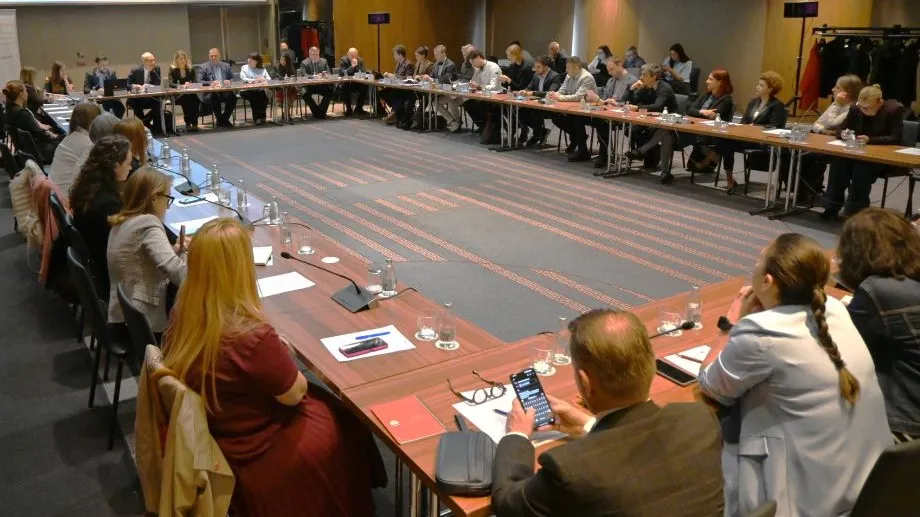
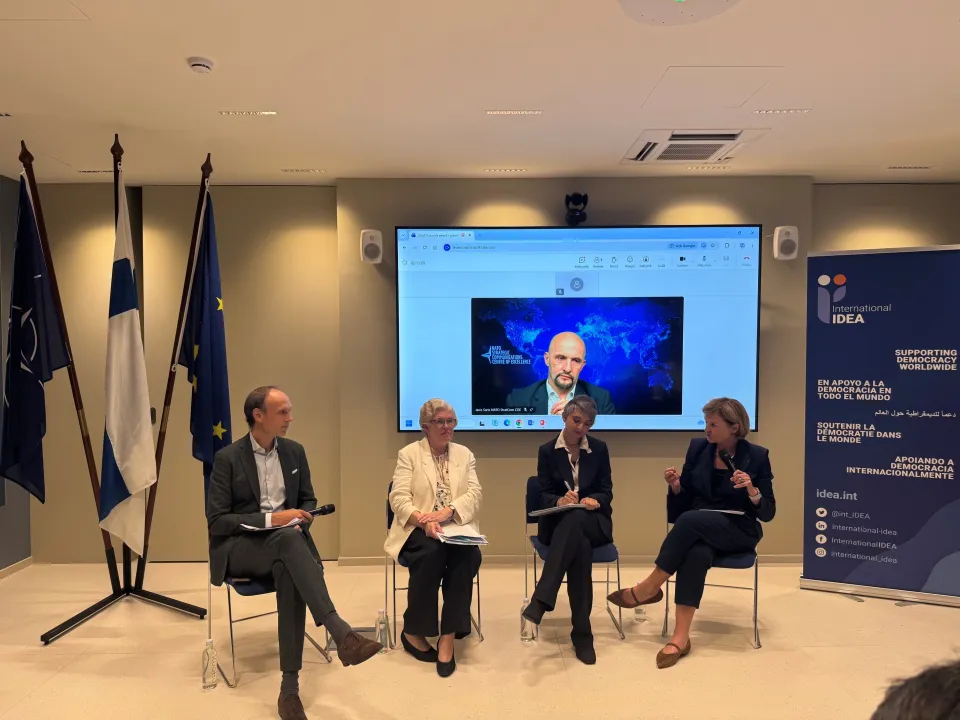
That was the shared starting point at an event held in Skopje on 19 May, where the Metamorphosis Foundation and International IDEA convened roughly 50 participants for a strategic dialogue: government spokespersons, regulators, election officials, diplomats, international experts, and civil society representatives from North Macedonia and the wider region, all brought into the same room to work through a problem that is still poorly understood at the institutional level.
A threat that doesn't announce itself
Bardhyl Jashari, Executive Director of the Metamorphosis Foundation, opened the event by drawing a distinction that often gets lost in public debate. FIMI, he argued, rarely operates through a single dramatic falsehood. It works by accumulating distrust, reinforcing existing fractures, making institutions look incompetent, and nudging citizens toward the conclusion that participation is futile. The goal is not to persuade people of any particular narrative, but to corrode their belief that facts and democratic processes are worth engaging with at all.
Khushbu Agrawal, Adviser at International IDEA, sharpened that picture. The threat, she stressed, is not theoretical. It is active and evolving, and what makes it particularly dangerous is the environment it exploits: institutional distrust, fragmented media, low digital literacy, and political polarisation create conditions where manipulation takes hold easily. When formal information institutions lose public trust, that vacuum is filled immediately by manipulation. The damage extends far beyond any single election, slowly hollowing out the legitimacy that democratic systems depend upon.
Together, their framing implied that responses focused on debunking individual falsehoods will always be insufficient. What is needed is structural: a dedicated national institution that bridges silos, builds shared awareness, and provides the coordinating framework that does not currently exist. The role of civil society also remains crucial to this effort. Fact-checkers and media monitors are trusted because they are independent, and that trust must be protected through sustained investment.
What governments are doing
Marija Miteva, Spokesperson of the Government of North Macedonia, gave an account of where the country stands. She acknowledged that the threat of foreign interference does not fit neatly into traditional political or security frameworks — it operates through narratives rather than through identifiable actors with identifiable objectives, which makes it difficult to assign responsibility or measure success in countering it.
The Government's stated approach is institutional coordination: a new cybersecurity strategy, legislation on network and information systems security, and the formation of a multi-institutional working group on disinformation. These are meaningful steps, but Miteva was also careful to note their limits. Measures designed to counter manipulation, she said, must be calibrated to avoid restricting legitimate political debate — a tension that remains unresolved not just in North Macedonia but across European democracies.
Sweden's experience, shared by Mikael Atterhög from the Swedish Embassy, offered a useful reference point. As recently as February 2026, the Swedish Prime Minister held a cross-party meeting on foreign interference after several EU member states had experienced coordinated attacks. Sweden has had a permanent electoral coordination network — drawing together multiple institutions — since 2021, and it has invested significantly in public awareness. The lesson Atterhög drew was straightforward: resilience is not primarily a technical problem. It is a societal one, and it requires buy-in from citizens, not just from state institutions.
Ambassador Vilma Dambrauskienė of Lithuania brought a perspective shaped by direct national experience. Lithuania has faced a distinctive combination of interference tactics: economic pressure timed to electoral cycles, the mobilisation of religious and cultural soft power, and coordinated digital disinformation. The goal, as Lithuanian intelligence has documented, is not simply to swing elections but to induce a broader psychological state of distrust in democratic institutions. In response, Lithuania has invested in dedicated inter-agency platforms for detection, monitoring, and civic engagement, and has consistently treated hybrid threats as security challenges requiring whole-of-society responses, not just technical fixes.
The specific vulnerabilities of North Macedonia
If Sweden and Lithuania represent relatively mature defensive posture, North Macedonia is at an earlier and more exposed stage, a point made plainly by several speakers.
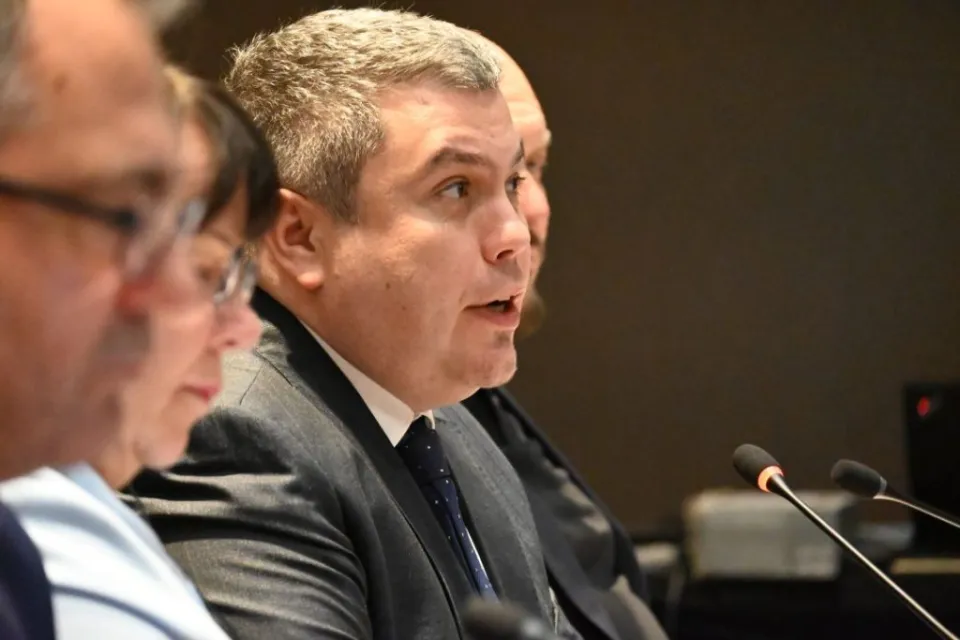
Bojan Marichikj, President of the State Election Commission, described election-related disinformation as having taken on the character of a geopolitical weapon. Its strategic logic is not to win arguments but to paralyse institutions, discredit the system's functionality, and suppress turnout before polling day has even begun. The Commission's biggest concern, he said, is not fraud in the traditional sense, but the gap between the speed at which disinformation moves and the speed at which institutions are currently capable of responding.
Goran Rizaov of the Metamorphosis Foundation offered a more granular picture. Foreign malign influence, he argued, does not import vulnerabilities into a country — it exploits the ones already there. In North Macedonia, those vulnerabilities include low institutional trust, deep ethnic and political polarisation, limited media literacy across much of the population, pockets of low journalistic professionalism, and the financial precariousness of many independent media outlets. Add unregulated social platforms to the mix, and the conditions for FIMI to spread become close to ideal.
The European context: Progress, gaps and practical responses
The afternoon session drew in European practitioners working at the front lines of detection, response, and coordination. Their contributions shared a common thread: the tools and networks exist, but they are not yet reaching the places that need them most.
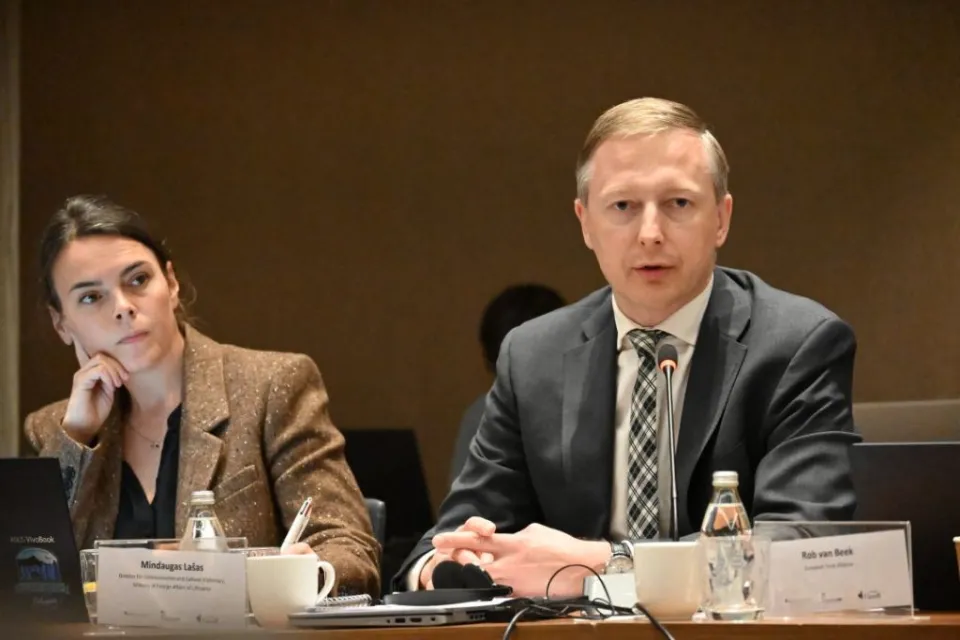
Rob van Beek from the European Trust Alliance identified AI as the factor most dramatically reshaping the landscape — central to both the production of disinformation and its detection, which makes responses increasingly complex. His core argument was that the Western Balkans cannot build resilience in isolation; connecting the region to European networks is a strategic necessity, not an afterthought.
That connection demands sustained investment, as Mindaugas Lašas from Lithuania's Ministry of Foreign Affairs made clear. Lithuania's institutional response systems and rapid-reaction protocols took years and significant political will to build. Lašas also flagged a structural obstacle no investment can fully compensate for: in most countries, disinformation spread through social media is not criminalised, leaving authorities with limited legal tools precisely when speed matters most.
Clémence Longley from the European Fact-Checking Standards Network put a human face on that gap. Fact-checkers are being asked to verify more, at greater complexity and cost, as the volume of manipulated content keeps rising. Shared repositories of verified facts and rapid crisis-response mechanisms are the network's practical answer — partial, but necessary.
Daniel Prroni from Albania's Faktoje added a regional caution: in Albania, the primary source of electoral disinformation is domestic, not foreign. Bot networks, AI-generated content, and media outlets with opaque ownership structures are the main vectors. It is a pattern familiar across the Western Balkans, and one that European frameworks will need to account for if inclusion of candidate countries is to be meaningful in practice.
The European Democracy Shield: A case for inclusion
One thread that ran consistently through the day's discussions was the European Democracy Shield and the question of whether EU candidate countries should be brought inside it. The argument for inclusion was made by multiple speakers, including by Marie Sophie Peyre from the Directorate-General for Enlargement and Eastern Neighbourhood of the European Commission, who delivered the keynote address. She made the case for candidate countries to be at the forefront of the Democracy Shield as they face many of the same FIMI threats as member states, often in more acute form, and bring experiences that are directly relevant to the broader European effort.
While the candidate countries have not fully adopted the governance structures or fulfilled the membership obligations tied to the frameworks, Peyre argued that this should not be used as grounds for passivity. She encouraged North Macedonia and other candidates to push actively for participation and to move beyond declaratory commitments toward the institutional infrastructure that meaningful participation requires.
From theory to practice: Simulating an attack
The event closed with a practical session wherein around 20 civil society representatives took part in a simulation exercise — the first of its kind to be run in North Macedonia — modelling the response to an information attack during elections. Participants worked through scenarios involving damage assessment, public communication under pressure, and coordination with state institutions, all in real time.
The simulation exercise not only encouraged participants to explore practical solutions, but also gave them direct exposure to the gaps between institutional theory and operational reality. It helped them understand that coordination which looks straightforward on paper dissolves quickly under the pressure of a fast-moving crisis. That gap, more than any individual piece of disinformation, is what makes democracies vulnerable.
The event "Building Resilience to Election-Related Information Manipulation" was organised by the Metamorphosis Foundation in cooperation with International IDEA, as part of the project "Combating Electoral Foreign Information Manipulation and Interference (FIMI)," supported by Global Affairs Canada.
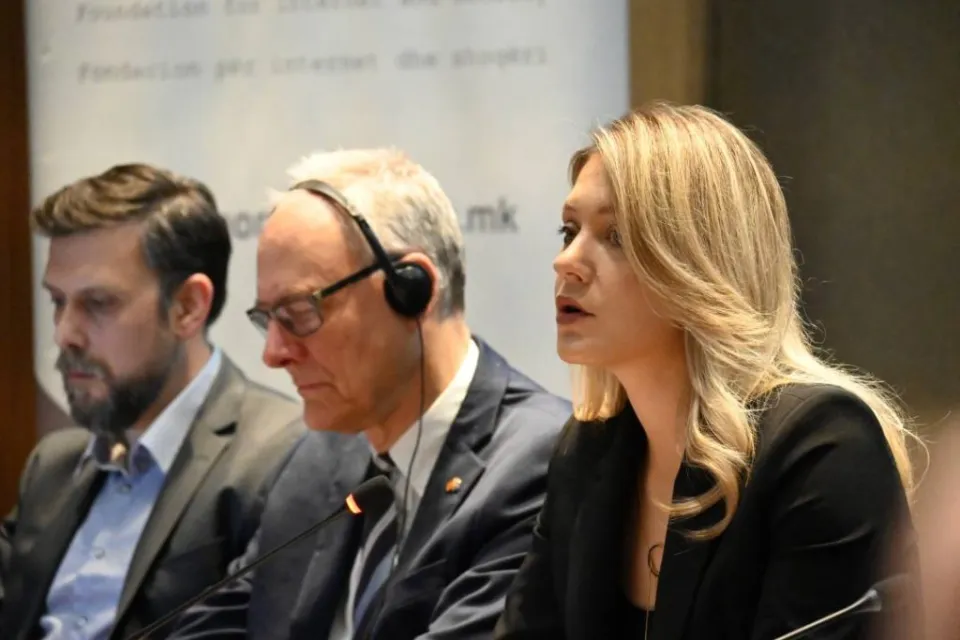
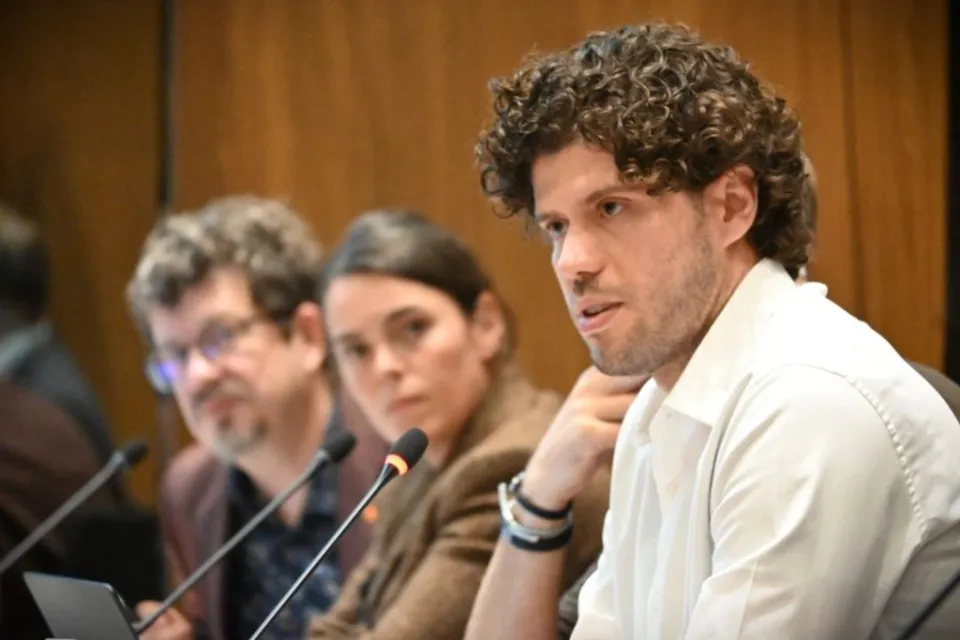
Photos from the dialogue


About the authors