Launch of the International Climate and Democracy Coalition at COP30
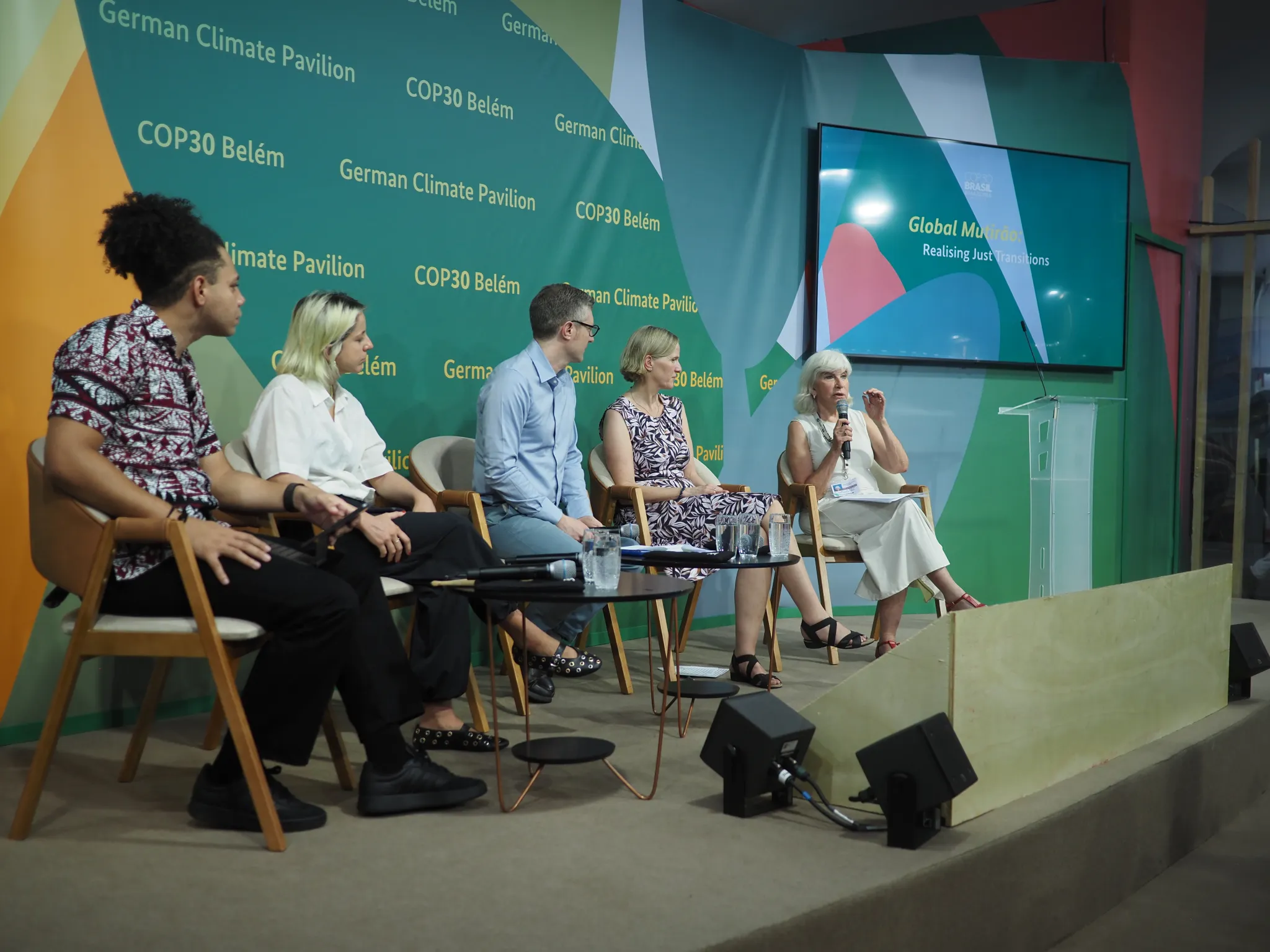
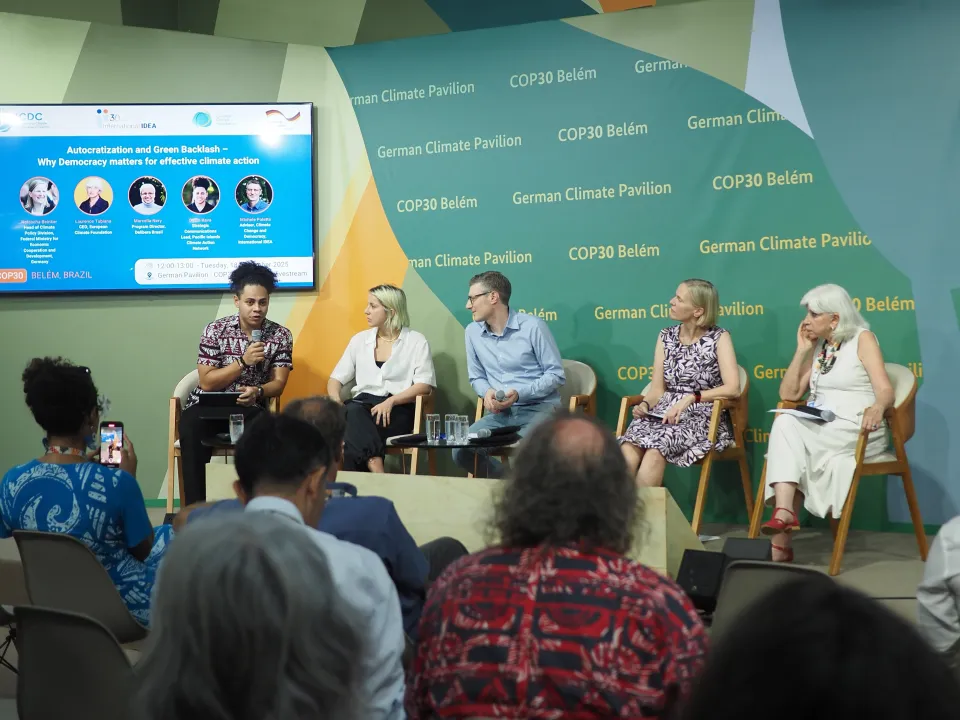
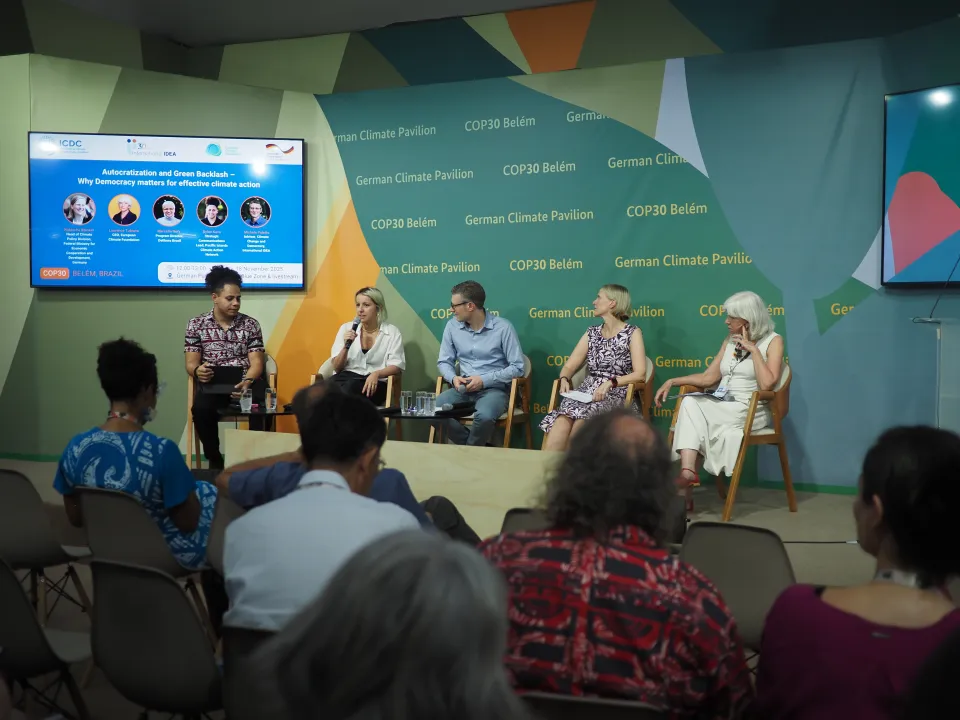
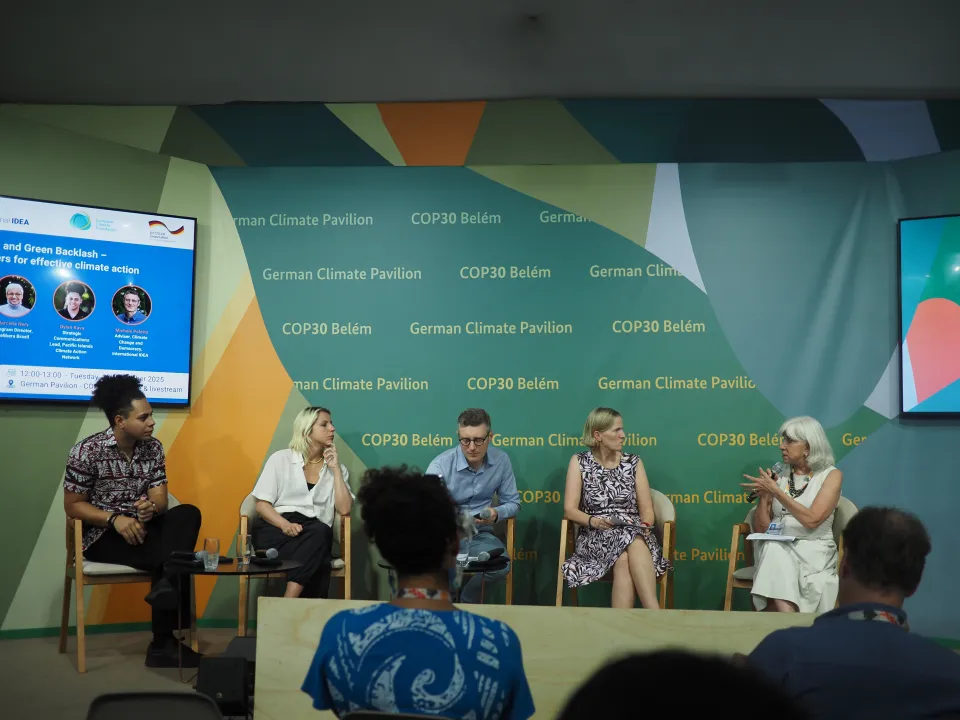
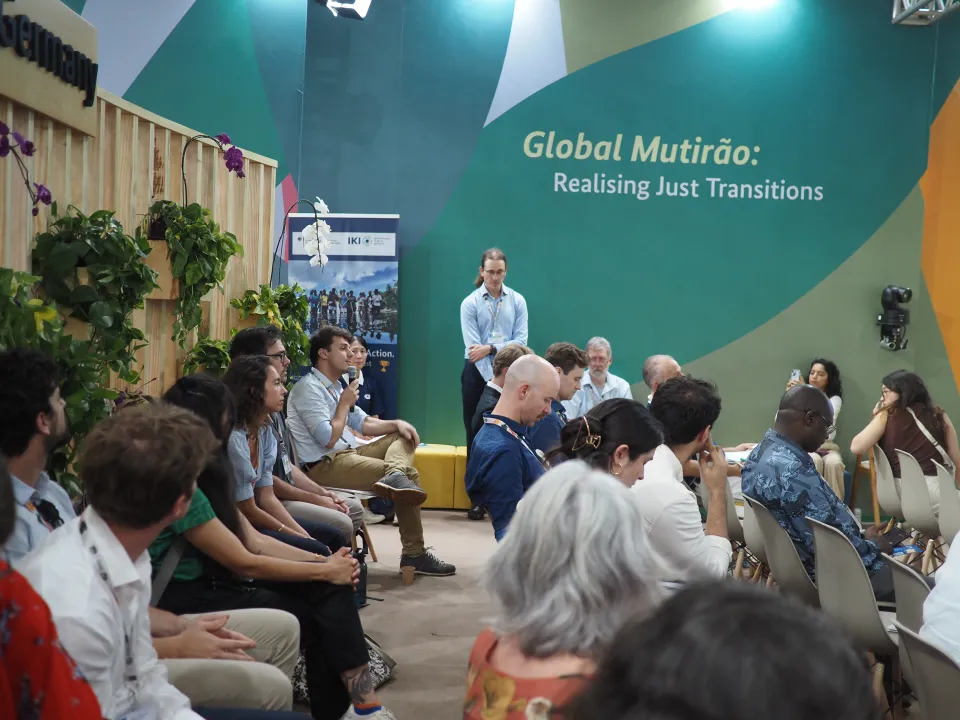
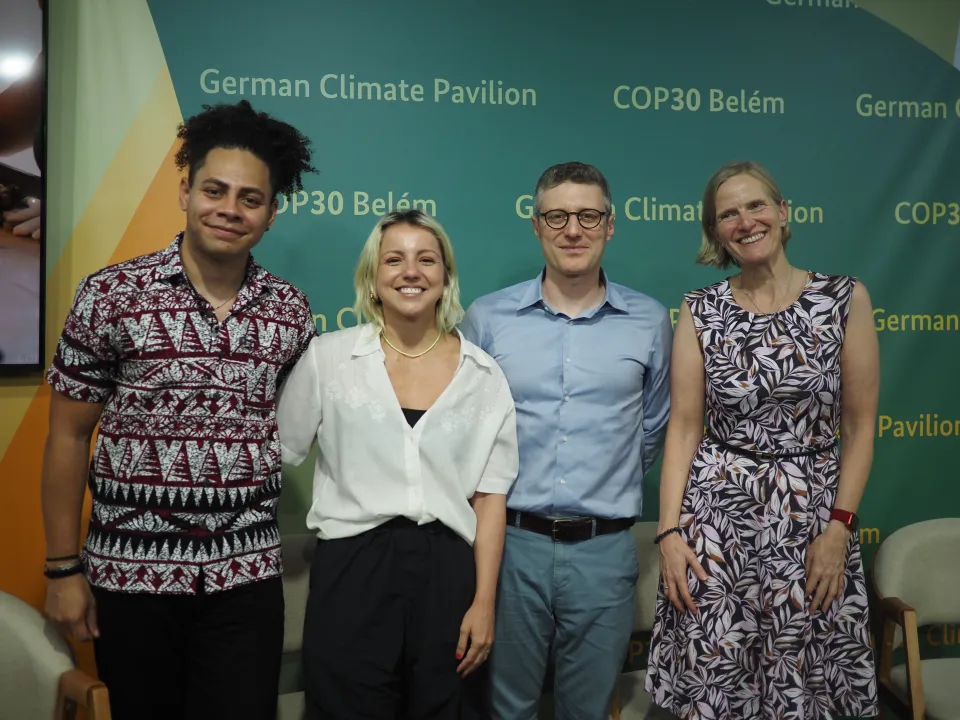
On 18 November, the Institute presented the International Climate and Democracy Coalition (ICDC) at an event in the German Pavilion.
Watch the event recording here.
Opening the panel discussion, Michele Poletto, Climate Change and Democracy Adviser at International IDEA, set the tone by describing how the decline in democratic performance that the Institute is recording across the world is directly related to the growing political divestment in climate policies. Yet, climate action will for many reasons be successful only if it is democratic. Therefore, International IDEA has taken the initiative to establish the ICDC along with several organizations active on the climate-democracy nexus, with strategic support from the European Climate Foundation (ECF) and the German government.
Natascha Beinker, Head of the Climate Policy Division at the German Federal Ministry for Economic Cooperation and Development, described the crises of climate and democracy as two sides of the same coin. While democracies are far from perfect in addressing climate change, they have essential traits that autocracies do not: The ability to hold actors to account, transparency of institutions, open debates and free press, participation and local ownership of policy processes. “We must strengthen democratic resilience as a condition for climate resilience”, she concluded, adding that this must entail reforms for more inclusive and transparent governance.
“Climate action has for long been rather insensitive to democracy”, claimed Laurence Tubiana, CEO of the ECF and Special Envoy for Europe at COP30, and one of the key architects of the Paris Agreement. While the focus mostly has been on setting targets and developing technological solutions, it is becoming increasingly clear that this is not enough and that we need democratic governance innovations to achieve a fair transition. Meanwhile, many governments are de-prioritizing climate action while claiming their citizens do not support it, while practically all polls show the contrary: citizens in fact want their governments to do more.
Dylan Kava, Strategic Communications Lead for the Pacific Islands Climate Action Network (PICAN), underscored how, when citizen perspectives are discarded, climate policies become disconnected from reality. Democracy ensures that policies and trade-offs are debated, not just adopted in a top-down manner. “Defending democracy is quite literally part of defending a living planet”, he said. Dylan Kava moreover described how Pacific citizens are living and practicing democracy in the face of climate change. In the Pacific, intergenerational justice is deeply rooted in the culture: Current generations are not owners but caretakers of the land, owing its protection to those that come after us.
Dylan Kava also shared reflections on how democratic backsliding is changing the storytelling about climate change. Increasingly, he observed, climate policy is being framed in terms of threats to jobs or national sovereignty and something that citizens do not want. “We need open and honest communication, journalists who can investigate freely, scientists who can speak without fear, and citizens who can question what they are consuming and what is coming out of media organizations as well as our politicians”, he concluded.
Sharing an on-the-ground perspective, Marcella Nery, Programme Director at Delibera Brasil, described how in their recent work with climate citizen assemblies in Brazil, in cooperation with International IDEA, they have seen the green backlash up close – but also a lot of hope and willingness of citizens and local governments to engage and participate on climate issues. Beyond a typical hearing process, the methodology of citizen assemblies allows citizens to actively deliberate and come up with practical solutions. Marcella Nery said that in their experience, no matter what political views citizens hold, climate change is not a narrative battle but largely a consensus issue on the local level in the Amazon. This is an opportunity to deepen both democracy and climate action.
In conclusion, after recorded messages from key ICDC member organizations, including Kevin Casas-Zamora, Secretary-General of International IDEA, Yasmine Qureshi, Chair of the Board of Governors at the Westminster Foundation for Democracy, and Matías Bianchi, Founder and Director of Asuntos del Sur, the representatives of the German government and the European Climate Foundation reinstated their support for the ICDC and the momentum that the Coalition is building.
Laurence Tubiana suggested two central focus areas for the ICDC: Firstly, to develop a citizens’ track in the UN Climate Change conferences, and secondly, to combat disinformation. She emphasized how disinformation is not random but organized. “They have a playbook – We should develop a playbook ourselves”, she said. For Natascha Beinker, ICDC could become a powerful tool for awareness-raising as well as concrete support and advice to governments, drawing on a unique combination of expertise from two fields. “I hope COP30 is not only a turning point for climate ambition, but also for democratic renewal”, she said.


About the authors