Advancing political finance transparency in Albania: Stakeholders unite for stronger electoral integrity
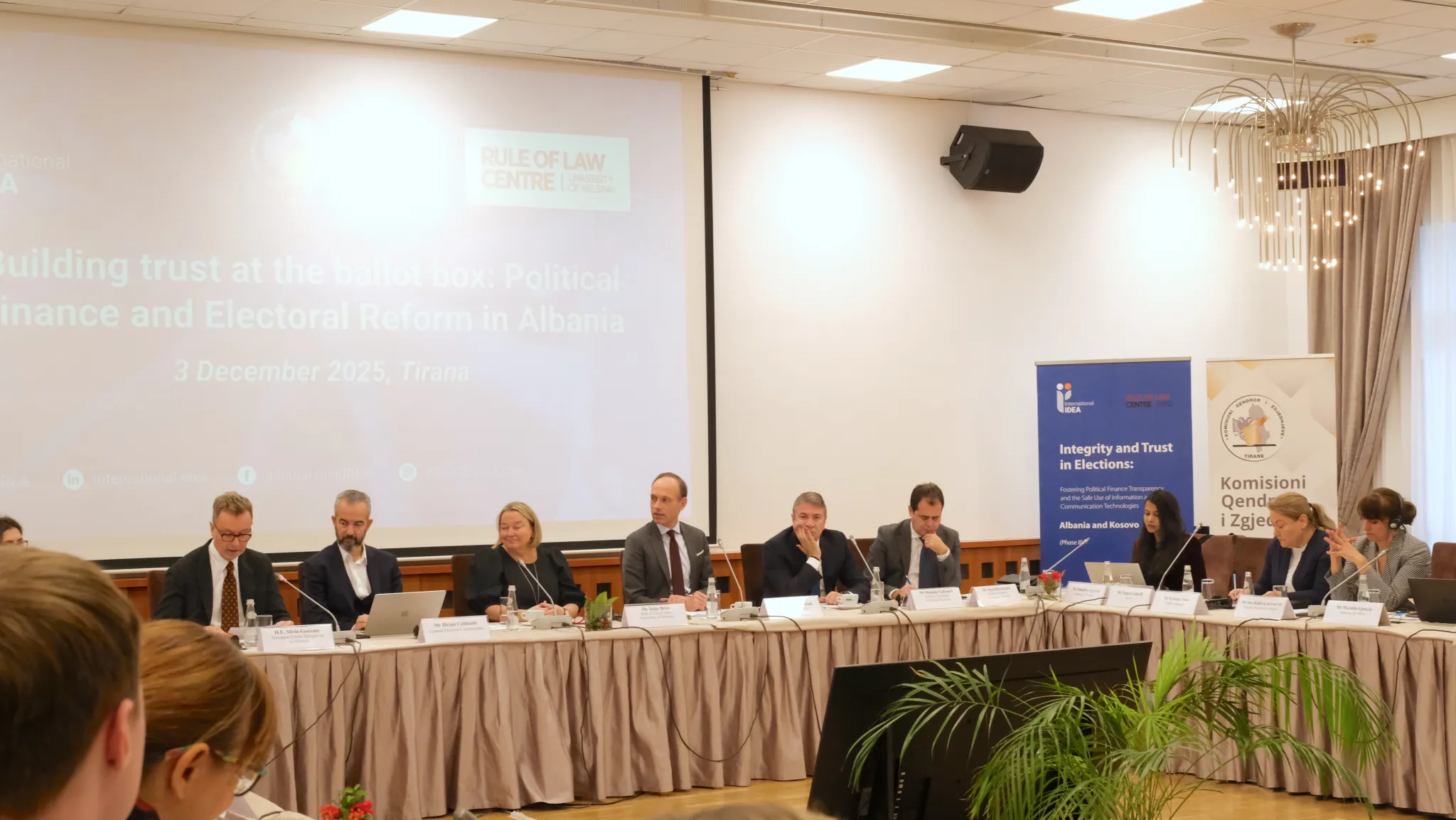
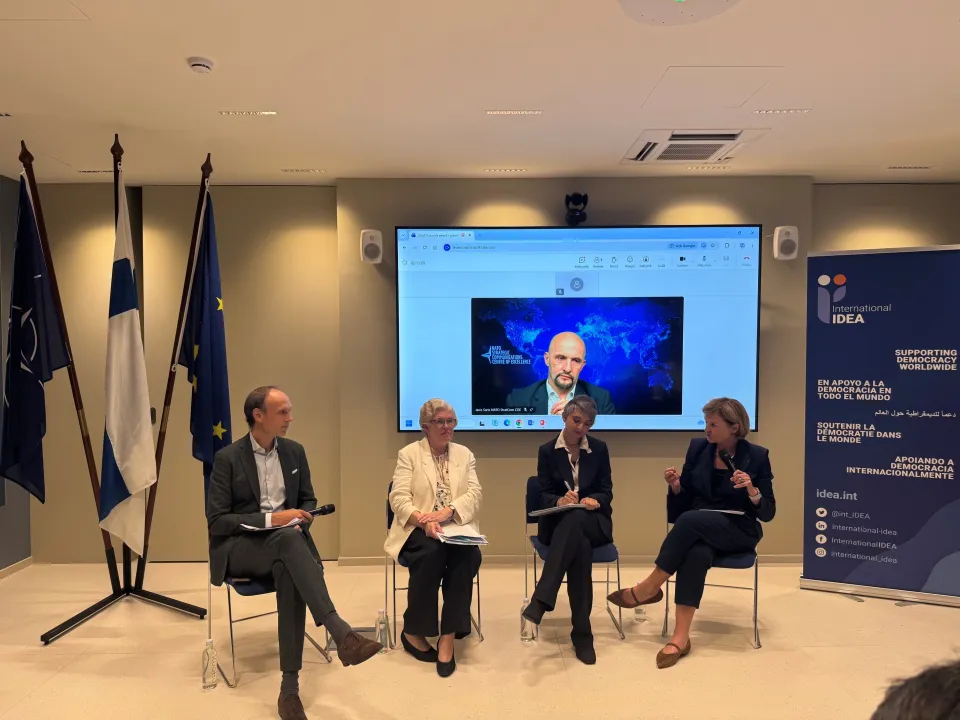
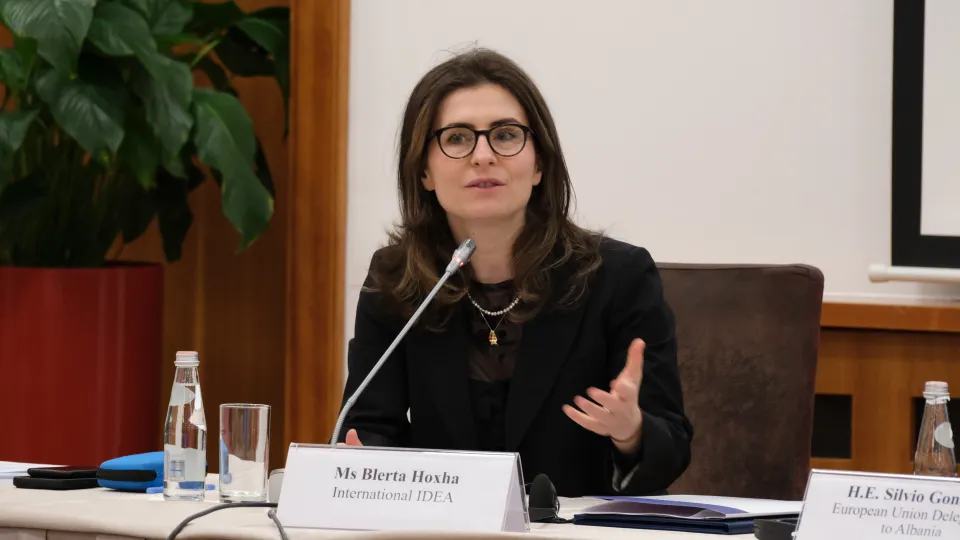
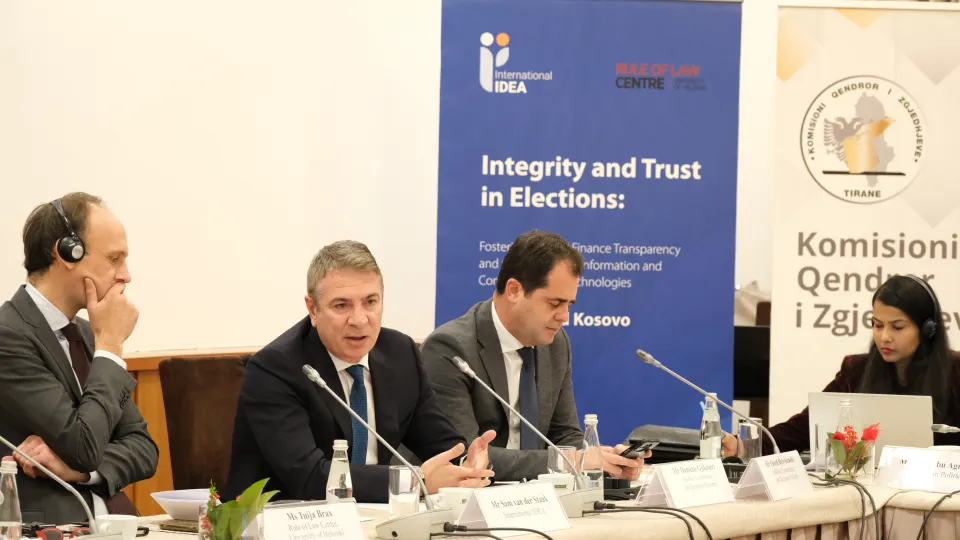
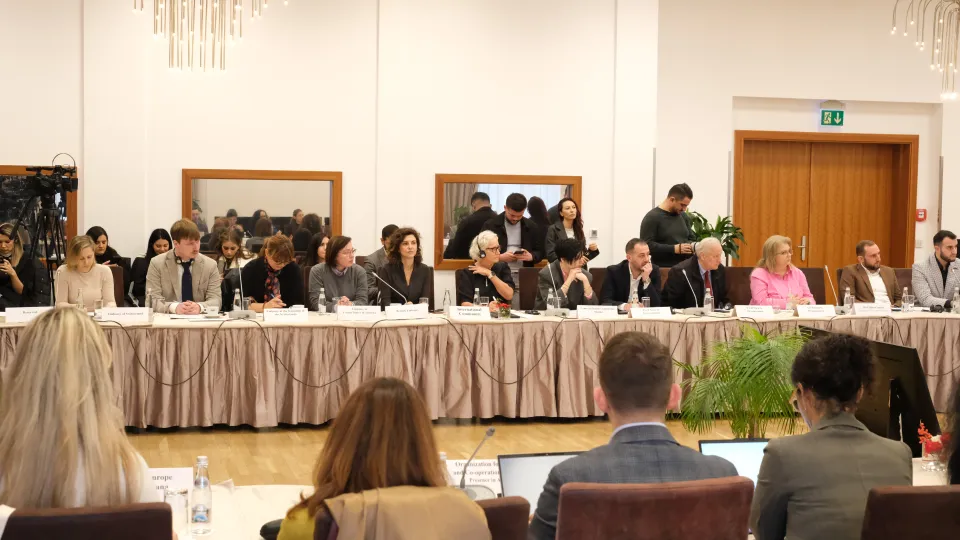
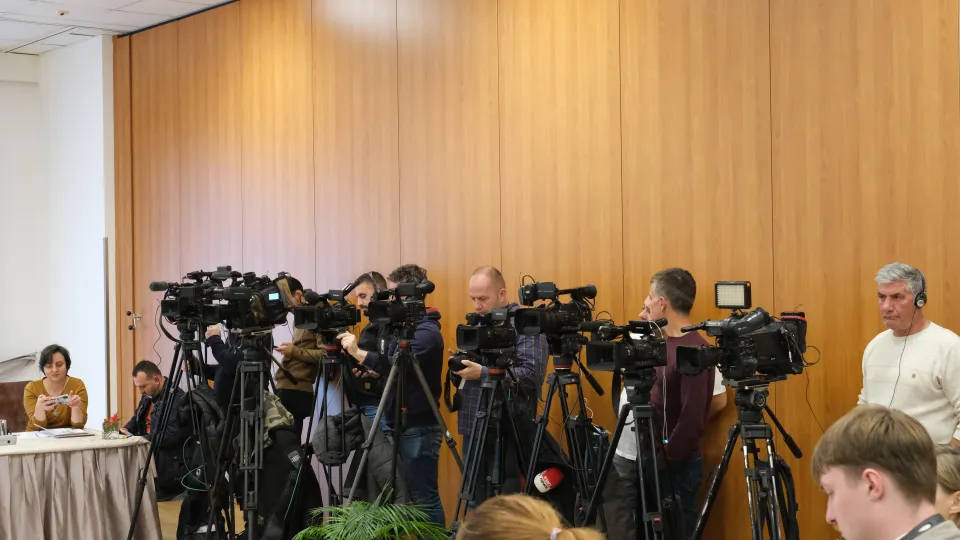
International IDEA, together with the Rule of Law Centre at the University of Helsinki, in cooperation with the Central Election Commission of Albania (CEC), convened a high-level conference on “Building Trust in Elections: Political Finance and Electoral Reform in Albania.” The event brought together key political and institutional leaders to accelerate momentum for ambitious reforms that can strengthen transparency, accountability, and public trust ahead of Albania’s next electoral cycle.
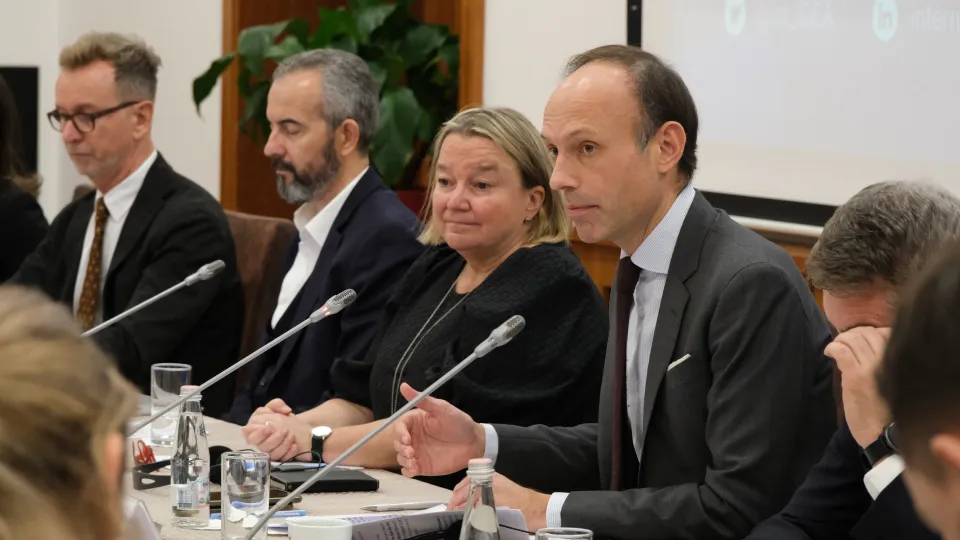
Key speakers included State Election Commissioner Mr Ilirjan Celibashi; HE Silvio Gonzato, European Union Ambassador to Albania, co-chairs of the Ad Hoc Parliamentary Committee on Electoral Reform, MPs Damian Gjiknuri and Oerd Bylykbashi; Tuija Brax, Director of the Rule of Law Centre at the University of Helsinki; and Sam Van Der Staak, Director of International IDEA’s Europe Regional Programme.
EU Ambassador Silvio Gonzato stressed that political finance transparency is indispensable for credible elections and central to Albania’s EU accession efforts.
State Election Commissioner Ilirjan Celibashi called for the urgent adoption of a modernised political party finance law, citing chronic non-compliance with financial reporting requirements. He urged lawmakers to introduce stronger enforcement tools, including real-time disclosure, improved auditing of party and campaign finances, proportionate sanctions, and bans on foreign and undisclosed third-party financing, to build a system that is both transparent and enforceable.
Members of the Ad Hoc Committee on Electoral Reform signaled openness to expert recommendations, while emphasizing the need to address broader issues such as misuse of state resources and risks of illicit financing.
International IDEA’s Europe Programme Director Sam Van Der Staak and Rule of Law Centre Director Tuija Brax underscored that meaningful reform now requires political will, cross-party cooperation, and evidence-based policymaking.
The conference also fostered regional exchange from Kosovo and Montenegro, reinforcing that Albania’s efforts are part of a broader democratic transformation across the Western Balkans. Ms Heini Huotarinen from the Ministry of Justice shared Finland’s experience in enhancing transparency of the political parties, while the representative of the civil society - Eugen Cakolli-KDI, Kristina Voko-BIRN Albania, Ana Kadovic – NDI - briefed on the efforts in Kosovo, Albania and Montenegro.
A key contribution to this effort is the Political Finance Assessment Study for Albania, presented during the conference. The study’s preliminary findings highlight persistent regulatory gaps and barriers that disproportionately affect youth and underrepresented groups—areas where targeted reform can have immediate impact on democratic inclusion.
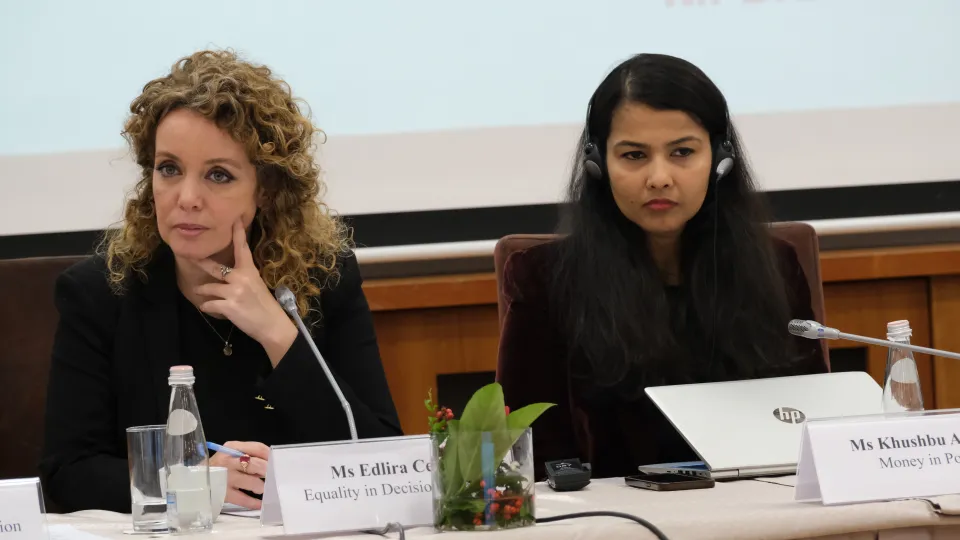
Barriers limiting the active participation of youth, women, people with special needs in elections and political life in Albania were also tackled by the participants, including challenges linked to access to party finance and the implications for electoral inclusiveness. These perspectives were presented by outstanding and distinguished civil society activists and researchers, including Suela Lala (Together Foundation), Edlira Cepani (Equality in decision-making), Kolindo Vjerdha and Ilir Brasha.
International IDEA remains committed to facilitating an open dialogue among policymakers, legislators, electoral authorities, civil society, and international actors, to supporting Albania in building a political finance framework that upholds transparency and ensures equal opportunities for all citizens to participate in democratic life. The event forms part of the project “Integrity and Trust in Albanian Elections: Fostering Political Finance Transparency and the Safe Use of ICTs,” implemented with the Rule of Law Centre of Finland and in co-operation with the CEC.
Regional conference "Building Trust in Ballot Box: Political Finance and Electoral Reform in Albania"


About the authors