Strengthening electoral integrity in Armenia ahead of the 2026 parliamentary elections
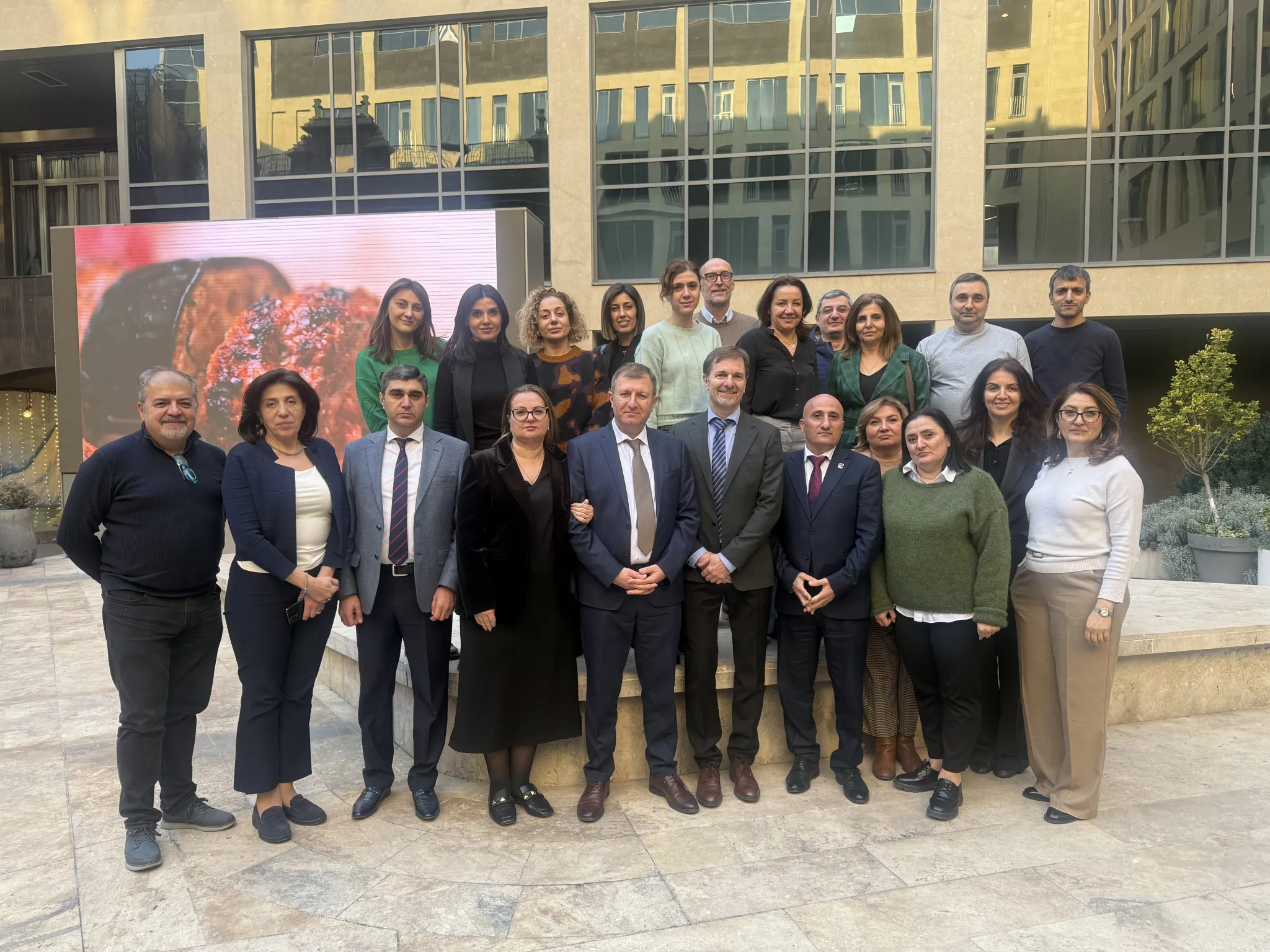
Against this backdrop, International IDEA convened members and senior staff of Armenia’s Central Electoral Commission (CEC), in Yerevan for a two-day workshop on electoral risk management, resilience-building, and crisis response. The workshop was conceived as an inception and knowledge-development activity, designed to establish a shared conceptual foundation on electoral risk management among CEC leadership and senior staff. The workshop, built on International IDEA’s global comparative expertise in integrating electoral risk management within electoral management bodies worldwide, developed through its Integrated Framework for Protecting Elections.
A key objective of the workshop was to prepare the ground for the systematic integration of electoral risk management (ERM) principles into the upcoming capacity-building programme for Territorial Electoral Commissions (TECs). The workshop combined theoretical inputs with practical group exercises, scenario building, and shared reflections based on international case studies.
The event opened with remarks from key national and international partners, underscoring the shared commitment to safeguarding electoral integrity and strengthening institutional resilience. Mr. Vahagn Hovakymyan, Chair of the Central Electoral Commission of Armenia, reaffirmed the Commission’s focus on proactive risk management and institutional preparedness. Mr. Frank Hess, Head of Cooperation at the EU Delegation to Armenia, highlighted the European Union’s continued support for democratic processes and comprehensive electoral reform. Mr. Aaron Coe, Political Counsellor at Global Affairs Canada, emphasized Canada’s longstanding commitment to free and fair elections and welcomed the practical application of the Framework for Protecting Elections in Armenia, which Canada has supported globally in the past years. Ms. Nana Kalandadze, Programme Manager at International IDEA, underscored the critical importance of protecting the integrity of elections, drawing on International IDEA’s global expertise, and highlighted the European Union’s central role in supporting these efforts.
The first day focused primarily on the introduction to the International IDEA’s Integrated Framework for Protecting Elections, followed by case studies illustrating how electoral management bodies in different contexts have advanced their risk management practices. Participants applied these concepts through a self assessment survey and group exercises on identifying internal and external risk factors relevant to the Armenian election context. The second day shifted toward analysing potential responses to identified risks. A session on electoral heat maps provided participants with tools to visualise vulnerabilities across different stages of the electoral cycle. This was followed by hands on exercises focused on risk assessment, crisis response planning and resilience building, designed to encourage greater interinstitutional coordination. These sessions allowed for tailored, context specific reflections on practical measures to mitigate risks in Armenia’s electoral environment. International IDEA demonstrated the Election Risk Management Tool, demonstrating its applicability for the CEC’s operational planning. The workshop concluded with a final reflection, feedback from participants and an outlook on next steps.
The workshop forms part of a broader, EU-funded electoral assistance programme supporting Armenia’s electoral institutions ahead of the 2026 parliamentary elections. Within this framework, International IDEA contributes technical expertise across several key areas, including electoral risk management and the protection of elections, oversight of campaign finance and campaign standards, particularly in relation to online platforms, and support to civic education initiatives aimed at strengthening public awareness and resilience. These components are implemented as part of the ARTEMIS Project, funded by the European Union, the Government of Germany, Norway, Sweden, UN DPPA and implemented by UNDP in partnership with International IDEA, in close coordination with the Central Elections Commission of the Republic of Armenia (CEC).


About the authors