Strengthening electoral integrity in Ethiopia: A critical training ahead of 2026 National Election
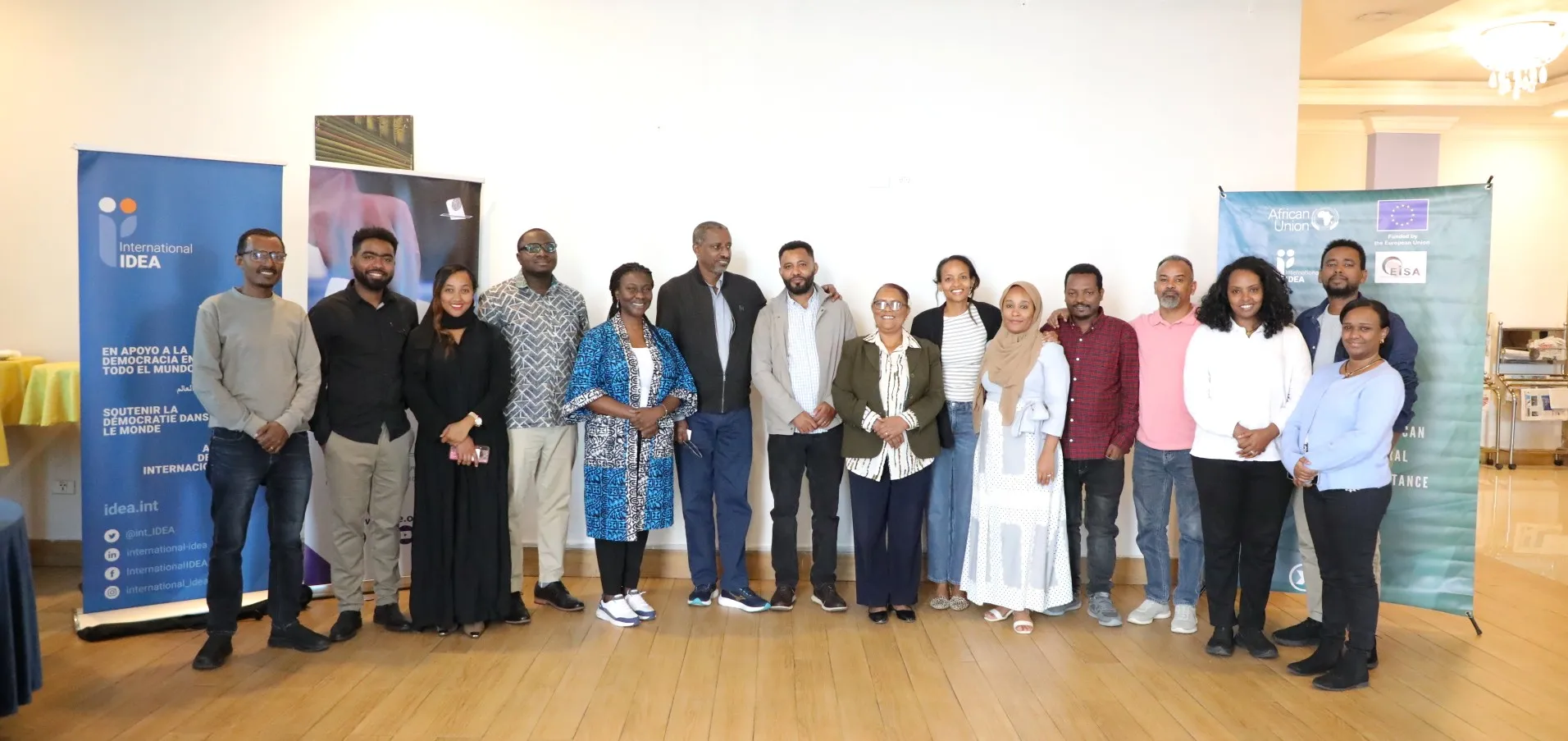
The TOT is part of International IDEA’s broader technical support to the NEBE towards establishing an electoral risk management framework, with funding from the European Union through the Strengthening Pan-African Capacities for Electoral Observation and Assistance (SPEC) Project.
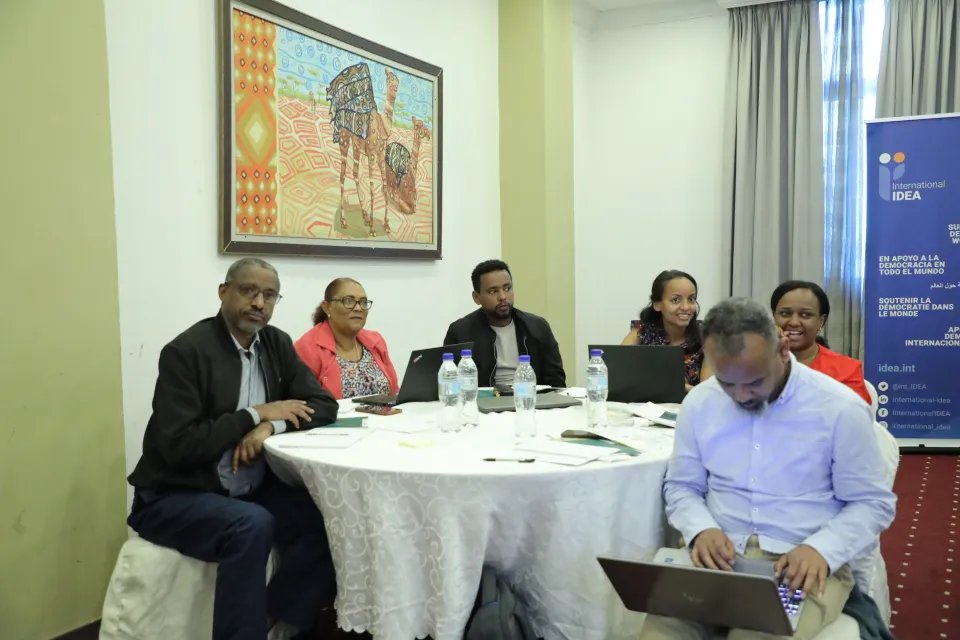
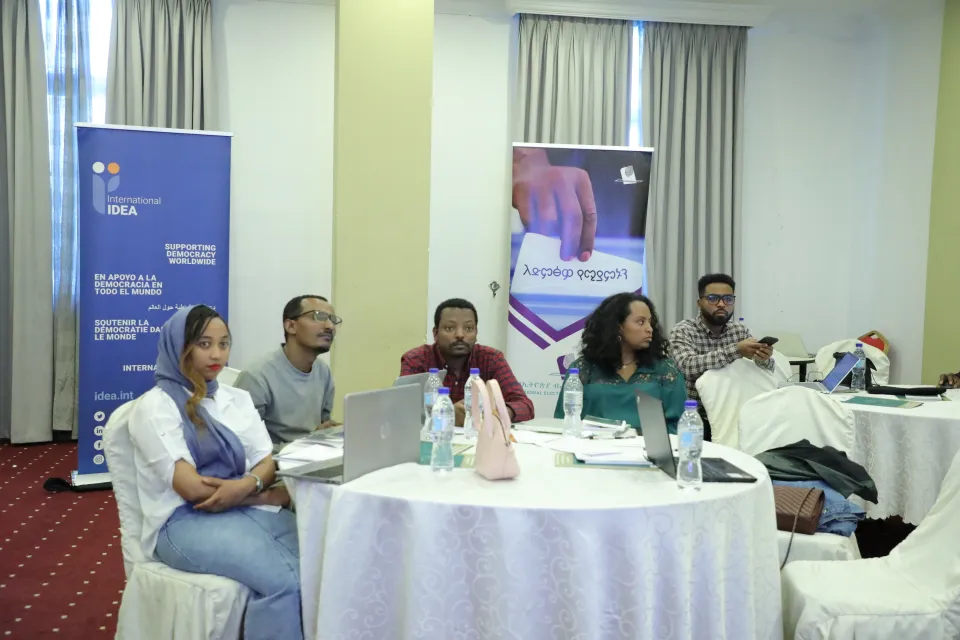
The two-day training brought together 12 NEBE staff to jointly understand the Protecting Elections Framework, a practical and holistic approach designed to help electoral management bodies recognize complex risk landscapes and build resilient systems that protect electoral integrity. The objective of the ToT was to enhance NEBE’s institutional capacity, to anticipate challenges and engage stakeholders confidently throughout the electoral cycle. In his opening remarks, NEBE Board Member Fikre Gebrehiwot emphasized the timing and importance of the training, noting that...
“The ToT comes at a crucial moment as Ethiopia prepares for its upcoming national elections, helping to strengthen capacity to anticipate and manage electoral risks”.
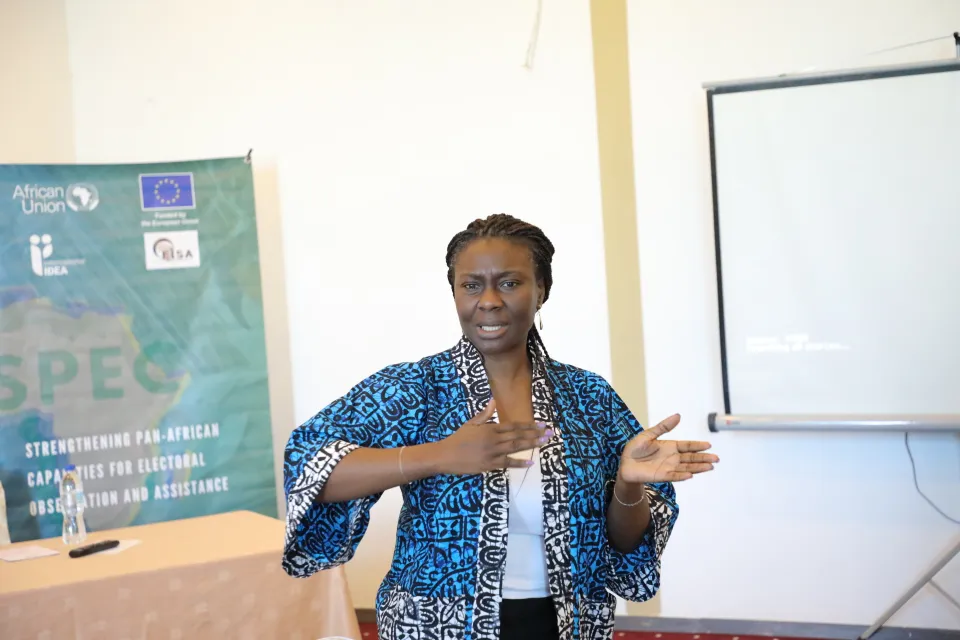
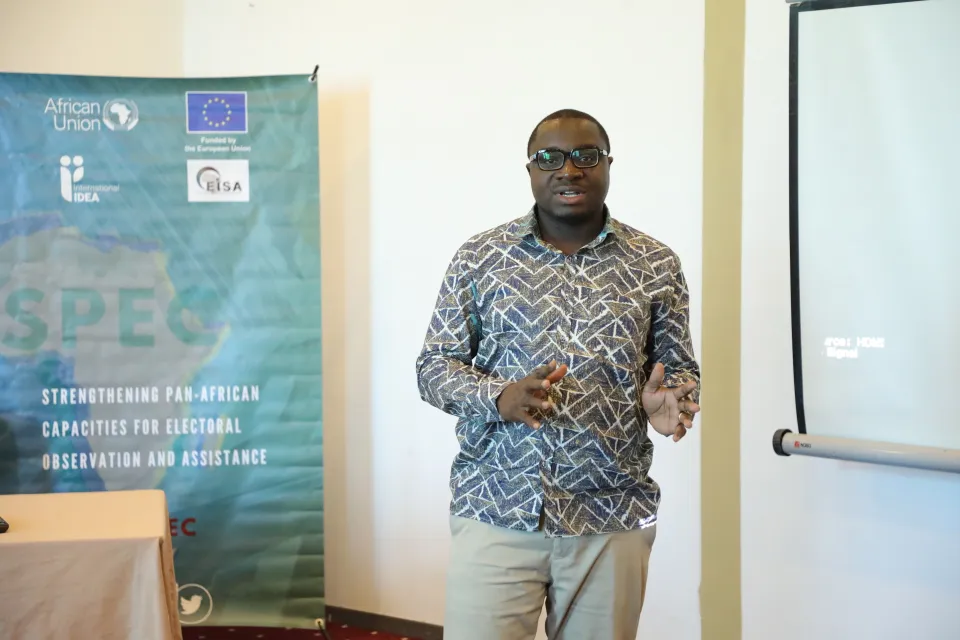
The two-day training was co-facilitated by International IDEA election experts: Mawusi Dumenu Programme Officer, Elections and Olufunto Akinduro, Senior Adviser, Electoral Processes. Participants were introduced to the core concepts of the Protecting Elections Framework that include risk management, resilience building, and crisis response. The training particularly focused on the electoral risk management methodology aspect of the framework, helping them to ground theoretical approaches in the practical realities of Ethiopia’s electoral context, using case-based examples to bring abstract concepts to life.
Training sessions covered topics such as electoral risk identification, categorization and risk mapping, and the use of heat maps and response actions as tools for proactive planning and mitigation. Participants were also exposed to facilitation techniques and strategies for mainstreaming gender and inclusion within electoral processes.
This ToT will enable NEBE personnel not only to apply these methodologies internally but also to serve as facilitators during the stakeholder consultative workshops that will be conducted as part of the ERM Framework development. By raising the internal capacity of NEBE staff in these methodologies, the training contributes directly to a more resilient, transparent and participatory electoral process as the country prepares for the general elections in June 2026.
International IDEA’s engagement in Ethiopia is long-standing and strategic. In 2019, prior to the establishment of the current National Election Board of Ethiopia (NEBE) under a revised legal framework, International IDEA organized an orientation programme for newly appointed NEBE board members and staff. This early intervention equipped electoral commissioners with essential knowledge in electoral administration and risk management, while promoting international standards and best practices for credible, transparent, and inclusive elections ahead of the then-scheduled 2020 polls.
Building on this foundation, International IDEA further strengthened its support in 2024 by facilitating an introductory self-assessment workshop for NEBE. The workshop introduced an integrated framework for electoral risk management, empowering NEBE’s technical staff through targeted sessions on protecting electoral integrity, enhancing operational efficiency, and strengthening institutional preparedness. The initiative also enabled NEBE staff to benefit from cross-country experience sharing and expert guidance, fostering peer learning and laying a strong foundation for sustained institutional development and resilience within the electoral management body.
These collaborative efforts reflect a broader trend of international IDEA’s technical support aimed at enhancing the professionalism and independence of Ethiopia’s electoral institutions. International IDEA will remain central in fostering electoral transparency and public confidence.


About the authors