Ukraine deepens dialogue with Austria and the Czech Republic on preparing out-of-country voting for post-war elections
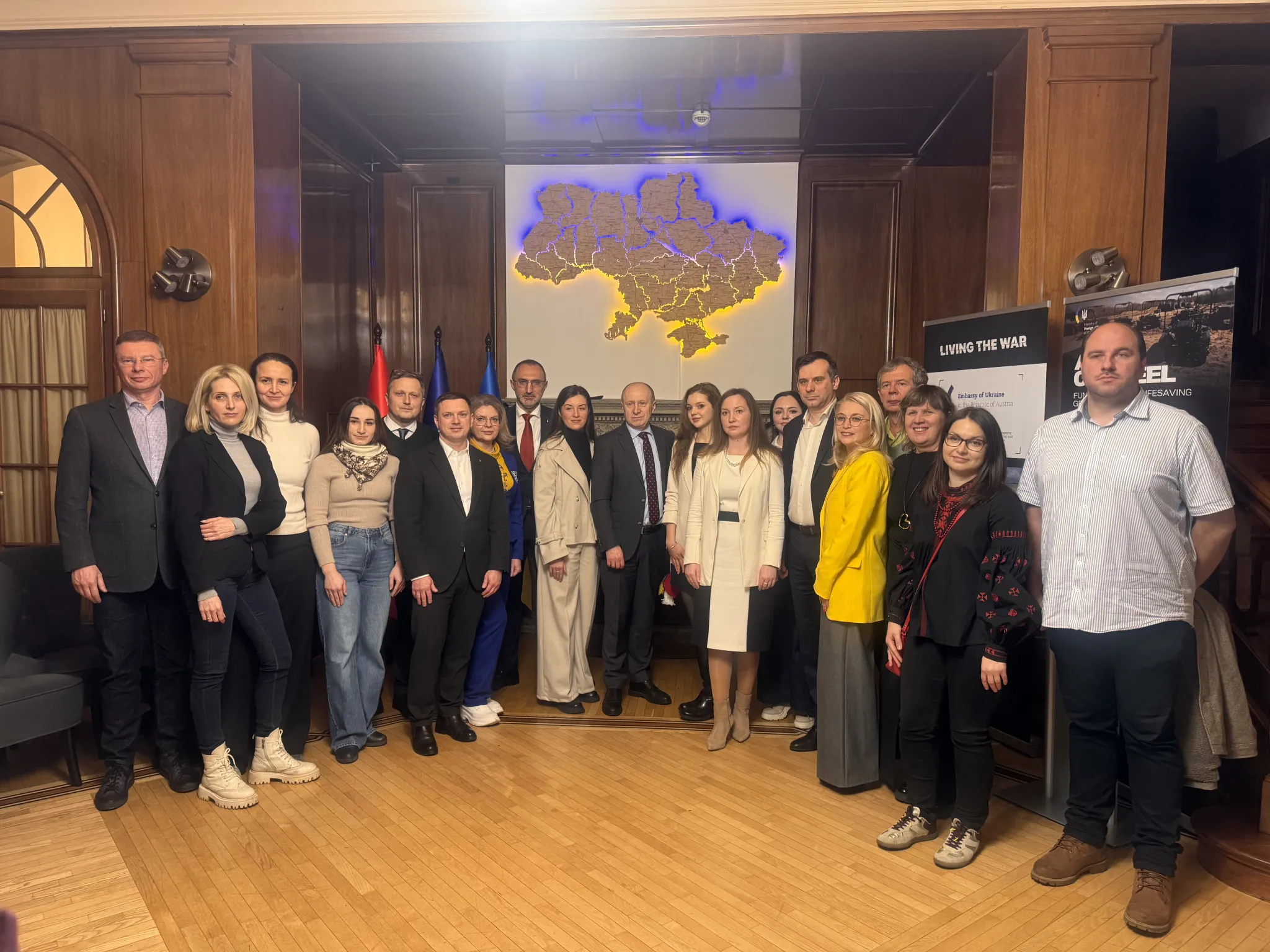
The visits were organised with the financial support of the European Union under the project INSPIRE UA – Inclusive Support for Participation, Involvement, Representation and Engagement of Ukrainians Abroad, implemented by International IDEA.
The consultations form part of a broader series of exchanges with EU Member States aimed at strengthening Ukraine’s institutional preparedness for out-of-country voting (OCV) and ensuring meaningful participation of millions of Ukrainians residing abroad once conditions allow elections to be held. The discussions focused on legal, institutional, logistical and security aspects of organising OCV in a post-war context. They also contributed to Ukraine’s broader EU accession agenda and aligned with the Roadmap on Functioning of Democratic Institutions, adopted by the Government of Ukraine in May 2025.
Consultations in Austria
In Vienna, the Ukrainian delegation held consultations at the Federal Ministry for European and International Affairs, the Federal Ministry of the Interior, the Vienna Provincial Office for State Protection and Counter-Extremism, Directorate for State Protection and Intelligence Service, and with representatives of major Austrian municipalities, including Vienna, Linz and Graz.
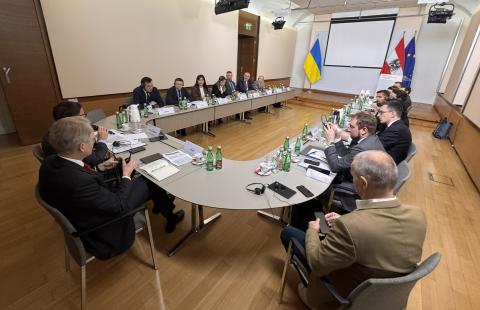
Discussions addressed Austria’s institutional framework for elections, including postal voting and arrangements for Austrian citizens abroad, as well as the legal and administrative conditions applicable to the organisation of voting by third countries on Austrian territory.
The programme also included consultations with representatives of the Embassies of Romania, Croatia and Moldova in Vienna, providing comparative insights into the practical organisation of out-of-country voting, including voter registration, premises selection, staffing, communication with diaspora communities and cooperation with Austrian authorities.
Consultations in the Czech Republic
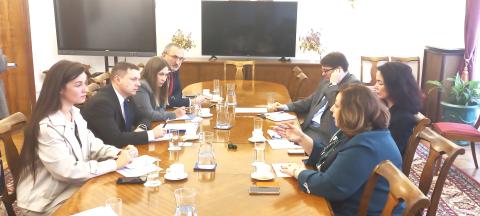
In Prague, the delegation met with the Ministry of Foreign Affairs, the Czech Statistical Office, the Ministry of the Interior, representatives of civil society and analytical centres, and the leadership of the City of Prague.
'
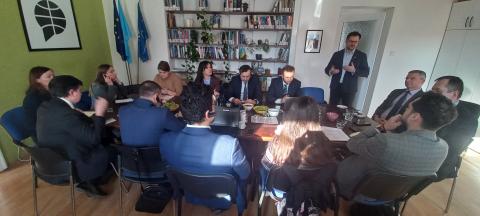
Consultations at the Ministry of Foreign Affairs addressed the legal framework and institutional roles relevant to organising voting abroad, including existing restrictions concerning electoral activities outside diplomatic premises, and the coordination role of the MFA in this context.
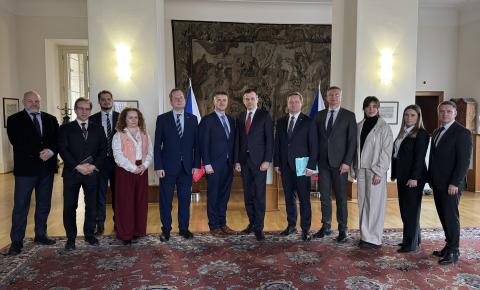
Czech counterparts outlined a practical approach that could help address these limitations, namely the establishment of temporary consular offices in selected regions, which would allow voting to take place within a diplomatic framework while expanding geographical accessibility for a large number of Ukrainian citizens residing in the Czech Republic when the time comes.
The Czech Statistical Office provided an overview of statistical data concerning Ukrainian citizens residing in the Czech Republic, and discussed the potential use and limitations of such data for electoral planning.
At the Ministry of the Interior, discussions focused on the institutional system governing elections, inter-agency coordination, legal and administrative conditions for hosting voting by third countries, and security considerations.
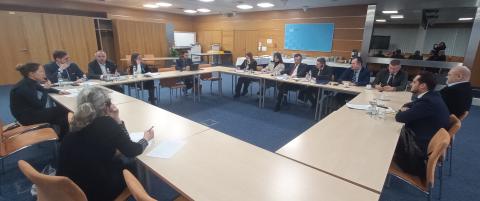
The delegation also met with the Mayor of Prague, Mr Boguslav Svoboda, and city officials responsible for security and crisis management to discuss coordination mechanisms, public order, emergency response and accessibility in urban settings when hosting events involving foreign nationals.
Community exchange in Austria and Czechia
In both the Czech Republic and Austria, the programmes included meetings with representatives of Ukrainian communities. Dedicated meetings with the Ukrainian community in Vienna and Prague allowed for an exchange on participation challenges, venue options, staffing needs, communication channels and cooperation with authorities in preparation for future post-war electoral processes.
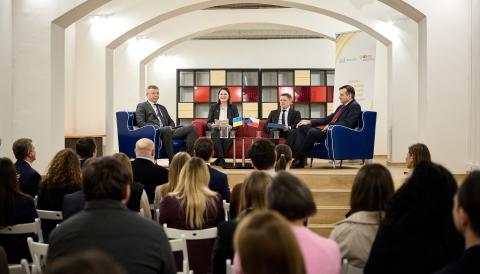
The consultations in the Czech Republic and Austria further strengthened Ukraine’s institutional readiness, enhanced coordination between electoral and diplomatic bodies, and reinforced partnerships with EU institutions and Member States.
Through INSPIRE UA, International IDEA, with the financial support of the European Union, promotes structured dialogue and peer learning between Ukrainian and European electoral institutions, ensuring that international experience informs Ukraine’s post-war democratic recovery. The project will culminate in a comprehensive report in July 2026, summarizing best practices, legal and logistical recommendations, and a roadmap for enabling the participation of millions of Ukrainians living abroad in future elections.


About the authors