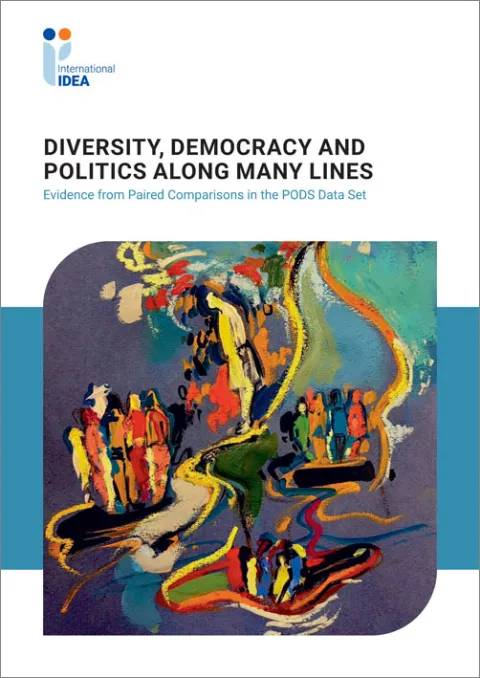
Diversity, Democracy and Politics Along Many Lines: Evidence from Paired Comparisons in the PODS Data Set
This report explores how ethnic, racial and religious identities shape trust in democracy across six countries. Drawing on a unique public perceptions survey, it shows that diversity is not inherently divisive but can become so when elites encourage fragmentation and institutions lack the strength to counter it. Importantly, dissatisfaction with specific institutions does not equate to rejecting democracy, and disaggregated data are essential for identifying inequalities that might otherwise remain hidden.
The country findings reveal contrasting patterns: Sierra Leone shows deep ethnic polarization, while Senegal’s civic identity has limited such divides. Brazil’s most visible cleavage is religious, Colombia’s stems from conflict and economic insecurity, India’s reflects minority experiences under majoritarian politics and the United States is marked more by partisan and geographic divides than by identity alone. Together, these insights highlight the need for inclusive reforms and robust institutions that earn the confidence of all citizens.


Details

Staff authors
Related databases & tools
Contents
Executive summary
Introduction
1. Senegal and Sierra Leone
2. India and the USA
3. Brazil and Colombia
4. Conclusion
References
Annex A. Key terms
Annex B. PODS survey methodology
Annex C. Key takeaways from pre-launch event
Give us feedback
Do you have a question or feedback about this publication? Leave us your feedback, and we’ll get back to you
Send feedbackDiversity, Democracy and Politics Along Many Lines: Evidence from Paired Comparisons in the PODS Data Set


 Download PDF

| Total views | 5666 |
|---|---|
| Downloads | 156 |
| Rating |

|
Staff authors
Related databases & tools
Give us feedback
Do you have a question or feedback about this publication? Leave us your feedback, and we’ll get back to you
Send feedback