Women, elections and peace: Civil society action in Gabon
Following the events of August 30, 2023, and the change in governance that occurred after the overthrow of President Ali Bongo Ondimba, Gabon entered a two-year transition period. This transition was marked by several institutional and political milestones aimed at restoring lasting constitutional order.
Over this period, civil society mobilized to relay the expectations and priorities of the general public to the transitional authorities, aiming to ensure effective representation of citizens’ aspirations and their integration into new public policies. Consequently, following the National Dialogue held in April 2024, a new Constitution was adopted by referendum in November 2024, paving the way for the organization of national elections.
Civil society organizations' involvement in the electoral process led to the creation of the first groups of national observers and the active participation of citizens in efforts to restore and consolidate democratic institutions.
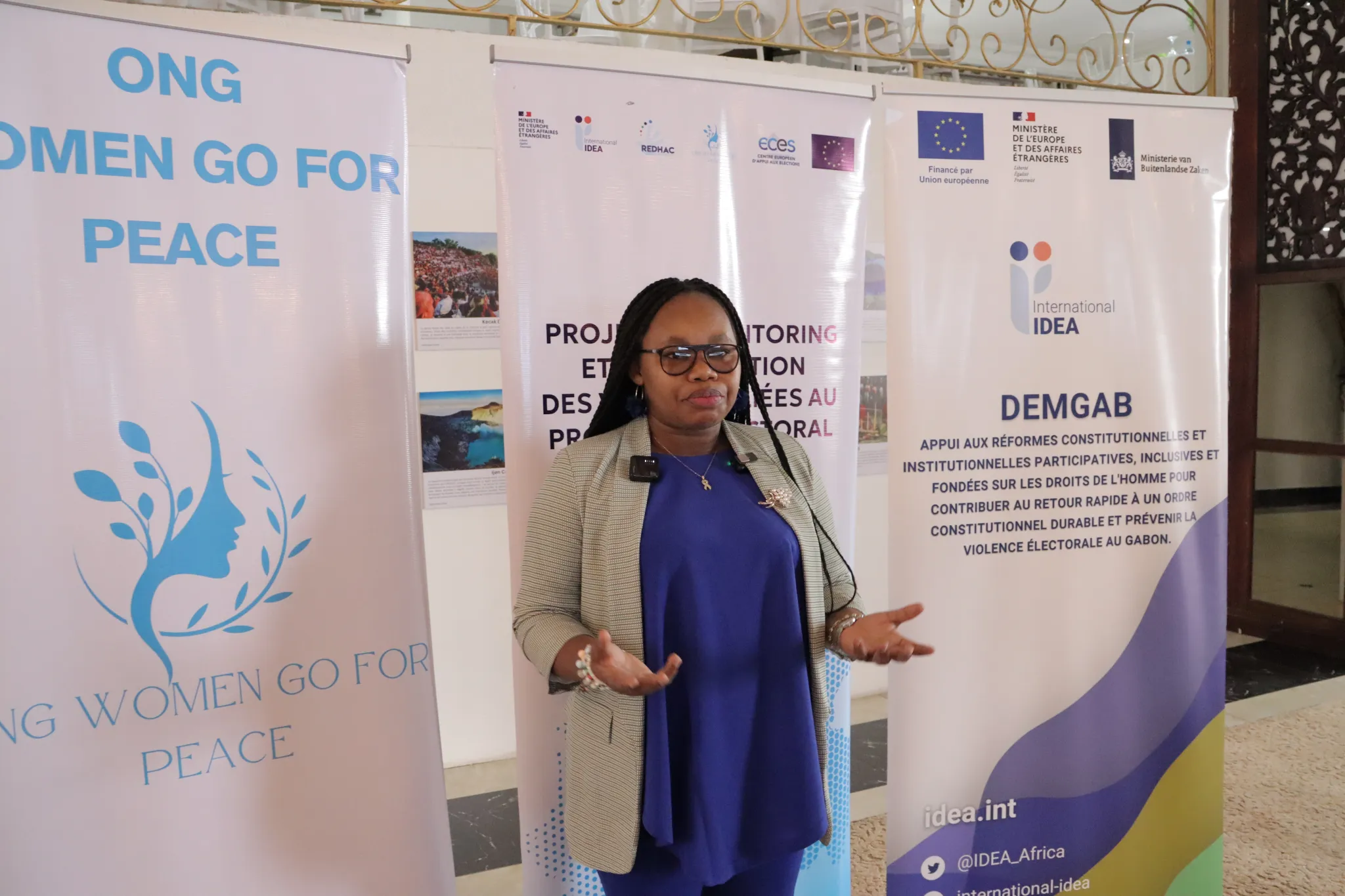
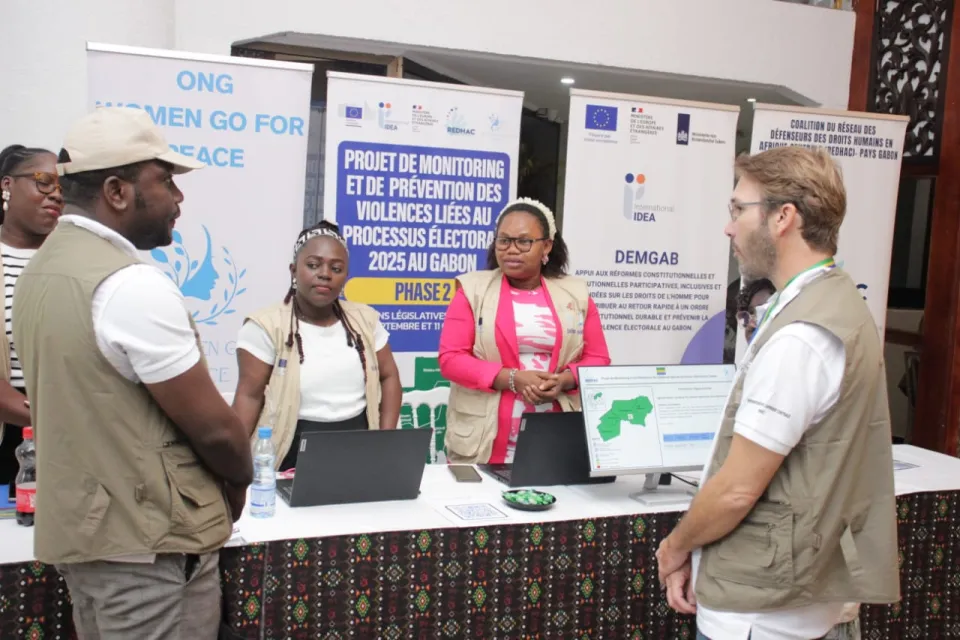
Through its project to support civil society organizations during the transitional elections in Gabon, funded by the French Ministry for Europe and Foreign Affairs and the European Union, International IDEA supported citizen engagement to promote free, transparent, and peaceful presidential and local elections. This support materialised in the creation of two monitoring units, including a monitoring unit for electoral violence led by the NGO Women Go for Peace and the Network of Human Rights Defenders in Central Africa (REDHAC).
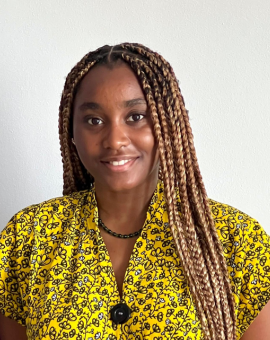
Marking International Women's Day, with this year's theme focus on “Rights, Justice, Action,” Hermina Akazong Sabinka, president of Women Go for Peace, looks back on her organization's work during the electoral process and the challenges that remain in defending and promoting the rights of women and girls in Gabon.
Active in civil society for some 15 years, she is a defender of human rights and gender equality, and is also involved in peace prevention, preservation, and consolidation processes at both the national and regional levels.
In the following interview, she discusses her experience of the 2025 electoral year and outlines prospects for strengthening women's participation and protecting women's rights in Gabon.
How does your work promote equal rights and justice for women and girls?
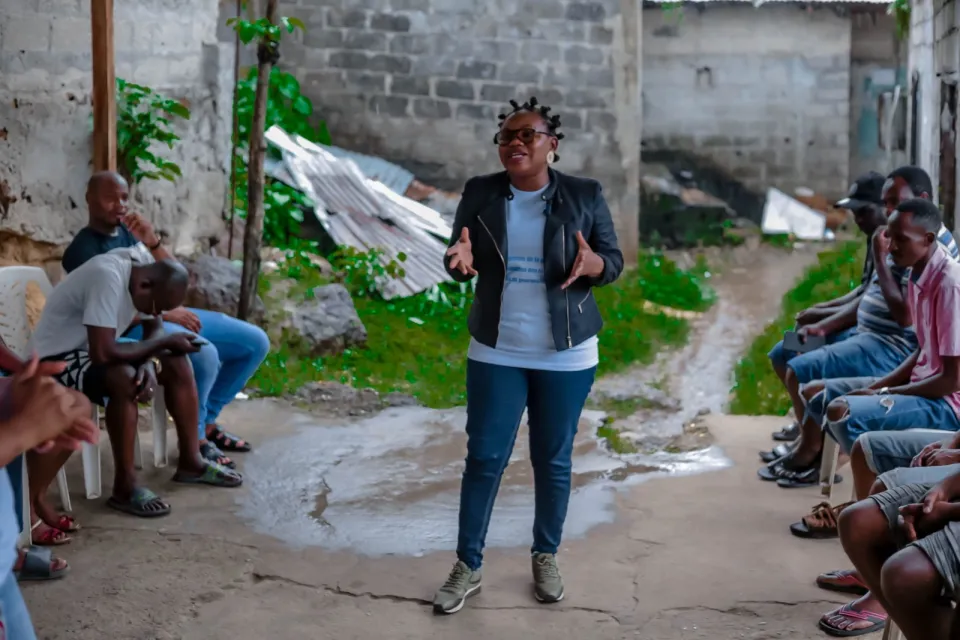
The NGO Women Go for Peace (WGP) aims to promote peace and unity through community living and social cohesion, as well as to encourage women's participation in electoral processes and decision-making spheres through civic and citizenship education, training workshops, information, and awareness-raising. WGP is based on the Sustainable Development Goals, SDG 16 (peace, justice, and strong and inclusive institutions); SDG 5 (gender equality), SDG 17 (partnerships for the goals), and in United Nations Security Council Resolutions 1325 and 2250 on women, peace, and security, and youth, peace, and security.
At Women Go for Peace, we are convinced that democracy cannot be real unless women and girls participate fully and safely.
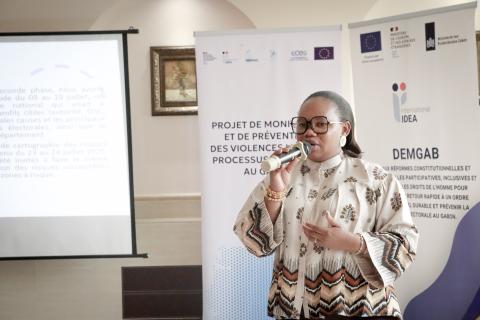
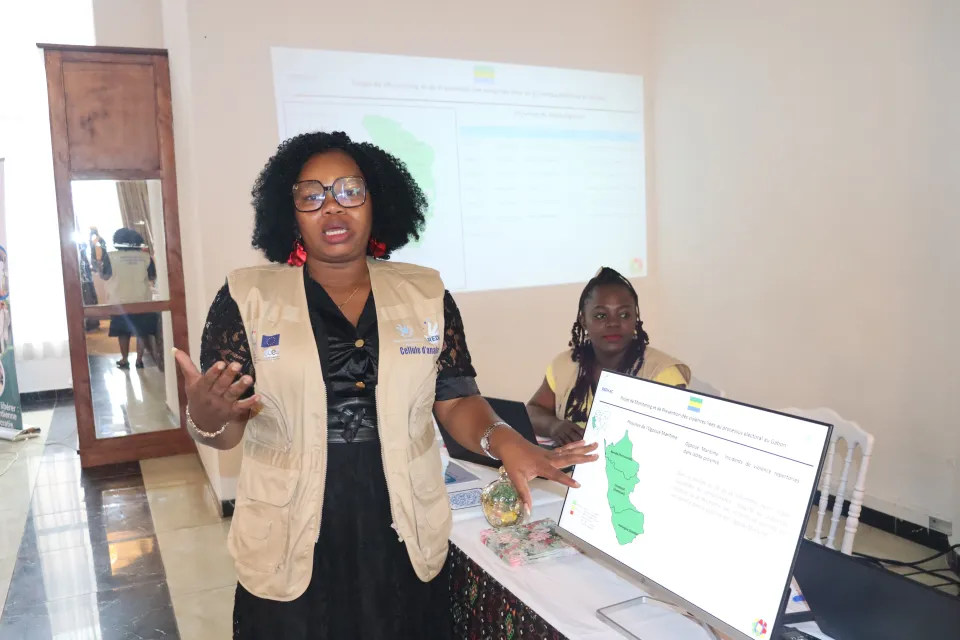
As part of the CSOGAB project, we implemented a project to monitor and prevent violence related to the 2025 electoral process in Gabon in partnership with IDEA International. One of the objectives of the project's analysis unit was to monitor gender-based violence during the election period, as many women are often stigmatized, intimidated and threatened during this period, which does not encourage their full political and institutional engagement. The project allowed us to document the incidents and make recommendations to both political parties and the relevant authorities.
Overall, our work promotes equality through concrete actions focused on prevention, training, support, documentation, and advocacy against violence against women and girls, particularly during election periods.
What are the main obstacles to the application of equal justice in your field, and what actions are needed to eliminate them?
It should be noted that both international and domestic legal frameworks provide measures to reduce inequalities. This is the case with Law No. 9/2016 of September 5, 2016, which sets quotas for women and young people in political elections and for women in senior government positions, and Article 83 of the Electoral Code, which specifies the need to comply with these quotas, etc.
Unfortunately, obstacles remain. Among these, we can mainly cite:
The persistence of socio-cultural constraints that discourage women from reporting violence or seeking positions of responsibility. We have examples of women who have given up on political careers because their partners sometimes go so far as to ask them to choose between them and their careers. Even at this stage, many women still hesitate to report violence for fear of reprisals or stigmatization.
The weak enforcement of existing laws and the lack of sanctions to protect women's rights, even though these laws should enable progress towards a more egalitarian society. This gap between the laws and their effective enforcement is a major obstacle.
The lack of specialized mechanisms to effectively address gender-based injustices and violence of all kinds.
To address this, measures are needed, notably:
- Organizing capacity building for members of the judiciary;
- Institutionalizing mechanisms to monitor and provide early warning of observed violence and inequalities;
- Systematically integrating a gender perspective into public policies and electoral processes;
- Providing long-term support to civil society organizations working on these issues ;
- Investing in education and community awareness-raising to dismantle stereotypes that hinder women's participation.
How are the democratic actors you work with evolving to claim and exercise equal rights?
We are seeing increased willingness among democratic actors at different levels. Political parties, civil society organizations, and the media are trying to integrate gender issues into their various programs and activities, although the adoption of internal charters within these groups would promote women's participation and engagement.
Although significant gaps remain, they recognize that the participation of women and young people is a factor in democratic stability.
CSOs in particular publicly denounce injustices and inequalities in various forums, while providing support wherever possible.
We also see strong networking among women, which strengthens their capacity for collective advocacy. Our role is to support this dynamic, build the confidence of women and girls, and remind them that equality is not a favor, but a right.


About the authors