Strengthening responses to information interference in Ukraine
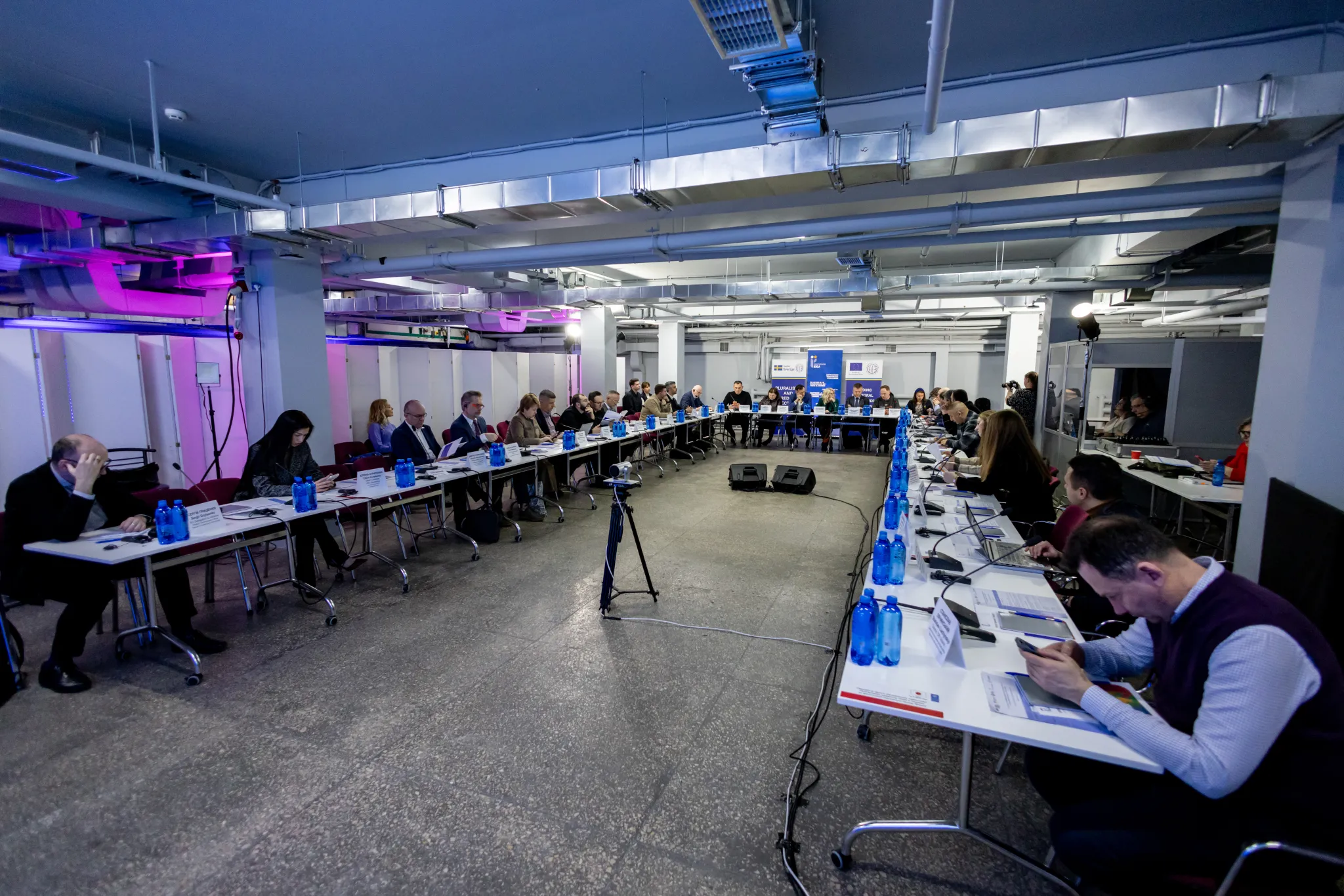
The event brought together more than 100 participants, both in person in Kyiv and online, including representatives of Ukrainian public authorities, international organisations, civil society, and expert communities.
The programme combined international experience with national perspectives across several thematic sessions, covering key areas such as legal and regulatory frameworks, coordination mechanisms, strategic communication approaches, and the role of different stakeholders in responding to information interference.
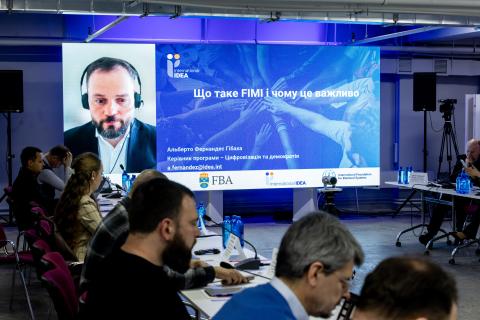
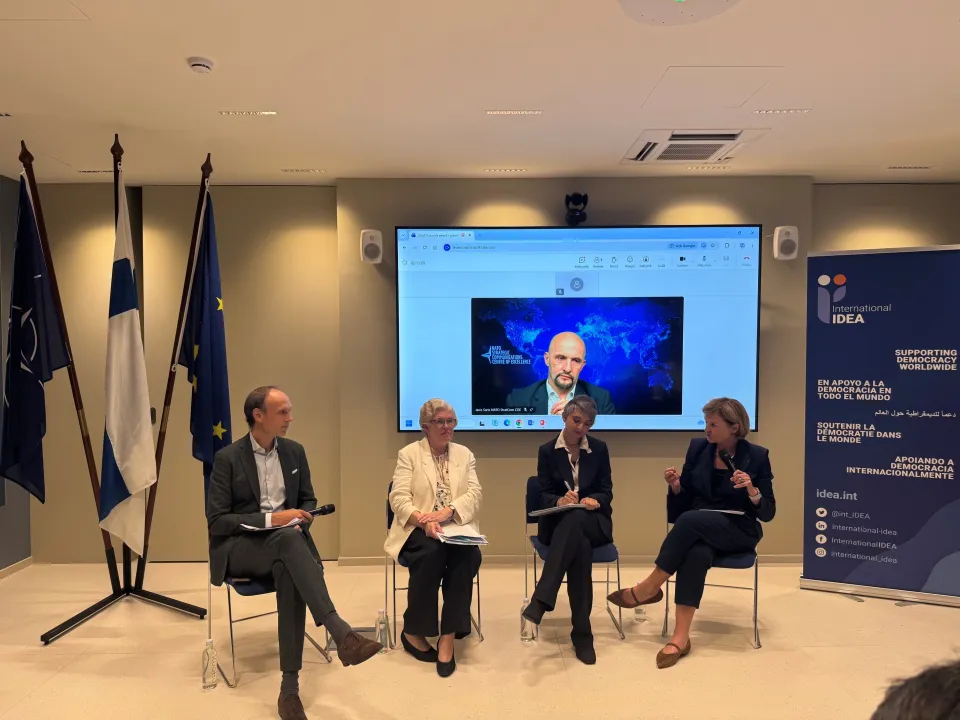
A presentation on foreign information manipulation and interference (FIMI) is delivered remotely and displayed on a large screen during the hybrid event.
The event brought together a broad and diverse group of Ukrainian and international stakeholders, reflecting the cross-institutional nature of the challenge. Discussions involved representatives of the Central Election Commission, the Verkhovna Rada of Ukraine, diplomatic missions—including the Embassies of Norway and Sweden—as well as international organisations such as the Council of Europe, the Folke Bernadotte Academy, and EU structures.
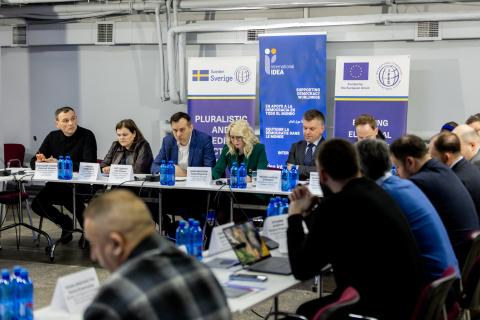
Speakers delivering opening remarks and moderating the discussion during the hybrid event.
Ukrainian participants also included key institutions responsible for information and security policy, alongside civil society organisations and analytical centres, ensuring a comprehensive and multi-level exchange of perspectives.
This broad representation ensured a multi-level discussion, bringing together policy, operational, and analytical perspectives.
International experience shared during the event included examples from countries such as France, Sweden, the United Kingdom, and others, providing comparative insights into how different models and coordination approaches are applied in practice.
Bringing together these perspectives, the event created space for a substantive and, at times, complex and challenging discussion, reflecting the evolving and unresolved nature of the issue in Ukraine. A key theme that emerged was the absence of a single agreed model at the national level.
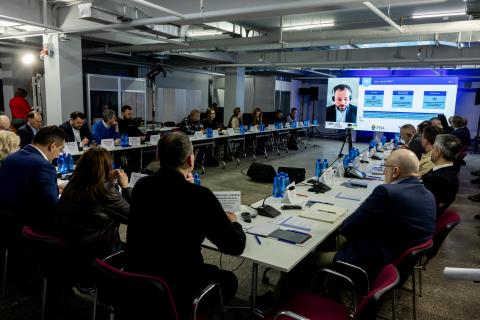
Participants attend a hybrid event, engaging with both in-person discussions and a remote speaker displayed on a large screen.
The discussion underscored that Ukraine is still at an early stage of developing a comprehensive response to information interference, with key roles, coordination mechanisms, and strategic approaches yet to be fully defined.
As a next step, the discussion is expected to inform continued analytical work and stakeholder engagement, with a view to developing more structured approaches and strengthening capacity in this area.
The event was organised within the U-VOTE project, supported by Norway and implemented by International IDEA, co-funded by the EU and Sweden via International Foundation for Electoral Systems, and held in partnership with the Folke Bernadotte Academy, CEC, and the National Council of Television and Radio Broadcasting of Ukraine.
This discussion forms part of International IDEA’s ongoing efforts to support the Central Election Commission of Ukraine in addressing emerging challenges to electoral integrity, particularly in the context of hybrid threats and an increasingly complex information environment.


About the authors