Migrants, indigenous peoples, and citizens: the Ngäbe Buglé youth
Since 1938, when the Guna Yala people achieved recognition of their comarca territory, there are now 6 established comarcas with their own internal rules and regulations. The Ngäbe Buglé comarca was recognized in 1997 through Law No. 10.
In recent decades, Panama has achieved significant economic progress. Its growth has had a comparatively impressive pace in Latin America. Although this has gone hand in hand with a certain reduction in inequality, it remains significant: according to the World Bank (2025), Panama is the third most unequal country in the region, after Colombia and Brazil.
Within this framework, indigenous comarcas maintain the highest levels of poverty. According to data from Panamá sin Pobreza, in 2026 poverty reaches 20.6% nationwide, while among the indigenous population it is 84.3%, with the Ngäbe Buglé comarca recording the highest percentages at 86.5%.
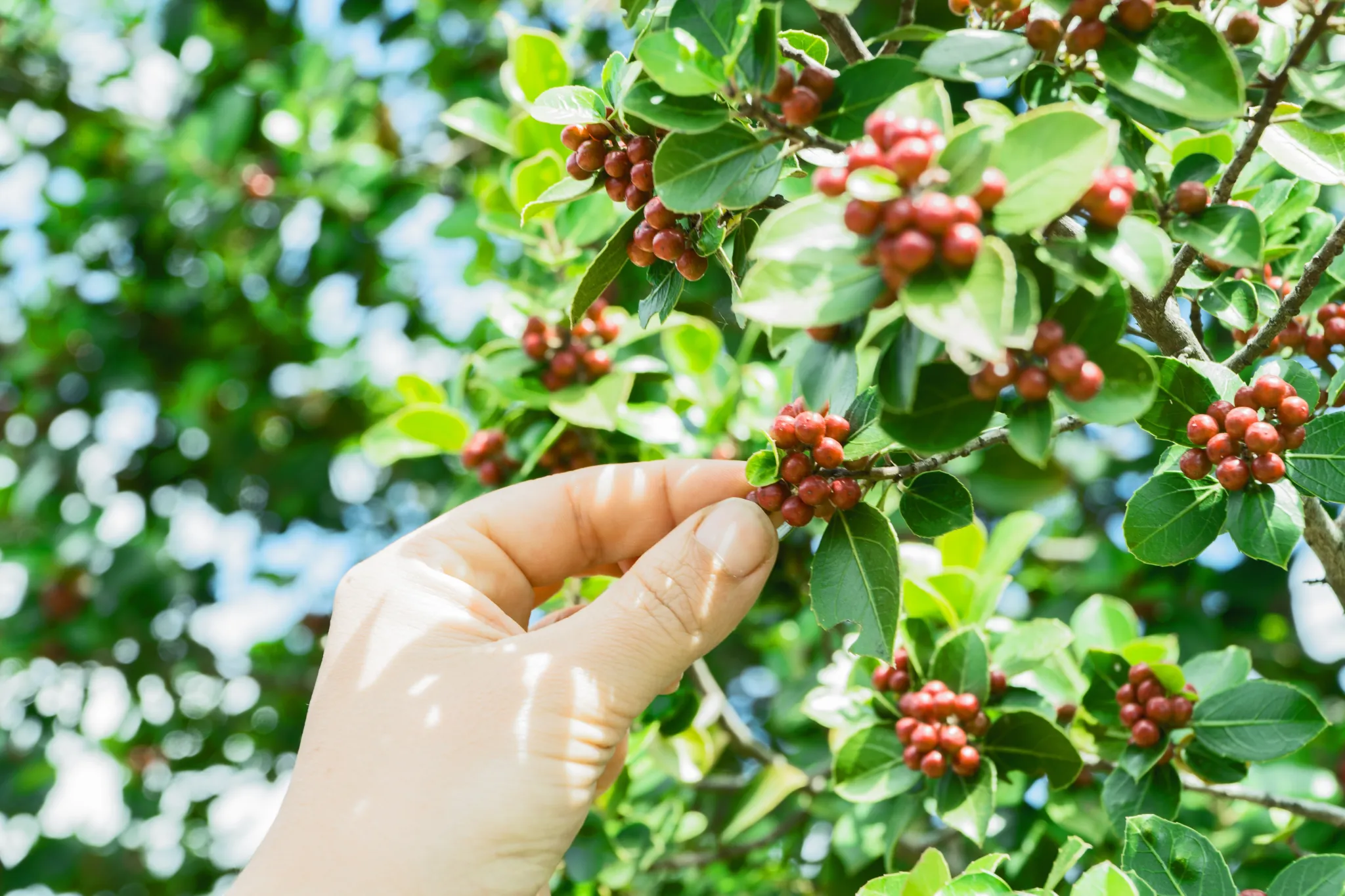
For this reason, thousands of inhabitants from this comarca, the majority of them youth, migrate every year in search of income. They do so particularly toward the coffee-growing areas in Chiriquí and, across the border, in Costa Rica. A minority of women migrate as dependents, which exposes them to a higher risk of violence.
Of the coffee plantation workers in Los Santos, Costa Rica, more than 50% come from the Ngäbe Buglé comarca (Varas, 2009). Although there are no exact figures, to get an idea of the volume of this migration, data from the Labor Migration Traceability System (SISTLAM) in Costa Rica regularized the entry of 38,207 agricultural workers in 2023. Of those, 61% (23,306) were from the Ngäbe Buglé comarca. Taking into account the total population of this comarca (212,084), this represents more than 10% of its inhabitants.
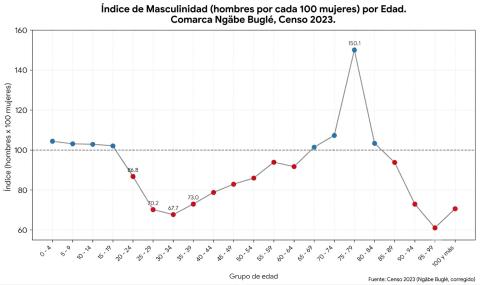
According to INEC data, demographic analysis reveals that the masculinity index for the population aged 30 to 34 drops to 67.7, highlighting a marked disparity with barely 67 men registered for every 100 women.
As can be seen in the graph, the ratio of men to women among the population aged 30 to 34 shows that the masculinity index drops to 67.7. That is, for every 100 women, there are only 67.7 men. Between the ages of 20 and 29, the index is 70.2. In general, during adulthood, the masculinity index is less than 100.
This migration is related to conditions of structural poverty. However, this human flow only manages to maintain subsistence conditions, and the cost is very high. It undermines social ties as well as access to rights as citizens. In a study by the consultancy firm IDEA International, conducted by Jackeline Guerra within the framework of the AECID project for Strengthening Governance in the Ngäbe Buglé Comarca, the effects of this transnational migration on the exercise of their civil rights were analyzed. First, there are difficulties in accessing the civil registry, which means that if their identity cards (cédulas) are expired, it limits their ability to carry out social and commercial procedures and exercise their rights as citizens, including the right to vote.
On the other hand, for those working in the Costa Rican countryside, traveling to the consulate in the capital, for example, to vote, can take 5 to 6 hours. This is not very different from a trip to San Félix, one of the entry points to the Ngäbe Buglé Comarca. This represents an investment of time and money that is very difficult for most of them to afford. Guerra's report shows that the districts with the highest migration are the ones that record the highest electoral absenteeism.
Furthermore, the periods of mobility coincide with the timing of comarca elections, depriving them of participation. And although the coffee harvest does not coincide with the general election period, Guerra's research shows that it does affect the participation of migrant indigenous people, since their return is not immediate, and some remain longer or end up staying across the border.
To properly assess the impact of this youth migration in the Ngäbe Buglé Comarca, it must be taken into account that the percentage of youth there accounts for 56.3% of the electoral registry, well above the national percentage.
This also represents a demographic dividend that could be leveraged for the benefit of the comarca and the country in general, but which currently finds no opportunities. In addition, the full exercise of their rights presents them with serious obstacles, including participation in decision-making regarding their country and their comarca.


About the authors