Libya: Bridging institutional information gaps in a fragmented information environment

In this context, electoral information circulates rapidly through digital platforms, where public debate unfolds in real time. However, institutional communication has often struggled to keep pace, creating a gap between official communication and fast-moving digital narratives, allowing misunderstandings and misinformation to shape public perceptions.
As Libya prepared for municipal elections, initial efforts in late 2023 focused on bringing together the High National Elections Commission (HNEC), media regulators, civil society organisations, and fact-checkers to better understand and respond to these challenges. Early discussions highlighted that many misleading narratives were not the result of coordinated disinformation campaigns, but rather confusion around electoral procedures and delays in official communication.
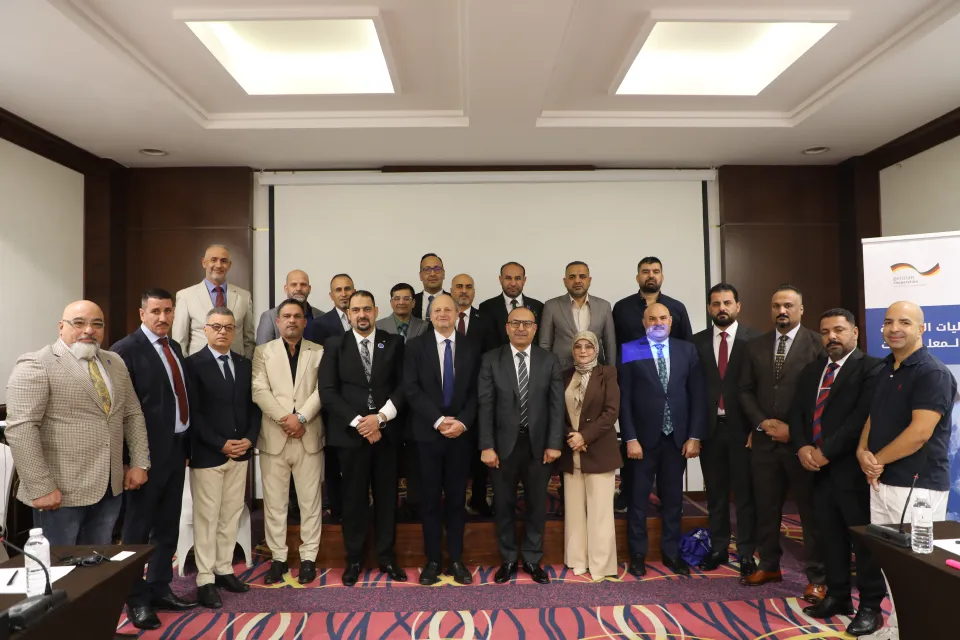
Through a series of workshops and exchanges, organized by International IDEA, participants worked together to map how electoral information spreads online, identify key risks, and agree on practical ways to improve communication. This included developing shared guidance, such as a glossary of commonly used terms and a code of conduct to encourage responsible online behaviour during elections.
As elections approached, it became clear that discussions alone were not enough to keep up with the speed of online narratives. In response, a more practical solution was developed: a digital platform called “Filter” tasked to monitor election-related discussions online, identify misleading or confusing information, and provide clear, accessible explanations based on official sources.
Over 2025, Filter became a bridge between institutions and the public. It translated technical electoral decisions into simple language, while also feeding back public concerns and recurring questions to the electoral authorities. This helped reduce the gap between how institutions communicate and how people receive and discuss information online. At the same time, targeted training and ongoing collaboration helped strengthen the HNEC’s ability to monitor online narratives and respond more quickly during sensitive electoral periods.
Lessons Learned
The Libya experience highlights that institutional communication must adapt to the speed of digital information environments. Traditional, highly controlled communication approaches are often too slow to respond to rapidly evolving online narratives, making more agile and accessible communication essential.
It also demonstrates that misinformation is frequently driven by procedural misunderstandings rather than coordinated campaigns. This underscores the importance of proactive, clear, and simplified explanations of electoral processes to prevent confusion before it spreads.
Another key lesson is the value of operational tools that bridge institutions and the public. The development of monitoring and clarification mechanisms can create a two-way communication channel, translating institutional decisions into accessible messages while feeding public concerns back to decision-makers.
The case also emphasises that strong institutional anchoring is critical for sustainability. Embedding new practices within existing structures, rather than relying on external or temporary arrangements, helps ensure long-term continuity and ownership.
Finally, Libya’s experience highlights the importance of clear roles and gradual institutionalisation. While centralised coordination can support early implementation, sustainable impact requires defined responsibilities, structured collaboration, and the gradual integration of new approaches into institutional systems.


About the authors



Consultant for International IDEA´s project in Libya, supporting the implementation and liaising with the High National Elections Commission (HNEC).