Fiji: Strengthening electoral integrity through stakeholder engagement

In particular, electoral processes have taken place in an increasingly complex information environment, where gaps in communication, limited public understanding of electoral procedures, and the rapid spread of online narratives can influence how elections are perceived. At the same time, collaboration between electoral authorities, civil society, and media actors has historically been limited, with few structured for ongoing dialogue and cooperation.
In December 2023, International IDEA began working in Fiji during a period of institutional transition, when the newly appointed leadership at the Fiji Elections Office (FEO) was making renewed efforts to strengthen transparency, improve public communication, and rebuild trust. This move towards institutional openness and reform created an opportunity to bring together key stakeholders such as, the Fiji Media Council and Fiji Media Association, the Online Safety Commission (OSC), and civil society organisations to explore more coordinated approaches of addressing information-related threats around elections.
In 2024, several workshops identified risks related to low digital literacy and limited public understanding of electoral systems, as well as challenges related to institutional transparency, data protection, cybersecurity, and online harassment.
To address these concerns, a joint roadmap was developed to strengthen electoral resilience by addressing both information vulnerabilities and institutional cooperation gaps. This included efforts to expand voter education and public awareness, counter mis/disinformation and online abuse, and rebuild trust between the FEO and civil society.
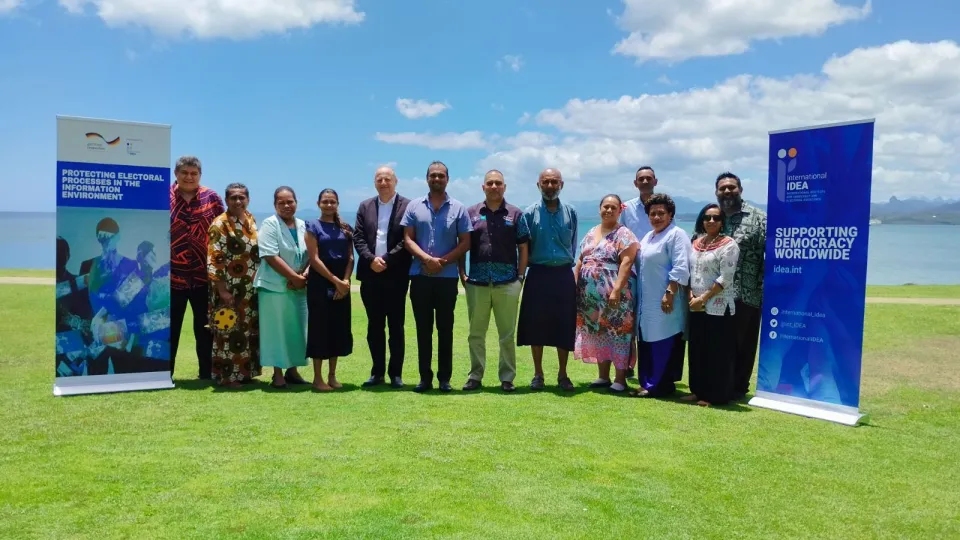
To put this into practice, a Working Group on Electoral Integrity was convened throughout 2025, initially with the prospect of working towards municipal elections in that year. While the elections were ultimately postponed to 2026, a Memorandum of Understanding was signed between the FEO and the Online Safety Commission, institutionalising their cooperation in addressing online harms related to elections.
Lessons Learned
The Fiji experience highlights the importance of building trust and cooperation over a sufficient period of time. Creating a trusted space for dialogue between electoral authorities, civil society, and media actors can help overcome historical tensions and foster more constructive engagement.
It also demonstrates that formal structures matter. Establishing a working group and agreeing on shared principles for cooperation provided a foundation for ongoing collaboration rather than one-off exchanges, helping make that cooperation more consistent and lasting.
Finally, the Fiji case shows the value of adaptability and timing. Being flexible and staying engaged over time help maintain momentum, even when political or electoral timelines shift, ensuring that cooperation can continue beyond specific electoral events.


About the authors