Reimagining Democracy: From backsliding to resilience in Asia and Africa
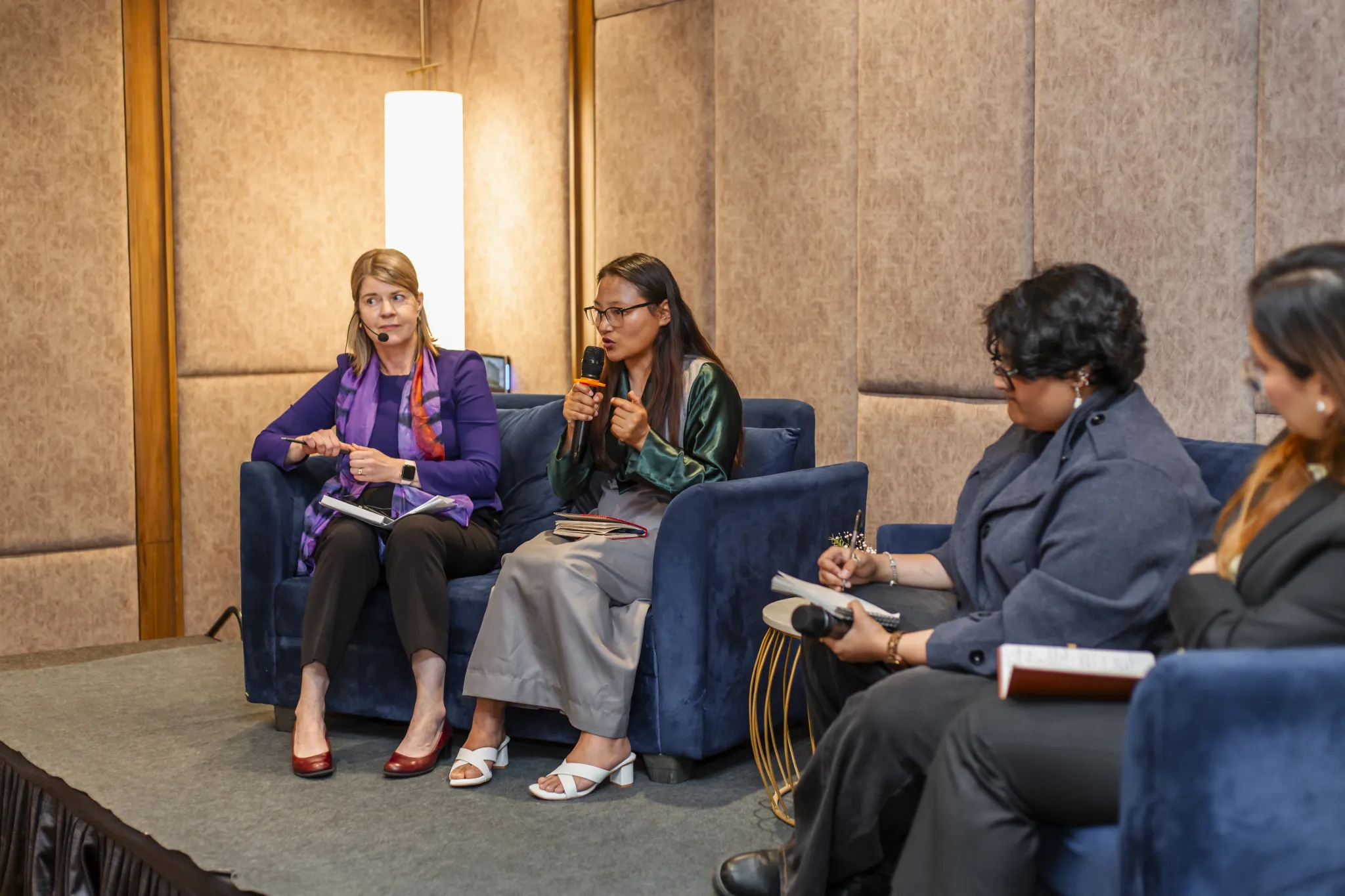
Kathmandu sits in a valley ringed by hills, where old temples, crowded streets, and political memory exist side by side. Only six weeks after a new government was ushered in following Nepal’s Gen Z uprising of September 2025, it was a fitting place to pose an old question with renewed urgency... what happens when people stop trusting the democratic institutions meant to represent them?
To this end, civil society actors, democratic reformers and young civic leaders from across Asia and Africa travelled to Nepal for International IDEA’s second dialogue on Reimagining Democracy in Asia: Countering Democratic Backsliding. The dialogue saw people from countries recently shaped by mass protests, and others from contexts where civic space is continuing to shrink. Some came from contexts where trust in political systems is falling, or worse, laws are being used to limit dissent. While their histories and contexts remained distinct and unique, the pressure points felt extremely familiar.
As witnessed across history, democratic backsliding rarely arrives as a single rupture. More often, it advances through the slow weakening of institutions, the narrowing of civic space, the manipulation of electoral rules, and the use of law to make dissent harder, riskier or easier to punish.
For participants from Nepal, Bangladesh and Sri Lanka, the discussions that followed were not theoretical. Fireside conversations brought forward experiences from recent years where protest movements had not only reshaped national politics but had also exposed the harder work that follows.
Protest can open the door, a participant noted. But the harder question is what happens after. How do we make sure public pressure becomes reform, and not just another moment that passes?
Another spoke about the gap between public pressure and implementation, noting that consensus for change in political rooms does not always translate into action.
From Kenya, Senegal and South Africa, Gen Z civic actors brought another part of the story, that young people are not disengaged from democracy. Many are engaging differently, through voter mobilisation, civic networks, digital campaigns, public pressure and demands for accountability, often because formal political systems feel distant, elitist or unresponsive.
Young people are not waiting to be invited into democracy, one participant from Kenya noted. They are already organising, registering voters, challenging leaders and asking what participation should look like now.
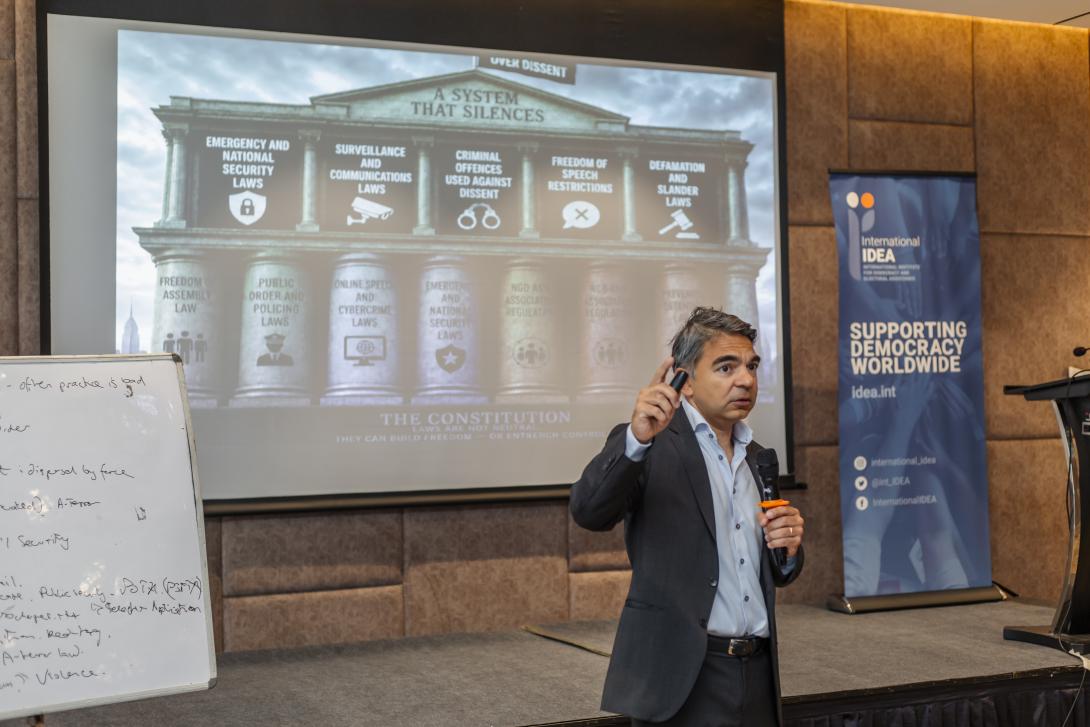
Credit: International IDEA, 2026
For Sumit Bisarya, Head of Constitutional Governance and Rule of Law at International IDEA and the designer of the dialogue, the discussions revealed that many citizens are deeply dissatisfied with politics, but the pathway from frustration to structural change remains unclear. Across countries, he noted, vibrant Gen Z movements are bringing energy, urgency and ambition, while also seeking more knowledge and stronger international networks. At the same time, similar “bad laws” are being replicated across contexts and used in similar ways to stifle dissent.
And thus, if democratic backsliding often advances through laws and institutions, then democratic resilience must also be built there, in the rules that shape who gets heard, who gets excluded, and how power is held to account. The dialogue thus sought to bridge a gap within civil society itself, between actors who have traditionally had access to democratic institutions and newer voices seeking to challenge, renew and reshape those institutions.
Participants also examined how freedom of assembly, protest laws, public participation, parliamentary processes and civic space can either protect democratic expression or stifle it. The questions raised explored this further, who gets to assemble, who decides when protest becomes illegal, what happens when the state disperses dissent, and what opportunities do citizens have to shape decisions between elections? Democracy is not only weakened in dramatic moments. It can also be weakened through procedures, permits, penalties and vague legal language.
A participant from Bangladesh captured the value of this collective cross-regional exchange.
What I am taking back is that our struggle is not isolated. The laws may have different names, but the pressure on dissent, civic space and public trust feels the same.
For many participants, that recognition was as important as the technical learnings.
These exchanges matter because they help us see both the warning signs and the possibilities, a participant from South Africa said. You begin to understand that others have faced similar pressures, and that there are strategies to learn from.
International IDEA’s 2025 report, Designing Resilient Institutions: Countering Democratic Backsliding in Asia, underscores the same challenge, democratic resilience depends not only on diagnosing threats, but on designing institutions, laws and civic pathways that can withstand pressure before decline becomes entrenched.
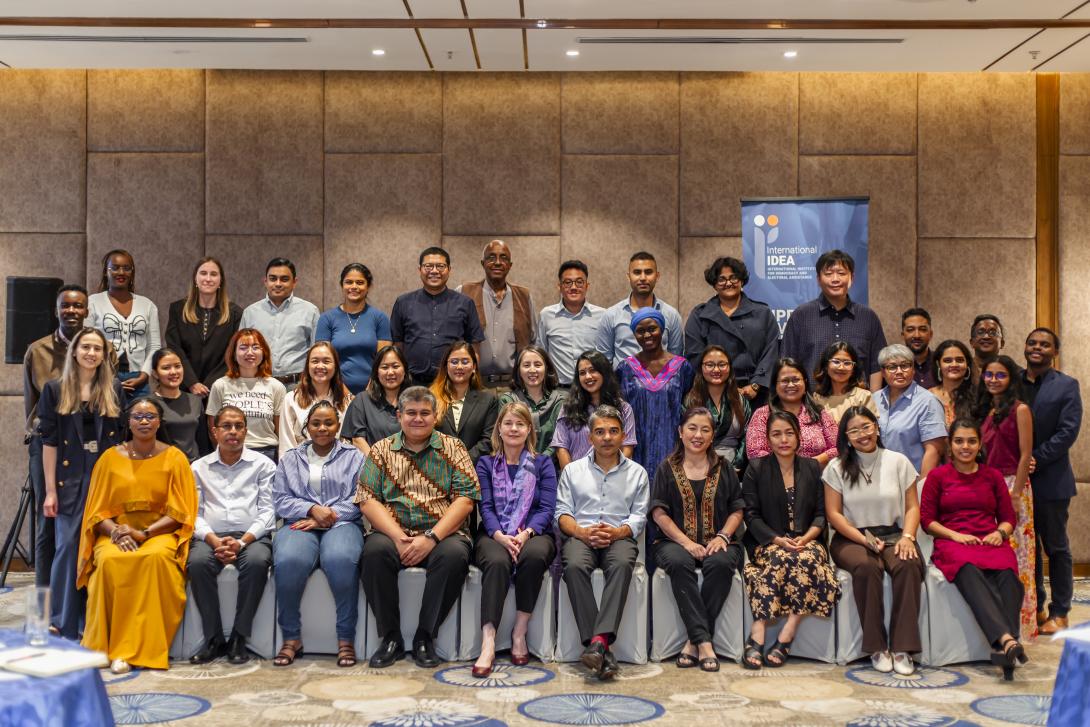
Credit: International IDEA, 2026
As Leena Rikkilä Tamang, Regional Director for Asia and the Pacific at International IDEA, reflected, these conversations need to continue.
At a time when democratic challenges are increasingly cross borders, democratic actors also need spaces to learn from each other,” she said. “These exchanges are not just conversations. They are part of the long-term work of strengthening civic space, rebuilding trust and supporting democratic resilience.
By the end of the two-day workshop, participants were looking at anticipatory measures; discussing tools to counter democratic backsliding and to enhance resilience. However, the presence of the Gen Z leaders offered a reminder that democratic resilience is not only about defending what has worked so far, but also about making space for those voices already imagining what democracy could become.
These themes are also explored in greater depth in International IDEA’s reports Parliamentary Rules in Democratic Backsliding and Resilient Design and Time, Space and Information: Lessons Learned from the Abuse of Law to Attack Civic Space, which examine how rules, procedures and legal frameworks can be used both to weaken democracy and to strengthen resilience. A forthcoming proceedings report from the Kathmandu dialogue will further capture the key insights, discussions and practical ideas emerging from the convening.


About the authors