Defending democracy, advancing gender equality
Disclaimer: Opinions expressed in this commentary are those of the author and do not necessarily represent the institutional position of International IDEA, its Board of Advisers or its Council of Member States.
Three decades of progress have expanded gender equality globally, and progress continues to be made as democratic actors continue to build on these gains. Governments are adopting new laws to address gender-based violence, expand political representation and strengthen protections for women and girls. Electoral quotas and reforms have increased women’s presence in parliaments and decision-making bodies. As a result, women’s representation in political life has increased, legal protections have expanded, and women’s movements have reshaped institutions and societies. And women themselves continue to lead movements for change.
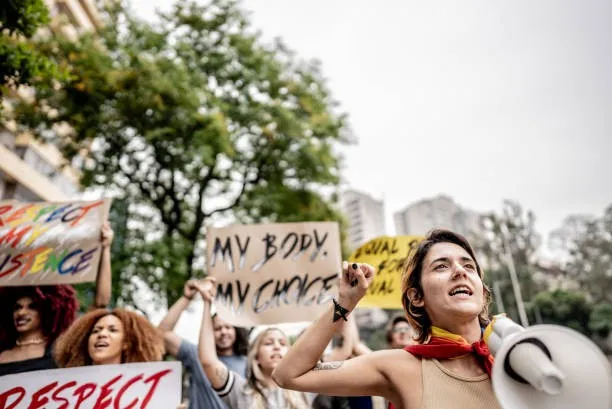
From the streets of Iran, where women have courageously mobilized for freedom and dignity, to citizen movements in Nepal and Serbia demanding more inclusive governance, women are asserting their rights and reshaping democratic politics. Globally, women are also pushing for greater representation at the highest levels of international leadership—including calls for the United Nations to appoint the first woman as Secretary-General, with two women currently on the official list of candidates. These movements remind us that democracy is sustained by people, including women, who demand accountability, rights and justice.
Yet progress remains insufficient and is increasingly under threat:
- While women’s parliamentary representation has increased over the past three decades, women hold just 27.5 per cent of parliamentary seats globally in 2026, marking the second consecutive year of the slowest growth since 2017.
- Women in politics face increasing violence and harassment. An IPU study found that 76 per cent of women MPs surveyed experienced violence, deterring many from entering or remaining in politics.
- Women hold only around 30 per cent of managerial positions globally.
- A recent World Bank study shows women have 67 per cent of the legal rights of men, while enforcement is only at 53 per cent and the availability of supportive systems at 47 per cent.
- While the UN reports that 90 per cent of UN Member States reported strengthening laws and measures to combat violence against women, enforcement falls short in 80 per cent of cases, pointing to a lack of capacity of justice systems
- As conflicts have increased worldwide, the United Nations has documented an 87 per cent rise in conflict-related sexual violence in just two years.
These challenges are exacerbated by a global trend of democratic decline. Since 2015, International IDEA’s Global State of Democracy report finds that all four core pillars of democracy—representation, rights, rule of law and participation—have declined globally, with some of the sharpest drops in credible elections, effective parliaments and freedom of expression.
Democratic backsliding, shrinking civic space and rising authoritarianism are contributing to a global backlash against gender equality and women’s rights. In many places, hard-won gains are being challenged, stalled and in some cases reversed.
When democratic institutions weaken, the consequences for gender equality are immediate. Shrinking civic space limits women’s organizations’ ability to advocate for change. Weak rule of law undermines women’s access to justice. Restrictions on participation reduce women’s influence in public life, while harassment, intimidation and attacks against women in politics deter women from entering and remaining in political life.
International IDEA views gender equality as integral to democracy. International IDEA’s Global State of Democracy Indices show that countries with stronger protections of rights, the rule of law, representative institutions, and active civic participation perform markedly better on gender equality. Gender equality, economic equality and social group equality are between 40 and 47 per cent higher in democracies. In high-quality democracies, levels of gender equality are 72 per cent higher than in low-performing countries.
International Women’s Day reminds us that the fight for women’s rights and the future of democracy are inseparable. When democracy advances, so do equality, prosperity and justice for all. As UN Member States convene in New York for the 70th Commission on the Status of Women, International IDEA urges governments to recognize that democracy and gender equality are mutually reinforcing and to renew their commitment to defending democratic institutions while advancing the rights, representation, and full participation of women and girls.


About the authors