Cross-regional workshop on strengthening the impact of climate deliberation
Citizen assemblies have emerged as an important innovation in climate governance, bringing together citizens, governments, civil society and policy actors to increase the ambition and improve the delivery of just and sustainable climate action. The potential of these processes to anchor policy agendas to local contexts has contributed to a growing interest in climate deliberation, including in regions where climate change impacts are most directly felt. As climate assemblies become more widely used, a key question is how deliberation outcomes can translate into lasting impact.
International IDEA has contributed to work on climate deliberation in the Global South through research, case studies and exchanges between practitioners. This includes our 2024 report, Deliberative Democracy and Climate Change: Exploring the Potential of Climate Assemblies in the Global South, the 2025 case study report Amazonian Climate Deliberation: Insights from Three Citizen Assemblies on Climate Finance Held Ahead of COP30, and the Voices of Climate Democracy series.
In May-June 2026, International IDEA co-organized a series of regional online learning exchanges with Democracy R&D, Extituto de Política Abierta and iDeemos, focusing on identifying challenges and strategies for achieving impact in climate deliberation. The discussions engaged more than 80 practitioners from 29 countries across Latin America, Africa, and Asia and the Pacific. From these conversations, a central question emerged:
How can climate deliberation in the Global South move from individual projects to more embedded and impactful systems of citizen participation on climate change issues?
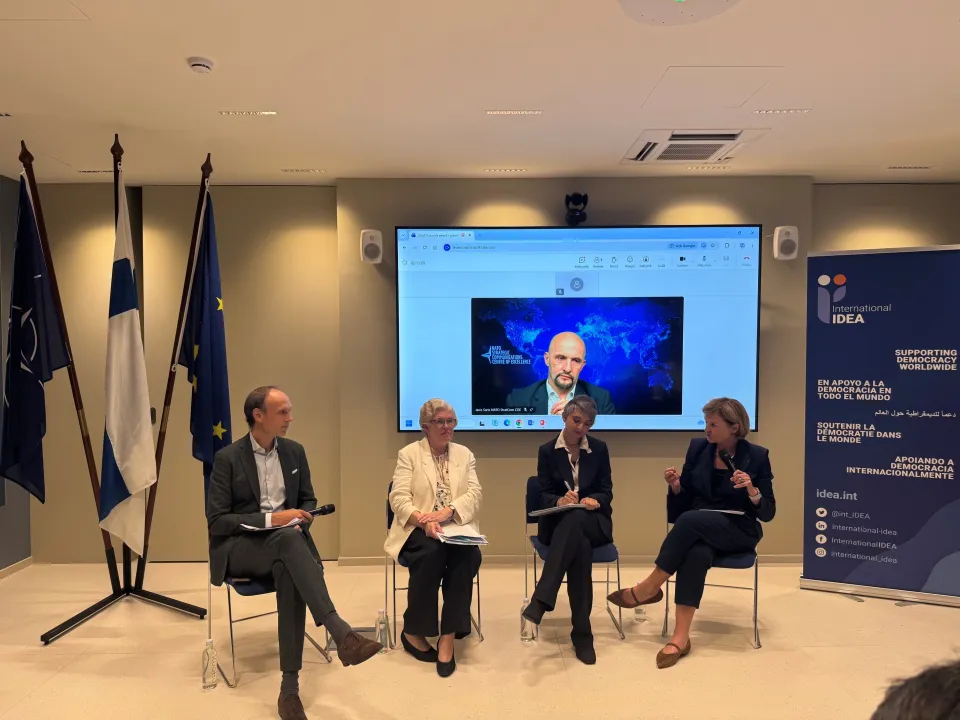
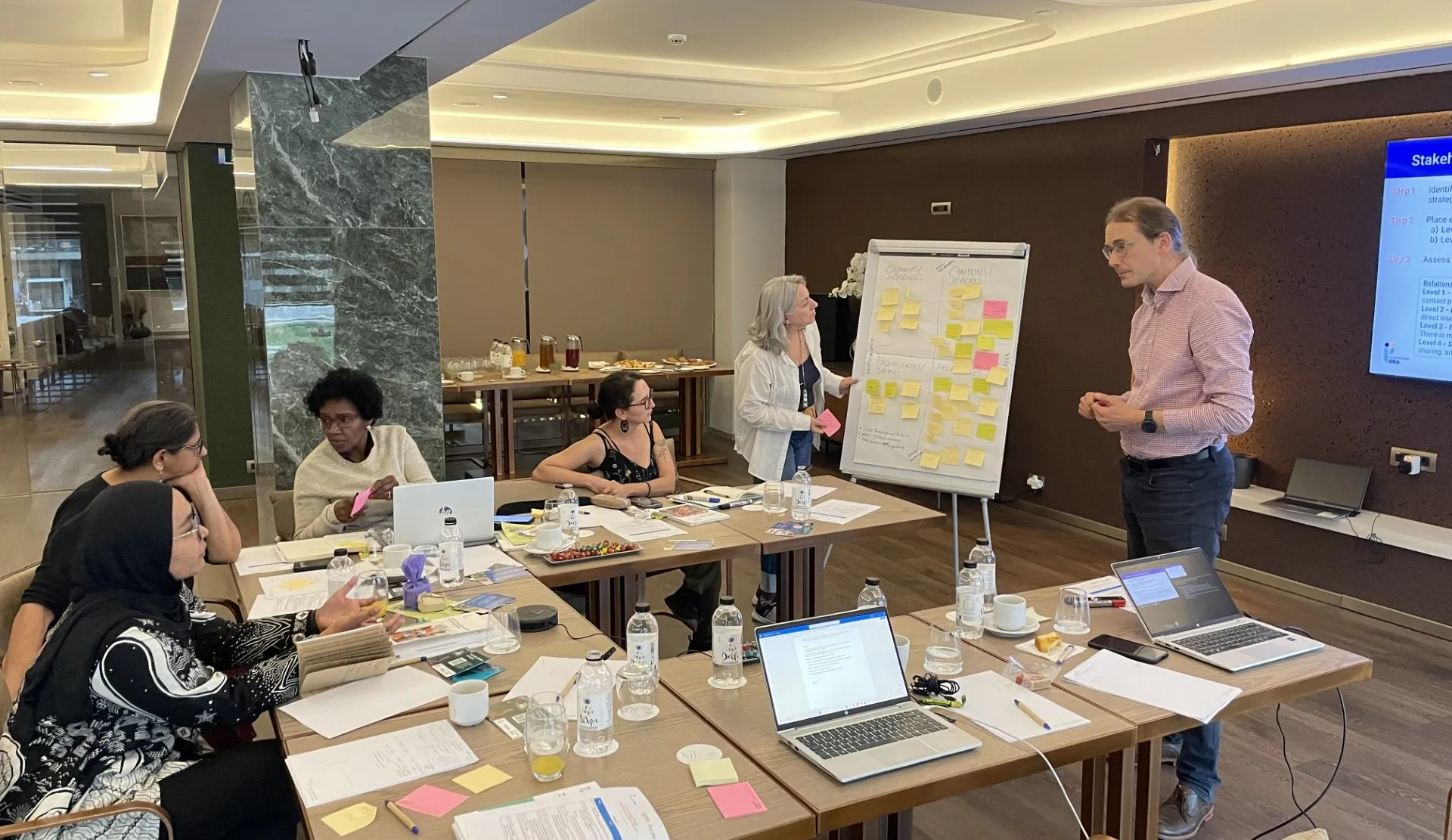
This inquiry was at the centre of a cross-regional expert workshop convened by International IDEA in Athens on 2 October. Organized back-to-back with the Global Democracy Coalition Forum and building on the series of online learning exchanges, the workshop brought together deliberation experts from the Global South to develop an impact action agenda through cross-regional exchange.
To shape the action agenda, participants discussed thematic priorities identified during the previous conversations and mapped relevant actors, networks and channels for exchange. They also explored how to create a broader collective advocacy strategy to strengthen the impact of climate deliberation in the Global South.
From thematic priorities and field mapping to collective advocacy
Participants assessed central challenges and related impact strategies, helping translate the broader findings into a clearer set of shared priorities. They highlighted the need of clearer pathways to implement deliberation outcomes, supported by stronger institutional links, networks and strategic partnerships, as a key priority. They also emphasized the importance of building strong ecosystems and coalitions of actors involved in climate deliberation, identifying complementary roles, expertise, and contributions. In addition, the challenge of local organisations in accessing climate funding, which frequently bypasses local civil society actors, was highlighted.
To strengthen cross-regional networks and field-building the workshop participants mapped relevant actors, relationships and channels for exchange, focusing on missing links and connections. Participants considered a wide set of actors in the climate-democracy field, asking where and for whom the methodology of citizen deliberation can be an important governance innovation for climate action. The discussions spanned funders and donors, media and communicators, as well as policymakers, policy influencers, and international and regional policy expert organizations.
A central conclusion was that deliberation should be viewed as an intermediary channel between citizens and decisionmakers, with deliberation organizations offering crucial expertise in solving complex policy issues. Reflecting on previous projects and best practices for joint advocacy, the workshop participants agreed on concrete steps to take the cross-regional collaboration forward. This includes collecting evidence as well as communicating the messages and strategies developed in the workshop to relevant forums and conferences, starting with the UNFCC COP31 held in November 2026 in Antalya, Turkey, where International IDEA will have a presence to advocate for democratic solutions to climate governance issues at one of the main stages for advancing global climate action.
We are grateful for the support from the German Federal Ministry for Economic Cooperation and Development (BMZ) which enabled International IDEA's work on citizen deliberation for effective climate action.


About the authors

Emma Persson is an intern at International IDEA's Climate change and Democracy team, fall of 2026.