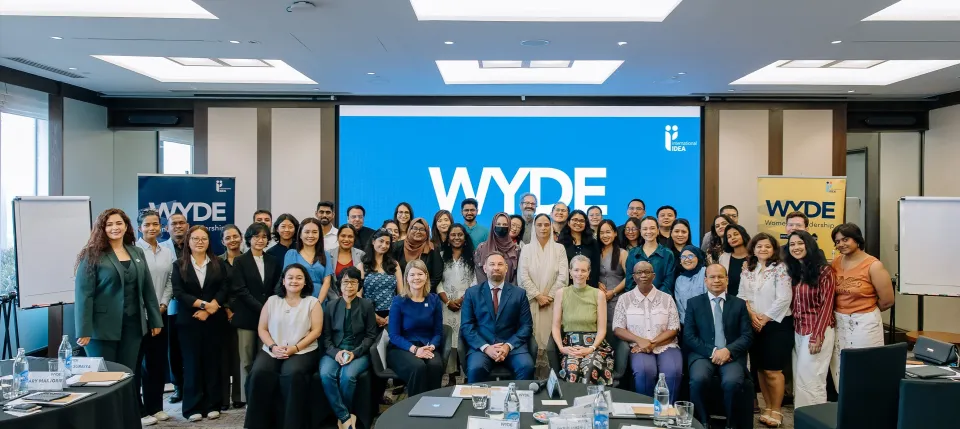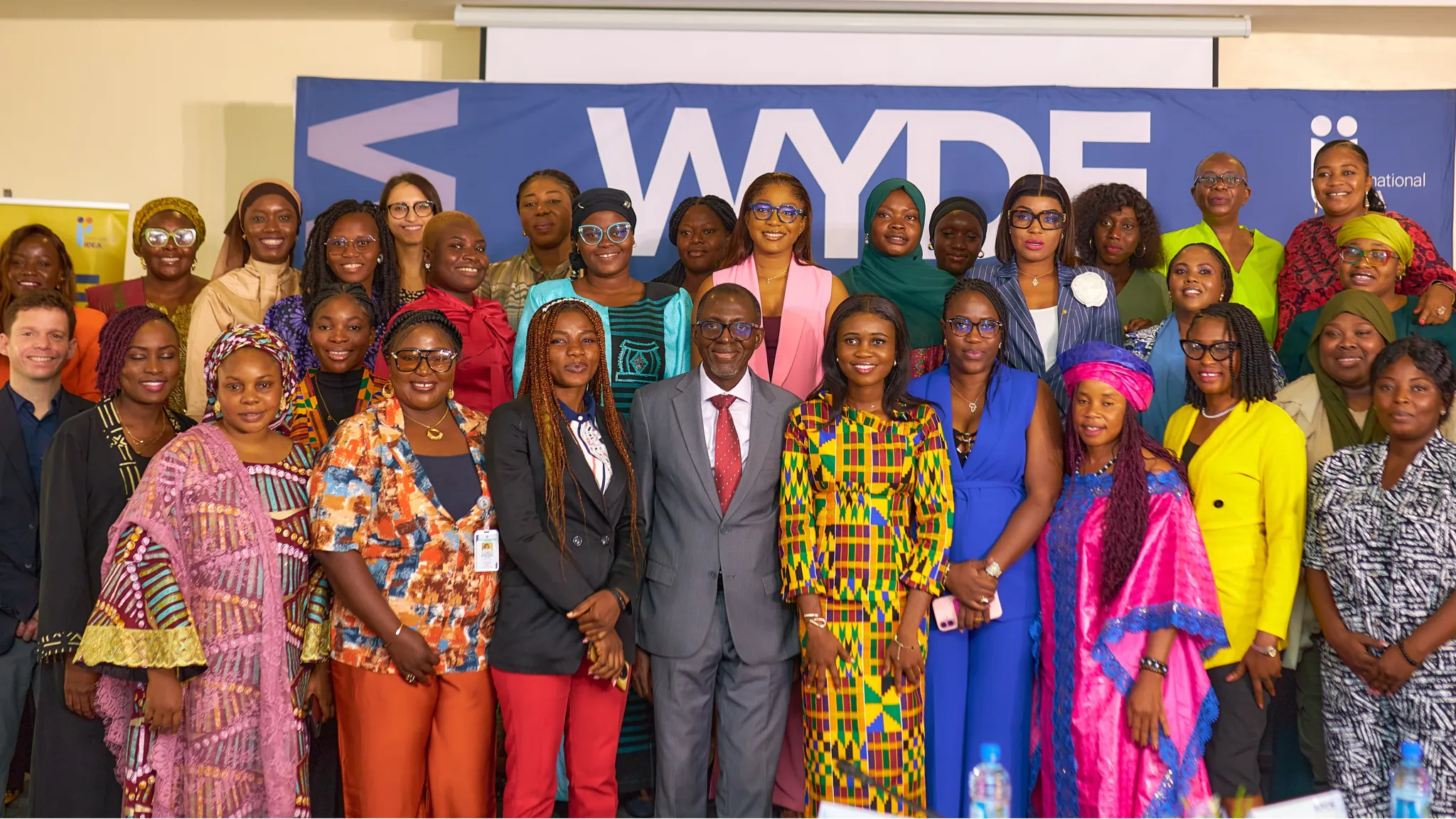
The Academy was convened within the framework of the European Union (EU)-funded Women and Youth Democratic Engagement (WYDE) Women’s Leadership Initiative, implemented in partnership with UN Women, the Inter-Parliamentary Union (IPU), and United Cities and Local Governments (UCLG), under the overall coordination and leadership of UN Women.
Over three days, participants expressed the enhancement of their understanding of democratic processes, gender norms and social norms intersectionality with young women’s participation and representation in politics, leadership and decision making at all levels, transformative leadership, violence against women manifests in political spaces, highlighting both the personal and structural dimensions of the problem, the critical role of digital media in shaping women’s leadership, visibility, and influence in politics, emphasizing that in today’s world, digital presence is inseparable from political presence and personal development. The Academy created a space where participants felt safe to reassess their political experiences and journeys in politics, countering stereotypes and practices and redefining their place and positioning in political and public life. As one participant expressed:
“The Academy has been a real space for awareness and progress. It allowed me to understand how my own social patterns influence my decisions and to identify concrete levers to evolve in my leadership.” - Amy Top, President of ASC Entente and Leader of the Cap sur l’Avenir Movement, Senegal.
A key outcome of the Academy was a shift in how participants understood gender social norms.
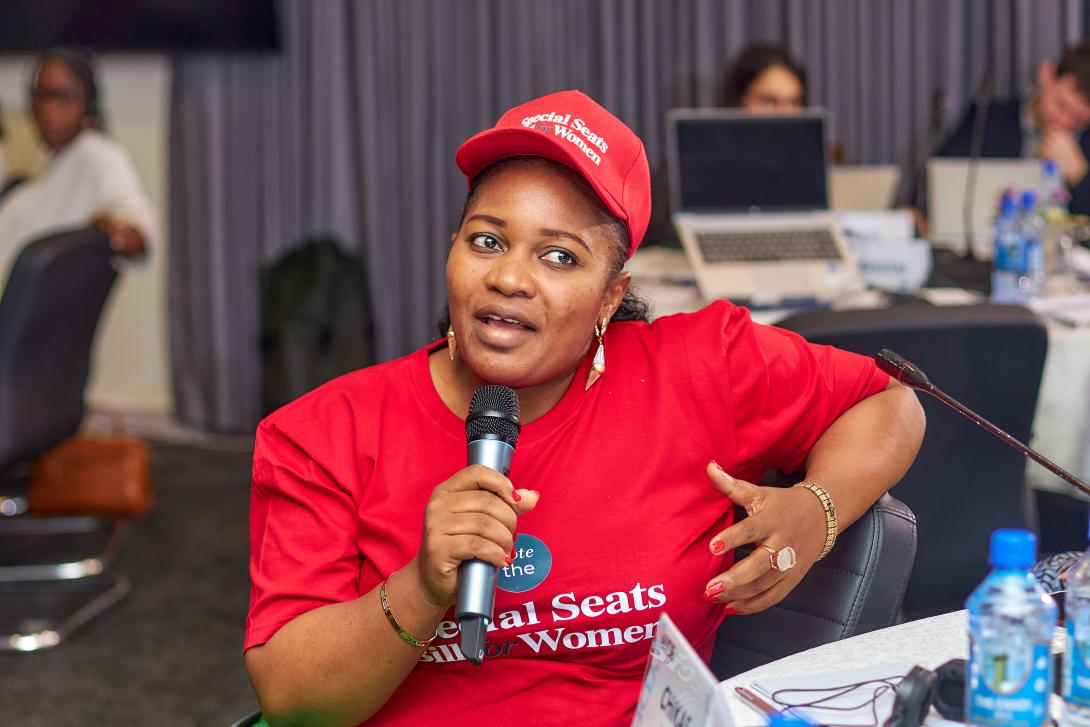
"Gender social norms are not just attitudes or traditions; they are powerful unwritten rules that shape opportunities, access and participation for women and men. Meaningful change requires shifting mindsets, engaging communities, and creating environments where women can exercise their rights.” - Rhoda Daniels Sanda, founder Guardian of Hope initiative, State Coordinator Researved Seat for Women Bill, Nigeria.
They recognized norms as transformable through personal agency: “As a young female leader, the Academy has helped me understand that social gender norms are much more than cultural habits: they are silent mechanisms that determine who has the right to exist, decide and influence. I realized that changing these norms does not start with speeches, but with example.” - Diaretou Mangane, National President of the Young Women's Wing, Liberal Democratic Reformers, Senegal.
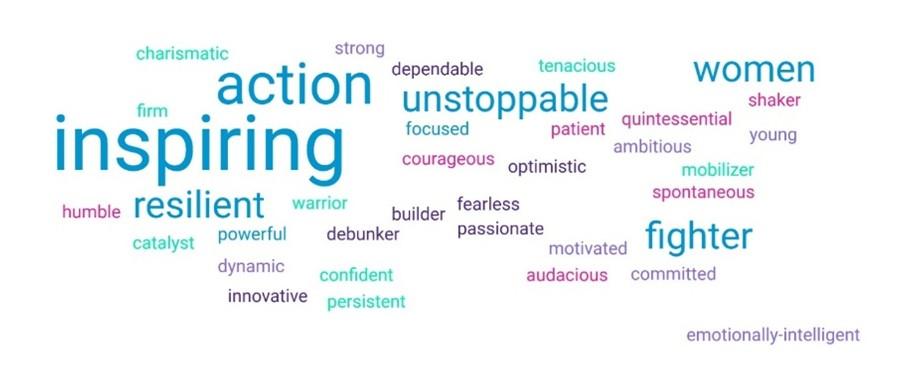
Overall, participants moved from seeing gender norms as abstract societal rules to recognizing them as systemic societal prescriptions, actionable constructs they can challenge individually, collectively, and institutionally. By the end of the Academy, the most significant transformations were visible not only in what participants learned, but in how they saw themselves — as political actors, as norm-shapers, and as leaders capable of influencing institutions and communities.
The illustrative/evident indicator of transformation lies in the precision and ambition of participants’ final commitments. These commitments demonstrate how the Academy translated new awareness, confidence, and technical knowledge into concrete leadership trajectories at the individual, community, and political levels.
Individual Leadership Commitments: Many participants committed to deepening their personal leadership, strengthening their technical expertise, and increasing their visibility as a foundation for broader influence.
Building technical and strategic capacity: “At the end of this training, I intend to transform my commitment into an operational political force by radically strengthening my leadership. I will specialize in education-sector budget management, curriculum reform, and school law to become a recognised reference. My goal is clear: to build the credibility needed to join Parliament or the Department of Education so I can influence laws and funding for lasting change.” — Adjaratou Seydou, Coordinator of Mon Choix Ma Carrière, Country Head for Young Women of Africa, Togo.
Developing inclusive and reflective leadership styles: “This Academy helped me better understand how certain social norms influenced my expectations, my choices, and sometimes my ways of collaborating. I want to adopt a more conscious and intentional posture: asking more questions, listening before deciding, and making sure my practices do not unconsciously reproduce inequalities.” — Amy Top, President of ASC Entente and Leader of the Cap sur l’Avenir Movement, Senegal.
Personal growth and self-positioning: “Instead of being just a woman engaged in politics, I want to become a force that paves the way for others.” — Aysat Aguda, Woman Leader of the Social Democratic Party, Nigeria.
“After this Academy, I plan to make a major shift in my leadership journey: moving from intuitive engagement to a more structured, strategic, and impact-driven approach. I want to strengthen my presence in decision-making spaces, use my voice more effectively, and mobilize more women around civic action and transformative leadership.” — Aïssata Dieng, Community leader, Ivory Coast.
Community-Level Commitments
Participants increasingly viewed leadership as service and committed to extending the Academy’s impact through mentorship, advocacy, and community empowerment.
Mentorship and the multiplier effect: “I want to shift from individual leadership to multiplier leadership. Instead of being the only woman engaged in politics, I want to open the way for others. I will mentor, coach, and mobilize more young women around me to take part in public decision-making.” — Boye Baby, Member of Parliament, Senegal.
Advocacy, education, and youth empowerment
“I will advocate for the monthly inclusion of senior high schools in sanitary pad distribution programmes and renovate a community school in my hometown.” — Mabel Obeng, Young Women of Africa Country Leader, Ghana.
“I want to strengthen my leadership to influence public policies in energy, infrastructure, and STEM education. I will create training hubs for young women, expand STEM clubs across West Africa, and build a network of mentors.” — Winner Fandoumi, National President, AIP-JEUNES, Togo.
Inclusive decision-making and participatory governance
“I want to launch awareness campaigns and training to encourage women to take leadership positions within political parties and public institutions, challenging the idea that leadership is reserved for men.” — Gertrude Nadia Sena Dossa, Deputy Mayor, Benin.
“My goal is to create participatory mechanisms where the less privileged — especially women and girls — have a voice in decision-making. I will organize and guide communities to inspire collective action.” — Aisha Kabir, Peace builder and community development officer, Nigeria.
Political and Institutional Commitments
Several participants left the Academy with renewed determination to enter or advance within formal political structures and influence policy directly.
Running for office and leadership positions
“I will run for the secretary position of my political party at ward level.” — Nerat Yakubu Gyang, Welfare director faculty of social sciences students’ union, University of Jos, Nigeria.
“I will write an official letter to the party chairman to express my interest in serving on the executive committee of the women’s wing.” — Laura Targbeh Korvah, President - National Young Women Political Council of Liberia (NYWPCL). Regional Coordinator -Board of the Women NGO Secretariat of Liberia (WONGOSOL), Liberia.
“I will contest the National Students Union presidency in Ghana again — and this time win. There has never been a female president.” — Mabel Obeng, Young Women of Africa Country Leader, Ghana.
Transitioning from activism to political influence
“I will advocate within my political party for more inclusive structures — including women’s reserved seats and gender-balanced committees — to ensure women are not only present but actively contributing.” — Rhoda Daniels Sanda, founder Guardian of Hope initiative, State Coordinator Researved Seat for Women Bill, Nigeria.
“Having had no previous political involvement, I have decided to join the youth league of a political party to gain a platform for concrete action.” — Monica Van Gabriella Boulanga-Moughola, Legal Officer and Youth Leadership Advocate, Gabon.
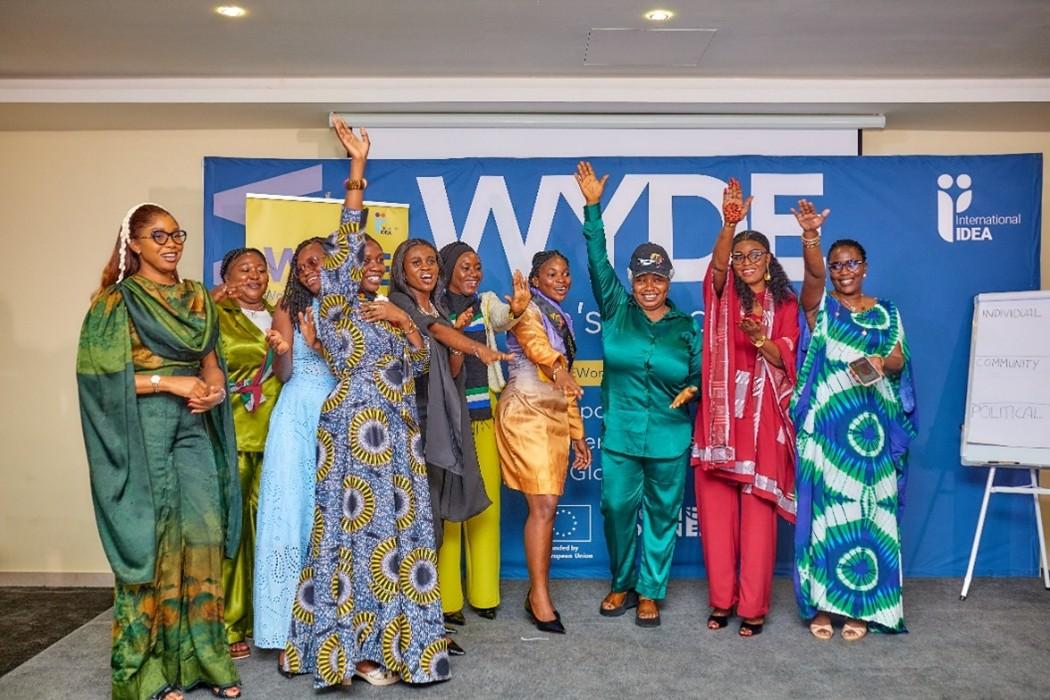
The Academy is already supporting these ambitions by enabling participants to build mutual accountability systems and peer networks. As Nerat Yakubu Gyang explained, “I have reached out to some co-participants from the Academy to become my accountability partners so I can implement my plan.” This spirit of solidarity and the concrete commitments above capture the Academy’s long-term impact. As Boye Baby, Parliamentarian from Senegal, reflected: “Eventually, they realise: ‘she is not going anywhere’ — and then they start to support you.”


About the authors