Understanding Foreign Information Manipulation and Interference (FIMI) in the Ivory Coast: an information environment under compounded pressure
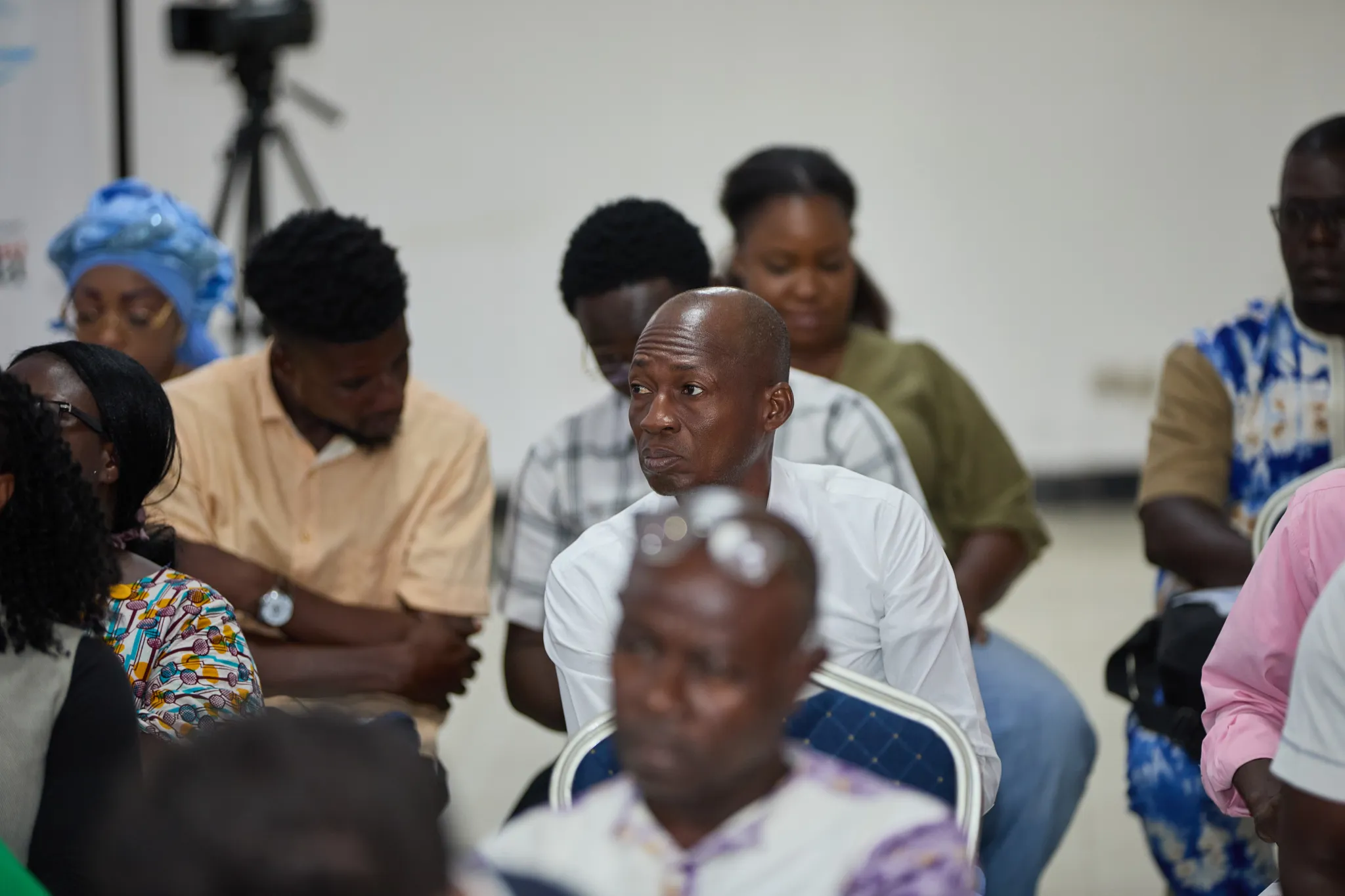
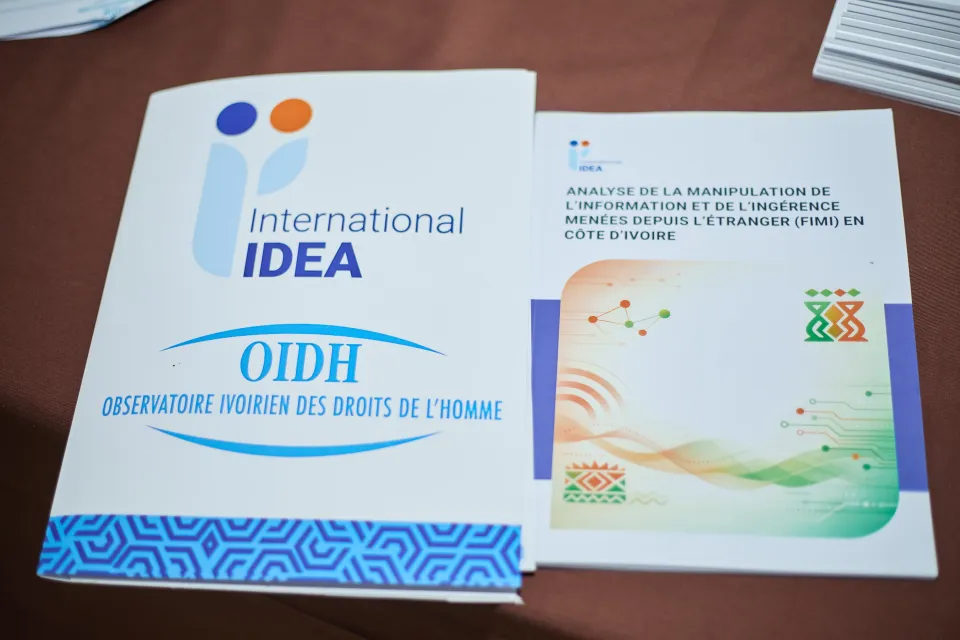
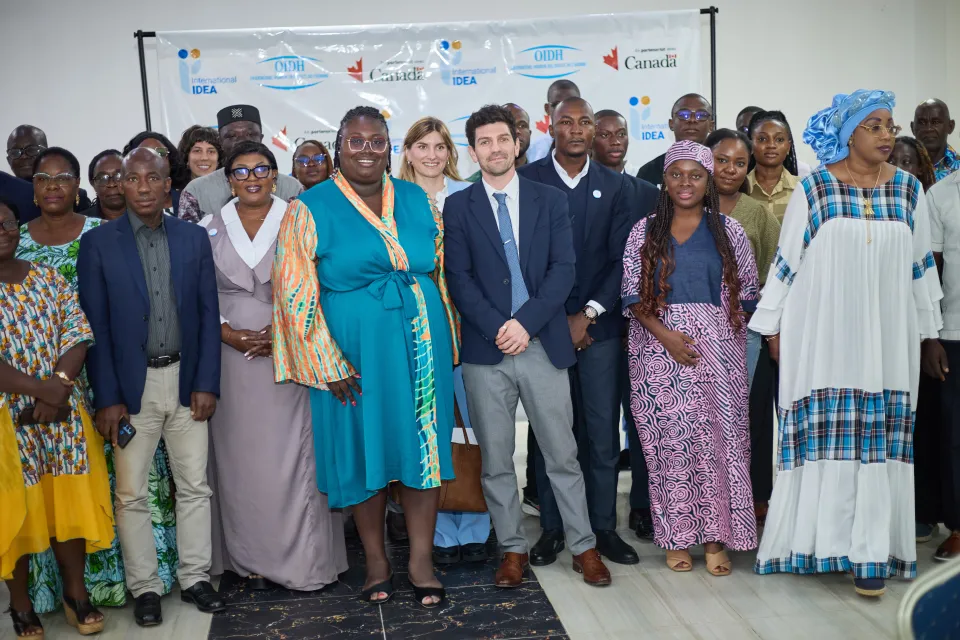
On the 13th of May, the Ivorian Human Rights Observatory (OIDH) in collaboration with International IDEA, launched the report titled “Analyse de la manipulation de l’information et de l’ingérence menées depuis l’étranger (FIMI) en Côte d’Ivoire” to share the main finding on FIMI in the country. This is the first report about FIMI made by Ivorian actors in the country and the event gathered academia, authorities and CSOs to discuss information integrity and its main challenges in the Ivory Coast.
Based on International IDEA’s global methodology, the OIDH’s report identifies six enabling factors and one key incentive driving the dissemination of election-related FIMI in Côte d’Ivoire. The report, among other points, highlights the geopolitical context in the Sahel, the lack of a regulatory framework on AI and information integrity in the country, and the pervasive commercial incentives shaping the Ivorian media landscape.
The event was part of the ongoing “Combatting Electoral Foreign Information Manipulation and Interference” project, which aims to strengthen civil society organisations’ ability to counter FIMI.
What was discussed, and how did this report shed light on the global discussion on FIMI?
Information integrity in the Ivory Coast is under unusual pressure that impacts the core of a democratic principle: deliberation and the public sphere. The strong presence of Russian actors in the Sahel Region (notably, Burkina Faso, Mali and Niger) and a backsliding of democratic values in these countries have boosted foreign manipulation and disinformation to exploit “radical Pan-Africanism, military populism and a rupture of the democratic order” in OIDH words.
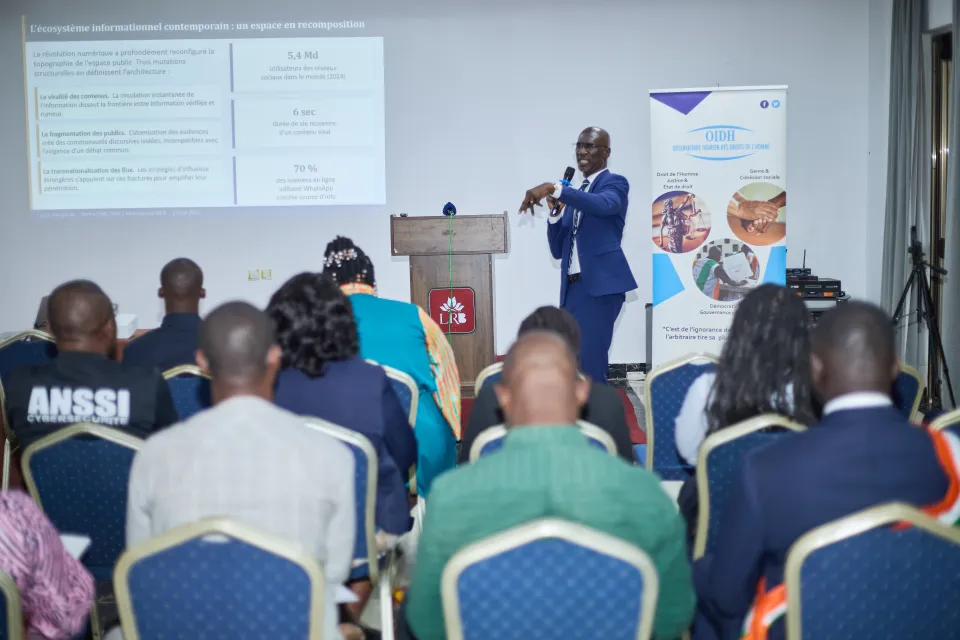
To explain how FIMI and disinformation are impacting the Ivorian democracy, university Professor Simplice Yodé Dion attested during the event to a profound reconfiguration of the public sphere under the effect of three major mutations.
First, there is the virality of the content: information now spreads so fast that people often share before verifying. This collapses the old boundary between the verified and the rumour. Second, there is the fragmentation of the public sphere: instead of one common public debate, we now have several “echo-chambers” that do not really speak to one another. Third, there are transnational flows of information: external actors can use these fractures to enter the national space and amplify discord.
Relating back to the idea of democratic deliberation, Dion recalls that the public sphere is the site of “communicative rationality,” where the “force of the better argument” must necessarily prevail over the “argument of force”. FIMI is not allowing the force of the argument.
In distinction to soft power and hard power, he introduces the concept of “sharp power”. Sharp power means persuasion through attraction, not force through military domination, but destabilisation through information warfare. Sharp power is designed to attack and destabilise from within: the goal is to lead people where they would not have gone by themselves, and to weaken the state from within.
The key element “from within” is well-documented in the OIDH report: rather than purely foreign actors delivering manipulated messages, FIMI in the Ivory Coast looks like a mix of narratives between imported foreign discourses and local frustrations, creating “political confrontation” in the public sphere. OIDH clarifies, nevertheless, that no official confirmation between Ivorian actors and foreign powers exists, but only “converged discourses”.
Mixed narratives and liaisons between foreign and local proxies have also been found in other countries such as North Macedonia, Georgia, and Moldova. This confirms that FIMI’s nature goes beyond the foreign dimension but touches upon coordinated, opaque and deceptive operations that may also involve local actors.
In a nutshell, be it local or foreign actors, the narratives of FIMI are not contributing but diminishing the public sphere and deliberation.
“Information sovereignty” as a response to FIMI?
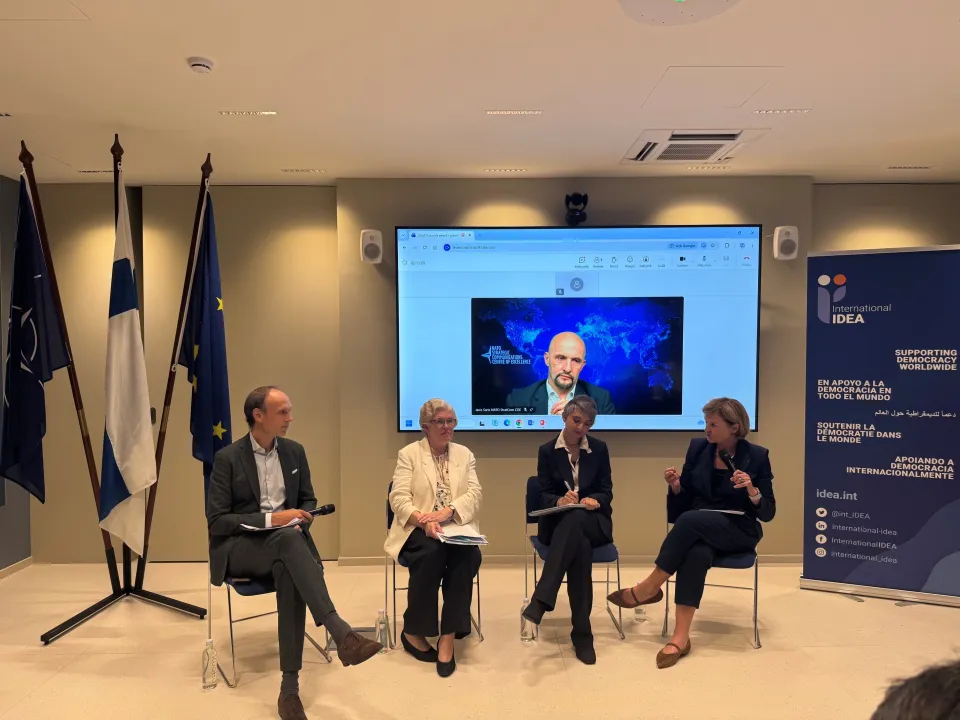
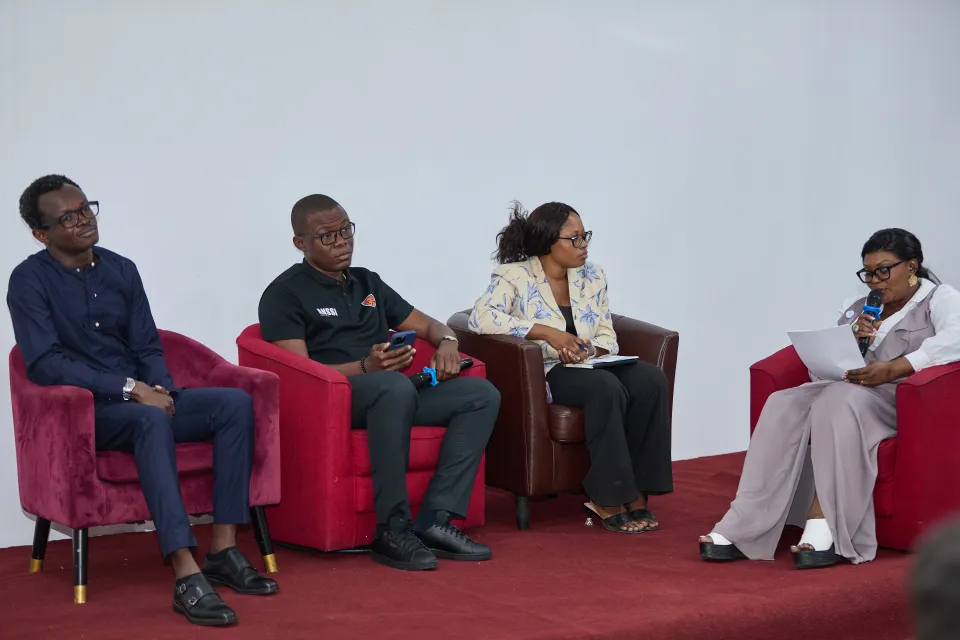
An expert panel on the topic of “Between information sovereignty and digital openness: how can foreign interference be addressed in the Ivory Coast?” took also place during the launch. The approaches discussed targeted how to strengthen the resilience of the information ecosystem in the Ivory Coast, highlighting important discussions such as what digital sovereignty should look like in the Ivory Coast.
The panel highlighted the importance of building an Ivorian digital public infrastructure: data centres and online platforms should have a presence in the country to enforce Ivorian rules in the digital space. Neither a regulatory body nor a national strategy could work if there is no presence of the main actors and parties on the ground: “the platforms and data should adapt to our rules, not in the other way around”. Some ideas were discussed around having clear and legal rules for online platforms.
However, experts highlighted the importance of critical information literacy, particularly for the youth. Integrating media and information literacy into children’s education, raising broad public awareness of FIMI/disinformation, and developing legal frameworks to equip the state with the necessary tools to strengthen media literacy will materialise the old idea of sovereignty based on the will of the people.
What are the following steps?
We look forward to implementing the second phase of the project alongside our national partners Coalition Ivoirienne des Défenseurs des droits Humains (CIDDH) and OIDH, with the support of Global Affairs Canada (GAC), from May 2026 to March 2027.
The main goal with the new phase of the project in the country will be to strengthen the resilience of Ivorian civil society against FIMI through political dialogues and capacity building. The project will also conduct more in-depth research on the Ivorian complexities of political finance in the digital age, particularly how online campaigning and crypto assets can be used as illicit financing flows of FIMI operations.
This phase aims to put forward civic and institutional responses allowing the identification and countering electoral-related FIMI in the Ivory Coast without touching the values around democratic deliberation and the public sphere.
Photos from the launch event


About the authors