Political participation of indigenous women: a pending debt of Panamanian democracy
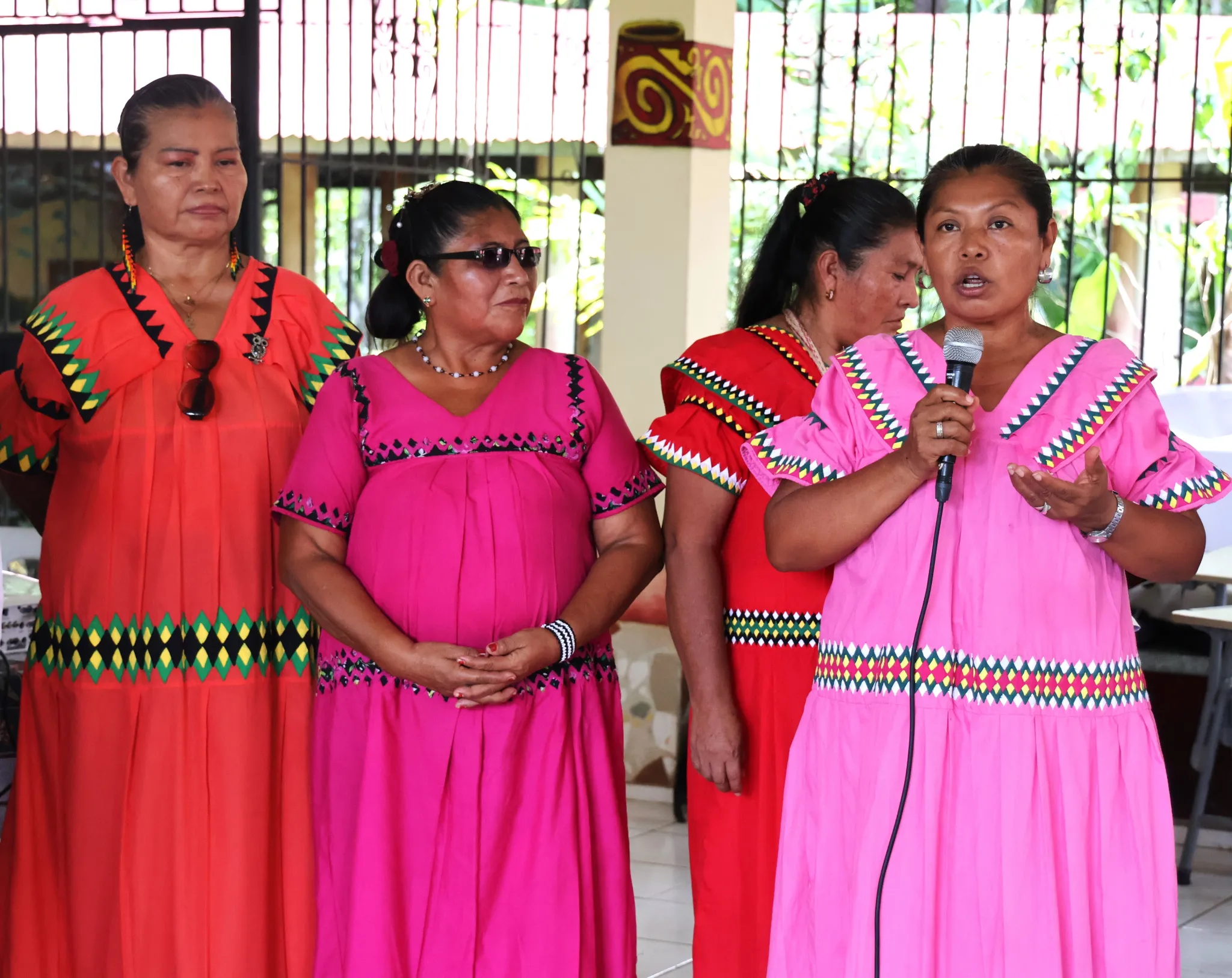
In Panama, women represent approximately half of the voter roll and actively participate in democratic life. However, they hold less than 14% of elected public offices, according to the Electoral Tribunal of Panama. While this reality represents a challenge for women in general, the hurdle takes on different dimensions for indigenous women. According to the 2023 Census, 352,292 indigenous women live in the country, representing 50.5% of the national indigenous population.
Many of the social, economic, and territorial gaps take on a distinct form in their lives, especially during childhood and old age. Their opportunities to participate, lead, and exert influence are conditioned by intersecting and mutually reinforcing gender, economic, geographic, and cultural inequalities.
In the frame of International Day of the World's Indigenous Peoples, this reality invites us to ask an essential question for democratic strengthening: Are we creating the conditions so that indigenous women can participate and exert influence with equal opportunities in decision-making spaces?
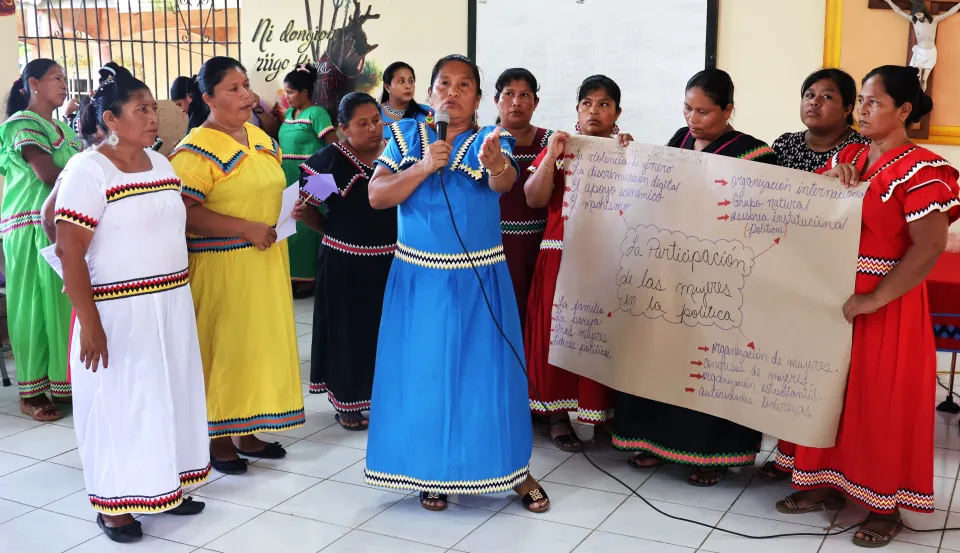
At International IDEA, we have accompanied spaces for dialogue with women from the Ngäbe-Buglé comarca that offer a clear lesson: the leadership of indigenous women does not need to be discovered or created. It already exists. It manifests in community organizations, in female leaders driving initiatives to strengthen territorial governance, and in women preserving ancestral knowledge while advancing proposals to improve representation and participation within their own governance structures.
One topic emerged repeatedly: care work. Many women continue to shoulder the majority of domestic responsibilities and the care of children, the elderly, and dependent family members. When these duties fall disproportionately on them, the time available to participate in community, educational, or decision-making processes is drastically reduced. Added to this are economic limitations, geographic distances, and unequal access to training and capacity-building opportunities.
Speaking about political participation therefore also means speaking about the right to time, to mobility, to access information and training, and to conditions that allow leadership to be exercised without having to choose between family care and community commitment. Formal equality of rights remains insufficient when structural barriers persist that prevent exercising them fully.
At the same time, Ngäbe-Buglé women's organizations themselves demonstrate that the agenda has evolved. Today, they are not only pushing for greater political representation; they are also advancing proposals to strengthen effective participation, recognize the historical contribution of women, and incorporate principles such as equality, parity, interculturality, and co-responsibility into spaces of representation and decision-making. That is to say, they are not only identifying barriers: they are also building solutions from their own territories.
This process invites us to broaden the conversation about the kind of democracy we want to build. An intercultural democracy is not limited to guaranteeing the right to participate; it also recognizes the different forms of leadership, organization, and collective building present in the country, creating the conditions so that all voices can exert influence under equal opportunities. Strengthening democracy means strengthening its ability to listen, dialogue, and incorporate the experiences and proposals of those who have historically been underrepresented in decision-making spaces.
The political participation of indigenous women is neither a concession nor a symbolic gesture. It is a necessary condition for building more representative institutions, more legitimate public decisions, and a democracy capable of reflecting the diversity of Panama.
On this International Day of the World's Indigenous Peoples, the invitation is to keep building a democracy that reflects Panama’s diversity. An intercultural democracy recognizes that the participation of indigenous women strengthens the quality of public decisions, expands the perspectives from which policies are built, and contributes to institutions that are more representative and closer to the reality of the territories. Creating the conditions for that leadership to continue growing does not only benefit indigenous women; it strengthens our democracy as a whole.


About the authors