Lesotho takes a strategic step towards inclusive electoral participation
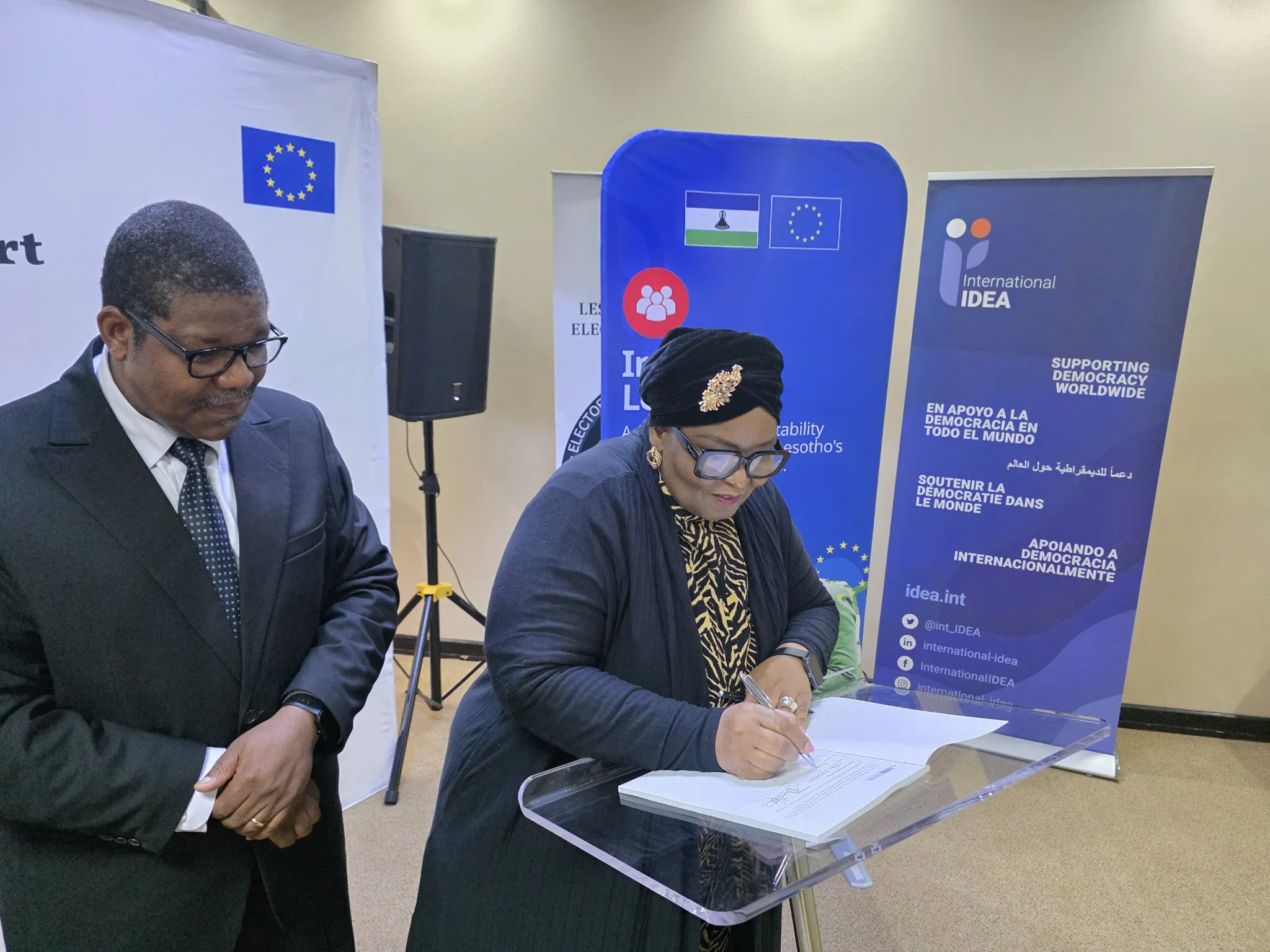
International IDEA and the United Nations Development Programme (UNDP) co-hosted the sign-off and launch of two landmark electoral strategy documents in Lesotho on 28 May 2026. The Civic and Voter Education Strategy and the Voter Registration Strategy were officially endorsed at a ceremony held at Lehakoe Club in Maseru, marking a significant milestone in the country's democratic development.
The two strategies were developed to strengthen the mandate of the Independent Electoral Commission (IEC) of Lesotho and to build a more informed, engaged, and participatory citizenry ahead of future electoral cycles. Their development involved an extensive consultative process with key national stakeholders, including political parties, civil society organisations, development partners, and academic institutions.
The launch was attended by IEC Commissioners, media representatives, political party delegates, civil society organisations, development partners, and academia. The official sign-off was conducted by the IEC Chairperson, Rev. Dr. John Maphephe, and the Principal Secretary to the Ministry of Local Government, Chieftainship, Police and Home Affairs, Mabataung Khalane, lending both institutional authority and government commitment to the process.
Strategies designed to transform democratic participation
In his opening remarks, the IEC Chairperson commended the quality and relevance of the two documents, noting that they were the product of broad stakeholder engagement. He extended particular appreciation to International IDEA and UNDP for their technical support throughout the development process.
The Acting Director of Elections presented an overview of the methodology employed in developing both strategies, highlighting their complementary nature and the strategic priorities they seek to address. She also acknowledged the challenges that may affect implementation and outlined the support expected from development partners to ensure the strategies achieve their intended outcomes.
Speaking at the launch, Gram Matenga, International IDEA's Regional Head of Programmes for Africa and West Asia, underscored the significance of the strategies for democratic governance in Lesotho:
"Democracy is not a one-day event. It is a way of life. Elections are the most visible expression of that life, but meaningful democracy depends on an informed, engaged, and empowered citizenry every day. The Civic and Voter Education Strategy before us is designed precisely to achieve that — to strengthen electoral democracy by ensuring that citizens know their rights and responsibilities, understand electoral processes, and have the tools to participate freely and confidently."
Matenga also commended the European Union for its financial support, noting that the partnership exemplifies the kind of constructive international cooperation that strengthens national institutions and empowers citizens.
European Union and government of Lesotho reaffirm commitment
Anna Reneiri, Head of Cooperation at the European Union Delegation to the Kingdom of Lesotho, emphasised the importance of the two strategies in addressing the structural challenges that have historically limited civic and electoral participation:
"Together, these strategy documents seek to address two major challenges around voter registration and civic and voter education. Their launch will strengthen the legitimacy of electoral processes and outcomes when citizens can participate competently."
She commended Lesotho's strategic direction in developing both documents, noting that they reflect a commitment to promoting a free and inclusive voter registry and building societal competency for participatory governance. The EU Delegation reaffirmed its long-term commitment to supporting resilient democracy and citizen participation in Lesotho.
On behalf of the Government of Lesotho, the Principal Secretary to the Ministry of Local Government, Chieftainship, Police and Home Affairs described the signing as a defining moment in the country's democratic journey:
"The signing of these strategies marks a significant milestone. This is not only a technical achievement but a profound commitment to strengthen the credibility, inclusiveness, and trustworthiness of our electoral processes."
She further pledged that the Ministry would work actively to support voter registry updates, ensuring that no eligible citizen is excluded from the democratic process.
A foundation for long-term democratic resilience
The formal sign-off of both documents by the IEC Chairperson and the Principal Secretary brought the ceremony to a close, with the Chairperson calling on all stakeholders to work collectively in implementing the strategies and realising their stated priorities and objectives.
The Civic and Voter Education Strategy and Voter Registration Strategy represent a concrete foundation for long-term electoral integrity in Lesotho. International IDEA remains committed to supporting the IEC and the Government of Lesotho in translating these strategies into sustained democratic gains for all citizens.
Khotso. Pula. Nala.


About the authors