International IDEA advocates for sustainable democracy financing at the African Electoral Integrity Summit 2025
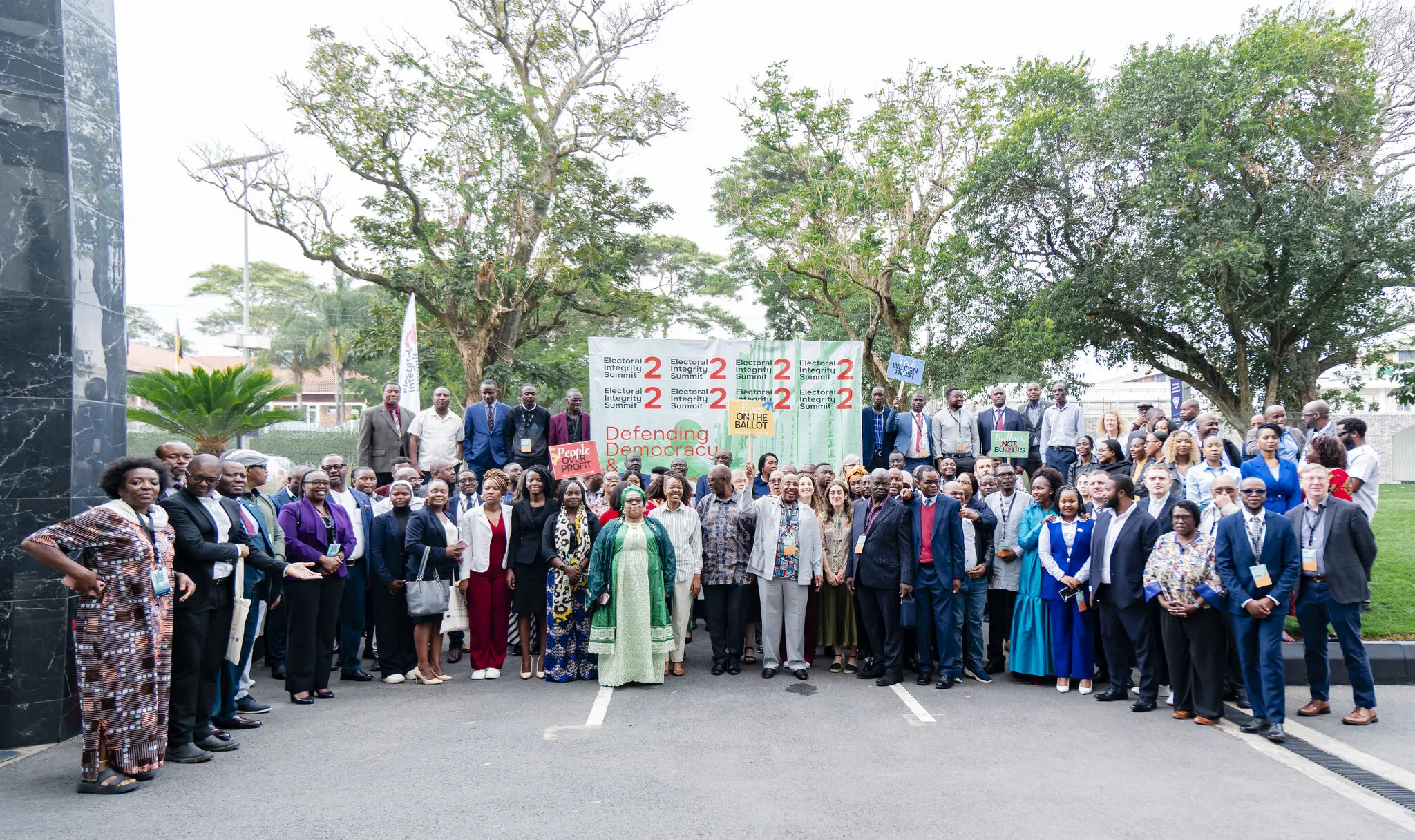
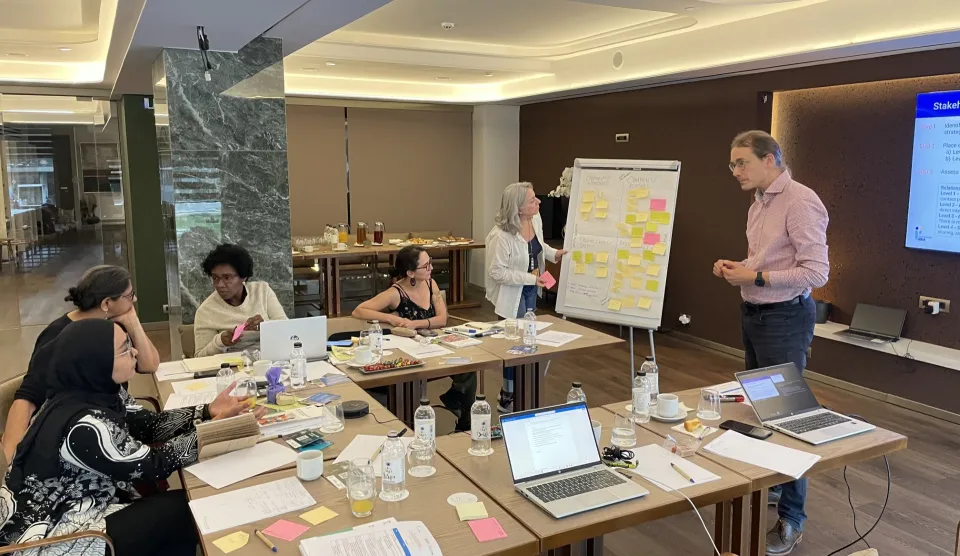
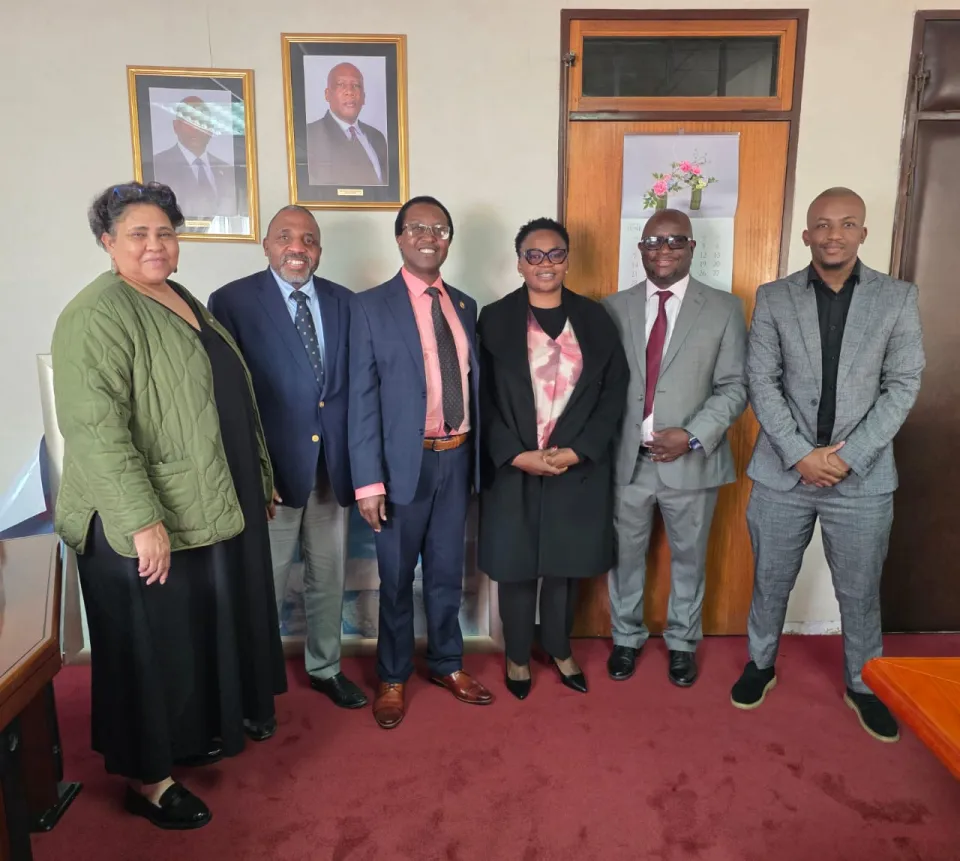
Convened by the African Election Observers Network (AfEONet), the summit brought together around 150 participants from across Africa and Europe, including electoral management bodies, civil society organizations, youth and women’s groups, academics, journalists, and international development partners.
The summit took place against a backdrop of a global democracy decline and a context of reduced funding for democracy support. Across the continent, civic space is shrinking, executive overreach is increasing, illicit political financing remains pervasive, and youth trust in democratic institutions is declining. At the same time, international funding for democracy support and citizen-led electoral observation is declining. In response, the summit’s theme “Defending Democracy and Reclaiming Civic Space: A Continental Call for Electoral Integrity and Inclusive Governance” called for renewed regional solidarity, innovation, and collective action.
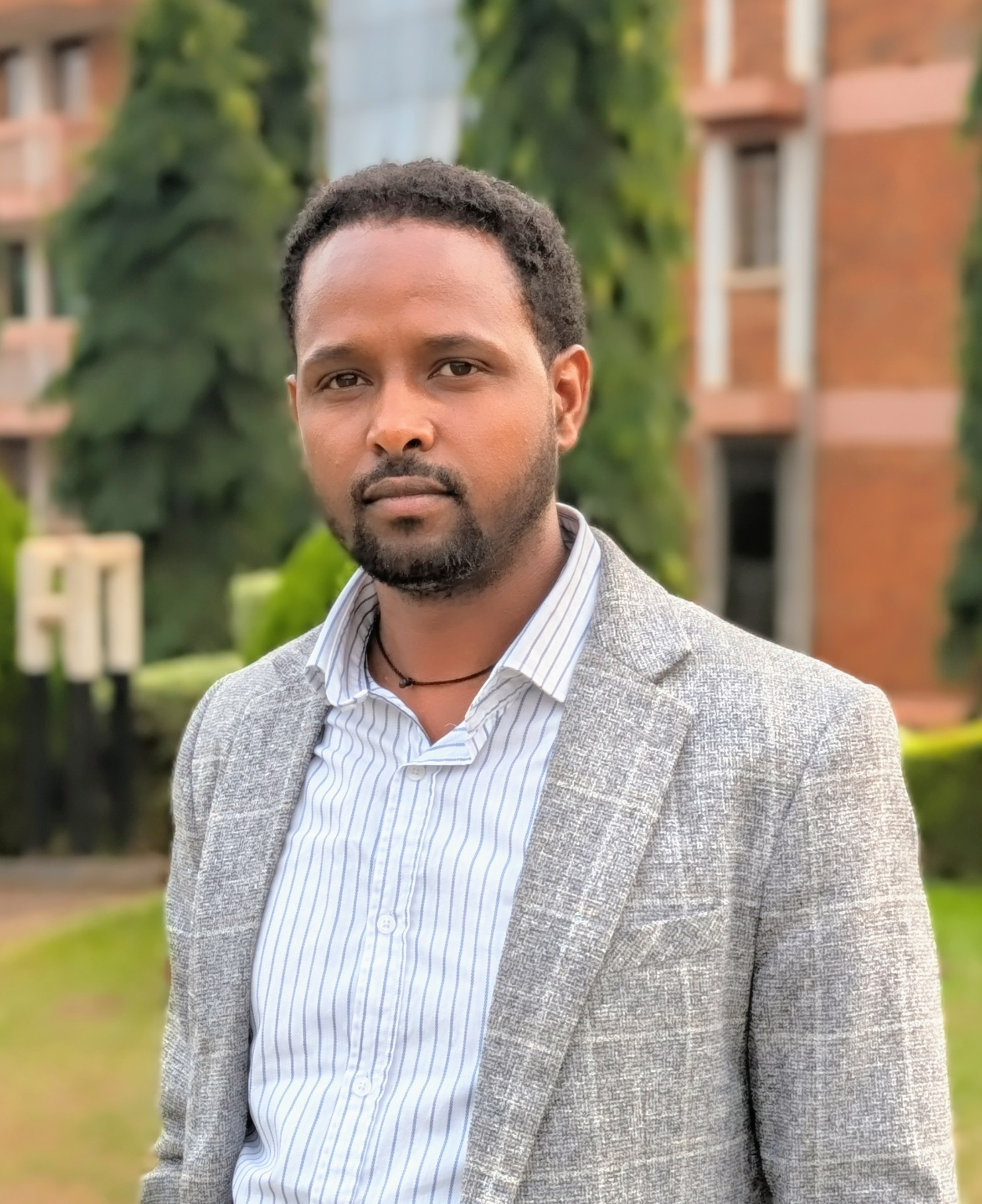
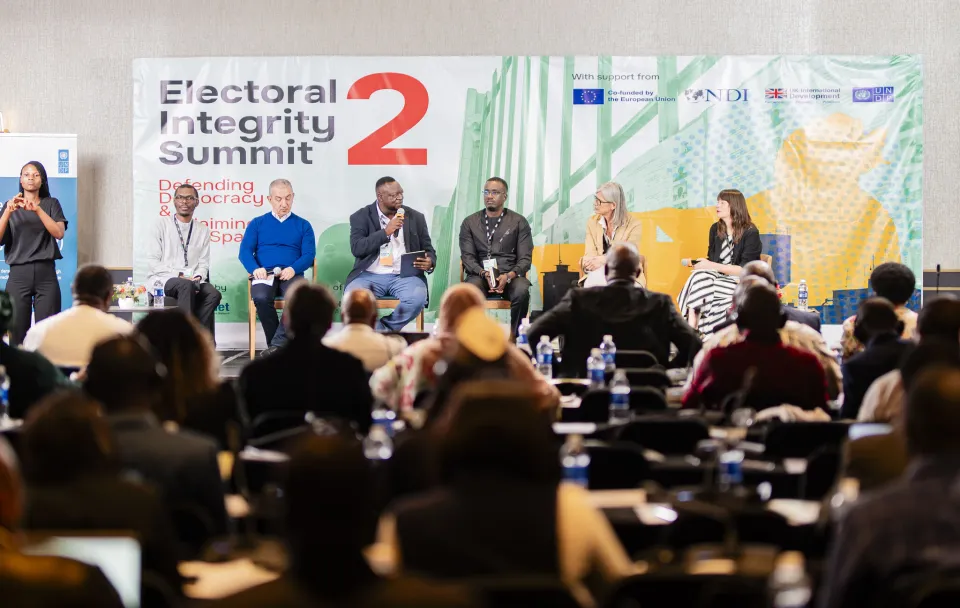
International IDEA, with the support of the European Union through the EU funded Strengthening Pan-African Capacities for Electoral Observation and Assistance (SPEC) project, contributed to these discussions. Representing International IDEA, Miguel de Brito, Mozambique Head of Programme, joined the panel on “Rethinking Financing Democracy in an Era of Shifting Global Support.” He highlighted a critical paradox: democracy indicators are worsening just as major donors are pulling back from democracy and electoral integrity funding. In his intervention, Miguel cautioned against the perception that democracy support is ineffective simply because its results are less immediate or easily measurable than other development investments. Instead, he urged donors and practitioners to rethink and not abandon democracy financing, emphasizing innovation, technology, and domestic resource mobilization.
“Citizen-led electoral observation remains one of the strongest lines of defence against democratic backsliding,” Miguel noted, stressing that the future lies in smaller, smarter, more flexible, and tech-enabled observation models that are rooted in local communities and treated as a public good.
A key outcome of the summit is the Lusaka Communique on Electoral Integrity and Civic Space, which sets out concrete recommendations and a post-summit advocacy roadmap. Additional deliverables include policy briefs and thematic summaries synthesizing insights from panel discussions, and a forthcoming advocacy toolkit to support national-level implementation of summit resolutions.
By supporting dialogue, policy development, and regional coordination, International IDEA continues to support initiatives to defend democracy in Africa helping stakeholders adapt to shifting global support while building resilient, locally owned pathways for electoral integrity and inclusive governance.


About the authors