Inclusive Lesotho: Support to inclusive political participation and representation
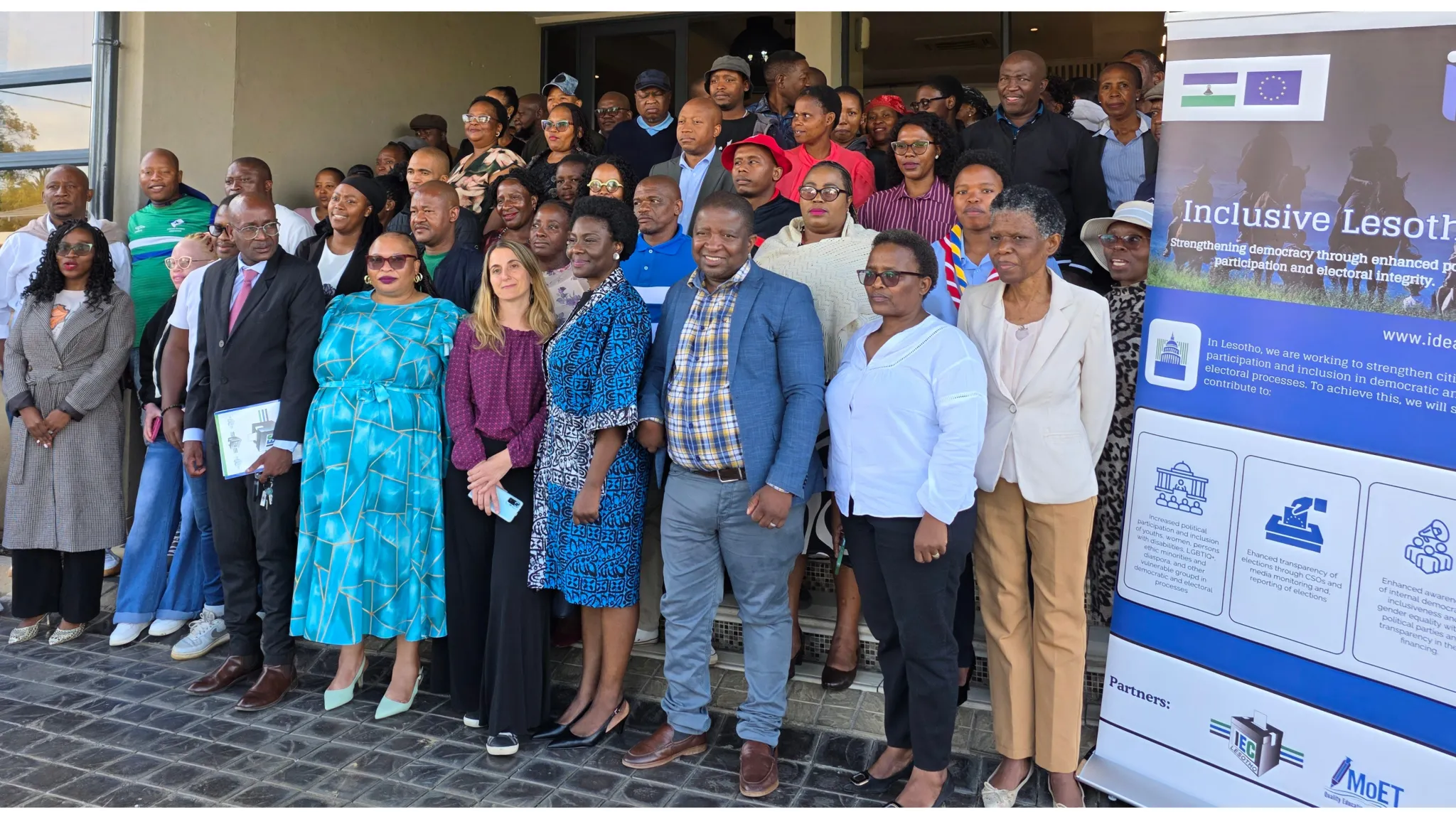
The two-day event held in Maseru consisted of stakeholders from government, civil society organisations (CSOs), academia, IEC’s civic and voter educators from the ten districts, representations from IEC’s committees (political parties), youth groups, media practitioners, IEC Commissioner, as well as Development Partners.
The stakeholders’ roundtable aimed to build consensus and draw insights and inputs that shape and contribute to a comprehensive Civic and Voter Education Strategy for IEC. The event provided an opportunity for stakeholders to reflect on IEC’s strengths, weaknesses, opportunities, and threats, and to share experiences in civic and voter education. It also presented an opportunity to collectively design interventions to enhance citizens’ competence, participation, and inclusivity in democratic processes.
The diversity of participants ensured a rich exchange of perspectives on how to tackle democratic deficits Lesotho faces and how best to strengthen civic initiatives and voter engagement across the country.
The participants emphasised that the outcome of the 2022 National Assembly General elections remains the fundamental democratic indicator of voter apathy and disengagement by the citizenry. They underscored the importance of collaboration and coordinated efforts, emphasising that the democratic deficit needs a multi-stakeholder approach and cannot be a responsibility of a single institution.
On behalf of the European Union Delegation in Lesotho, Marcella Veneziani underscored that;
Lesotho faces challenges, we heard about the outcome of the voter turn out on the elections of 2022, the reminder that without informed and engaged citizens, democracy cannot fulfil its promises”. She further emphasized that, “Democracy is not the spectators sport, civic and voter education demystify the electoral process, reducing spoilt ballot and ensuring votes are casted as intended, it is important therefore to use the platform to reimagine the way to empower citizens to be able regardless of gender, age, ability or background to actively be part of the democracy in the country.
The IEC Commissioner further amplified the importance of the event by stating that;
Lesotho has faced persistent challenges of democratic disengagement which is reflected by declining voter turnout since independence. Participation has steadily decreased, reading a historic voter turnout of 37.7 after the 2022 Elections which is a serious indictment in terms of civic and voter education. The Stakeholder’s roundtable is fundamental to gather insight for goal setting, to conduct SWOT analysis, to lay the foundation for a comprehensive Civic and Voter Education Strategy that aligns with IEC’s Strategic Plan.
Key issues and barriers discussed
With a well-coordinated approach by the Civic and Voter Education Strategy Expert, discussions highlighted persistent factors contributing to the continuous decline in voter turnout since the return to multiparty democracy:
- Absence or limited formal education on civic and voter education.
- Lack of institutional resources (Financial and Human Capital).
- Geographic and infrastructural challenges.
- Poverty and poor delivery service.
- High unemployment rate, drugs and substance abuse.
- Short-term civic and voter education just before elections.
- Absence of a long-term civic and voter education strategy.
- Misinformation and unprofessional media.
- Weak institution and legal framework.
- Absence of youth platforms.
- Politicized civil servants and Security Agency.
Interventions identified
The stakeholder’s roundtable devised and discussed interventions to alleviate challenges hindering continuous civic and voter education initiatives. The Programme Manager highlighted some of the interventions implemented under the Inclusive Lesotho program by International IDEA that respond to the barriers already identified, such as improving the school curriculum. Through collaboration with the Ministry of Education and Training, civic and voter education integration is underway to ensure that democratic values are nurtured from an early age. Some of the interventions discussed were:
- IEC institutional strengthening.
- Development of the Long-Term Civic and Voter Education Strategy and Plan.
- Civic and voter education integration in the school’s curriculum is compulsory from the secondary level.
- Resource mobilization.
- Youth engagement and use of technological advancements.
- Inclusive civic and voter education materials/ resources.
- A coordinated approach and evidence-based civic and voter education strategy.
- The consensus around the implementation plan and timeframes for the strategy.
What’s next
With exchanged perspectives on the development of the civic and voter education strategy, consultations with relevant stakeholders will proceed in parallel with the drafting of the document. When the draft strategy has been developed, it will be shared with relevant stakeholders for input and consolidation. The draft strategy will be further validated by relevant stakeholders and officially launched.


About the authors