MISAHEL and partners convened a high-level workshop on strengthening security and stabilization in Sahel and West Africa
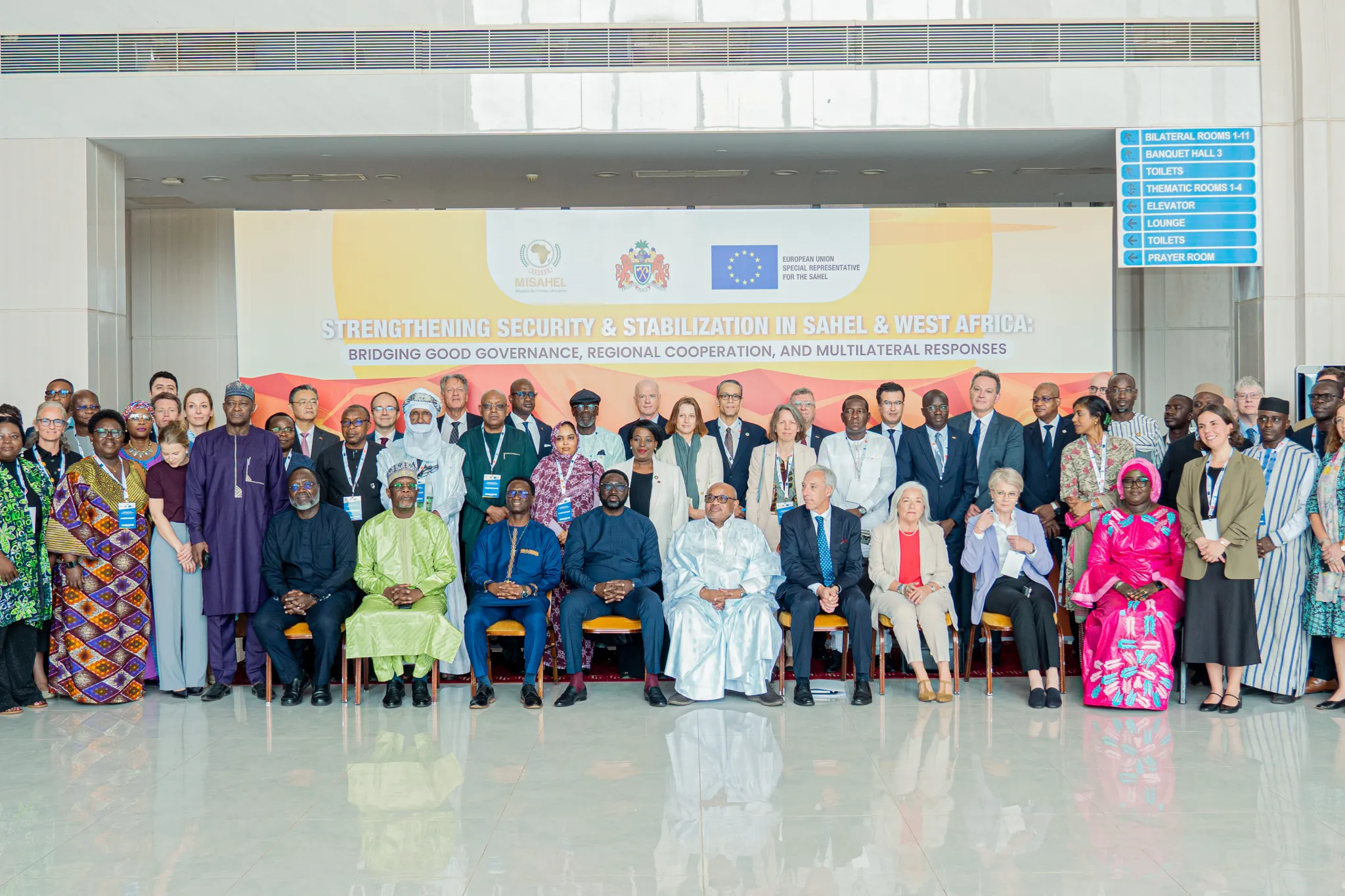
The African Union Mission for Mali and the Sahel (MISAHEL), in collaboration with the European Union Special Representative for the Sahel, Swiss Special Envoy for the Sahel, Danish Special Envoy for the Sahel, Germany's Special Envoy for the Sahel, the Netherlands Ministry of Foreign Affairs (DSH), and International IDEA, convened a high-level workshop on Strengthening Security and Stabilization in Sahel and West Africa: Bridging Good Governance, Regional Cooperation, and Multilateral Responses. The two-day workshop was held from 23– 24 April 2026 at the Sir Dawda Kairaba Jawara International Conference Centre in Banjul, The Gambia.
This workshop was convened against the backdrop of a regional context marked by persistent and multidimensional challenges. West Africa and the Sahel continue to grapple with the escalation of terrorism and violent extremism, complex political transitions, and increasing risks of spillover into coastal states. These interconnected dynamics undermine regional stability and underscore the urgent need for coordinated, integrated, and sustainable responses.
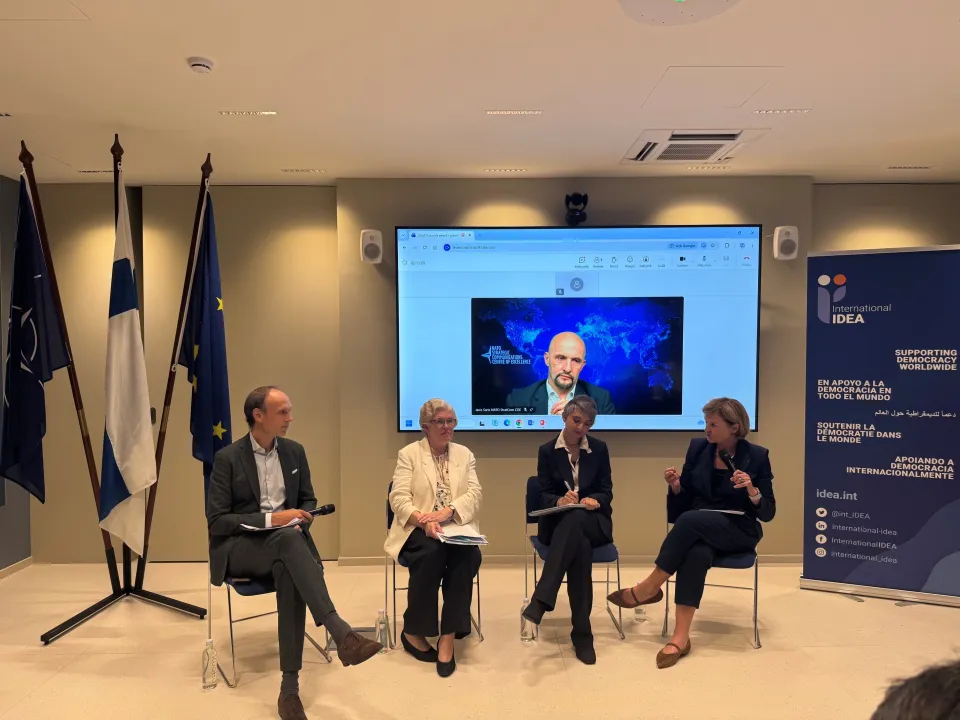
Beyond addressing immediate security concerns, the convergence, through panel discussions and participants' contributions, emphasised the essential need to strengthen the nexus among security, good governance, and stabilisation. Current reactive approaches, which are often short-term crisis management, should evolve into proactive strategies that anticipate threats, enhance institutional capacity, and foster societal resilience. Good governance, characterised by inclusivity, is crucial for legitimising stabilisation efforts and fostering trust between communities and their institutions.
The two-day workshop brought together more than 50 participants, including high-level policymakers, special envoys, representatives of states and Regional Economic Communities, civil society actors, officials from the African Union and the European Union, and experts in security and governance. This diverse assembly facilitates the convergence of institutional, diplomatic, and civic viewpoints, helping to identify actionable pathways for collaborative efforts.
The challenges before us require a quality of international partnership that is different in kind from what has existed in the past. We do not need more commitments that are not followed through on. We do not need coordination mechanisms that produce reports but not results. We need a genuine, sustained, and coherent partnership, a partnership built on mutual respect, shared analysis, and a willingness to adapt when our strategies are not working, says H.E. Dr Mamadou Tangara, AU High Representative and Head of MISAHEL.
H.E. João Cravinho, European Union Special Representative for the Sahel, stressed that the region is facing more than a security emergency; it is also confronting deep challenges in governance, societal resilience, and public trust in state institutions. He noted that short-term security responses alone cannot resolve these issues and called for an integrated approaches that tackle the root causes and lays the foundation for lasting stability.
At the heart of our discussion is a key idea: security, good governance, and Stabilization are inseparable. Security operations alone cannot deliver sustainable peace, says H.E. Cravinho.
Bullets do not build classrooms. Armoured vehicles do not bring rainfall. Checkpoints do not restore trust between the government and its people. Stabilisation without governance accountability breeds resentment. Security without justice breeds resistance. Development without inclusion breeds inequality, and inequality breeds conflict, says Prof Pierre Gomez, Minister of Higher Education, Research, Science and Technology. Representing the President of the Republic of The Gambia
Following the official close of the workshop, MISAHEL and its partners adopted a communiqué reaffirming their shared commitment to advancing integrated approaches that link security, governance, and stabilisation across West Africa and the Sahel, recognising that sustainable peace depends on strong institutions, inclusive communities, and effective regional and multilateral cooperation.


About the authors