Youth in Action: Inside Benin’s Parliamentary Academy

What happens when young people are given 90 seconds to speak directly to members of parliament?
From 29–30 April in the coastal city of Grand Popo, Benin, 72 youth leaders from 77 communes answered that question at the Youth Parliamentary Academy (YPA), where ideas were transformed into policy proposals and youth voices entered the heart of parliamentary dialogue.
Co-hosted by the Inter Pares– Parliaments in Partnership programme and the National Assembly of Benin, and funded by the European Union, the Academy set out to bridge the gap between young citizens and decision-making institutions.
A Strong Institutional Commitment to Youth Engagement
The Academy was officially opened by Professor Mahugnon Kakpo, Second Vice-President of the National Assembly of Benin, who emphasized that the initiative extends far beyond a training exercise.
This academy is not limited to a training framework. It reflects the conviction that the consolidation of Benin's democracy is based on the commitment and intelligence of its youth.” He further described the Youth Parliament of Benin as “a real laboratory of citizenship, leadership and responsibility.
Representing Inter Pares, Jonathan Murphy, Head of Programme, framed the Academy as part of a broader effort to strengthen the link between parliamentary institutions and citizens – particularly young people.
This academy is part of a dynamic of cooperation aimed at bringing parliamentary institutions closer to citizens, especially young people.” He also stressed the importance of grounding democratic development in lived experience, stating that “your traditions, your histories and your memories must constitute the foundations of the democracy you are building in Benin.
The opening also featured a powerful call to responsibility from Guerschom Agbowakounou, President of the Youth Parliament of Benin, who highlighted both the urgency and weight of youth engagement in national development. He urged participants to channel the concerns of their peers into concrete action, reinforcing their role as representatives of youth voices in national decision-making.
Learning by Doing: From Ideas to Action
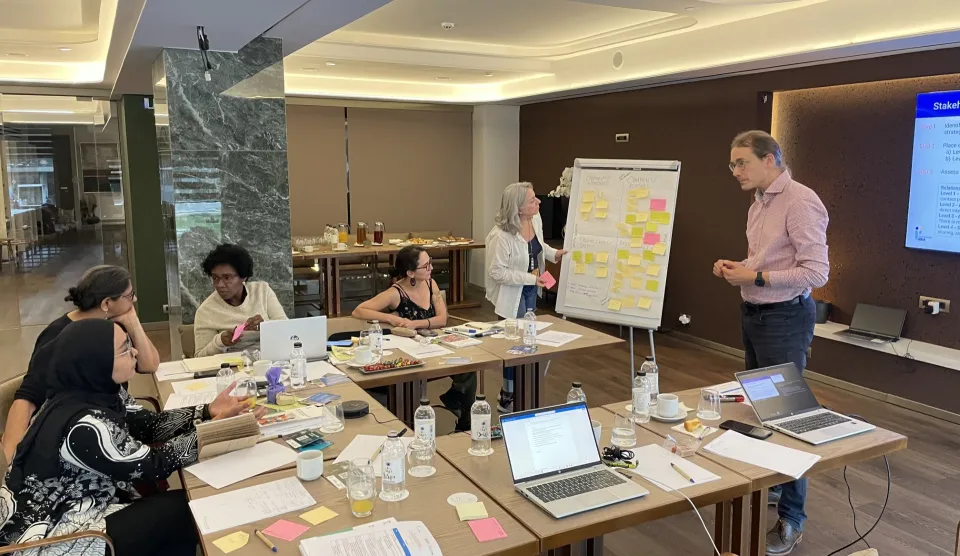
At the core of the Academy was an intensive, hands-on methodology centered on “learning by doing.” Over two days, participants worked in twelve groups to identify pressing challenges affecting youth and translate them into structured, evidence-based policy pitches.
Guided by expert facilitators, participants strengthened their skills in analysis, advocacy, and public speaking. A dedicated session on the parliamentary pitch emphasized clarity, conciseness, and impact – equipping participants to communicate effectively with decision-makers in just 90 seconds.
From Training to Policy Proposals
The highlight of the Academy was the presentation of 12 parliamentary pitches to key decision-makers, including three Presidents of the Standing Committees of the National Assembly.
This exercise marked a rare and meaningful moment of direct youth-to-parliament engagement. The proposals, grounded in real challenges and supported by practical solutions, were praised for their clarity, relevance, and feasibility. Feedback from parliamentarians further strengthened participants’ approaches and sharpened their advocacy skills.
Youth Voices: Building Skills, Confidence, and Impact
Beyond the technical training, the Academy created space for young parliamentarians to build confidence and find their voice.
Joliberta Agossou, a member of the Development and Environment Commission of the Youth Parliament of Benin, described the experience as both challenging and empowering:
Many skills were developed during these two days of intense activity, notably our speaking skills, our ability to pitch well, and to capture the attention of local authorities in a few seconds… It was truly a great challenge for us as young people to meet.
She also highlighted how feedback from senior parliamentarians helped refine their approach and strengthen how they represent youth concerns. Looking ahead, she captured the broader ambition of the Academy:
“Benin is seen through its ideas and supported by its youth. It is therefore necessary that in each commune, each young person is capable of raising their voice and carrying their ideas loud and clear.”
For Clevis Atikpa Batio, a young parliamentarian from the Collines department, located in the centre of the country, the experience was equally transformative – particularly in developing practical advocacy skills:
At first, it wasn’t easy – structuring our ideas and delivering a 90-second parliamentary pitch was a real challenge. But with support, we succeeded.
Reflecting on what he gained, he emphasized the concrete nature of the learning:
I have learned how to structure my ideas, how to write, and how to formulate a plea to address to deputies – so that one day, my proposals can become resolutions.
Closing the Academy: A Step Toward Lasting Impact
The closing ceremony reflected a shared sense of achievement and forward-looking commitment.
Muriel Abikou, Representative of the European Union, reaffirmed continued support for youth participation in democratic life, stating:
The European Union remains committed to supporting initiatives that promote the active participation of young people in public life and the strengthening of democracy.
Honourable Orden Alladatin, President of the Law Commission, National Assembly of Benin, congratulated participants on the quality and relevance of their proposals, encouraging them to continue their civic engagement beyond the Academy.
Partners and youth representatives alike emphasized that beyond the training itself, the YPA has strengthened a lasting channel of dialogue between young citizens and the National Assembly of Benin – laying the foundation for continued collaboration and more inclusive, participatory governance.
A Lasting Channel Between Youth and Parliament
By equipping participants with practical skills, amplifying their voices, and creating direct pathways to decision-makers, the YPA demonstrated a clear ambition: to foster a generation of young leaders capable of thinking, proposing, and acting in the service of democracy.
Additional Resources:


About the author