Reimagining democracy for an inclusive, peaceful, resilient and sustainable world: Highlights from #IICDEM2026
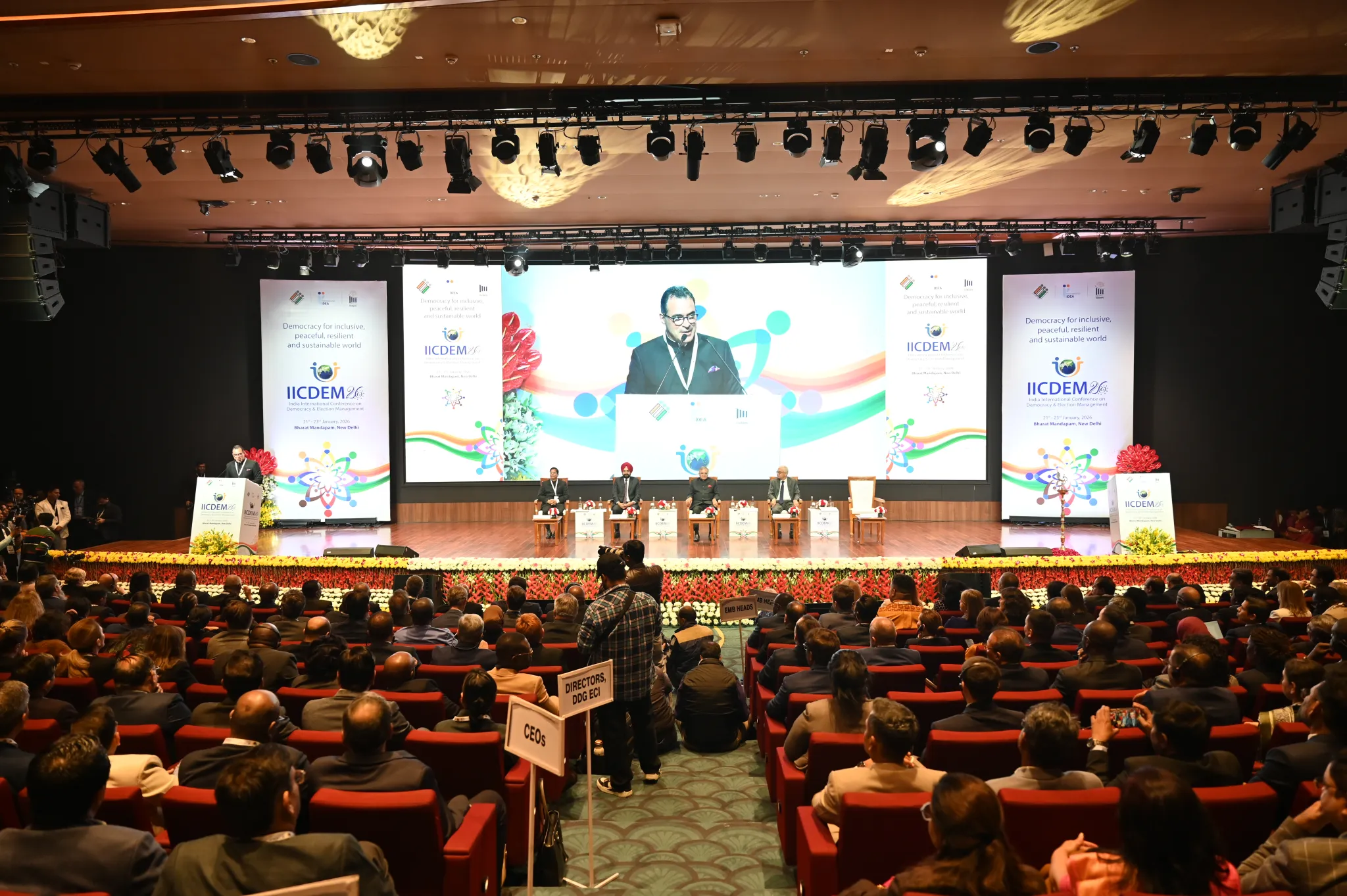
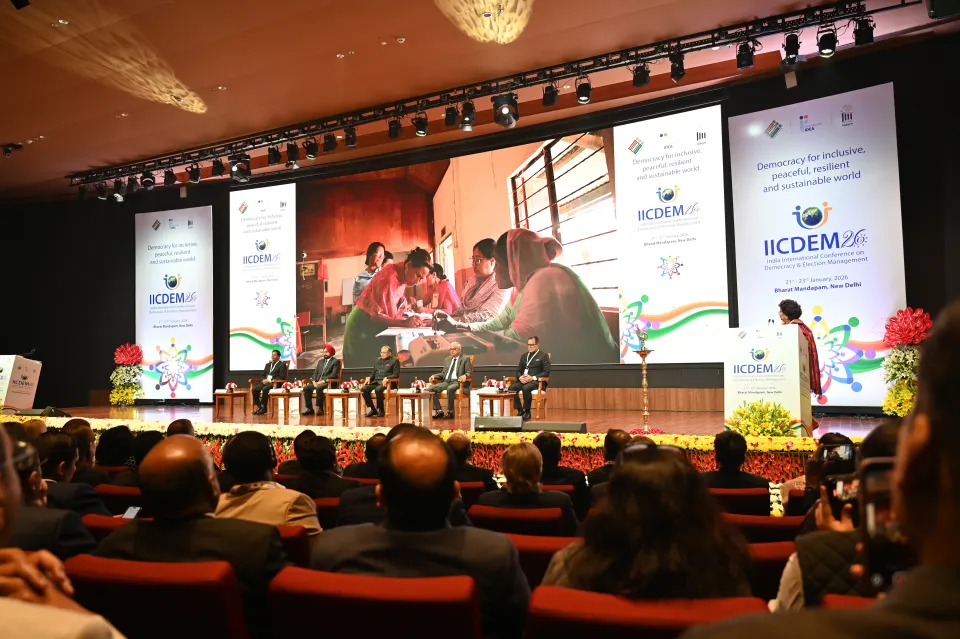
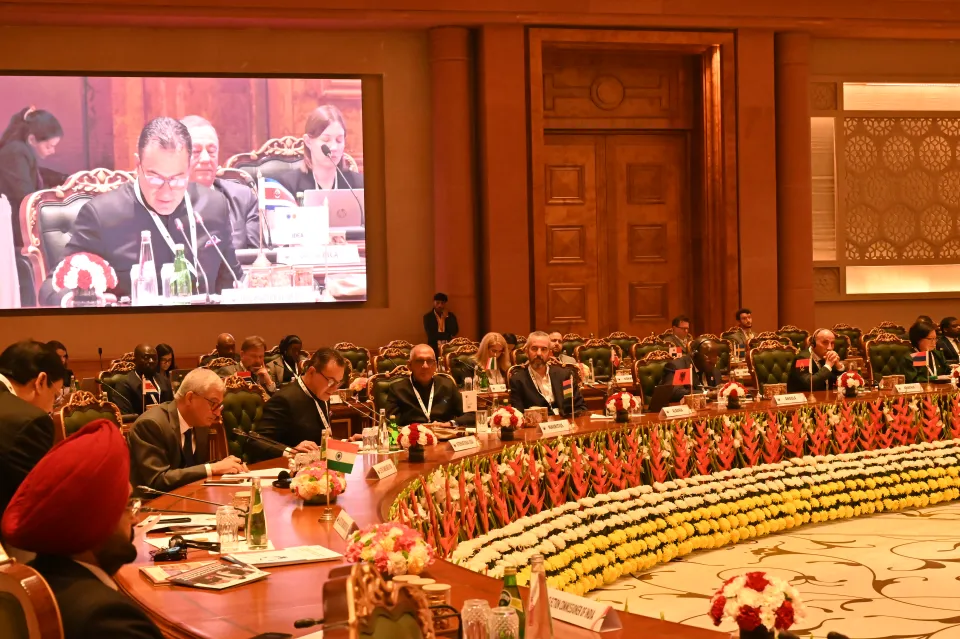
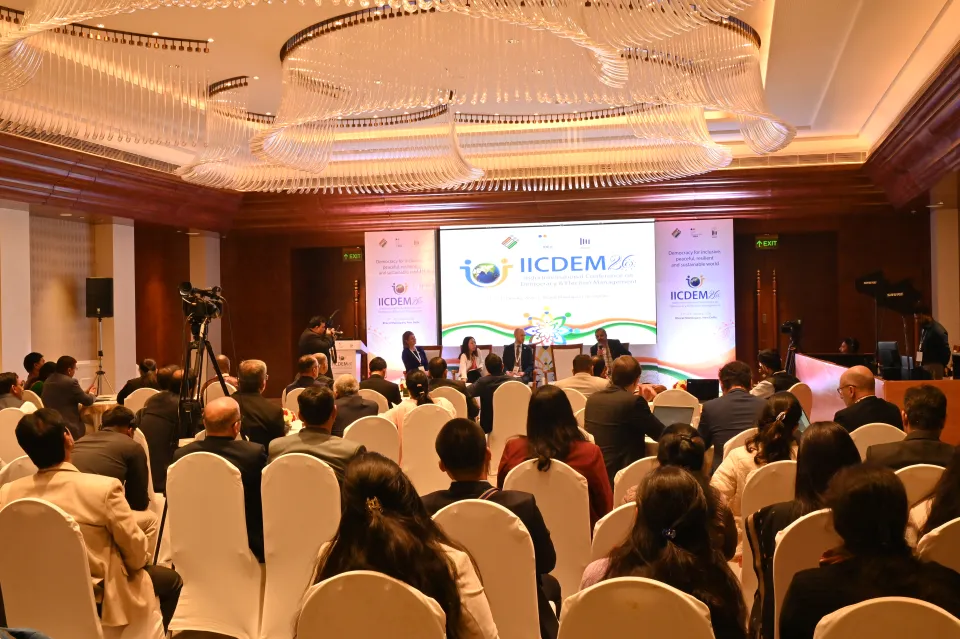
From 21-23 January, the India International Institute of Democracy and Election Management (IIIDEM) under the aegis of the Election Commission of India organised the India International Conference on Democracy and Elections Management focusing on reimagining democracy for an inclusive, peaceful, resilient and sustainable world.
The #IICDEM2026 conference was held at the outset of India’s chairship of International IDEA’s Council of Member States, which in 2026 will focus on two strategic pillars: Reimagining Democracy for the Future; and Strengthening the Independence and Professionalism of Election Management Bodies.
"Amid broad democratic backsliding, elections continue to offer an opportunity for renewal. Democracy can be restored as long as electoral routes for political change remain open. Protecting electoral integrity is thus a vital task for democracies, requiring whole-of-society coordination and investment.
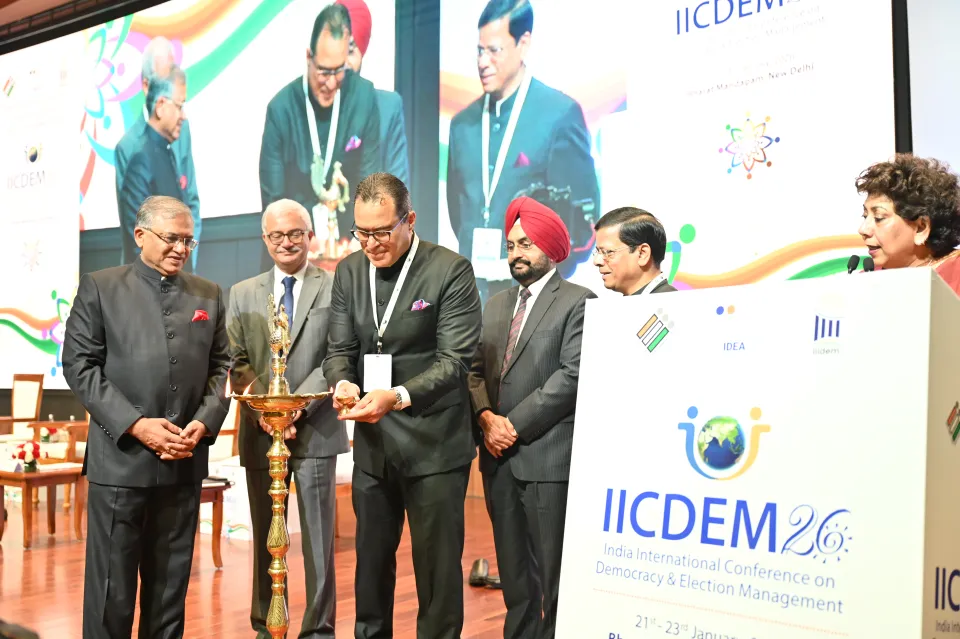
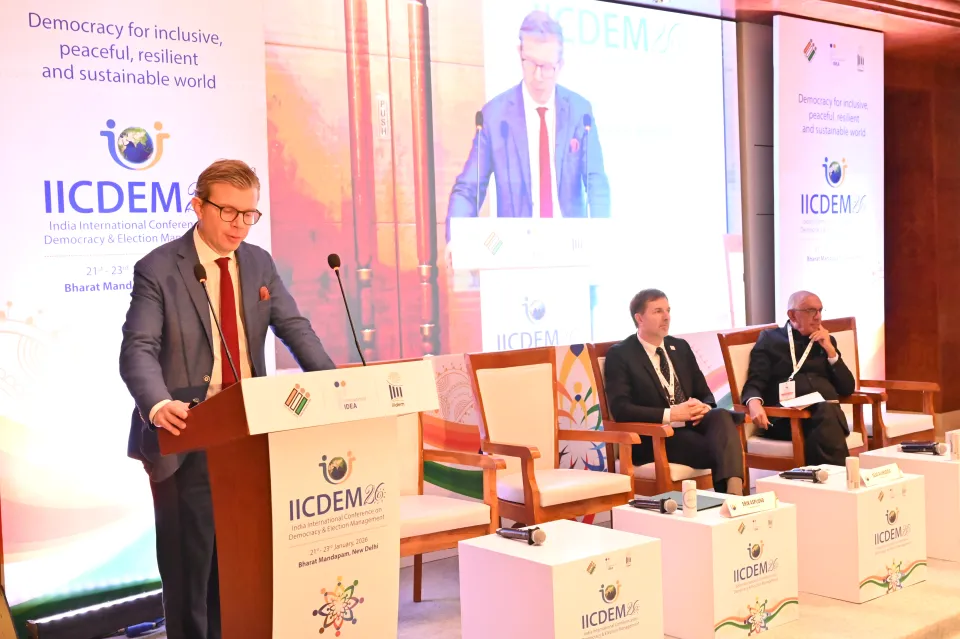
I look forward to continuing our work together to keep the light of democracy shining through the darkness. This light is a product of human dreams, a tribute to human potential, and a beacon for human hope”, said Kevin Casas-Zamora, Secretary-General of International IDEA, during his keynote speech at #IICDEM2026’s inaugural session.
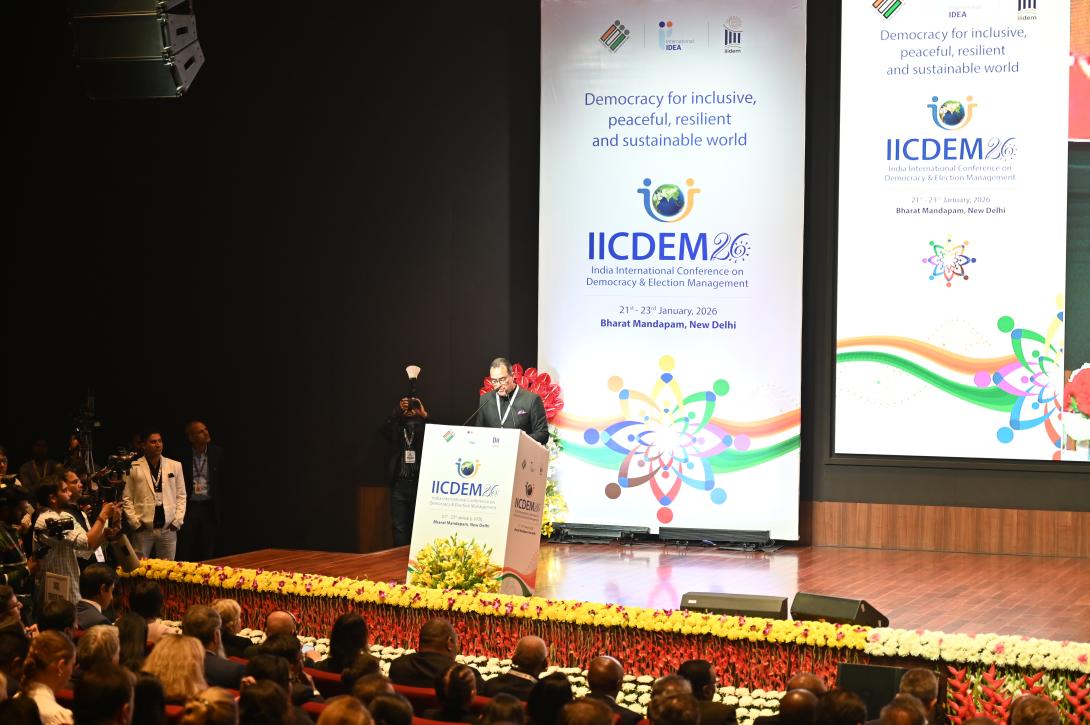
Throughout the course of the three-day conference, International IDEA’s experts hosted a series of sessions and delivered insightful presentations for hundreds of delegates from all over the world and across India.
Democracy that delivers, now and in the future
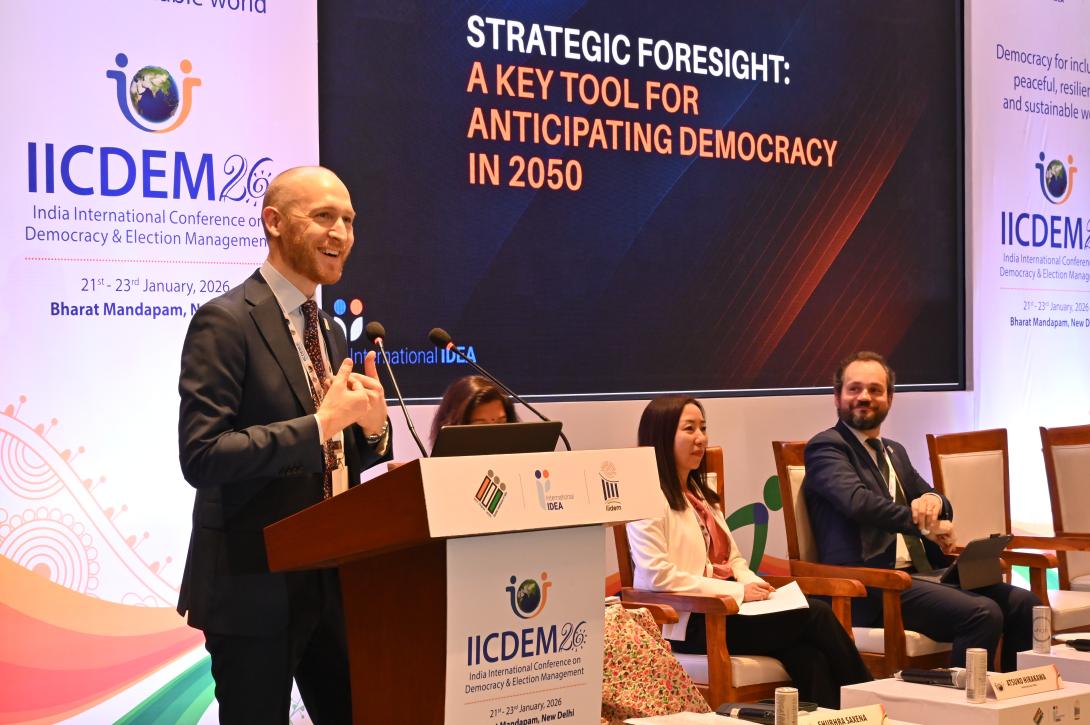
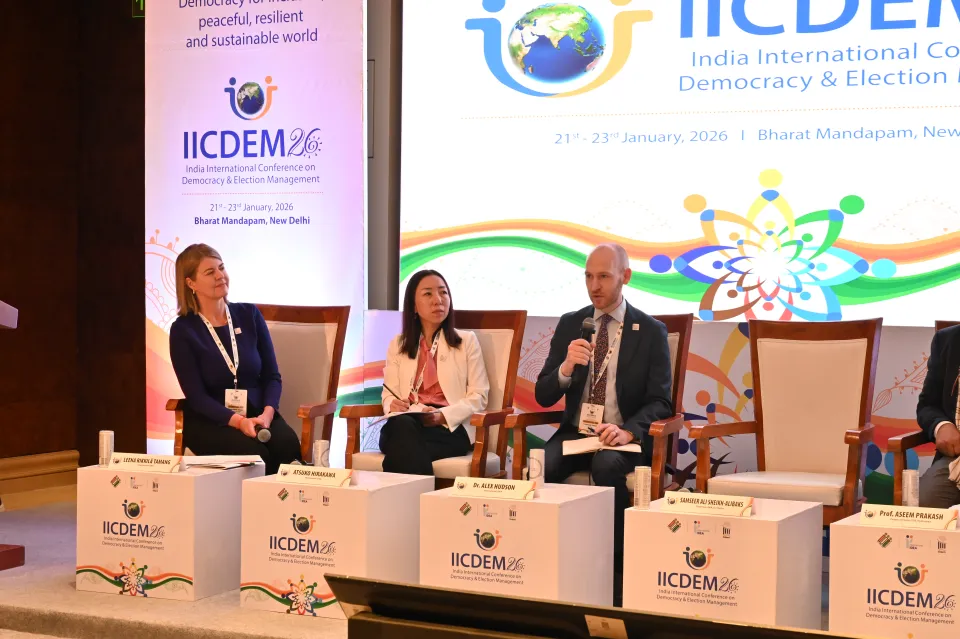
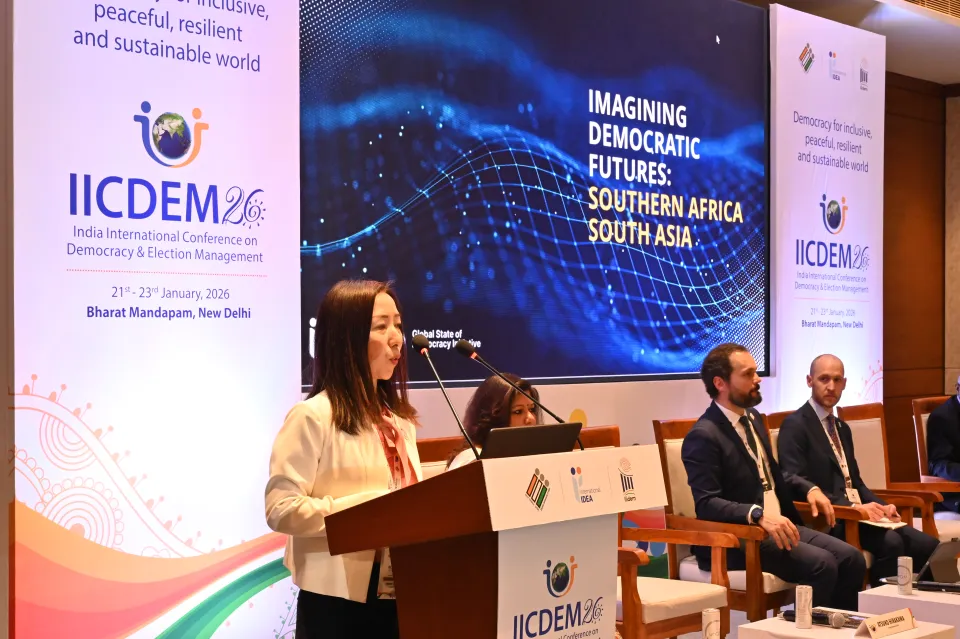
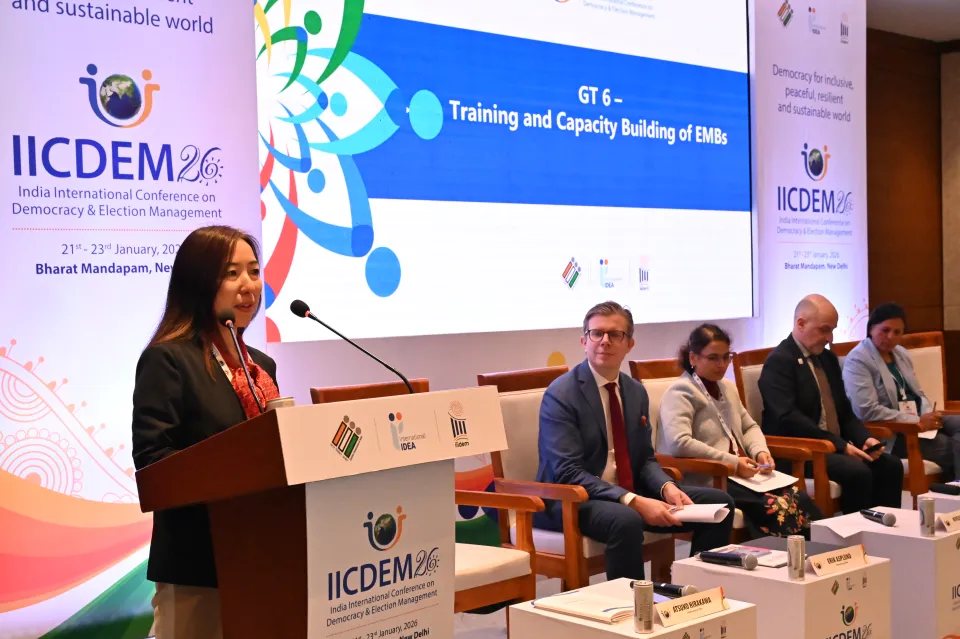
Democracy Assessment Experts, Alex Hudson and Atsuko Hirakawa, examined 'Democracy that Delivers' using the Global State of Democracy and Democracy Tracker findings, and the practical performance of democratic institutions in delivering tangible outcomes for citizens, focusing on contributions to peace, inclusion and empowerment.
They also presented Strategic Foresight as a key tool for anticipating 'Democracy in 2050', looking at how democratic systems can be designed to remain resilient, adaptable, and sustainable in an era of rapid political, technological, and social change.
Election management bodies, the cornerstones of sustainable democracy
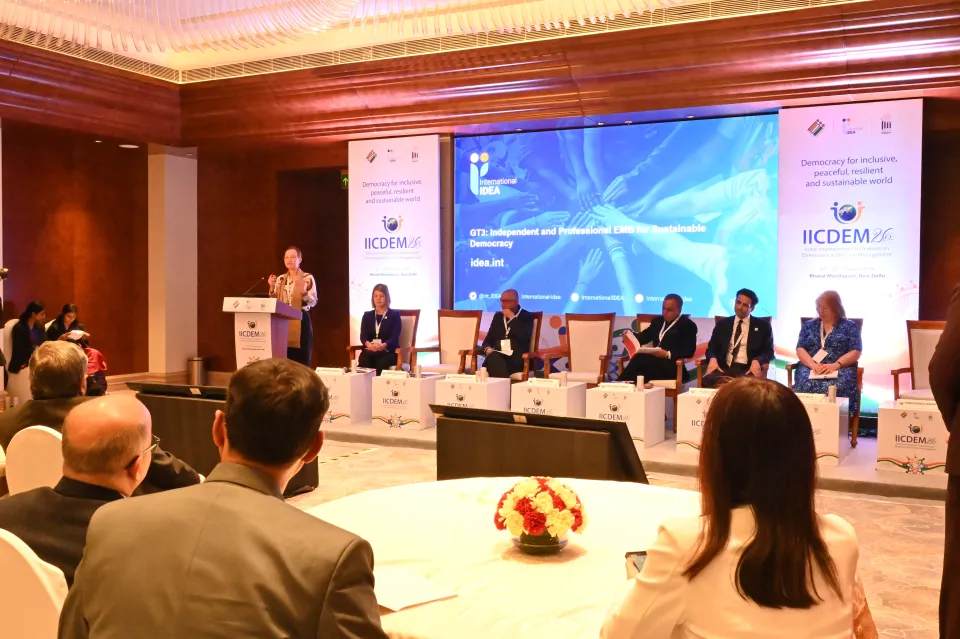
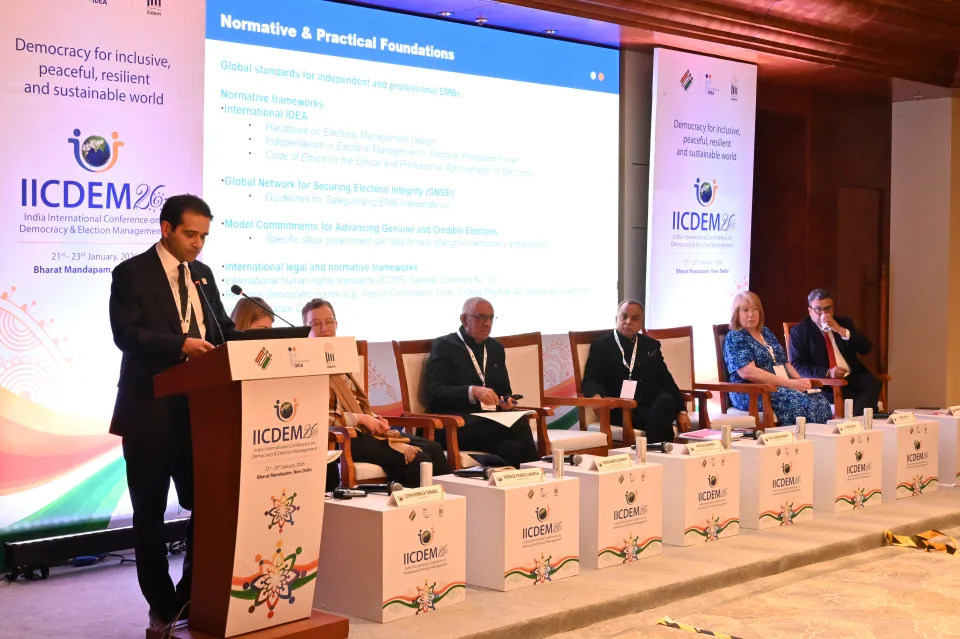
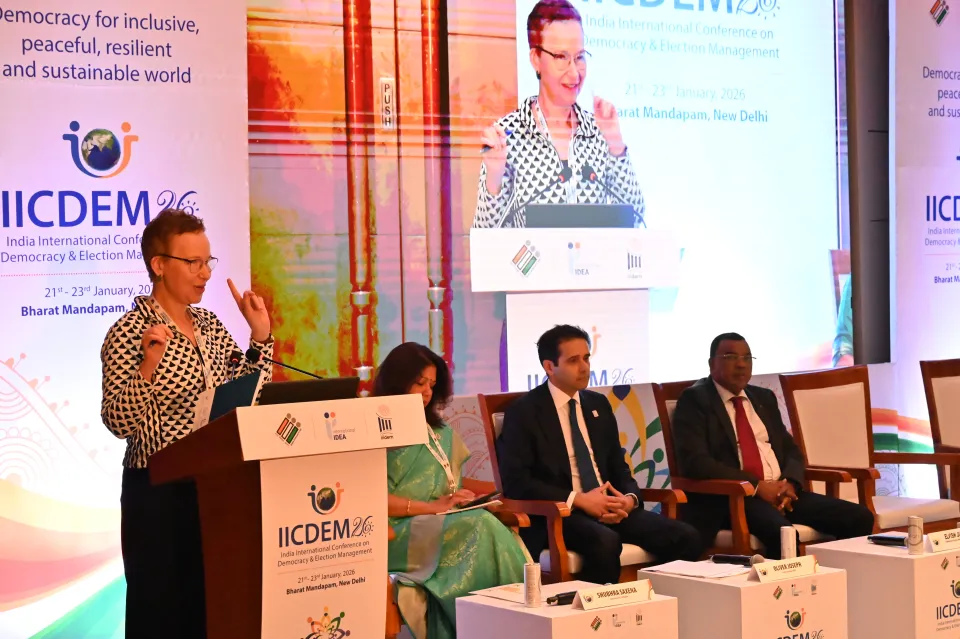
Electoral Processes experts, Therese Pearce Laanela and Oliver Joseph focused on the foundational role of independent and professional election management bodies as cornerstones of sustainable democracy, exploring the institutional characteristics, governance frameworks, and operational practices that enable EMBs to deliver credible, transparent, and inclusive electoral processes.
They also shared insights on sustainable and impartial election funding as essential democratic infrastructure that preserves EMB independence, professionalism, and cost-efficiency.
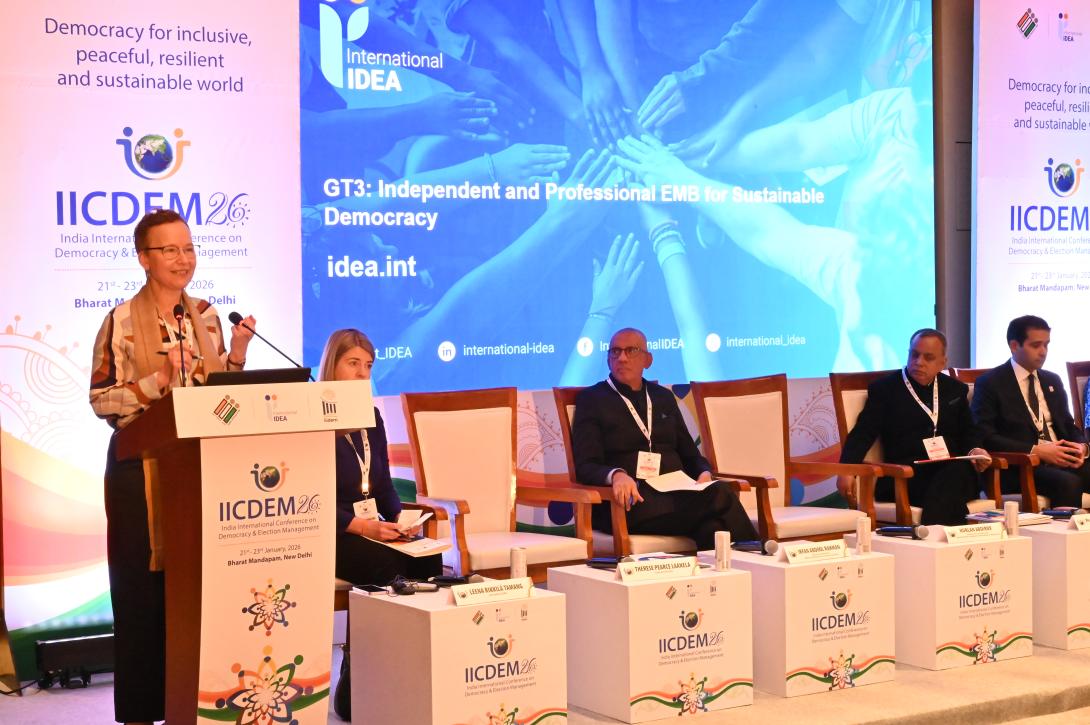
Therese Pearce Laanela outlined the evolution and current paradigm shifts in election management bodies (EMBs), highlighting the evolution of global norms of EMB independence. She emphasised the urgency of rethinking past assumptions, noting the impact of global events on voting, voter information, and the acceptance of election results.
“We are reshaping and future-proofing the field of election administration, with a need to incorporate new professional characteristics, skillsets and mindsets including active advocacy of election principles, leadership of inter-agency cooperation mechanisms, trust-building community networks, and strengthening of the electoral frontlines”, she emphasized.
Electoral risk management and resilience
Electoral Processes Experts, Erik Asplund and Sead Alihodzic, looked into the expanding range of risks confronting elections, from logistical disruptions, electoral malpractices, and disinformation to the impacts of natural and human-made hazards.
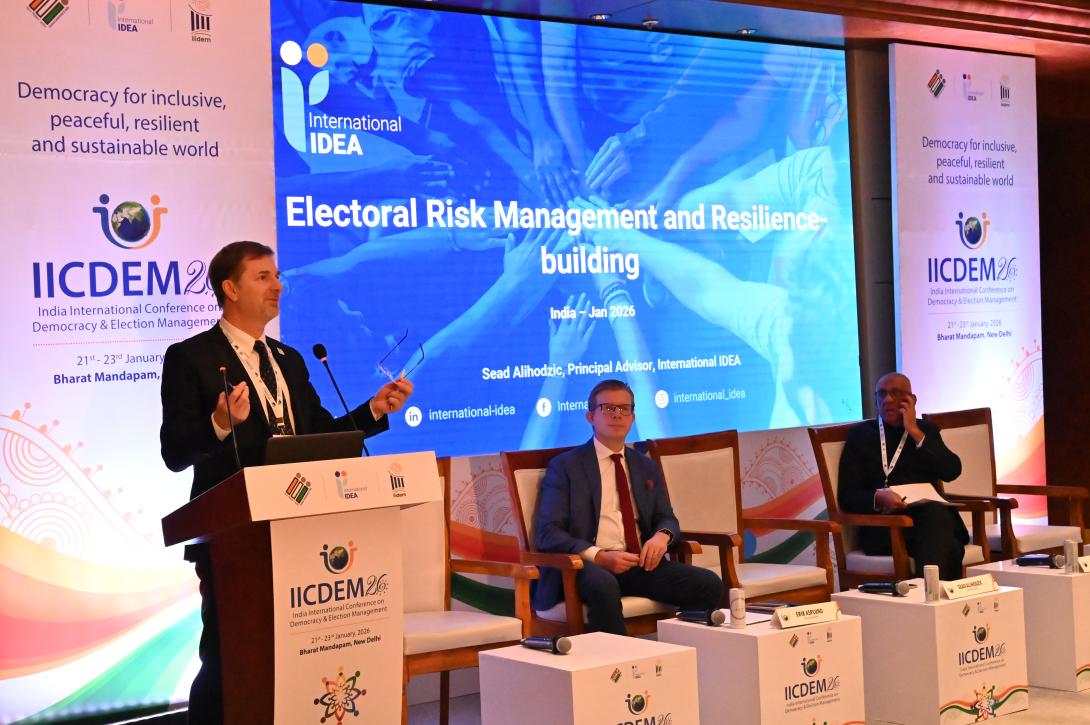
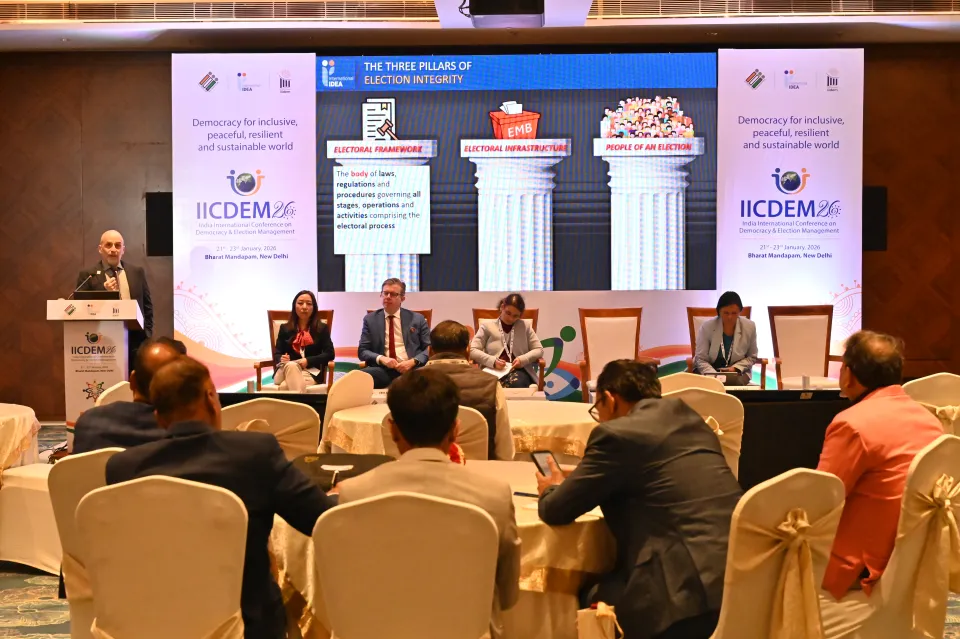
Together with Electoral Processes Advisor, Antonio Spinelli, they addressed the critical need for institutionalized, competency-based professional development within Election Management Bodies to ensure consistent electoral excellence.
AI-driven electoral efficiency, but also disruption
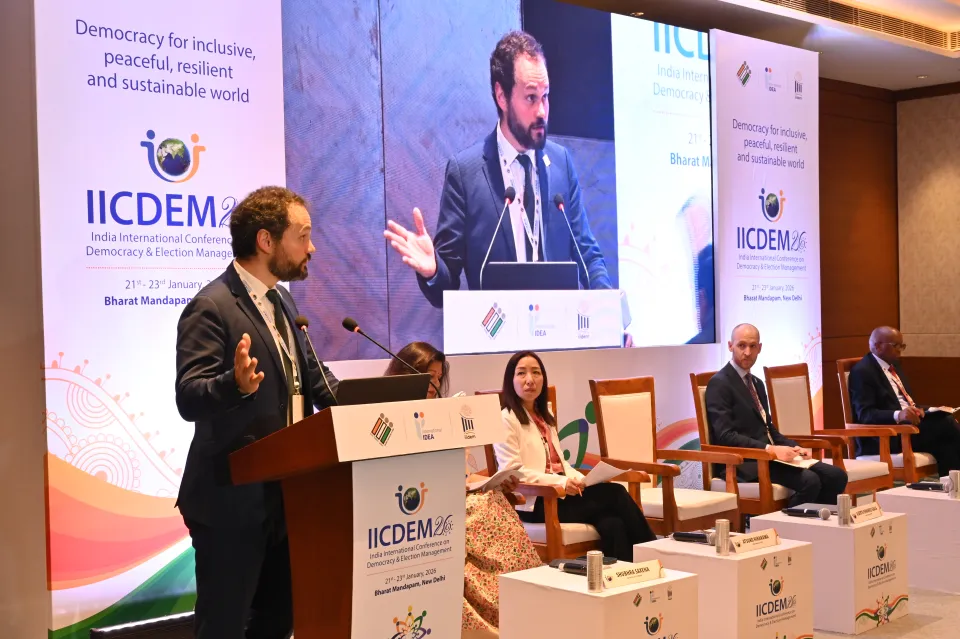
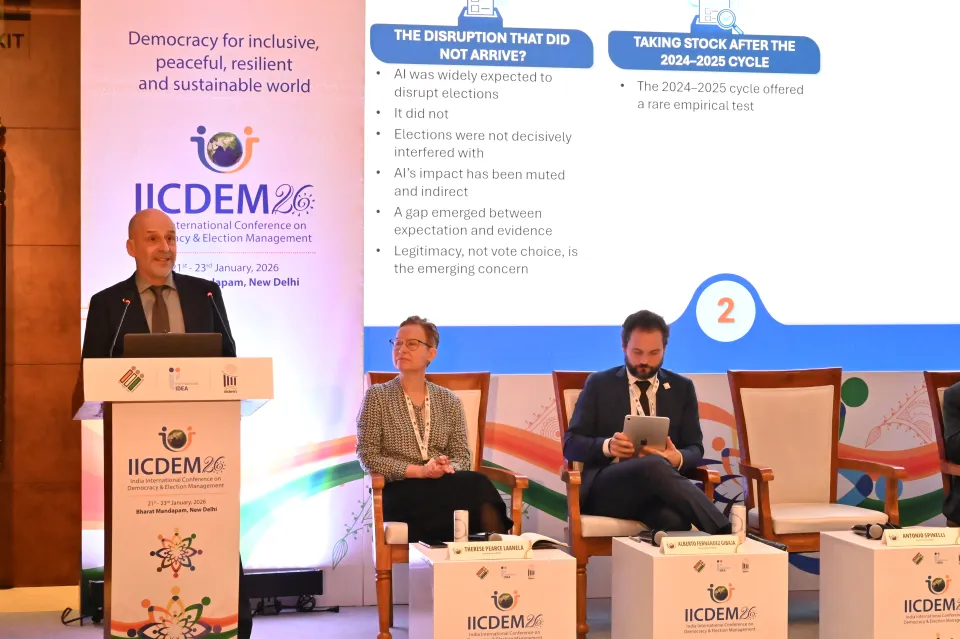
The Head of Digitalization and Democracy at International IDEA, Alberto Fernandez Gibaja, presented insights on the evolving role of Artificial Intelligence (AI) in electoral processes, recognizing its dual potential to enhance efficiency, inclusion, and transparency while also introducing new risks to integrity and public trust.
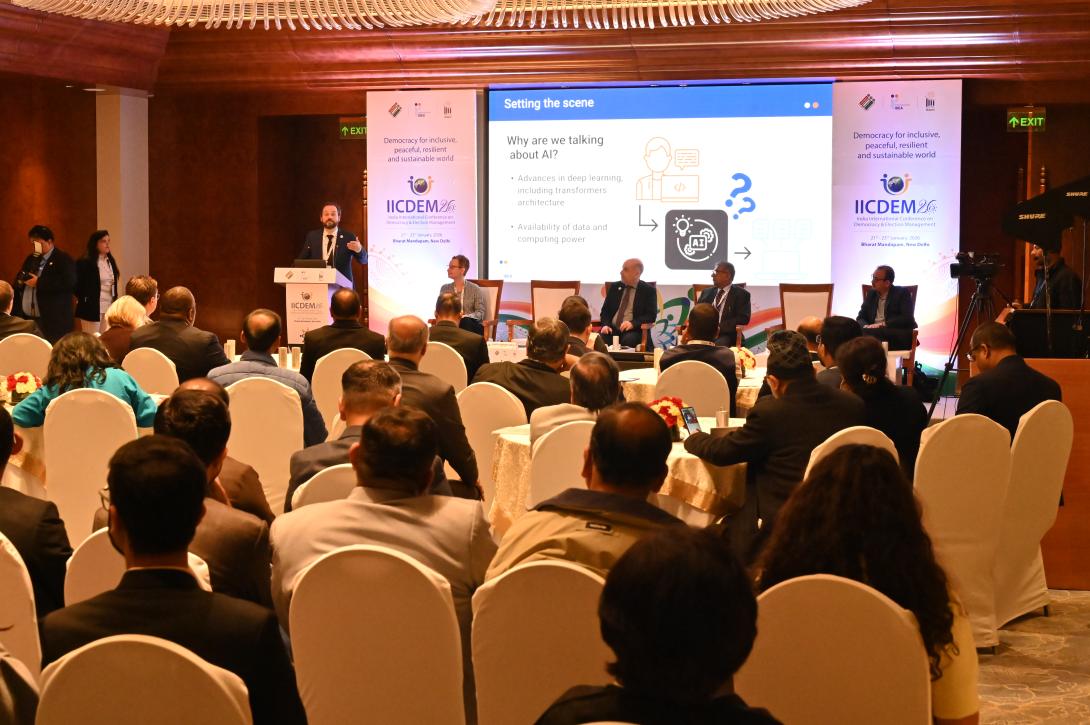
“AI expands the space of what is acceptable and contestable in public discourse, and new distortions are appearing in how voters access electoral information. The central challenge ahead is therefore not whether AI will matter, but whether EMBs can recognise these pressures early and adapt in time to protect trust and legitimacy," emphasized Antonio Spinelli during his presentation.
International IDEA’s Asia and The Pacific Director, Leena Rikkilä Tamang, facilitated many of the sessions, fostering a meaningful learning exchange throughout the #IICDEM2026 conference.
Renewing democracy through trust, innovation and diversity
As Kevin Casas-Zamora concluded in his remarks, protecting and speaking up for democratic values is now more urgent than ever. The global spread of democracy, which was once viewed as inevitable, has not just stalled, but is regressing. International IDEA’s data show that more countries have declined in democratic performance than have improved, for nine straight years. Meanwhile, the headlines of the past months have belied any presumption that the cause of democracy will be sustained by the same state actors who led the charge for the last century.
If democracy is to be resilient, if democracy is to be renewed, then we need new champions to carry the torch.
Get a glimpse of #IICDEM2026


About the authors