The newly launched report Mapping Election-Related FIMI Enablers and Incentives in the Republic of Moldova reveals a stark reality: Moldova’s greatest vulnerabilities lie in the digital space, opaque political financing, and gaps in institutional coordination. At the same time, the findings show that democratic resilience remains possible—if institutions, civil society, media, and citizens act together in a sustained and strategic way.
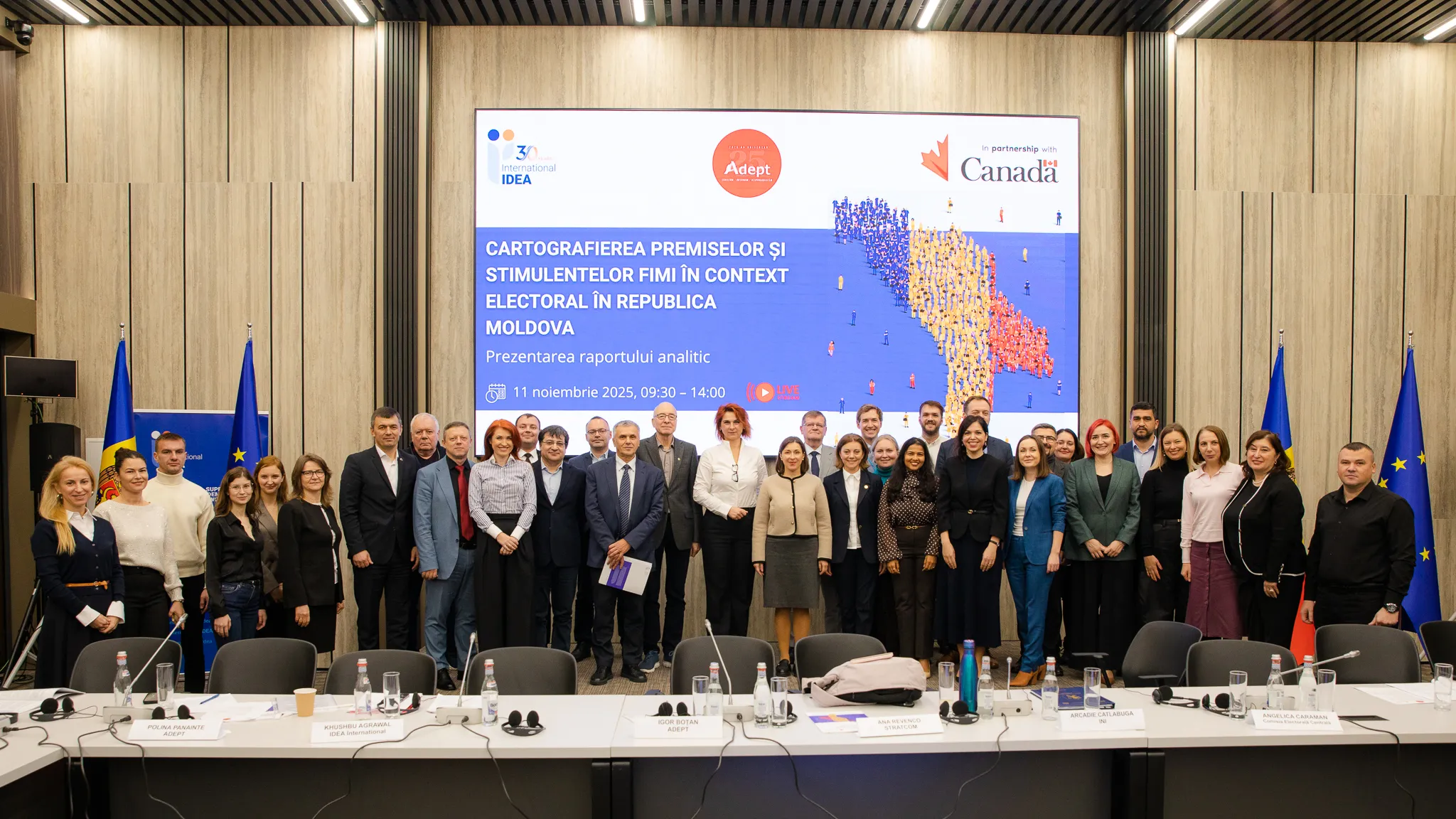
Against this urgent backdrop, International IDEA and the Association for Participatory Democracy (ADEPT), supported by Global Affairs Canada, convened the launch event of the report in Chișinău on 11 November 2025. The event brought together more than 60 participants from government institutions, political parties, civil society, the media, and international partners to examine vulnerabilities in Moldova’s political, legal, social, and institutional environment, lessons learned, and concrete pathways for strengthening its democratic defenses—beyond crisis response and across the entire electoral cycle.
Opening Session
Opening remarks were delivered by Khushbu Agrawal (Adviser at International IDEA), Katelynn Wynen (Second Secretary at the Embassy of Canada in Romania), and Igor Boțan (Executive Director of ADEPT). The message was clear: defending Moldova’s democracy in the age of foreign information manipulation requires shared responsibility and unity of purpose.
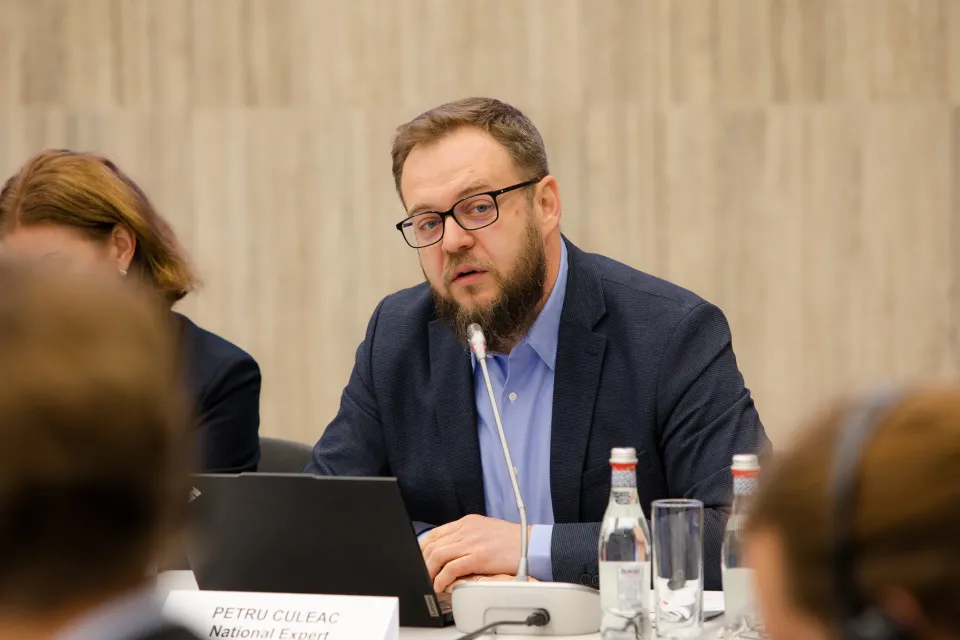
Report co-author Petru Culeac presented the methodology, explaining how the analysis—grounded in document review and in-depth interviews—revealed the vulnerabilities that feed the FIMI phenomenon in Moldova. The report applies the 22-factor analytical framework, which identifies key enablers and incentives, ranging from low institutional trust and socio-economic fragility to gaps in digital regulation, that are exploited by malign actors, particularly those from the Russian Federation.
The three panel discussions that followed reflected on the findings and deliberated on the most important issues identified in the report.
Panel I — Institutions Under Pressure: Confronting Internal Gaps and External Threats
Speakers:
- Igor Boțan – ADEPT, Author
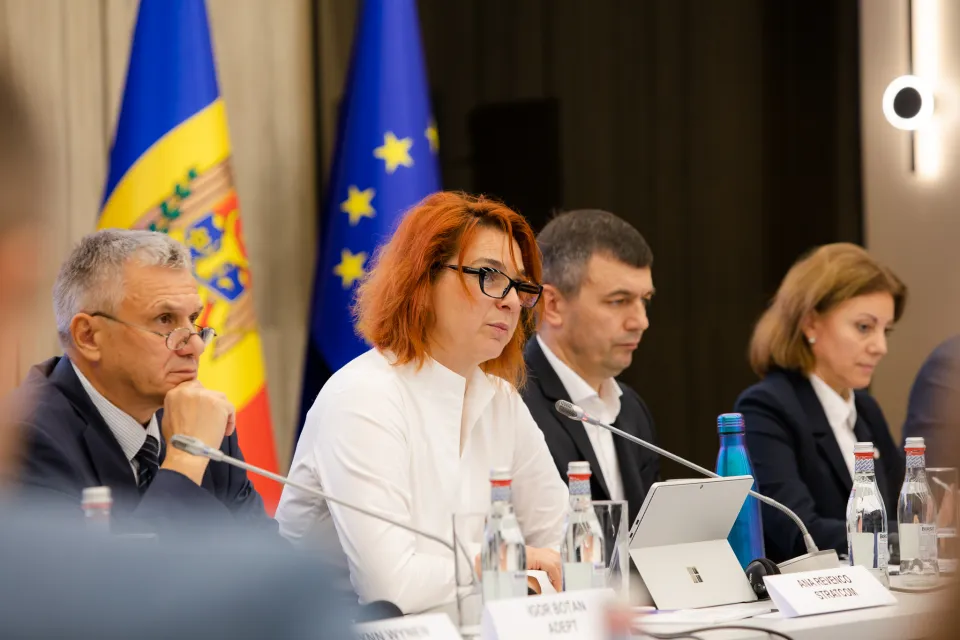
- Ana Revenco – Director, Center for Strategic Communication and Countering Disinformation
- Arcadie Catlabuga – Head, National Investigation Inspectorate
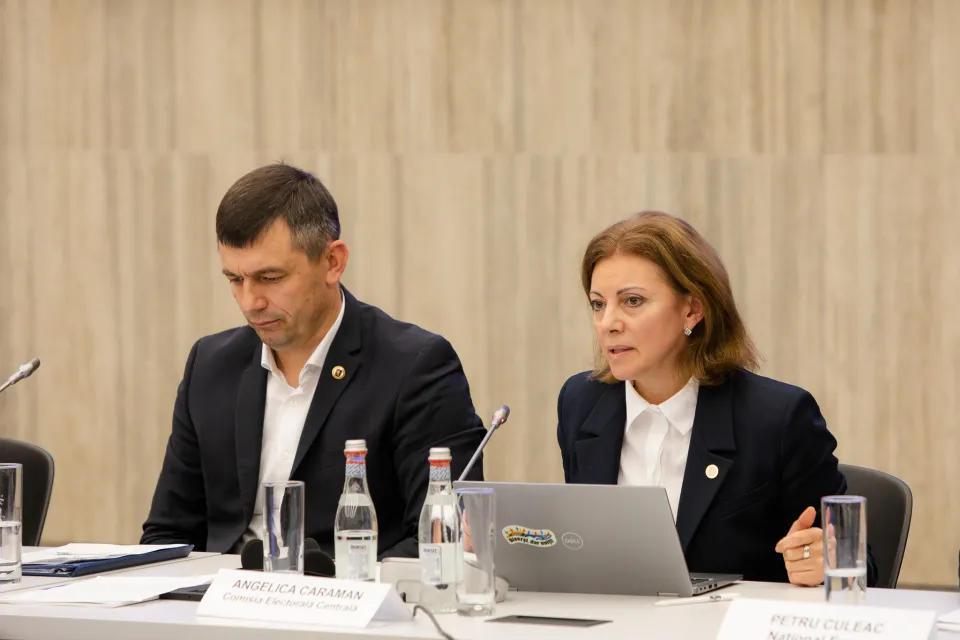
- Angelica Caraman – Chair, Central Electoral Commission
- Liliana Vițu – Chair, Audiovisual Council
The first panel examined how institutional vulnerabilities continue to create openings for foreign interference. Discussions centered on the consequences of fragmented coordination between authorities, reactive crisis management, and regulatory frameworks that struggle to keep pace with evolving threats.
Panelists highlighted that Moldova’s institutions are often mobilized only once interference becomes visible, rather than operating within a permanent prevention and preparedness model. The discussion emphasized the growing intersection of foreign interference, criminal networks, and intimidation tactics, as well as the increasing pressure on electoral and media regulators through digital manipulation and procedural abuse. The session concluded with a strong call for a permanent, coordinated national architecture that operates continuously between election cycles.
Moldova must abandon the crisis-driven model and instead build a strategic, nationwide response architecture. Protecting democracy depends largely on the actions taken between elections, when institutions should prepare, coordinate, and strengthen communication channels~Ana Revenco
Panel II — The Digital Battlefield: Money, Platforms, and Invisible Influence
Speakers:
- Petru Culeac – Good Governance Expert, Author
- Pavel Postică – Deputy Chair, Central Electoral Commission
- Andrei Curăraru – Public policy and security expert, WatchDog Community
- Constantin Cheianu – MP, Parliamentary Committee for Culture, Education, Research, Youth, Sports, and Media
- Măriuța Nistor – Investigative Journalist, Ziarul de Garda
- Vitalie Eșanu – Founder/CTO, Soofragio & Privesc.eu, IT Expert
The second panel focused on how political influence has moved decisively into the digital space, where transparency and accountability remain weak. Discussions underscored the role of opaque financing, third-party actors, anonymous online pages, and cryptocurrency-linked flows in shaping unregulated political messaging.
Monitoring data revealed large networks of suspicious online activity producing massive volumes of coordinated content across major platforms. Participants traced how manipulation tactics have evolved from offline mobilization into sophisticated, often foreign-run digital ecosystems. The panel also explored how platform algorithms and emerging AI tools accelerate the spread of targeted narratives, deepen echo chambers, and lower the cost of influence operations. The session reinforced that without stronger financial transparency, digital regulation, and platform responsibility, the online space will remain Moldova’s primary point of exposure for interference.
With the cost of producing manipulative content plummeting because of AI, international propaganda targeting Moldova has intensified, especially in the context of EU accession efforts ~ Andrei Curăraru
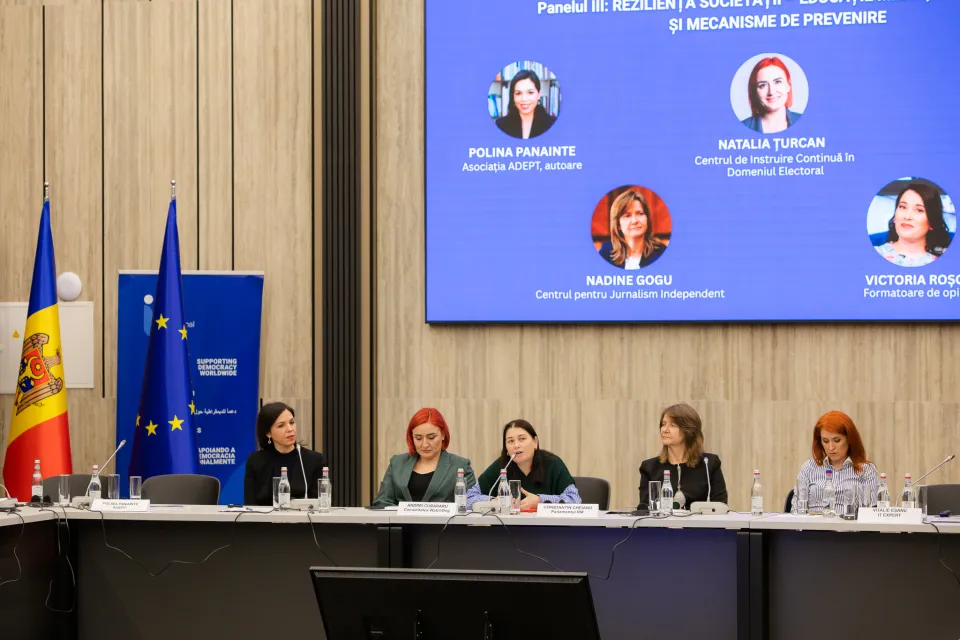
Panel III — Society as a Firewall: Education, Journalism, and Civic Responsibility
Speakers:
- Polina Panainte – ADEPT, Author
- Natalia Țurcanu – Director, Center for Continuing Education in the Electoral Field
- Mariana Rață – Investigative Journalist, TV8
- Nadine Gogu – Executive Director, Center for Independent Journalism
- Victoria Roșca – Opinion Leader, influencer
The final panel explored the societal foundations of democratic resilience, stressing that institutional defenses alone are insufficient without an informed and engaged public. Discussions focused on the central role of media literacy, civic education, and independent journalism in helping citizens recognize and resist manipulation.
Panelists highlighted that many citizens continue to consume information without verifying sources, making them especially vulnerable to misleading narratives. The challenges facing independent media in competing with opaque digital platforms were discussed as a structural threat to public trust and access to reliable information. The panel also addressed the growing responsibility of online opinion leaders and public communicators in shaping perceptions. The session concluded with a shared understanding that long-term resilience depends on critical thinking, educational investment, and societal responsibility.
Many citizens consume news without verifying sources, making them vulnerable to misleading information. Integrating media literacy into educational and community spaces is essential for long-term resilience~ Nadine Gogu
Key Takeaways
- Foreign interference in Moldova is becoming more structured and increasingly linked to criminal networks, which are attempting to undermine Moldova’s European trajectory.
- Manipulation tactics are rapidly evolving through digital platforms, AI tools, and opaque online networks.
- Political financing transparency has not kept pace with digital realities, blurring the boundaries between legitimate communication and covert influence.
- Independent media face systemic disadvantages in the current information ecosystem. Opaque online platforms, commercial pressures, and disparities in content monetization undermine fact-based journalism and public access to reliable information.
- Democratic resilience depends on sustained coordination among institutions, civil society, and international partners.
- Moldova needs a long-term national strategy—not only election-period responses, but a stable, coordinated architecture for addressing manipulation.
- Media literacy and civic education are indispensable long-term defenses.
- Early-warning and monitoring systems can significantly strengthen preparedness.
The report has been prepared within the framework of the project ‘Combatting election-related foreign information manipulation and interference’, implemented by International IDEA and supported by Global Affairs Canada in four countries: Moldova, North Macedonia, Senegal, and Côte d'Ivoire.
The event recording is available in English and Romanian.
Video report of the launch
Event Photos




About the authors