Democratic resilience and security: Bridging communities, building futures
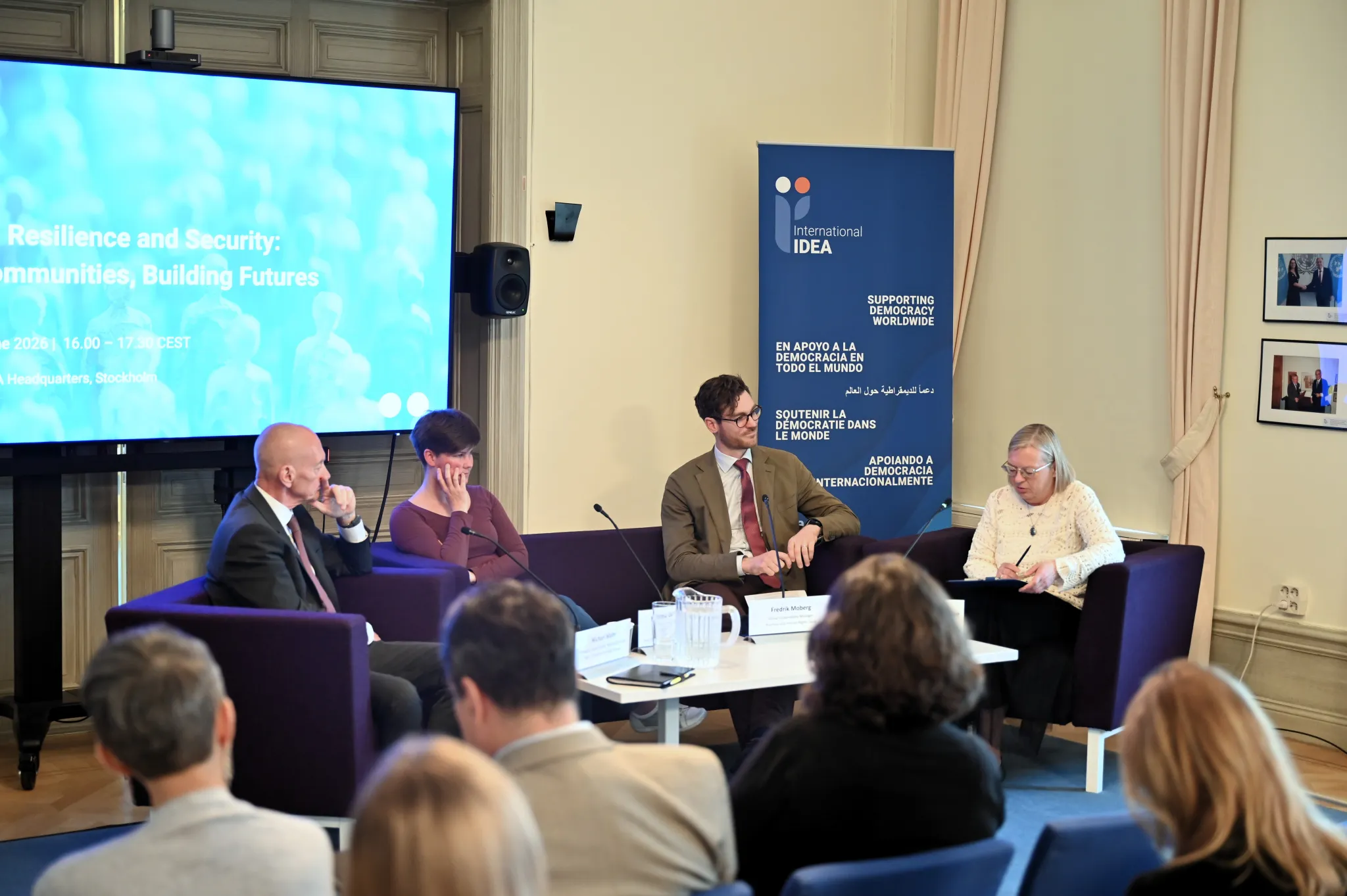
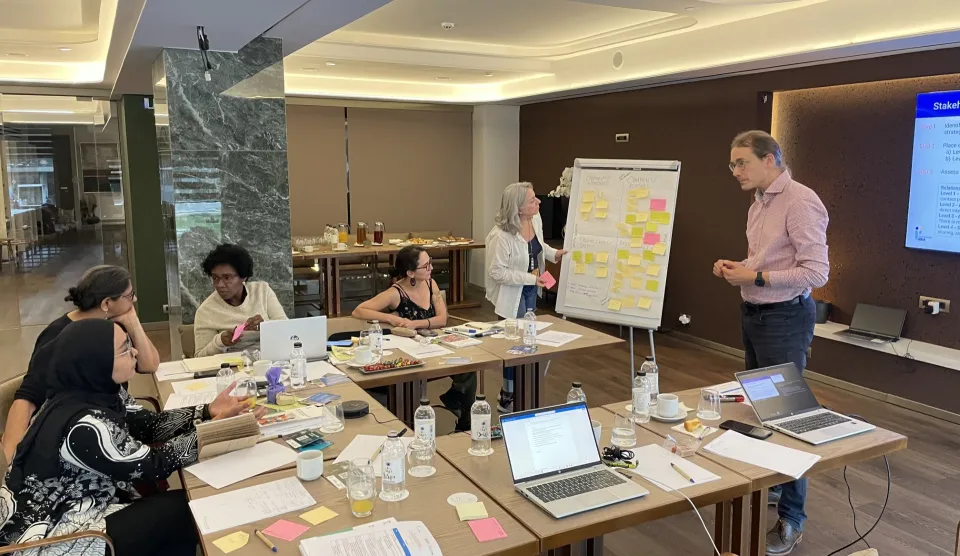
International IDEA hosted a public event, 'Democratic Resilience and Security: Bridging Communities, Building Futures', at its headquarters in Stockholm on 4 June, as a pre-celebration of Sweden's National Day and the country's upcoming general elections in September. The event brought together speakers from the Swedish parliament, Saab, and Total Defence to explore the interlinkage between sustainable security and democratic resilience — and what practical steps can be taken to ensure that resilience strategies remain inclusive, accountable, and citizen-centred.
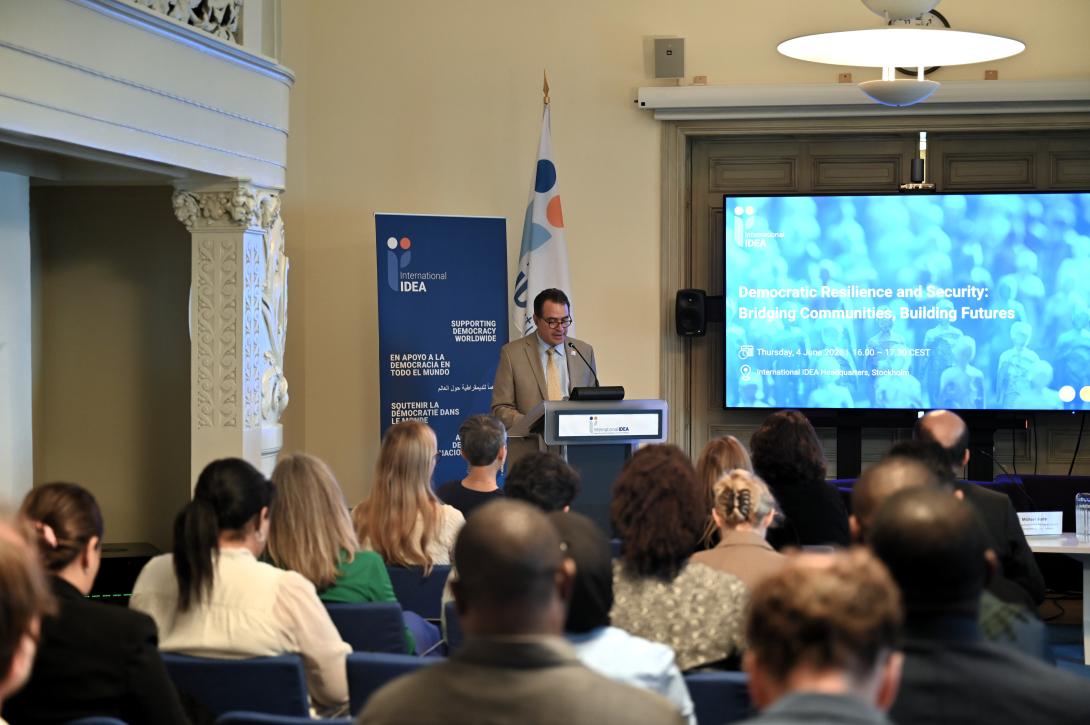
The Secretary-General of International IDEA, Dr Kevin Casas-Zamora, opened the event by framing the relationship between democracy and security as one of mutual dependence. He emphasised that democratic institutions are increasingly targets of hybrid threats — foreign information manipulation, cyber intrusions, and the erosion of public trust — and that International IDEA supports partners in building resilience against these threats. At the same time, he cautioned against overreach: "Imprudent or excessive securitisation can put at risk the very values we seek to defend." Dr Casas-Zamora also highlighted the security dividends of democracy, noting that democracies rarely go to war with one another and form strong, transparent alliances, underscoring that investing in democracy is itself an investment in security.
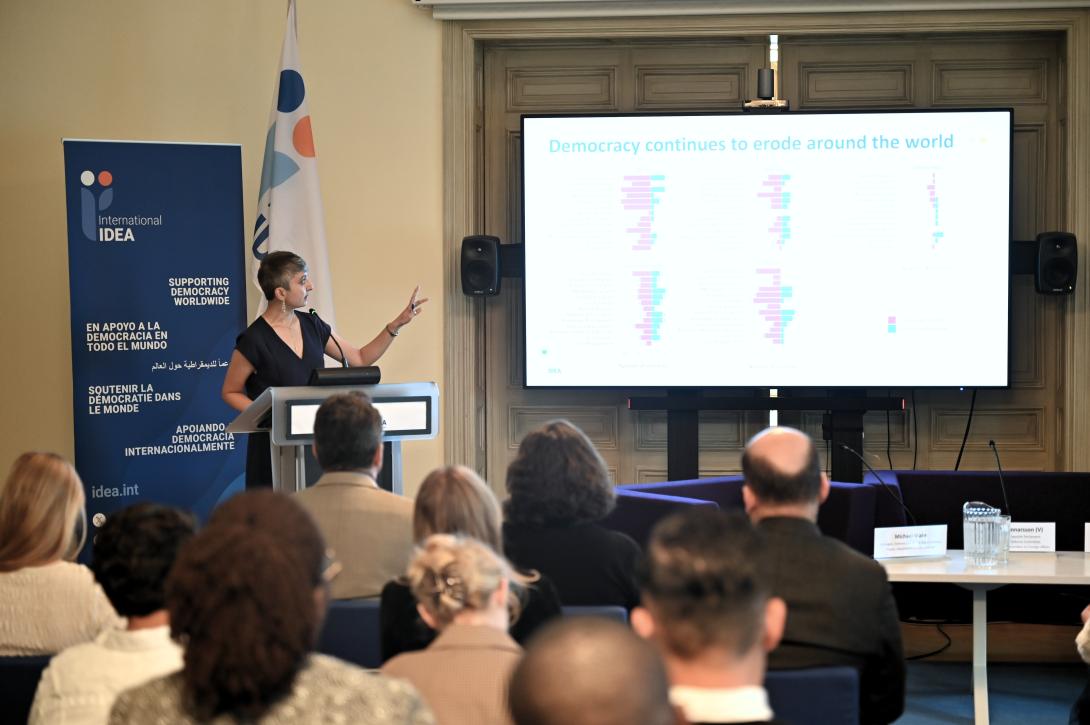
Following the opening remarks, Head of Democracy Assessment at International IDEA, Dr Seema Shah's presentation drew on International IDEA's Global State of Democracy indices to situate Sweden within the broader global and regional trends. Globally, roughly 57 per cent of countries have experienced at least one significant democratic decline between 2020 and 2025, with the most affected areas including credible elections, effective parliament, access to justice, civil liberties, and judicial independence. Europe mirrors these trends, with declines concentrated in civil liberties, credible elections, and access to justice, and no advances recorded in credible elections over the period. Sweden, while consistently among the world's top performers, has seen gradual declines over the past two decades in freedom of the press, freedom of expression, access to justice, and economic equality — as well as a slow but steady deterioration in social group equality and civic engagement over the past ten years. Dr Shah noted that these latter trends are particularly concerning in the context of total defence, which depends on citizens feeling a personal stake in the country's long-term security — something that cannot be legislated, but must emerge organically from a society where people feel included, equal, and valued. She closed by arguing that the central question for Sweden is not how to balance security against democracy, but how to ensure that the two reinforce each other.
After the presentation, a panel discussion was held with Hanna Gunnarsson, Member of the Swedish Parliament (the Left Party), Deputy of the Committee on Foreign Affairs, and Member of the Defence Committee; Fredrik Moberg, Group Sustainability Manager for Business and Human Rights at Saab Group; and Michael Malm, Strategist at the Swedish Armed Forces. The discussion was moderated by Katarzyna Gardapkhadze, Director of Global Programmes at International IDEA.
The panel discussion centred on three interconnected themes. Panellists agreed that inclusive democratic governance is itself a security asset, and Sweden’s model of total defence – which extends well beyond military capacity to encompass schools, healthcare, transport, and the full range of civilian roles that keep society functioning in times of crisis – depends fundamentally on citizens feeling included, valued, and willing to contribute. The discussion also addressed the unavoidable trade-offs that democracies must navigate under pressure: from supply chain dependencies and industrial investment decisions to competing land use claims and politically sensitive question of conscription. Panellists emphasised that managing such trade-offs openly and legitimately, through dialogue with affected communities, is itself a form of democratic resilience. On the question of a way forward, the discussion converged on the importance of transparency, civic knowledge, and close collaboration between government, civil society and the private sector – and the need to plan for resilience now, rather than in the midst of a crisis.
Questions from the audience extended the discussion to the challenge of building social cohesion in a more diverse and multicultural Sweden, the reliability of willingness-to-defend surveys, and lessons from Ukraine — where, paradoxically, a history of distrust toward the state may have produced a more self-reliant and locally resilient civil society. The moderator closed by noting that the art of reaching conclusions through open dialogue, across political differences, is itself a skill in decline, and one that this event had, in small measure, sought to revive.


About the authors