Central Africa young women’s empowerment academy
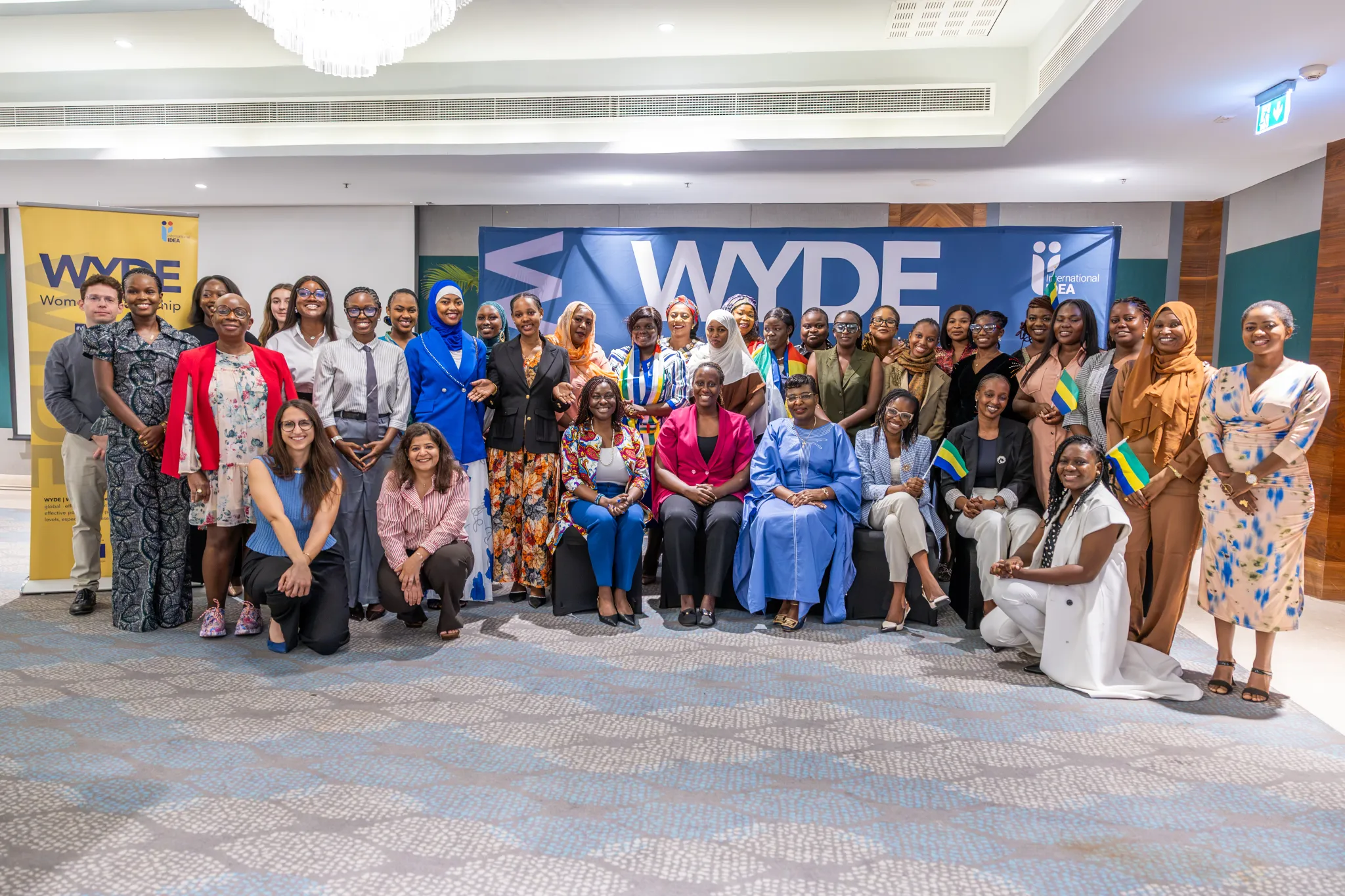
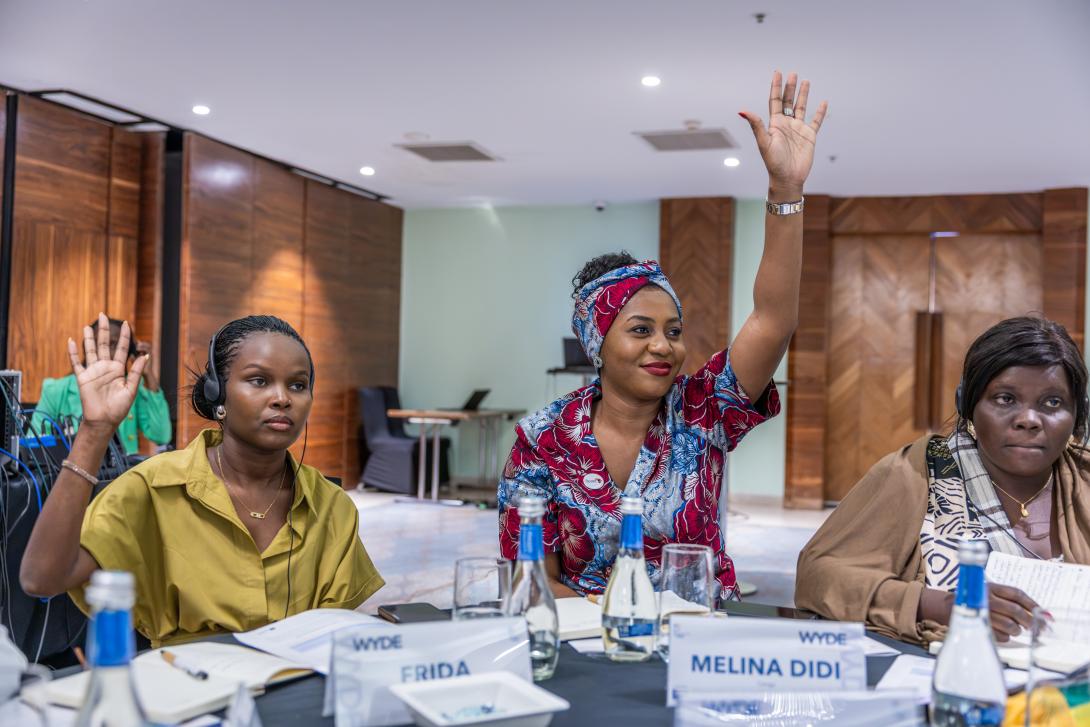
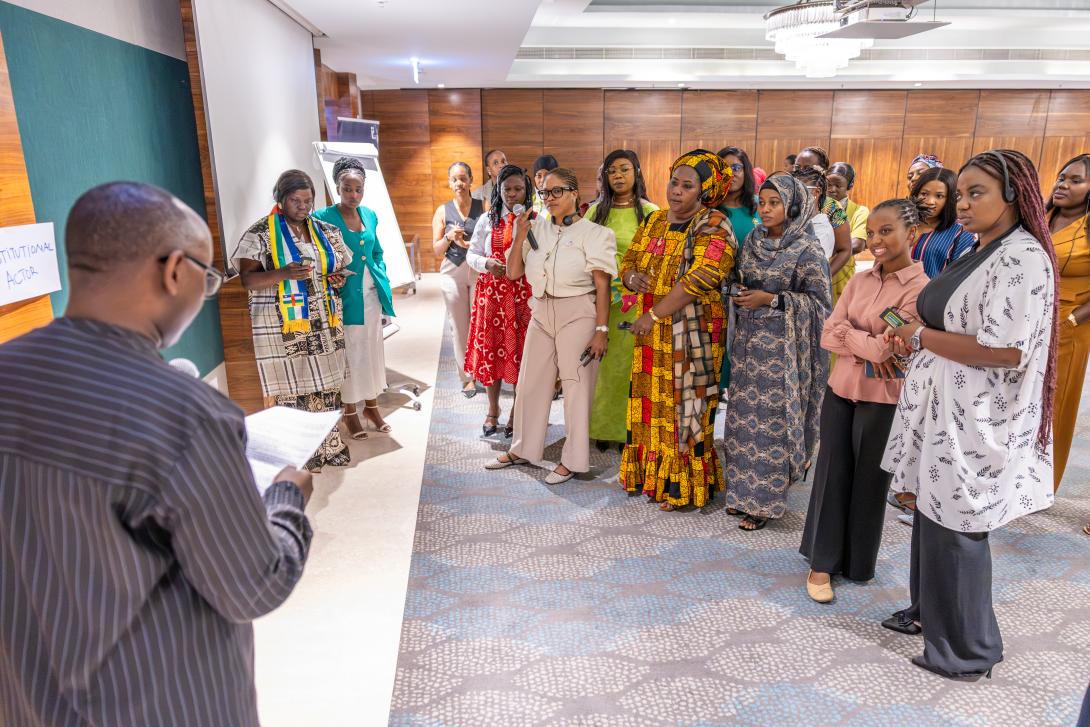
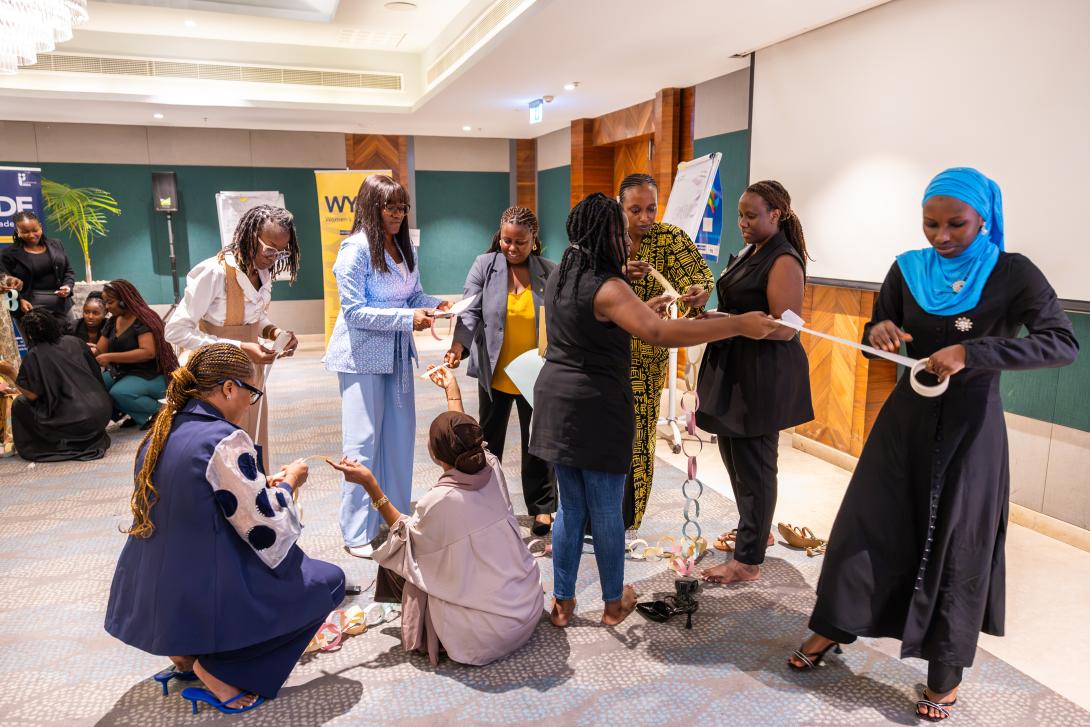
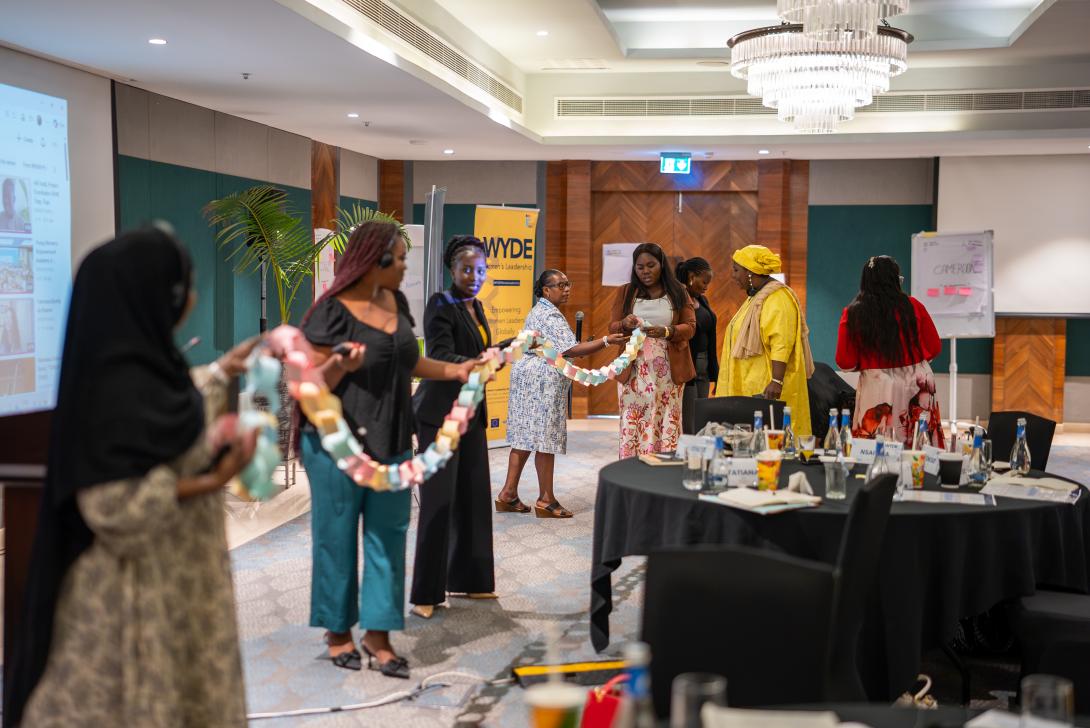
The Women and Youth Democratic Engagement (WYDE) Women’s Leadership Central Africa Young Women’s Empowerment Academy brought together 29 young women engaged in community, political, civic public life from Burundi, Cameroon, Central African Republic, Chad, Gabon, the Republic of Congo and Rwanda. The Academy was convened under the European Union (EU) funded Women and Youth Democratic Engagement (WYDE) Women’s Leadership Initiative which is implemented in partnership with UN Women, Inter-Parliamentary Union (IPU) and United Cities and Local Governments (UCLG) under the overall coordination and leadership of UN Women.
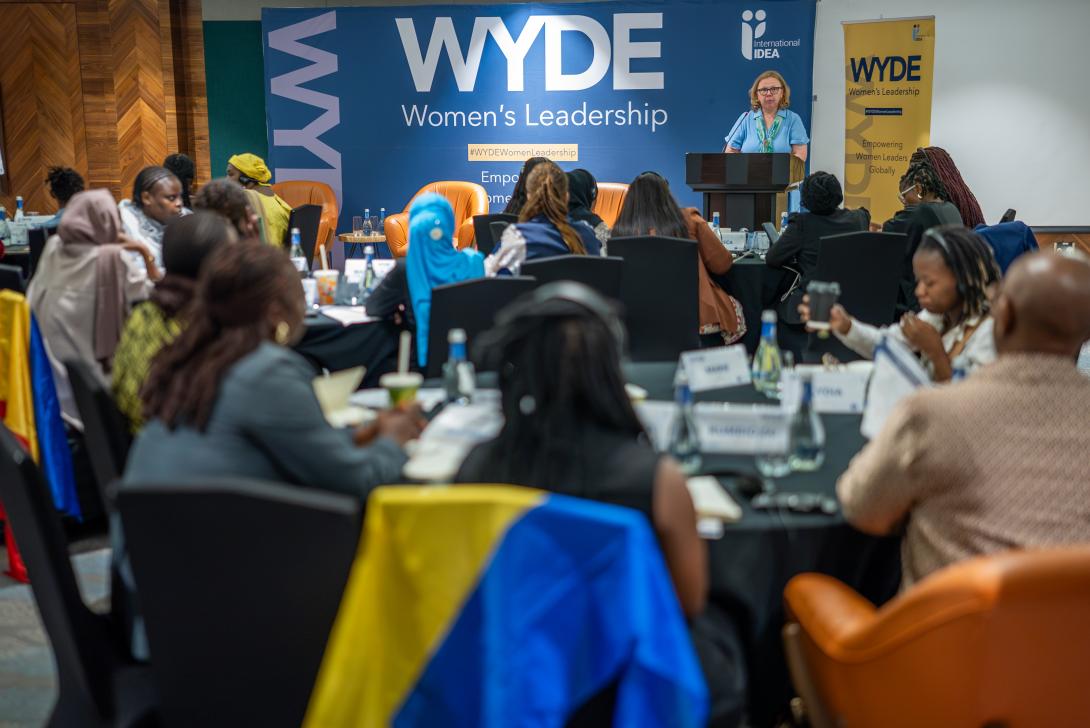
The Academy featured the participation of Helena Guarin, First Counsellor and Team Leader for the Green and Digital Transition at the Delegation of the European Union to Rwanda; Marie Goreth Nizigama, UN Women Rwanda Country Representative and Olufunto Akinduro, Senior Adviser for Electoral Processes at the Africa and West Asia Regional Programme of International IDEA. In their remarks, the speakers highlighted both the progress achieved and the challenges that remain in advancing women’s political participation and leadership. They emphasized that meaningful inclusion requires more than increasing numbers alone; it also means addressing the social norms, stereotypes and forms of violence that continue to limit women’s opportunities to lead. While countries such as Rwanda demonstrate what is possible when women’s representation is prioritized, significant barriers persist across the continent, particularly for young women seeking to enter public life.
Participants were encouraged to see leadership as a continuous journey, to remain focused on developing practical solutions, and to build on the knowledge, networks and skills gained through the Academy to drive change in their communities and institutions. The European Union, UN Women and International IDEA reaffirmed their commitment to supporting these efforts and congratulated participants for their dedication to strengthening inclusive and representative leadership.
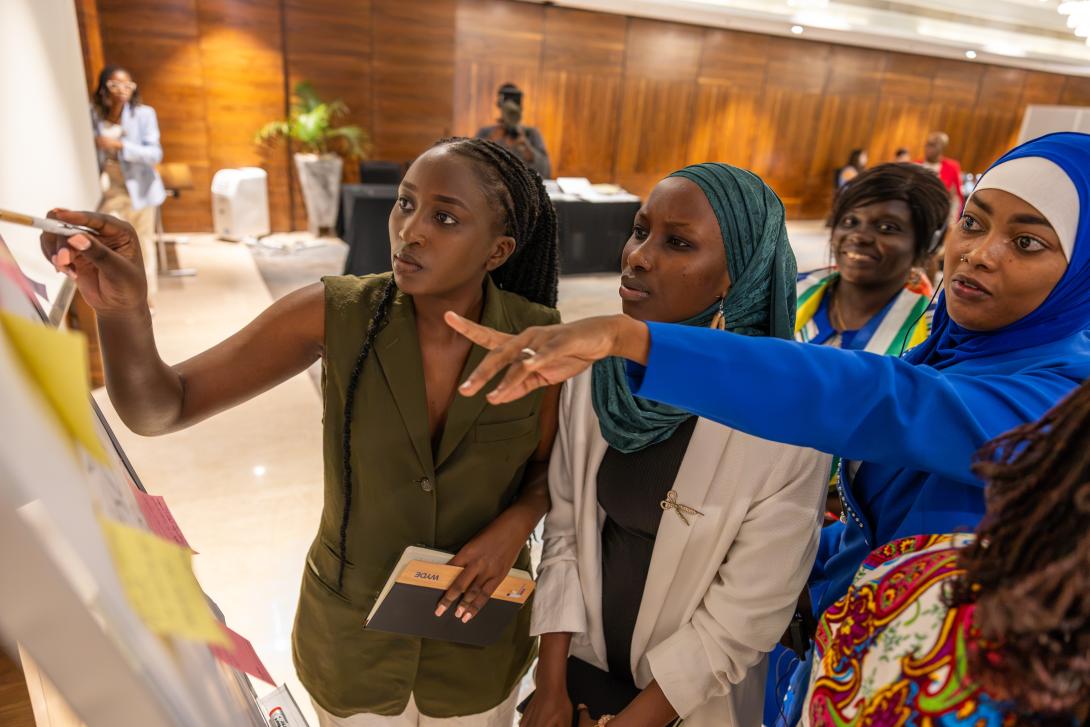
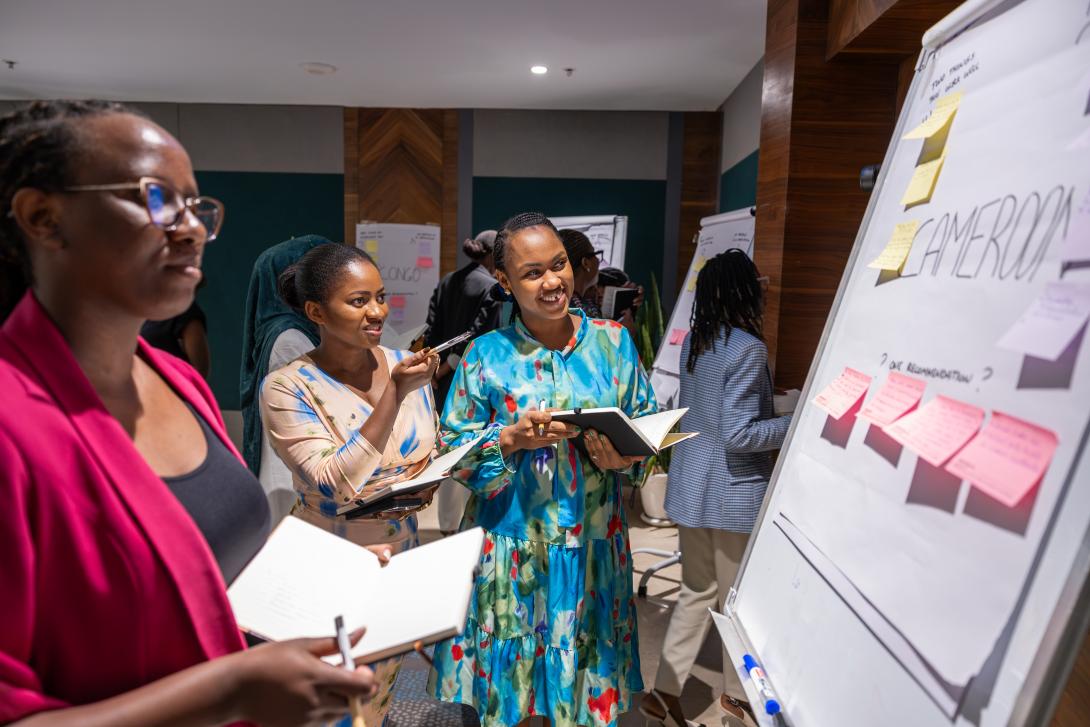
The Academy’s sessions focused on challenging and rewriting the social norms that continue to limit women’s leadership. Participants repeatedly reflected on how the Academy helped them question assumptions that had shaped their own perceptions of what was possible.
“I don't need anyone's permission to take my place. Social norms are a barrier to young women's empowerment, and we must break them down. I shouldn't be afraid to assert myself in society. Social media and new technologies can be dangerous in the wrong hands. Leadership is a learning process; you have to train yourself to improve.”
For many participants, leadership came to be understood not as a title, but as the ability to influence, create opportunities for others and contribute to change. Several spoke about gaining confidence in their own voices and recognizing the importance of combining advocacy with practical skills such as communication, networking and coalition-building.
As one participant noted:
“One of my key takeaways from the Academy is that leadership is not only about holding a position, but about using my voice, creating spaces for others, and actively contributing to decisions that affect my community. I also realized the importance of challenging the social norms and expectations that often make young women question whether they belong in leadership and decision-making spaces. The Academy also reminded me that having a strong message is not enough; I need to be able to communicate it confidently, build meaningful networks, and turn my ideas into concrete action. Going forward, I want to strengthen my public speaking and networking skills, use my work as a journalist and advocate to amplify the voices of young women, and create more opportunities for girls and young women—particularly those from marginalized communities—to see themselves as leaders and active participants in decision-making”.
The Academy provided a safe space for participants to discuss barriers, fears and the realities facing young women who seek to engage in politics and public decision-making. Hearing the experiences of women leaders and fellow participants from across the region helped many reconsider limitations they had previously accepted. One participant shared:
“The first lesson I’ve learned is the importance of deconstructing social norms. No woman should miss out on an opportunity to shine because of these unwritten rules that society imposes on women. We all have the right to be in politics and, more broadly, to do whatever we want, because we’re capable of it. The second lesson is: build my confidence and not let fear hold me back Personally, I’m someone who’s afraid of being seen and taking up space, especially in politics, given the situation in our own country. I sometimes felt demotivated and thought I wouldn’t have a chance in politics if I wasn’t a member of the ruling party. I was also afraid for my safety. But during the Academy, I met and heard about women who continued to get involved despite very significant risks—some of whom had even been kidnapped. This made me realize that fear must not stop me from moving forward. So I want to start by building my self-confidence and developing my skills, especially in communication and language learning. The third takeaway is: use social media more and seek out allies I also want to use my social media more to express myself and defend my ideas. Until now, I was afraid of being too visible. I’ve realized that I shouldn’t stay alone and that I need to seek out allies, starting with my extended family and friends. Finally, I’ve learned that I must keep moving forward despite the judgments, rumors, and social norms that may seek to discourage women. Statements like “she’s sleeping with the authorities to get where she is” or “she’s against us—she’s an enemy of her own country” shouldn’t determine how far a woman can go.”
Exposure to the experiences of peers from across Central Africa encouraged participants to imagine new possibilities for their own engagement in public life. Several participants described returning home with renewed confidence and fresh ideas.
One participant reflected:
“Personally, this Academy had a much greater impact on me than I expected. Before the Academy, I had considered the possibility of engaging in politics one day, but given the realities and challenges of my country, I had often felt that it was not something I could realistically pursue. Seeing other young women from different countries who are already taking up space, speaking out and engaging in political and leadership spaces changed that perspective for me. It reminded me that, as young women, we can do and become more than what our circumstances sometimes make us believe. We can choose our paths, take up space and contribute to decisions that affect our communities and our countries. I returned to Burundi feeling like a different person. I developed new perspectives, a deeper understanding of women’s leadership, and even new ideas for projects and causes I want to pursue. The Academy also made me reflect more seriously on the kind of leader I want to become and the role I can play in creating opportunities for other young women”.
Beyond individual learning, participants consistently emphasized the value of connecting with peers from across the region. The exchange of experiences with other young women fostered a sense of solidarity and expressed the hope that the project can continue supporting the building of a network.
As one participant explained:
“This experience has been very enriching for me, both personally and professionally. The Academy has allowed me to take a step back and reflect on my journey, better understand the role I want to play in my community, and think more deeply about how I can contribute to women’s empowerment and their participation in civic life. I particularly appreciated the exchanges among participants, as they allowed us to share different realities, experiences, and perspectives. I hope this momentum can continue after the Academy through an active network of participants, regular meetings, mentoring, and joint initiatives. This would help transform what we learned at the Academy into concrete and sustainable actions.”
The Academy concluded with participants expressing a stronger commitment to contribute to positive change in their communities. Witnessing the determination and achievements of other young women reinforced the belief that meaningful change is possible when women are equipped, connected and empowered to lead. One participant summarized this sentiment:
“I was deeply moved by seeing women from different countries standing up for their rights and speaking out for change. Their courage and determination really touched me. This experience reminded me that change is possible when we have the courage to speak up and take action. I feel more motivated to do my best and contribute to positive change in my own community.”


About the authors