In times of trouble, what is Europe’s common narrative?
Disclaimer: Opinions expressed in this commentary are those of the authors and do not necessarily represent the institutional position of International IDEA, its Board of Advisers or its Council of Member States.
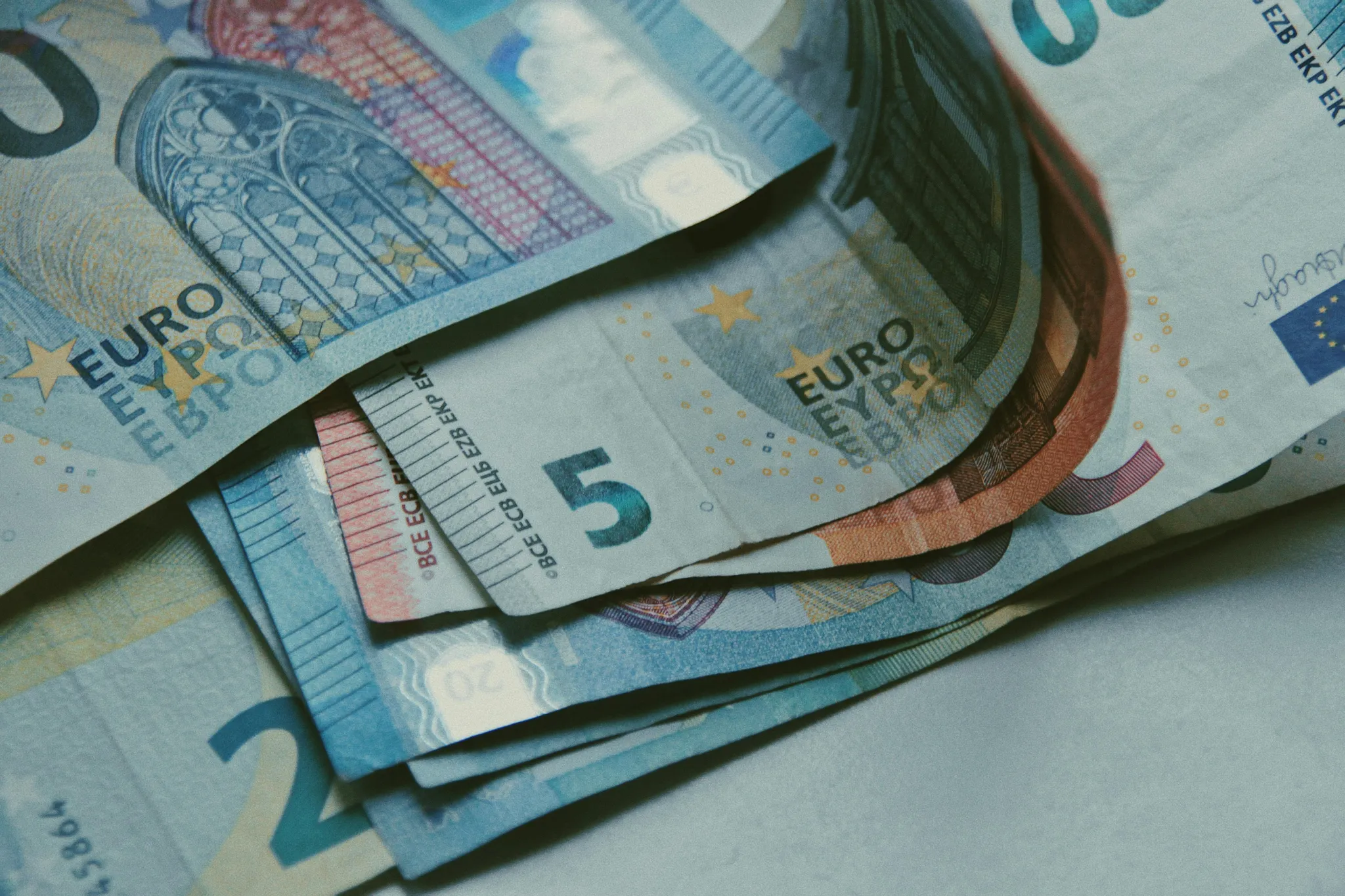
When Europe first designed its Euro banknotes, the European Central Bank (ECB) avoided anything that could be divisive or imply favouritism—the problem that one country’s hero is another country’s grievance. A portrait of Churchill or de Gaulle would not unite the bloc; nor would a Swedish elk nor a Spanish bull. The United States had its common heritage of Founding Fathers and a bald eagle. The European Union ended up with generic bridges and windows meant to signal openness.
Given the rise of anti-immigrant populism, even those symbols of EU openness can feel dated. But the banknote story points to a deeper problem Europe now faces as its territorial sovereignty is challenged: how do you create the all-important narrative—the founding myth or imagined community—that binds Europeans together enough to sustain sacrifice and risk?
The risk writes itself and is increasingly urgent: Russian forces invade a small sliver of neighbouring Estonia to test NATO’s resolve. Would Spanish voters accept that their soldiers might die for territory most could not find on a map? And yet Europe’s strategic shocks are no longer only eastern. Even talk of Greenland being pulled into someone else’s orbit was described to me by a senior EU official as a ‘real wake-up call’.
The challenge for those forging a shared narrative is to show—for example, Spanish voters—that their security is bound up with Estonia. What is the story that unites Europeans across distance and different threat perceptions? In other words: if we had to put a single image on the Euro notes today, what would it be?
Under ECB President, Christine Lagarde, Europe is now redesigning its banknotes, guided by the mind-numbing, and EU-sounding ‘Motif Advisory Group’ as well as polling of 365,000 Europeans. The shortlisted themes has included culture and shared European figures like Marie Curie and Leonardo de Vinci.
The motifs are certainly more purposeful than bridges. But is that image enough? This narrative is even more important because Europe lacks aby pan-European political figure that speaks for a continent.
So, how about the ballot box? Or an image the narrates the importance of democracy, whose arch runs from the sacrifices of millions in World War II to the challenges from autocrats such as the Russian President Vladimir Putin. Democracy may be a universal value, but much of its concept and language surrounding it are European.
There may be a sweet spot to spin this narrative, with evidence that voters are increasingly associating democratic values with the bloc’s security. In 2025, EU approval from its citizens was at the highest in two decades, and this rise was mainly due to security fears. EU citizens are the wagons, and respect for democracy and the rule of law are seem as both bloc’s main strength core value they want to protect.
Concepts like the ballot box or other fundamental rights also may act as a corrective to the increasingly dominant security agenda of Europe, which risks subsuming ‘soft power’ to rearmament. In EU corridors of power there is talk of a ‘Draghi and drones’ strategy—implementing economic reforms outlined by former ECB President Mario Draghi, along with more defence spending. But the front line is not just the trenches, nor Draghi’s 400-page report. Perhaps the new narrative should be ‘Democracy, Draghi and Drones.”
Nor does the ballot box have to be dry. This EU video encouraging people to vote in elections features grandparents—survivors of WWII, Prague and the Baltic battle for independence from the Russians—telling grandchildren the importance of voting.
The notes could also follow the example of Euro coins—with a Euro symbol on one and a national symbol on the other (that currently includes the Irish harp and Germany’s federal eagle), connecting national symbols with wider EU democratic values.
The ECB is due to decide late 2026 on final Euro designs. The official motifs are ‘European culture: shared cultural spaces’ and ‘Rivers and birds: resilience in diversity’. But these motifs came from focus groups that completed their workshops in early 2022 —just before the Russian invasion of Ukraine set a chain reaction that has led to the poly-crisis of 2026.
It is a sign that Europe needs to rethink its core message. Culture and birds are signs of a continent mired in nostalgia for good times when the end of the Cold War spawned economic dividends. Kicking off new banknotes with designs about fundamental rights to voting, free speech and security could herald a wider narrative about the imperative to renewing democracy in Europe—and making it a value that worth fighting for.


About the author