The power of women’s collective expertise: Shaping constitutional design and embedding democratic governance
Across the world, constitutions shape the rules of political life.
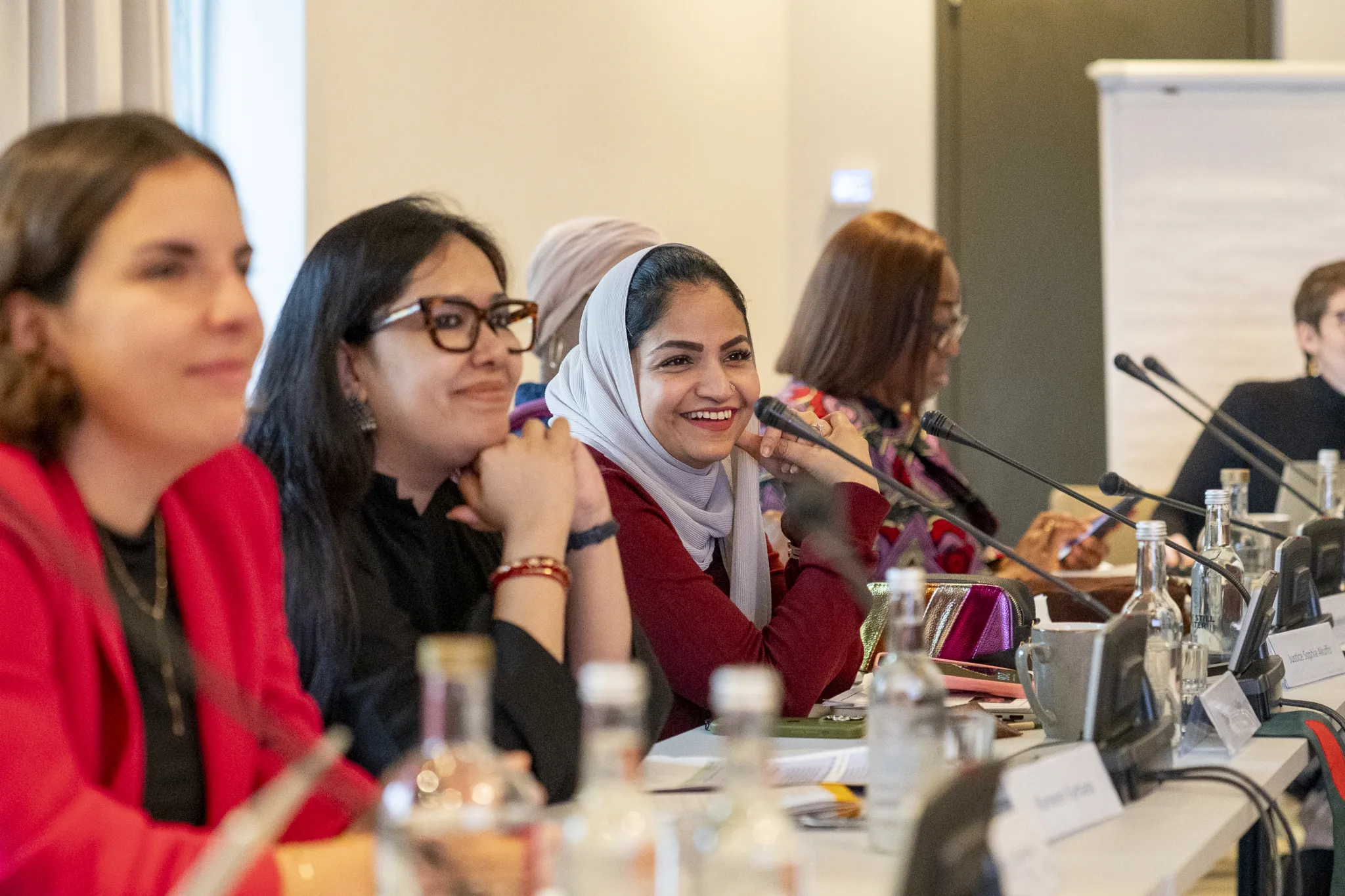
However, the women who help build them have long been underrepresented, underestimated, or confined to narrow roles. The Women Constitution-Makers’ Dialogue emerged in response to this gap, creating a rare – and the only dedicated – peer-to-peer space where women constitution-makers meet as experts shaping the foundations of democratic governance.
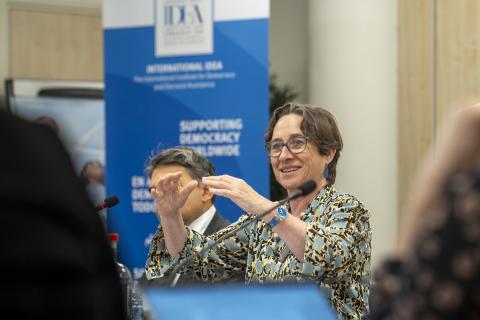
Established in 2019 by International IDEA, in partnership with the Edinburgh Centre for Constitutional Law, PeaceRep, and the Global Justice Academy, the Dialogue responded to a documented and persistent problem: while women’s inclusion in constitution-making bodies has improved, their representation remains low and their influence is often restricted to so-called “women’s issues.”
This marginalization persists despite a growing body of research showing that women’s participation fundamentally shapes constitutional outcomes. Peace and security consultant Nanako Tamaru, also a Dialogue participant, highlighted that gender equality is not peripheral to stability but central to it: “Research has shown that gender equality and the status of women are directly correlated with peacefulness…” and in some studies proving “a better indicator of a state’s peacefulness than democracy, or GDP.” She further notes that higher levels of women’s representation in legislatures are associated with longer-term peace and stability, coinciding with greater attention to social equity, more cooperative governance, and more sustainable political settlements .
Yet women engaged in constitution-building – particularly in conflict-affected and transitioning states – continue to face strikingly similar challenges. They navigate complex debates on, for example, governance systems, decentralization, natural resource management, judicial design, and institutional accountability, often without access to comparative expertise, peer support, or sustained professional networks. These gaps are not merely technical; they shape who speaks with authority, whose ideas gain traction, and who is supported to withstand the adversarial pressures of constitutional negotiations.
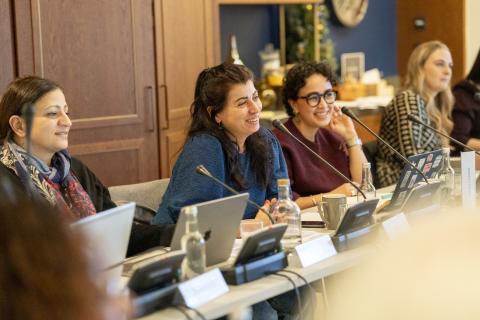
The Women Constitution-Makers’ Dialogue was designed as a conceptual and practical intervention to address these realities. Unlike conventional workshops or advocacy forums, it is a closed, peer-to-peer space centered on women’s lived experience as constitution-makers. Through multi-day discussions, participants share lessons learned, exchange ideas, and identify comparative models and resources related to constitutional process design, substantive provisions, and implementation challenges. Importantly, the Dialogue recognizes women not as a homogenous group, but as political actors with intersecting identities, ideologies, and areas of expertise.
Conversations among women constitutional makers are vital for several reasons. They create solidarity and shared experiences across borders, broadening capacity, facilitating information exchange, and providing additional safety nets and resources. They also foster idea exchange and support – so that women don’t always have to re-invent the wheel, since women have been pioneers of change and transformation for generations. Most importantly, these spaces give women the opportunity to lead, dialogue, and shape ideas. – Mona-Lisa, Danieli Mungure, Executive Director at Molao Matters, Attorney at Law
Peer Exchange and the Power of Women’s Expertise
This emphasis on peer exchange reflects the strategic value of women’s conversations within highly charged political environments. Without spaces for women to share, shape, and hone their perspectives, constitutions risk being built on a foundation with a gendered blind spot – one that can persist and influence the future state. Women’s lived experiences bring unique insights and priorities to constitutional debates, even on issues that may not appear to have gender implications at first glance, such as budgeting, security, policing, or decentralization.
As Christina Murray, Professor Emeritus of Public Law at the University of Cape Town, notes: “I am not sure that conversations among women are more important than many other conversations. But, conversations among women are important. I think that one of the main benefits of the Dialogues is to build the confidence of women to act and participate in the sometimes aggressive and tense context of constitution making.” The Dialogue functions as precisely this kind of confidence-building space – one that equips women to engage more forcefully and effectively in mixed, and often adversarial, negotiating arenas.
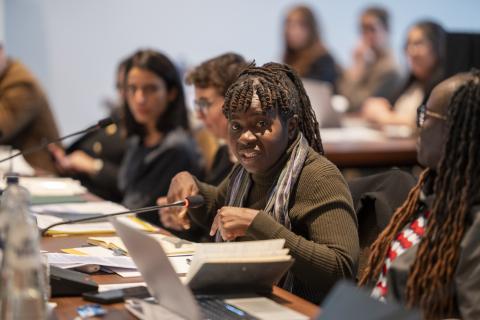
Participants’ experiences also challenge persistent assumptions about the scope of women’s constitutional contributions. The late Meherzia Labidi-Maiza, who was a member of Tunisia’s parliament, emphasized how women’s input extended well beyond gender-specific provisions in Tunisia’s 2014 constitution-making process: “The contribution of women in the constitution was not limited to women’s issues… it was extended to all issues of rights, economic and social rights, to liberties, to how to secure the future for the coming generation and also how to consolidate democracy.” Women, she argued, bring both pragmatism and a holistic sensitivity to rights that strengthens constitutional design as a whole.
Since its founding, the Dialogue has convened annually around critical constitutional themes. These range from responding to social unrest and reconciling customary law with gender equality, to decentralization, natural resource governance, independent institutions, and the role of courts and lawyers in transition and reform. Over time, it has evolved into a sustained global forum linking past, ongoing, and future reform processes.
Who Participates – and What They Bring
Participants in the Women Constitution-Makers’ Dialogue reflect a striking diversity of experience and context. They include members of constitution-making bodies, peace negotiators, civil society leaders, and advisors from countries such as Chile, Kenya, Nepal, the Philippines, Tunisia, South Africa, South Sudan, Syria, Yemen, and others across Africa, Asia, Latin America, and the Middle East.
Some participants come from post-conflict societies grappling with fragile political settlements; others are navigating democratic backsliding, social unrest, or demands for structural transformation. What unites them is direct engagement with constitutional reform – and the shared recognition that their expertise is often undervalued within formal negotiations.
The Dialogue creates space for women to deepen technical knowledge in areas frequently coded as “neutral” or “expert-only,” such as federalism, fiscal devolution, judicial independence, or institutional oversight. This approach reflects a core principle articulated by Christine Bell of the University of Edinburgh: “All constitutional experts need to be gender experts.” Gender analysis, in this view, is not an add-on but essential to understanding how constitutional arrangements distribute power, resources, and rights.
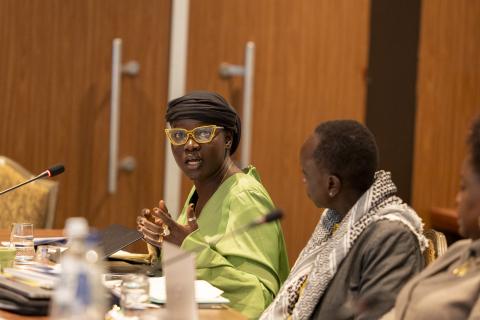
This dynamic was evident at the November 2025 Dialogue in the Hague, which examined the role of courts and lawyers in constitutional transition and reform. Participants from Bangladesh, Ghana, and Syria reflected on how legal system – and the actors within them – can either help rebuild trust and accountability after crisis, or entrench longstanding patterns of capture and control. Discussions underscored that legal spaces are rarely gender neutral, as they are shaped by power, hierarchy, and exclusion. Opaque appointments, politicized professional bodies, and informal networks can limit women’s influence, and in some cases expose them to professional and or personal risk. Participants emphasized that women’s constitutional experience matters beyond so-called “women’s issues”: it is essential not only for advancing equality, but also for shaping legal cultures and institutions capable of supporting democracy over the long term.
Participants consistently describe the Dialogue as transformative. Beyond expanding comparative knowledge, it fosters solidarity and confidence in contexts where women face resistance or backlash simply for being at the table. Many have gone on to apply insights directly in their national processes – training legislators, advising drafting committees, shaping public education efforts, or influencing implementation debates long after constitutions are adopted.
Influence Beyond the Table
The impact of the Women Constitution-Makers’ Dialogue extends far beyond its participants. Its outputs – reports, insights, and comparative analyses – serve as critical resources for international advisors, researchers, donors, and practitioners.
As Beatrice Duncan of UN Women has emphasized, constitution-making is foundational to development itself:
Constitution making and constitutional building are key elements of development… the cornerstone of development.” Because constitutions reflect state priorities, she argues, women and girls – “sovereign in their own rights” – must be given every opportunity to participate meaningfully in shaping them.
The Dialogue helps to reframe inclusion as a question of access, influence and expertise, not just presence. It generates grounded, comparative knowledge about how constitutional design choices play out in practice, and it provides a gendered lens on questions too often treated as purely technocratic. Finally, it sustains a global network of women constitution-makers whose relationships endure beyond any single event – ensuring that women’s constitutional expertise is not lost once a process concludes.
From Dialogue to Democratic Transformation
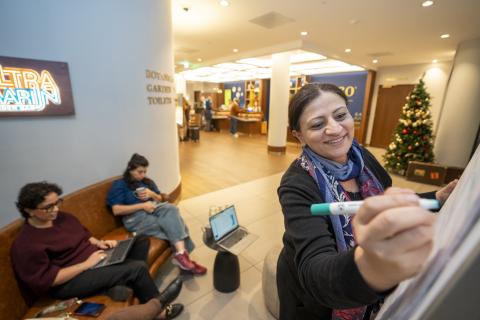
In a global moment marked by democratic backsliding, protracted conflict, and renewed struggles over constitutional order, the Women Constitution-Makers’ Dialogue demonstrates what becomes possible when women are treated not only as participants, but as architects of political change.
Through investing in women’s expertise, amplifying comparative knowledge, and sustaining peer-to-peer exchange, the Dialogue helps shift constitutional reform from narrow elite negotiation toward a more inclusive, informed, and resilient process. Its continued relevance rests on a simple but powerful premise: when women are recognized as experts – and experts are at the table – constitutional futures become richer, fairer, and more durable.
Additional Resources:
- Founding Women: A Dialogue with Women Constitution-Makers (2019 video)
- Founding Women: A Dialogue with Women Constitution-Makers (2019 report)
- Constitution-Building in Response to Social Unrest - Second Annual Women Constitution-Makers’ Dialogue (2020 report)
- Constitutions, Customary and Religious Law and Gender Equality: Reconciling Rights in Constitutional Design Negotiations - Third Annual Women Constitution-Makers’ Dialogue (2021 report)
- Constitutional Approaches to Decentralization: Elements, Challenges and Implications - Fourth Annual Women Constitution-Makers’ Dialogue (2022 report)
- Natural Resource Management: Development and Environmental Protection in Constitutional Reform Processes - Fifth Annual Women Constitution-Makers’ Dialogue (2023 report)
- Independent Institutions: Enhancing Democratic Integrity and Accountability through Constitutional Design - Sixth Annual Women Constitution-Makers’ Dialogue (2024 report)


About the authors