Ukraine’s Parliament: From wartime resilience to democratic renewal
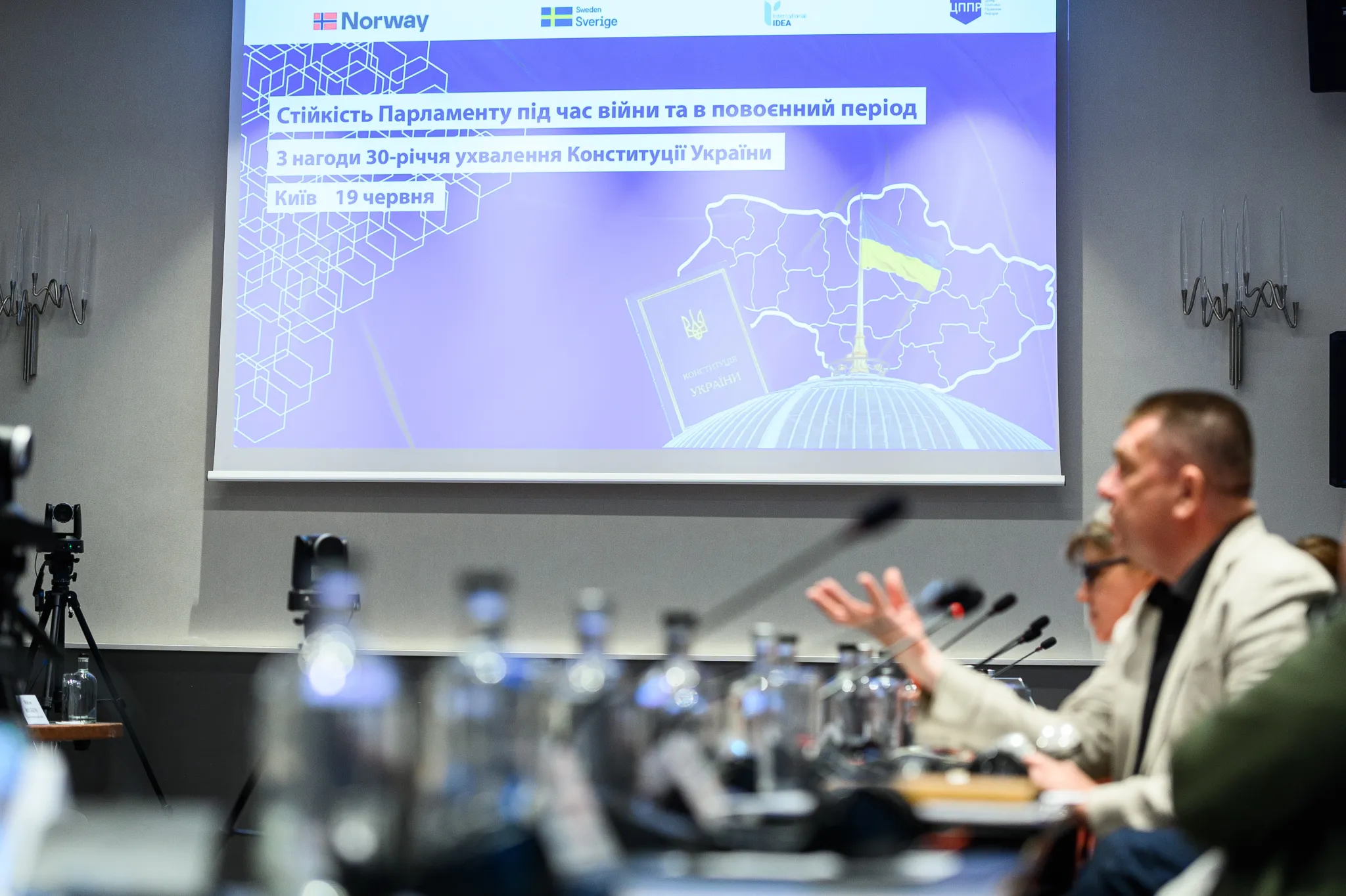
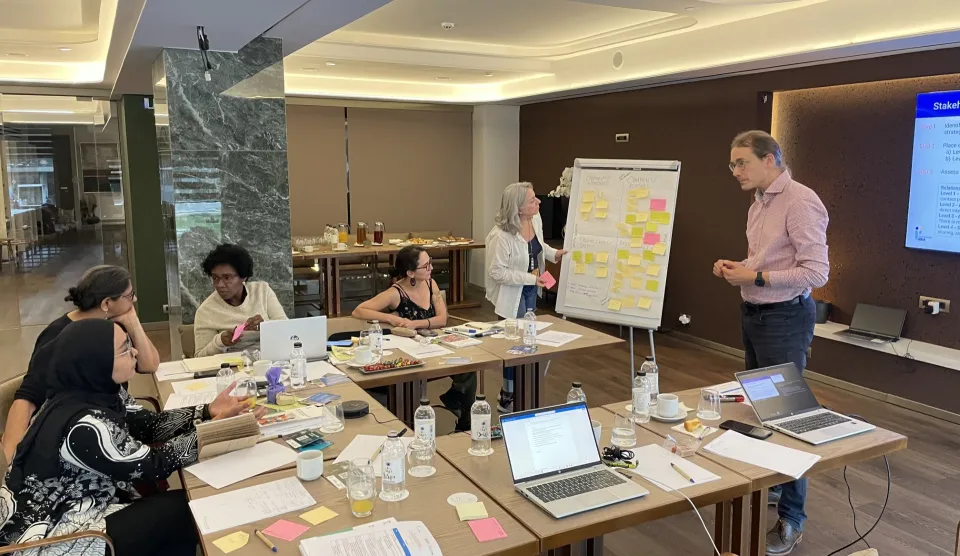
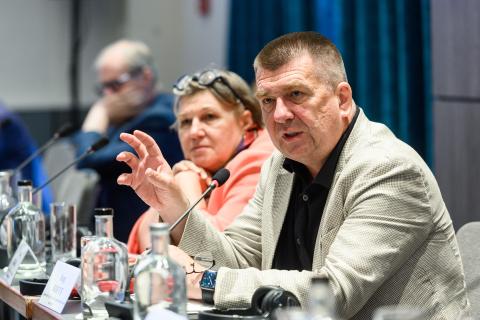
On 19 June 2026, more than 60 representatives of the Verkhovna Rada of Ukraine, state institutions, international organizations, civil society and academia gathered in Kyiv for the round table "The Resilience of Parliament During the War and in the Post-war Period", organized by the Centre of Policy and Legal Reform (CPLR) in cooperation with International IDEA under the U-VOTE project, supported by Norway. Held on the occasion of the 30th anniversary of the Constitution of Ukraine, the event contributed to the development of the Roadmap for Ukraine's Transition from Martial Law to Civilian Democratic Governance and the Roadmap for the Functioning of Democratic Institutions.
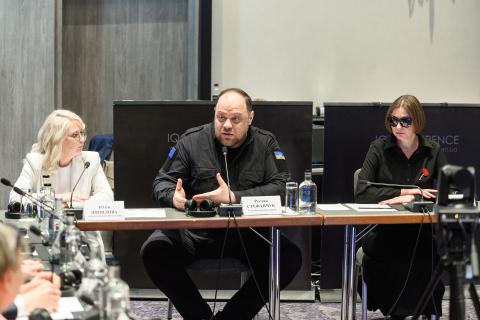
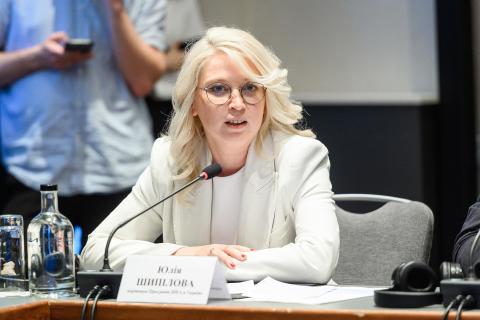
The event was opened by Ruslan Stefanchuk, Chairman of the Verkhovna Rada of Ukraine, who underscored that although Ukraine's Constitution was designed for peacetime, it has demonstrated remarkable resilience and effectiveness under the extraordinary conditions of full-scale war. The roundtable brought together representatives of the Verkhovna Rada of Ukraine, government institutions, international organizations, the diplomatic community, civil society and the expert community. Speakers included Yuliya Shypilova, Ukraine Programme Lead at International IDEA; Iryna Shostak, Constitutional Law Expert of CPLR; Serhii Kalchenko, Chair of the Committee on Rules of Procedure, Parliamentary Ethics and Organization of the Work of the Verkhovna Rada; Yaroslav Yurchyshyn, Chair of the Committee on Freedom of Speech; Stanislav Ivasyk, Key Expert on EU Integration in the EU Project Pravo-Justice; Viktoriia Podhorna, Member of the Committee of the Verkhovna Rada of Ukraine on Digital Transformation; and Yuliya Kyrychenko, Chair of the Board of CPLR, as well as other experts.
Participants discussed the chapter of the study dedicated to the Verkhovna Rada, examining how the Ukraine Parliament has continued to function as a legitimate democratic institution despite wartime challenges. The discussion highlighted Parliament's role in maintaining legislative continuity, democratic decision-making and progress on Ukraine's European integration agenda. Participants also emphasized that resilience should extend beyond institutional survival and serve as a foundation for long-term democratic strengthening. The findings will inform ongoing analytical work and contribute to recommendations for restoring democratic governance and strengthening key institutions during Ukraine's post-war transition.
Constitutional resilience under pressure
The war demonstrated the resilience of Ukraine’s constitutional system. Rather than prompting major constitutional changes, participants argued that wartime lessons should inform future democratic and parliamentary reforms.
The war has forced Parliament to navigate a difficult balance between security requirements and democratic openness. Restrictions on access to information and parliamentary activity were often introduced for legitimate security reasons. At the same time, participants stressed that transparency and security should not be viewed as competing objectives. Both are essential components of democratic resilience. The challenge moving forward is to identify ways to restore and sustain democratic openness while maintaining institutional security and effective decision-making.
The importance of strong institutions and public trust
The discussion repeatedly highlighted that parliamentary resilience is not the result of leadership alone. Ukraine’s ability to maintain parliamentary operations during wartime was made possible by years of institutional investment, including administrative reforms, digital infrastructure, professional parliamentary services and procedural modernization. These long-term reforms helped ensure continuity under extraordinary conditions and demonstrated that strong democratic institutions are built before crises occur. Participants called for a strategic approach to future parliamentary reforms that would build on wartime lessons and strengthen institutional effectiveness in the years ahead.
Another key theme was the importance of public trust. While greater transparency remains important, participants noted that trust depends on more than access to information. It also depends on institutional effectiveness, ethical conduct, communication and citizen engagement.
Preparing for a new political environment
Looking beyond the war, participants discussed how future elections may reshape Ukraine’s political landscape. A future Parliament may include more veterans, volunteers, civic leaders and representatives of new political movements. These changes could bring new expectations regarding representation, parliamentary culture and decision-making. To ensure stability, participants stressed the need to strengthen democratic institutions, parliamentary procedures and political party development before elections take place rather than after.
European integration as a driver of reform
European integration emerged as a major theme throughout the discussion. Participants emphasized that EU accession is not only a technical process of legislative alignment but also an opportunity to modernize Parliament and strengthen democratic governance. Many reforms required for accession—including improvements in transparency, accountability and institutional effectiveness—also contribute directly to parliamentary resilience. As a result, European integration and parliamentary modernization should be seen as mutually reinforcing processes.
Looking ahead
The discussion concluded that the resilience of the Verkhovna Rada extends far beyond its ability to function during wartime. Ukraine’s Parliament has preserved democratic legitimacy and constitutional continuity under exceptional circumstances, providing an important example of democratic resilience.
The challenge now is to transform wartime lessons into long-term reforms. By strengthening institutions, rebuilding trust, preparing for democratic renewal and advancing European integration, Ukraine has an opportunity to emerge from the war with a stronger, more effective and more resilient Parliament.


About the authors