Ukraine deepens dialogue with the Netherlands and Ireland on preparing out-of-country voting for post-war elections
The visits were organized with the financial support of the European Union under the project INSPIRE UA – Inclusive Support for Participation, Involvement, Representation and Engagement of Ukrainians Abroad, implemented by International IDEA.
The consultations form part of a broader series of exchanges with EU Member States aimed at strengthening Ukraine’s institutional preparedness for out-of-country voting (OCV) and ensuring meaningful participation of millions of Ukrainians residing abroad once conditions allow elections to be held. The discussions focused on legal, institutional, logistical and security aspects of organising OCV in a post-war context. They also contributed to Ukraine’s broader EU accession agenda and align with the Roadmap on Functioning of Democratic Institutions, adopted by the Government of Ukraine in May 2025.
Consultations in the Netherlands
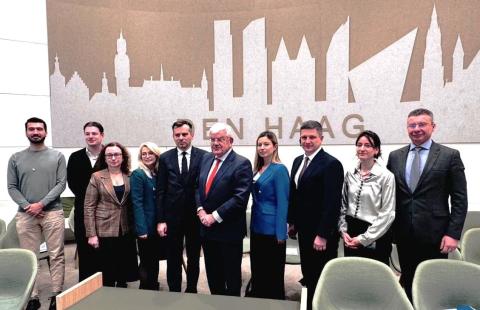
In The Hague, the Ukrainian delegation met with the Ministry of Foreign Affairs of the Netherlands, the Electoral Council of the Netherlands (Kiesraad), and the Elections Unit of the Municipality of The Hague.
The discussions focused on the Netherlands’ approaches to voting from abroad, including different voting modalities, voter registration requirements and election timelines. Dutch counterparts shared reflections on balancing accessibility, integrity and logistical feasibility, and reaffirmed their strong support for Ukraine, including readiness to share practical guidance and public information tools.
Consultations with the Electoral Council addressed the legal and institutional framework governing overseas voting, while meetings with the Municipality of The Hague provided insights into the role of local authorities in hosting foreign elections, including venue selection, logistical coordination and security considerations when organizing polling stations beyond embassy premises.
Consultations in Ireland
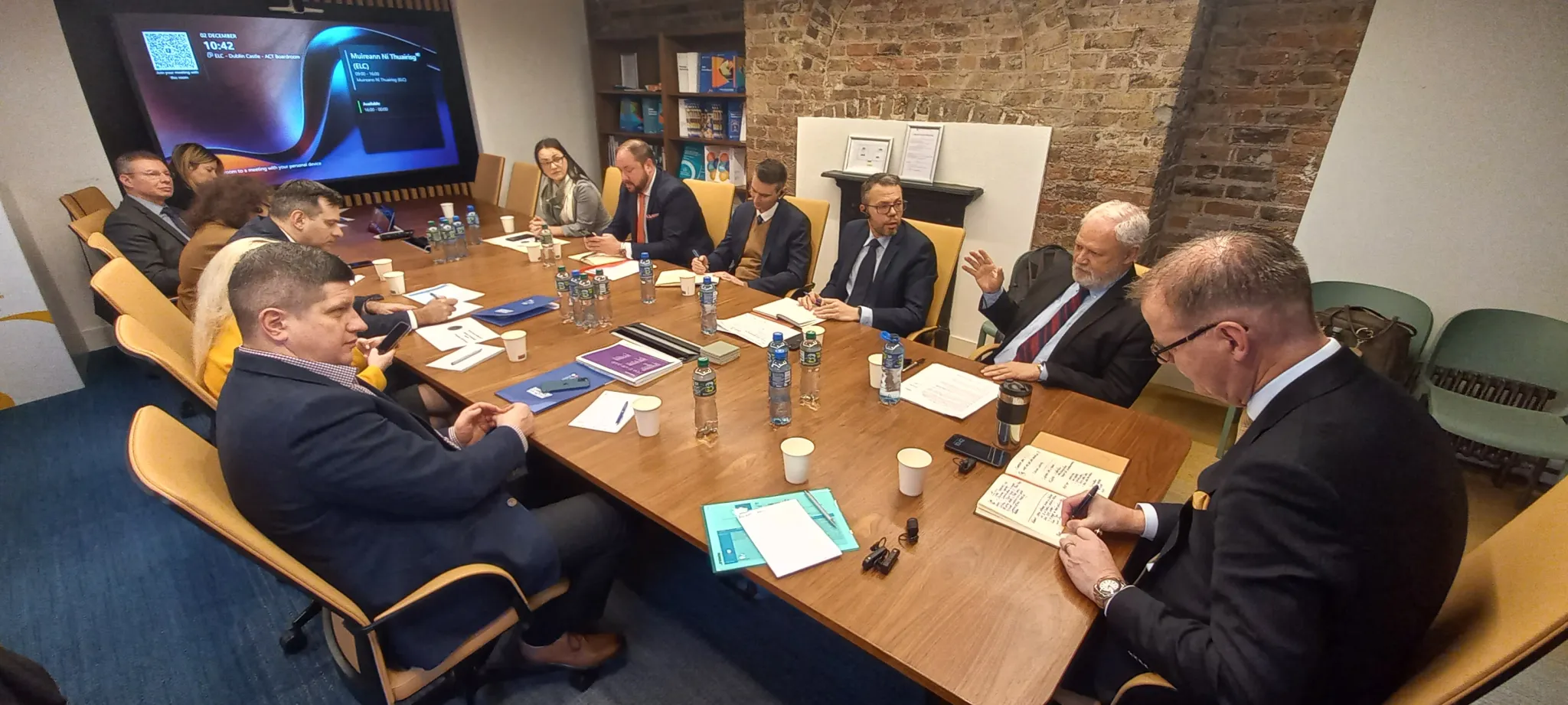
In Dublin, the Ukrainian delegation met with the Chair of the Electoral Commission of Ireland, as well as with representatives of the Electoral Commission, the Department of Housing, Local Government and Heritage, the Department of Foreign Affairs, and Garda Siochana (the Irish Police Service)
Discussions with the Chair of the Electoral Commission focused on the role of an independent electoral management body in safeguarding public trust, transparency and integrity of elections, with particular attention to voter communication, accessibility standards and institutional preparedness.
Irish counterparts explained that Ireland does not provide out-of-country voting for its own citizens, but shared experience relevant to hosting foreign elections, including inter-agency coordination, public information, data protection and security risk management. The consultations also addressed challenges related to the geographic dispersion of Ukrainian citizens and the importance of aggregated, non-personalized data for planning purposes.
Security-related discussions with the Irish Police Service highlighted the importance of early coordination, risk assessment and proportional security arrangements when hosting large-scale electoral events.

Community Exchange in the Netherlands and Ireland
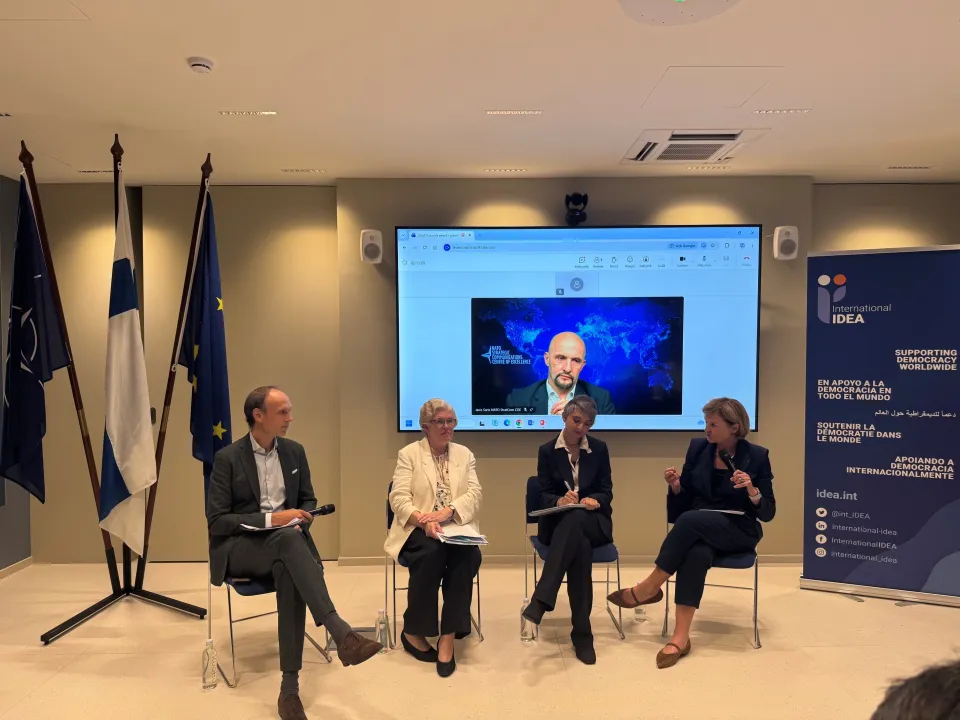
In both the Netherlands and Ireland, the programmes included meetings with representatives of Ukrainian communities.
Across both countries, community members highlighted that participation depends on trust, clear communication and respect for privacy. They emphasised the importance of neutral and trusted venues beyond embassy premises, transparent data protection practices, and simple, accessible voter information.
Participants also pointed to a gap between official communication channels and the platforms most used by communities, such as social media and local groups, underlining the need for concise, visual and practical outreach. Community representatives expressed readiness to support voter outreach and the identification of trusted individuals for polling station work.

Diplomatic Exchange in the Netherlands and Ireland
The delegation also met with diplomatic missions experienced in organizing out-of-country voting. In the Netherlands, the Embassy of Romania shared lessons from organizing large-scale elections abroad, while in Ireland diplomats from Moldova, Poland, Australia, France and Brazil exchanged comparative experience related to different OCV models, logistics, security arrangements and countering disinformation.
Taken together, these exchanges complemented institutional consultations by linking host-country requirements with practical, community-based and comparative insights.
The consultations in the Netherlands and Ireland further strengthened Ukraine’s institutional readiness, enhanced coordination between electoral and diplomatic bodies, and reinforced partnerships with EU institutions and Member States.
Through INSPIRE UA, International IDEA, with the financial support of the European Union, promotes structured dialogue and peer learning between Ukrainian and European electoral institutions, ensuring that international experience informs Ukraine’s post-war democratic recovery. The project will culminate in a comprehensive report in July 2026, summarizing best practices, legal and logistical recommendations, and a roadmap for enabling the participation of millions of Ukrainians living abroad in future elections.


About the authors